By -- Source, United Press International


Electrical Testing & Commissioning of Power Systems

Our customized live online or in‑person group training can be delivered to your staff at your location.

  • Live Online
  • 12 hours Instructor-led
  • Group Training Available
Regular Price:
$599
Coupon Price:
$499
Reserve Your Seat Today
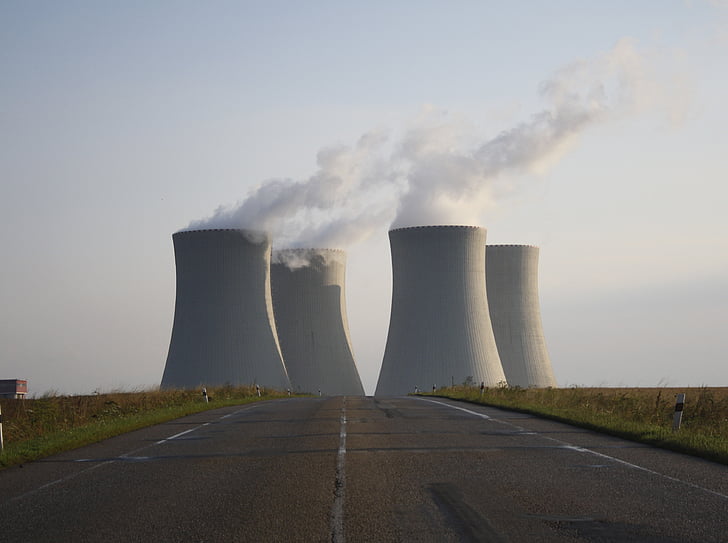
LOS ANGELES -- The supply of electricity in the United States has grown to levels that will insure enough power to keep air-conditioners delightfully humming this summer, according to a report issued Wednesday.

The North American Electric Reliability Council (NERC) said in its annual Summer Assessment that despite some potential transmission bottlenecks, the nation could probably depend on making it through the anticipated surge in power demand during the coming summer months.

"We expect that generating resources will be adequate to meet projected demand for electricity in North America this summer," said Michehl R. Gent, president of the organization that oversees the reliability of the U.S. power grid.

NERC predicted that peak demand this summer would only be about 0.4 percent above the projected peak in 2001, and 2.7 percent above the actual peak demand last year.

"The relatively flat growth in the projection for this summer compared to 2001 is reflective of the slowdown in the North American economy," the NERC report said. "To put this growth rate in perspective, the historical average annual demand growth for the last 10 years has been about 2.5 percent."

NERC said that comparing the projected 2002 demand to the actual 2001 numbers was actually not as accurate since it takes into account the weather conditions of last summer, which were on the cool side.

While demand growth should be relatively flat, NERC found that "significant amounts of new generating resources have been added in several regions since last summer."

Significant increases in power-generating capacity were added in previous areas of concern such as California, where demand is down and 5,000 megawatts (MW) of new generation has been added on the supply side; New York City and Long Island have increased their capacity by 450 MW.

"Despite recent announcements that planned new generators will be delayed or canceled, those previously planned to be in service this summer are still on schedule and are expected to be available to serve peak demand," NERC said.

The Pacific Northwest hydroelectric picture is expected to improve after last summer's drought, but some new potential trouble spots have cropped up, primarily in the booming southern Nevada and Arizona area, and also on the other side of the country in southwestern Connecticut.

The problems of the two regions differ, according to NERC. Connecticut is seen as having ample supply but potentially strained transmission capabilities. Nevada and Arizona, however, appear to have enough transmission capacity to handle heavy loads, but there may be problems obtaining additional supplies at times when the temperatures in Phoenix and especially Las Vegas soar into the sultry triple digits.

"Adequate transmission capability exists to permit electricity imports into southern Nevada, but if the electricity purchases are not available, this area will be especially susceptible to customer curtailments (blackouts) associated with higher than normal equipment failures or extreme weather," NERC said.

Nevada's difficulties have been compounded by this spring's decision by state regulators to disallow $437 million of a requested rate hike by Nevada Power to cover higher power prices during the electricity crisis that was centered on neighboring California but affected border states as well.

The decision came about the same time that bankrupt Enron ended power deliveries to Nevada, which left Nevada Power's parent company, Sierra Pacific Resources, scrambling to come up with a payment plan for its suppliers before summer demands.

"With the continued cooperation of power suppliers, we should have adequate power and cash to meet our customers' needs through the peak power season," Sierra Pacific CEO Walt Higgins said earlier this month. "We are presently current with all of our vendors, and we expect to be able to meet our obligations to suppliers who work with us. Those suppliers who choose not to work with us, however, may have to wait longer for payment."

Related News
U.S. Ends Support for Ukraine’s Energy Grid Restoration

US Termination of Ukraine Energy Grid Support signals a policy shift: USAID halts aid for grid restoration amid Russia attacks, impacting energy security, infrastructure resilience, winter readiness, and negotiations leverage with Moscow and allies.


Key Points

A US policy reversal ending USAID support for Ukraine's grid, impacting energy security, resilience, and leverage.

✅ USAID halt reduces funds for grid restoration and winter prep

✅ Policy shift may weaken Kyiv's leverage in talks with Russia

✅ Ukraine seeks EU, IFIs, private capital for energy resilience


The U.S. government has recently decided to terminate its support for Ukraine's energy grid restoration, a critical initiative managed by the U.S. Agency for International Development (USAID). This decision, reported by NBC News, comes at a time when Ukraine is grappling with significant challenges to its energy infrastructure due to ongoing Russian attacks. The termination of support was reportedly finalized before Ukrainian President Volodymyr Zelensky's scheduled visit to Washington, marking a significant shift in U.S. policy and raising concerns about the broader implications for Ukraine's energy resilience and its negotiations with Russia.

The Critical Role of U.S. Support

Since Russia's invasion of Ukraine, the country’s energy infrastructure has been one of the primary targets of military strikes. Russia has launched numerous attacks on Ukraine's power generation facilities, substations, and power lines, causing power outages across multiple regions. These attacks have led to significant material losses, with damage reaching billions of dollars. As part of its commitment to Ukraine, the U.S. government, through USAID, had been instrumental in funding restoration efforts aimed at rebuilding and reinforcing Ukraine’s energy grid.

USAID's support was crucial in helping Ukraine withstand the damage inflicted by Russian missile strikes. This aid was not just about restoring basic services but also about fortifying the energy grid to ensure that Ukraine could continue functioning amidst the war and keep the lights on this winter as temperatures drop. The U.S. contribution to Ukraine's energy sector, alongside international support, helped reduce the immediate vulnerabilities faced by Ukraine's civilians and industries.

The Abrupt Change in U.S. Policy

The decision to cut support for energy grid restoration is seen as a sharp reversal in U.S. policy, particularly as the Biden administration has previously shown strong backing for Ukraine in the aftermath of the invasion. This shift in policy was reportedly made by the U.S. State Department, which directed USAID to halt its involvement in the energy sector.

According to NBC News, USAID officials expressed concern about the timing of this decision. One official noted that terminating support for Ukraine’s energy grid restoration would severely undermine the U.S. government's ability to negotiate on issues like ceasefires and peace talks with Russia. The official argued that such a move would signal to Russia that the U.S. is backing away from its long-term investments in Ukraine, potentially weakening Ukraine's position in the ongoing war.

The abrupt end to this support is also seen as a blow to the morale of Ukraine’s government and people. Ukraine had been heavily reliant on the U.S. for resources to repair its critical infrastructure, and the decision to cut this support without warning has created uncertainty about the future of such recovery efforts.

Ukraine’s Response and Search for Alternatives

In response to the termination of U.S. support, Ukrainian officials have been seeking alternative sources of funding to continue the restoration of their energy grid. Deputy Prime Minister Olha Stefanishyna reported that Ukraine has already reached preliminary agreements with other international partners to secure financial support for energy resilience, cyber defense, and recovery programs including new energy solutions for winter blackouts.

These efforts come at a time when Ukraine is working to rebuild its war-torn economy and safeguard critical sectors like energy and infrastructure. The termination of U.S. support for energy restoration projects underscores the growing pressure on Ukraine to diversify its sources of aid and not become overly dependent on any one nation. Ukrainian leaders are in ongoing talks with European governments, international financial institutions, and private investors to ensure that essential programs do not stall due to the lack of funding from the U.S., as energy cooperation grows and Ukraine helps Spain amid blackouts in solidarity.

Implications for Ukraine’s Energy Security

Ukraine's energy security remains a critical issue in the context of the ongoing conflict with Russia. The war has made the country’s energy infrastructure vulnerable to repeated attacks, and the restoration of this infrastructure is essential for ensuring that Ukraine can keep the lights on and recover in the long term. The U.S. has been one of the largest contributors to Ukraine's energy security efforts, and its withdrawal could force Ukraine to look for other partners who may not have the same level of financial or technological resources.

This development also raises questions about the future of U.S. involvement in Ukraine's recovery efforts more broadly. As the war continues and winter looms over the battlefront for frontline communities, the need for reliable and sustained support from international partners will only increase. If the U.S. significantly scales back its aid, Ukraine may face even greater challenges in maintaining its energy infrastructure and achieving long-term recovery.

Moving Forward

The termination of U.S. support for Ukraine’s energy grid restoration serves as a reminder of the complexities involved in international aid and geopolitics during wartime. As Ukraine faces the ongoing realities of the war, it must adapt to a shifting international landscape where traditional allies may not always be reliable sources of support. Ukraine’s leadership will need to be strategic in its search for alternative sources of aid, while also focusing on strengthening its energy grid, managing electricity reserves to stabilize supply, and reducing its vulnerabilities to Russian attacks.

While the end of U.S. support for Ukraine's energy restoration is a significant setback, it also underscores the urgent need for Ukraine to diversify its international partnerships. The future of Ukraine’s energy resilience may depend on how effectively it can navigate these changing dynamics while maintaining the support of the international community in the fight against Russian aggression.


Related News

View more

Ontario Teachers Pension Plan agrees to acquire a 25% stake in SSEN Transmission

Ontario Teachers SSEN Transmission Investment advances UK renewable energy, with a 25% minority stake in SSE plc's electricity transmission network, backing offshore wind, grid expansion, and Net Zero 2050 goals across Scotland and UK.


Key Points

A 25% stake by Ontario Teachers in SSE's SSEN Transmission to fund UK grid upgrades and accelerate renewables.

✅ £1,465m cash for 25% minority stake in SSEN Transmission

✅ Supports offshore wind, grid expansion, and Net Zero targets

✅ Partnering SSE plc to deliver clean, affordable power in the UK


Ontario Teachers’ Pension Plan Board (‘Ontario Teachers’) has reached an agreement with Scotland-based energy provider SSE plc (‘SSE’) to acquire a 25% minority stake in its electricity transmission network business, SSEN Transmission, to provide clean, affordable renewable energy to millions of homes and businesses across the UK, reflecting how clean-energy generation powers both the economy and the environment.

The transaction is based on an effective economic date of 31 March 2022, and total cash proceeds of £1,465m for the 25% stake are expected at completion. The transaction is expected to complete shortly.

Measures such as Ontario's 2021 electricity rate reductions have aimed to ease costs for businesses, informing broader discussions on affordability.

SSEN Transmission, which operates under its licenced entity, Scottish Hydro Electric Transmission plc, transports electricity generated from renewable resources – including onshore and offshore wind and hydro – from the north of Scotland across more than a quarter of the UK land mass amid scrutiny of UK electricity and gas networks profits under the regulatory regime. The investment by Ontario Teachers’ will help support the UK Government’s Net Zero 2050 targets, including the delivery of 50GW of offshore wind capacity by 2030.

Charles Thomazi, Senior Managing Director, Head of EMEA Infrastructure & Natural Resources, from Ontario Teachers’ said, noting that in Canada decisions like the OEB decision on Hydro One's T&D rates guide utility planning:

“SSEN Transmission is one of Europe’s fastest growing transmission networks. Its network stretches across some of the most challenging terrain in Scotland – from the North Sea and across the Highlands – to deliver safe, reliable, renewable energy to demand centres across the UK.

We’re delighted to partner again with SSE and are committed to supporting the growth of its network and the vital role it plays in the UK’s green energy revolution.”

Investor views on regulated utilities can diverge, as illustrated by analyses of Hydro One's investment outlook that weigh uncertainties and risk factors.

Rob McDonald, Managing Director of SSEN Transmission, said:

“With the north of Scotland home to the UK’s greatest resources of renewable electricity we have a critical role to play in helping deliver the UK and Scottish Governments net zero commitments.  Our investments will also be key to securing the UK’s future energy independence through enabling the deployment of homegrown, affordable, low carbon power.

“With significant growth forecast in transmission, bringing in Ontario Teachers’ as a minority stake partner will help fund our ambitious investment plans as we continue to deliver a network for net zero emissions across the north of Scotland.” 

Ontario Teachers’ Infrastructure & Natural Resources group invests in electricity infrastructure worldwide to accelerate the energy transition with current investments including Caruna, Finland’s largest electricity distributor, Evoltz, a leading electricity transmission platform in Brazil, and Spark Infrastructure, which invests in essential energy infrastructure in Australia to serve over 5 million homes and businesses.

In Ontario, distribution consolidation has included the sale of Peterborough Distribution to Hydro One for $105 million, illustrating ongoing sector realignment.


Related News

View more

As peak wildfire season nears, SDG&E completes work on microgrid in Ramona

SDG&E Ramona Microgrid delivers renewable energy and battery storage for wildfire mitigation, grid resilience, and PSPS support, powering the Cal Fire Air Attack Base with a 500 kW, 2,000 kWh lithium-ion system during outages.


Key Points

A renewable, battery-backed microgrid powering Ramona's Air Attack Base, boosting wildfire response and PSPS resilience.

✅ 500 kW, 2,000 kWh lithium-ion storage replaces diesel

✅ Keeps Cal Fire and USFS aircraft operations powered

✅ Supports PSPS continuity and rural water reliability


It figures to be another dry year — with the potential to spark wildfires in the region. But San Diego Gas & Electric just completed a renewable energy upgrade to a microgrid in Ramona that will help firefighters and reduce the effects of power shutoffs to backcountry residents.

The microgrid will provide backup power to the Ramona Air Attack Base, helping keep the lights on during outages, home to Cal Fire and the U.S. Forest Service's fleet of aircrafts that can quickly douse fires before they get out of hand.

"It gives us peace of mind to have backup power for a critical facility like the Ramona Air Attack Base, especially given the fact that fire season in California has become year-round," Cal Fire/San Diego County Fire Chief Tony Mecham said in a statement.

The air attack base serves as a hub for fixed-wing aircraft assigned to put out fires. Cal Fire staffs the base throughout the year with one two airtankers and one tactical aircraft. The base also houses the Forest Service's Bell 205 A++ helicopter and crew to protect the Cleveland National Forest. Aircraft for both CalFire and the Forest Service can also be mobilized to help fight fires throughout the state.

This summer, the Ramona microgrid won't have to rely on diesel generation. Instead, the facility next to the town's airport will be powered by a 500 kilowatt and 2,000 kilowatt-hour lithium-ion battery storage system that won't generate any greenhouse gas emissions.

"What's great about it, besides that it's a renewable resource, is that it's a permanent installation," said Jonathan Woldemariam, SDG&E's director of wildfire mitigation and vegetation management. "In other words, we don't have to roll a portable generator out there. It's something that can be leveraged right there because it's already installed and ready to go."

Microgrids have taken on a larger profile across the state because they can operate independently of the larger electric grid, where repairing California's grid is an ongoing challenge, thus allowing small areas or communities to keep the power flowing for hours at a time during emergencies.

That can be crucial in wildfire-prone areas affected by Public Safety Power Shutoffs, or PSPS, the practice in which investor-owned utilities in California de-energize electrical power lines in a defined area when conditions are dry and windy in order to reduce the risk of a power line falling and igniting a wildfire, while power grid upgrades move forward statewide.

Rural and backcountry communities are particularly hard hit when the power is pre-emptively cut off because many homes rely on water from wells powered by electricity for their homes, horses and livestock.

In addition to Ramona, SDG&E has established microgrids in three other areas in High Fire Threat Districts:

The microgrids in Butterfield Ranch and Shelter Valley run on diesel power but the utility plans to complete solar and battery storage systems for each locale by the end of next year, as other regions develop new microgrid rules to guide deployment.

SDG&E has a fifth microgrid in operation — in Borrego Springs, which in 2013 became the first utility-scale microgrid in the country. It provides grid resiliency to the roughly 2,700 residents of the desert town and serves as a model for integrated microgrid projects elsewhere in delivering local electricity. While the Borrego Springs microgrid is not located in a High Fire Threat District, "when and if any power is turned off, especially the power transmission feed that goes to Borrego, we can support the customers using the microgrid out there," Woldemariam said.

Microgrid costs can be higher than conventional energy systems, even as projected energy storage revenue grows over the next decade, and the costs of the SDG&E projects are passed on to ratepayers. As per California Public Utilities Commission rules, the financial details for each of microgrid are kept confidential for at least three years.

SDG&E's microgrids are part of the utility's larger plan to reduce wildfire risk that SDG&E files with the utilities commission. In its wildfire plan for 2020 through 2022, SDG&E expected to spend $1.89 billion on mitigation measures.


Related News

View more

COVID-19 crisis shows need to keep electricity options open, says Birol

Electricity Security and Firm Capacity underpin reliable supply, balancing variable renewables with grid flexibility via gas plants, nuclear power, hydropower, battery storage, and demand response, safeguarding telework, e-commerce, and critical healthcare operations.


Key Points

Ability to meet demand by combining firm generation and flexible resources, keeping grids stable as renewables grow.

✅ Balances variable renewables with dispatchable generation

✅ Rewards flexibility via capacity markets and ancillary services

✅ Enhances grid stability for critical loads during low demand


The huge disruption caused by the coronavirus crisis, and the low-carbon electricity lessons drawn from it, has highlighted how much modern societies rely on electricity and how firm capacity, such as that provided by nuclear power, is a crucial element in ensuring supply, International Energy Agency (IEA) Executive Director Fatih Birol said.

In a commentary posted on LinkedIn, Birol said: "The coronavirus crisis reminds us of electricity's indispensable role in our lives. It's also providing insights into how that role is set to expand and evolve in the years and decades ahead."

Reliable electricity supply is crucial for teleworking, e-commerce, operating ventilators and other medical equipment, among all its other uses, he said, adding that the hundreds of millions of people who live without any access to electricity are far more vulnerable to disease and other dangers.

"Although new forms of short-term flexibility such as battery storage are on the rise, and initiatives like UK home virtual power plants are emerging, most electricity systems rely on natural gas power plants - which can quickly ramp generation up or down at short notice - to provide flexibility, underlining the critical role of gas in clean energy transitions," Birol said.

"Today, most gas power plants lose money if they are used only from time to time to help the system adjust to shifts in demand. The lower levels of electricity demand during the current crisis are adding to these pressures. Hydropower, an often forgotten workhorse of electricity generation, remains an essential source of flexibility.

"Firm capacity, including nuclear power in countries that have chosen to retain it as an option, is a crucial element in ensuring a secure electricity supply even as soaring electricity and coal use complicate transitions. Policy makers need to design markets that reward different sources for their contributions to electricity security, which can enable them to establish viable business models."

In most economies that have taken strong confinement measures in response to the coronavirus - and for which the IEA has available data - electricity demand has declined by around 15%, largely as a result of factories and businesses halting operations, and in New York City load patterns were notably reshaped during lockdowns. If electricity demand falls quickly while weather conditions remain the same, the share of variable renewables like wind and solar can become higher than normal, and low-emissions sources are set to cover almost all near-term growth.

"With weaker electricity demand, power generation capacity is abundant. However, electricity system operators have to constantly balance demand and supply in real time. People typically think of power outages as happening when surging electricity demand overwhelms supply. But in fact, some of the most high-profile blackouts in recent times took place during periods of low demand," Birol said.

"When electricity from wind and solar is satisfying the majority of demand, and renewables poised to eclipse coal by 2025 are reshaping the mix, systems need to maintain flexibility in order to be able to ramp up other sources of generation quickly when the pattern of supply shifts, such as when the sun sets. A very high share of wind and solar in a given moment also makes the maintenance of grid stability more challenging."


Related News

View more

Africa's Electricity Unlikely To Go Green This Decade

Africa 2030 Energy Mix Forecast finds electricity generation doubling, with fossil fuels dominant, non-hydro renewables under 10%, hydro vulnerable to droughts, and machine-learning analysis of planned power plants shaping climate and investment decisions.


Key Points

An analysis predicting Africa's 2030 power mix, with fossil fuels dominant, limited renewables growth, and hydro risks.

✅ ML model assesses 2,500 planned plants' commissioning odds

✅ Fossil fuels ~66% of generation; non-hydro RE <10% by 2030

✅ Policy shifts and finance reallocation to scale solar and wind


New research today from the University of Oxford predicts that total electricity generation across the African continent will double by 2030, with fossil fuels continuing to dominate the energy mix posing potential risk to global climate change commitments.

The study, published in Nature Energy, uses a state-of-the art machine-learning technique to analyse the pipeline of more than 2,500 currently-planned power plants and their chances of being successfully commissioned. It shows the share of non-hydro renewables in African electricity generation is likely to remain below 10% in 2030, although this varies by region.

'Africa's electricity demand is set to increase significantly as the continent strives to industrialise and improve the wellbeing of its people, which offers an opportunity to power this economic development and expand universal electricity access through renewables' says Galina Alova, study lead author and researcher at the Oxford Smith School of Enterprise and the Environment.

'There is a prominent narrative in the energy planning community that the continent will be able to take advantage of its vast renewable energy resources and rapidly decreasing clean technology prices to leapfrog to renewables by 2030 but our analysis shows that overall it is not currently positioned to do so.'

The study predicts that in 2030, fossil fuels will account for two-thirds of all generated electricity across Africa. While an additional 18% of generation is set to come from hydro-energy projects across Africa. These have their own challenges, such as being vulnerable to an increasing number of droughts caused by climate change.

The research also highlights regional differences in the pace of the transition to renewables across Sub-Saharan Africa, with southern Africa leading the way. South Africa alone is forecast to add almost 40% of Africa's total predicted new solar capacity by 2030.

'Namibia is committed to generate 70% of its electricity needs from renewable sources, including all the major alternative sources such as hydropower, wind and solar generation, by 2030, as specified in the National Energy Policy and in Intended Nationally Determined Contributions under Paris Climate Change Accord,' says Calle Schlettwein, Namibia Minister of Water (former Minister of Finance and Minister of Industrialisation). 'We welcome this study and believe that it will support the refinement of strategies for increasing generation capacity from renewable sources in Africa and facilitate both successful and more effective public and private sector investments in the renewable energy sector.'

Minister Schlettwein adds: 'The more data-driven and advanced analytics-based research is available for understanding the risks associated with power generation projects, the better. Some of the risks that could be useful to explore in the future are the uncertainties in hydrological conditions and wind regimes linked to climate change, and economic downturns such as that caused by the COVID-19 pandemic.'

The study further suggests that a decisive move towards renewable energy in Africa would require a significant shock to the current system. This includes large-scale cancellation of fossil fuel plants currently being planned. In addition, the study identifies ways in which planned renewable energy projects can be designed to improve their success chances for example, smaller size, fitting ownership structure, and availability of development finance for projects.

'The development community and African decision makers need to act quickly if the continent wants to avoid being locked into a carbon-intense energy future' says Philipp Trotter, study author and researcher at the Smith School. 'Immediate re-directions of development finance from fossil fuels to renewables are an important lever to increase experience with solar and wind energy projects across the continent in the short term, creating critical learning curve effects.'


Related News

View more

New England takes key step to 1.2 GW of Quebec hydro as Maine approves transmission line

NECEC Clean Energy Connect advances with Maine DEP permits, Hydro-Québec contracts, and rigorous transmission line mitigation, including tapered vegetation, culvert upgrades, and forest conservation, delivering low-carbon power, broadband fiber, and projected ratepayer savings.


Key Points

A Maine transmission project delivering Hydro-Québec power with strict DEP mitigation, lower bills, and added broadband.

✅ DEP permits mandate tapered vegetation, culvert upgrades, land conservation

✅ Hydro-Québec to supply 9.55 TWh/yr via MA contracts; bill savings 2-4%

✅ Added broadband fiber in Somerset and Franklin; local tax benefits


The Maine DEP reviewed the Clean Energy Connect project for more than two years, while regional interest in cross-border transmission continued to grow, before issuing permits that included additional environmental mitigation elements.

"Collectively, the requirements of the permit require an unprecedented level of environmental protection and compensatory land conservation for the construction of a transmission line in the state of Maine," DEP said in a May 11 statement.

Requirements include limits on transmission corridor width, forest preservation, culvert replacement and vegetation management projects, while broader grid programs like vehicle-to-grid integration enhance clean energy utilization across the region.

"In our original proposal we worked hard to develop a project that provided robust mitigation measures to protect the environment," NECEC Transmission CEO Thorn Dickinson said in a statement. "And through this permitting process, we now have made an exceedingly good project even better for Maine."

NECEC will be built on land owned or controlled by Central Maine Power. The 53 miles of new corridor on working forest land will use a new clearing technique for tapered vegetation, while the remainder of the project follows existing power lines.

Environmentalists said they agreed with the decision, and the mitigation measures state regulators took, noting similar momentum behind new wind investments in other parts of Canada.

"Building new ways to deliver low-carbon energy to our region is a critical piece of tackling the climate crisis," CLF Senior Attorney Phelps Turner said in a statement. "DEP was absolutely right to impose significant environmental conditions on this project and ensure that it does not harm critical wildlife areas."

Once complete, Turner said the transmission line will allow the region "to retire dirty fossil fuel plants in the coming years, which is a win for our health and our climate."

The Massachusetts Department of Public Utilities in June 2019 advanced the project by approving contracts for the state's utilities to purchase 9,554,940 MWh annually from Hydro-Quebec. Officials said the project is expected to provide approximately 2% to 4% savings on monthly energy bills.

Total net benefits to Massachusetts ratepayers over the 20-year contract, including both direct and indirect benefits, are expected to be approximately $4 billion, according to the state's estimates.

NECEC "will also deliver significant economic benefits to Maine and the region, including lower electricity prices, increased local real estate taxes and reduced energy costs with examples like battery-backed community microgrids demonstrating local resilience, expanded fiber optic cable for broadband service in Somerset and Franklin counties and funding of economic development for Western Maine," project developers said in a statement.​


Related News

View more

Sign Up for Electricity Forum’s Newsletter

Stay informed with our FREE Newsletter — get the latest news, breakthrough technologies, and expert insights, delivered straight to your inbox.

Electricity Today T&D Magazine Subscribe for FREE

Stay informed with the latest T&D policies and technologies.
  • Timely insights from industry experts
  • Practical solutions T&D engineers
  • Free access to every issue

Live Online & In-person Group Training

Advantages To Instructor-Led Training – Instructor-Led Course, Customized Training, Multiple Locations, Economical, CEU Credits, Course Discounts.

Request For Quotation

Whether you would prefer Live Online or In-Person instruction, our electrical training courses can be tailored to meet your company's specific requirements and delivered to your employees in one location or at various locations.