NFPA 70E Training - 2027 Edition - Arc Flash and Electrical Safety Course
Our customized live online or in‑person group training can be delivered to your staff at your location.

- Live Online
- 6 hours Instructor-led
- Group Training Available
Regular Price:
$199
Coupon Price:
$149
The future of nuclear energy in the U.S. is bright. There has been a groundswell of activity and investment in recent years surrounding advanced nuclear reactors. A dynamic group of nuclear engineers and scientists are chasing the future - and racing against China and Russia - to develop innovative reactor designs. These technologies hold enormous promise to provide clean, safe, affordable, and reliable energy, not just for our country, but for the world. These innovators have a vision for the future, and they charge ahead backed by more than $1 billion in private capital. The future of nuclear energy is bright.
Some would argue that we have been here before. In 2005, Congress passed incentives to encourage a "nuclear renaissance" amid high natural gas prices. The industry stood ready to build a large number of modern light-water reactors, improved versions of existing nuclear technology.
But reality fell short of expectations and the result was only five new nuclear plants, with a price tag of $8 billion to $10 billion each. Now, in an age of low-cost natural gas, it is becoming harder for the nearly 100 existing reactors to compete. The Energy Information Administration calculates that electricity generation from a new nuclear plant would cost about 25 percent more than electricity from a new gas-fired combined-cycle power plant. This is causing some nuclear energy companies to scale back their operations. For instance, Chicago-based Exelon Corporation announced just a few weeks ago that it would shutter two of its nuclear plants in Illinois in the coming years, citing pressure from natural gas as a major factor.
So this begs the question: Will this new wave of innovative reactors live up to its promise" Investors think so, and so do we. For starters, these advanced reactors differ significantly from their predecessors. Rather than water, they use materials like molten salt or noble gasses as coolants. Most are considered "walk away safe," since they are designed to use the laws of physics, rather than equipment, to prevent accidents. If a natural disaster strikes, for instance, these reactors would simply shut down, substantially reducing the threat of a meltdown. Many are designed to be small and modular, so they could be built in factories with construction costs that are a fraction of their big, custom-built forerunners. Small reactors could also be plugged into future micro-grid systems without requiring extensive transmission infrastructure. Some of these new reactor technologies could actually help to reduce the amount of nuclear waste we've accumulated through the years by using that waste as fuel. That could alleviate a major challenge facing the industry. And of course, all of this would be achieved without any air pollution.
Nuclear energy used to be just another partisan issue. Thankfully, that is changing. The four of us represent opposite ends of the political spectrum in the Senate, but we are all pulling in the same direction, backing various pieces of legislation to promote advanced nuclear innovation and development. One bill would open the doors of our national laboratories to entrepreneurs and their innovative new companies to develop public-private partnerships with the potential to bring new ideas to market. Another bill looks to build a sensible regulatory framework to allow diverse advanced reactor concepts to go from the drawing board to reality.
These bills have been moving through Congress and are garnering broad bipartisan support. The Nuclear Energy Innovation Capabilities Act recently passed the Senate as part of a bipartisan energy bill, on an 87-4 vote. The Nuclear Energy Innovation and Modernization Act was approved by the Senate Environment and Public Works Committee on a 17-3 vote.
Though we may come to this issue for different reasons, our end goal is the same. We want to promote new technologies that provide cleaner energy and get them built by and for Americans. We can't take a back seat as China and Russia build test reactors and lure away American innovators. This new nuclear renaissance is primed for success. It has broad bipartisan support in Congress, serious private capital investment and the ability to help address environmental challenges - all while encouraging American innovation. The world is heading into a new age of nuclear energy, and the United States must lead the way.
Related News
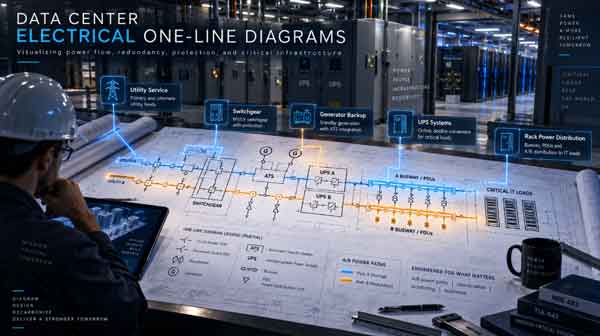
Texas regulators soften data center interconnection rules amid grid audit
Texas Data Center Interconnection Rules set a flat study fee and longer energization timelines, reshaping…
View more

Canada will need more electricity to hit net-zero: IEA report
Canada Clean Electricity Expansion is urged by the IEA to meet net-zero targets, scaling non-emitting…
View more
Neste increases the use of wind power at its Finnish production sites to nearly 30%
Neste wind power agreement boosts renewable electricity in Finland, partnering with Ilmatar and Fortum to…
View more
Intellirent – New Regional Service Center supporting the Southwest
Intellirent is pleased to announce the expansion of its regional footprint with the opening of…
View more
Tariff Threats Boost Support for Canadian Energy Projects
Canadian Energy Infrastructure Tariffs are reshaping pipelines, deregulation, and energy independence, as U.S. trade tensions…
View more
New Jersey, New York suspending utility shut-offs amid coronavirus pandemic
NY & NJ Utility Shutoff Moratorium suspends power, heat, and water disconnections amid COVID-19, as…
View more
Sign Up for Electricity Forum’s Newsletter
Stay informed with our FREE Newsletter — get the latest news, breakthrough technologies, and expert insights, delivered straight to your inbox.
Electricity Today T&D Magazine Subscribe for FREE

Stay informed with the latest T&D policies and technologies.
- Timely insights from industry experts
- Practical solutions T&D engineers
- Free access to every issue

