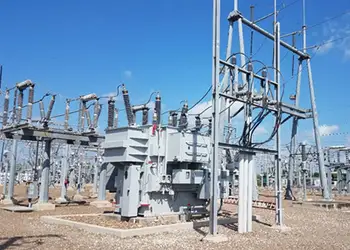
Substation Protection Training - Protect Transformers, Buses and Lines
Our customized live online or in‑person group training can be delivered to your staff at your location.
- Live Online
- 12 hours Instructor-led
- Group Training Available
Regular Price:
$799
Coupon Price:
$699
State utility commissions, historically, have been sedate institutions. Regulators could often count on two things: anonymity and job security.
But commissioners today are apt to find picketers outside their offices or homes, and their average tenure nationally is less than 3 1/2 years.
In several states - including Maryland - where prices are rising as the effects of electricity deregulation take hold, consumer and political backlash is growing. Not since the upheaval in the nuclear power industry after the 1979 accident at Pennsylvania's Three Mile Island froze nuclear plant construction and spurred higher rates have regulators faced such scorn.
Some warn that growing political interference with commissions could make it more difficult to find well-qualified nominees. That could pose problems in deregulated states that potentially face years of difficult solutions to rising energy costs.
Some Maryland lawmakers have said firing the five appointed members of the state's Public Service Commission will be a top priority when the General Assembly convenes Wednesday in a special session to tackle the projected 72 percent average rate increase for Baltimore Gas and Electric customers.
The commission, which works full time, is designed to be a quasi- judicial body that takes testimony, analyzes facts and makes decisions about rates and other matters.
Outright firings have been rare in more than a century of utility regulation in the United States. But in an era when all forms of energy are soaring in price, concerns are growing about regulatory independence - a bedrock principal of utility oversight and one that the power industry depends on to attract investors.
"I think it's a sense of despair," said Harry Trebing, an economics professor emeritus at Michigan State University and former head of the Institute of Public Utilities. The same legislative bodies that were sold on deregulation a few years ago are finding the transition to a free market more expensive than expected and are looking for someplace to direct their anger, Trebing said. Utilities and regulators are prime targets.
Most states take steps to insulate commissions from politics by staggering their terms so that no one governor can replace the entire board. States also make it hard, if not impossible, to remove a member for political reasons.
In many states, commissions must be made up of members of both parties to ensure balance. In about a dozen states, commissioners are directly elected by voters, and in two - Virginia and South Carolina - they are elected by state legislatures.
"They do yeoman's service, and it is not glorious and not popular in the sense that they get to preside over rate increases," Stephen L. Teichler, a utility and regulatory law expert with Duane Morris in Washington, said of utility commissioners in general. "They often get a bad rap for things beyond their control."
A generation ago, new safety requirements led to massive cost overruns for utility projects, driving up consumer rates. Utility commissioners in California found their offices overrun by protesters in one instance. Others received threatening calls in the middle of the night, and a commissioner in an Eastern state had his mailbox blown up, recalled Charles Gray, executive director of the National Association of Regulatory Utility Commissioners.
"There was a visceral reaction," Gray said.
But retribution against regulators is a dangerous game, industry experts said. It can have long-term consequences - for the utilities being regulated and their customers, experts said. Commissioners who constantly fear for their jobs are less likely to make decisions based on independent reasoning, the theory goes.
"If the commissioners are always concerned that if they do something considered unpopular that they'd be sanctioned or even removed, that impacts their independence," said Kenneth Rose, an Ohio-based industry consultant.
Maryland's commission was hardly immune from accusations of political patronage and industry connections throughout years of Democratic appointments. But critics of Republican Gov. Robert L. Ehrlich Jr. contend his naming of Kenneth D. Schisler as its chairman was destructive because of the staff upheaval that followed.
Schisler fired five top PSC staffers for what some allege were political reasons, which the chairman denies. The firings made waves in the relatively small world of utility regulators, who generally rely on professional staff for expert advice and analysis.
"To come in and run them off was kind of outrageous," said Doug Jones, professor of economics and public utility regulation at Ohio State University.
Jones believes that the Maryland PSC failed to properly devise a plan to phase in higher utility rates in the transition to deregulation. Still, he said, the concept of commission independence should be inviolable.
"I would almost always say that, other than impeachment, no matter how poorly they perform, that [firing] should never happen," he said.
If utilities feel they can't get a fair shake from state regulators, experts said, they might be wary of investing in new power plants or other infrastructure. In addition, credit reporting agencies such as Moody's, Standard & Poor's and Fitch keep detailed records of the actions taken by each state's utility commissions, assigning a grade to each one. Those seen as too unpredictable get a low grade, which can result in a lower credit rating for every utility in a state. That leads to higher borrowing costs, which are passed to consumers in their rates.
That's what happened to BGE and other Maryland utilities after lawmakers first threatened this year to fire PSC commissioners and interfere with a merger between BGE's corporate parent, Constellation Energy Group, and a Florida-based utility owner. Credit reporting agencies quickly downgraded the utility's debt and have threatened to take further action if the feud persists.
A similar situation arose in Illinois, where rate caps imposed as part of the state's move to deregulation will expire next year. Regulators voted to require utility Commonwealth Edison to procure power in an energy auction similar to the one that led to BGE's rate increase.
Illinois Gov. Rod R. Blagojevich pressured the chairman of the Illinois Commerce Commission to resign. He eventually nominated the head of a consumer advocacy group, a known auction foe, to replace him. The day the news hit, utility investors meeting in New York went into a panic, believing that credit downgrades for all Illinois utilities were coming.
"These kinds of things move markets, it's true," said Gray, of the regulatory trade group.
The Illinois Senate refused to confirm Blagojevich's choice after heavy lobbying by utilities, who feared they couldn't get a fair hearing from the commission under the new leadership. A different nominee was approved, but some say the episode illustrates how utility commissions have been breached by politics as deregulation spreads.
"I think the perception of the public is that the Commerce Commission has favored utilities perhaps more than they should," said David Kolata, executive director of the Illinois Citizen's Board, whose former boss, Martin Cohen, was Blagojevich's rejected choice for the commission. "I certainly don't think it's a coincidence that the first known consumer advocate ever appointed to the commission became the first commissioner ever rejected by the Senate."
Related News
US NRC issues final safety evaluation for NuScale SMR
NuScale SMR Design Certification marks NRC Phase 6 FSER approval, validating small modular reactor safety…
View more
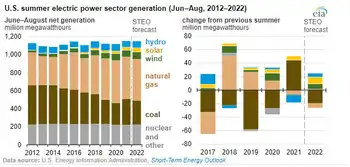
EIA expects solar and wind to be larger sources of U.S. electricity generation this summer
US Summer Electricity Outlook 2022 projects rising renewable energy generation as utility-scale solar and wind…
View more

Attribution study: June 2026 heatwave increases risk to Europe overhead power lines
European Heatwave Attribution links the June 2026 event to human driven warming, underscoring rising grid…
View more
London Gateway Unveils World’s First All-Electric Berth
London Gateway All-Electric Berth enables shore power and cold ironing for container ships, cutting emissions,…
View more
Is Ontario's Power Cost-Effective?
Ontario Nuclear Power Costs highlight LCOE, capex, refurbishment outlays, and waste management, compared with renewables,…
View more
Severe heat: 5 electricity blackout risks facing the entire U.S., not just Texas
Texas power grid highlights ERCOT reliability strains from extreme heat, climate change, and low wind,…
View more
Sign Up for Electricity Forum’s Newsletter
Stay informed with our FREE Newsletter — get the latest news, breakthrough technologies, and expert insights, delivered straight to your inbox.
Electricity Today T&D Magazine Subscribe for FREE

Stay informed with the latest T&D policies and technologies.
- Timely insights from industry experts
- Practical solutions T&D engineers
- Free access to every issue

