Saskatchewan's First Large-Scale Wind Power Project

By


Protective Relay Training - Basic

Our customized live online or in‑person group training can be delivered to your staff at your location.
  • Live Online
  • 12 hours Instructor-led
  • Group Training Available
Regular Price:
$699
Coupon Price:
$599
Reserve Your Seat Today

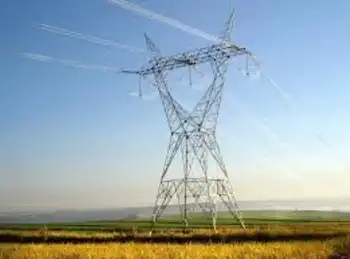
REGINA, SASK -- Saskatchewan's first major supply of green power is shaping up to come from a $20 million wind power project proposed for construction five kilometres southeast of Gull Lake. Ralph Goodale, Minister of Natural Resources Canada and Saskatchewan Crown Investments Corporation Minister Maynard Sonntag, has announced that Enbridge Inc and Suncor Energy Inc, would develop the SunBridge Wind Power Project. The ability to pursue the project was, in part, due to the Government of Canada's Budget 2000 commitment to purchase electricity from emerging renewable sources in Saskatchewan and Prince Edward Island. For Saskatchewan, this purchase will total $12.4 million over 10 years. Suncor and Enbridge submitted the winning bid to construct and operate the wind power facility and SaskPower will purchase the electricity. The power will be used for federal government buildings in Saskatchewan and other customers starting in 2002. Construction of the SunBridge Wind Power Project, which is subject to public consultation and environmental regulatory approvals, is scheduled to start this May. It is expected to be fully commissioned by June 2002. "This initiative will help develop markets for renewable energy like wind power in Saskatchewan and the rest of Canada," said Minister Goodale. "Our investment in renewable electricity will help us meet a significant proportion of our energy requirements in a way that is environmentally friendly and consistent with our national action plan on climate change. We are pleased that our contribution is a driving force for the construction of the Gull Lake wind power facility." "Through SaskPower, the Government of Saskatchewan is committed to investing in wind power technology as a safe, renewable energy source," Minister Sonntag said. "The SunBridge Wind Power Project is a major first step towards developing a viable and cost-effective green power industry in Saskatchewan. Green power will help meet the province's growing energy needs in an environmentally sustainable manner that does not contribute to climate change. We look forward to additional wind power development that will see the provincial government and other customers meet a portion of our needs with wind-generated electricity." Commenting on the significance of the SunBridge Wind Power Project, SaskPower president and CEO John Wright noted "the federal supply contract represents the single largest purchase of green power the Government of Canada has ever made. As such, it is an important part of our business plan and a reflection of our commitment to further develop green power sources as we balance our customers' needs for secure and cost-effective supply with a shared concern for the environment." Rick George, president and CEO of Suncor, said SunBridge is part of his company's overall plan to invest $100 million in alternative and renewable energy projects by 2005. "This is a major step toward building an alternative and renewable energy business that will help to diversify Canada's sources of energy for the future and give consumers the option to choose renewable energy to meet their energy needs." Enbridge president and CEO Patrick D. Daniel said, "Enbridge Pipelines Inc. has had a presence in Saskatchewan for over 50 years, and is one of SaskPower's largest customers, operating over 3300 kilometers of pipeline through the province. We believe participation in this project will enhance our relationship with the government and people of Saskatchewan. This project also fits in with Enbridge's strategies of investing in emerging energy technologies, and of working to reduce greenhouse gas emissions, addressing the issue of global climate change." When operational, SunBridge's 17 turbines will have a capacity of just over 11 megawatts of electricity for distribution through the Saskatchewan power grid. High wind speeds in the Gull Lake area, combined with proximity to existing power lines, were key factors in the selection of the location for Saskatchewan's first large-scale wind power project.

Related News
Crucial step towards completing nuclear plant achieved in Abu Dhabi

Barakah Unit 4 Cold Hydrostatic Testing validates reactor coolant system integrity at the Barakah Nuclear Energy Plant in Abu Dhabi, UAE, confirming safety, quality, and commissioning readiness under ENEC and KEPCO oversight.


Key Points

Pressure test of Unit 4's reactor coolant system, confirming integrity and safety for commissioning at Barakah.

✅ 25% above normal operating pressure verified.

✅ Welds, joints, and high-pressure components inspected.

✅ Supports safe, reliable, emissions-free baseload power.


The Emirates Nuclear Energy Corporation (ENEC) has successfully completed Cold Hydrostatic Testing (CHT) at Unit 4 of the Barakah Nuclear Energy Plant, the Arab world’s first nuclear energy plant being built in the Al Dhafra region of Abu Dhabi, UAE. The testing incorporated the lessons learned from the previous three units and is a crucial step towards the completion of Unit 4, the final unit of the Barakah plant.

As a part of CHT, the pressure inside Unit 4’s systems was increased to 25 per cent above what will be the normal operating pressure, demonstrating, as seen across global nuclear projects, the quality and robust nature of the Unit’s construction. Prior to the commencement of CHT, Unit 4’s Nuclear Steam Supply Systems were flushed with demineralised water, and the Reactor Pressure Vessel Head and Reactor Coolant Pump Seals were installed. During the Cold Hydrostatic Testing, the welds, joints, pipes and components of the reactor coolant system and associated high-pressure systems were verified.

Mohammed Al Hammadi, Chief Executive Officer of ENEC said: “I am proud of the continued progress being made at Barakah despite the circumstances we have all faced in relation to COVID-19. The UAE leadership’s decisive and proactive response to the pandemic supported us in taking timely, safety-led actions to protect the health and safety of our workforce and our plant. These actions, alongside the efforts of our talented and dedicated workforce, have enabled the successful completion of CHT at Unit 4, which was completed in adherence to the highest standards of safety, quality, and security.

“With this accomplishment, we move another step closer to achieving our goal of supplying up to a quarter of our nation’s electricity needs through the national grid and powering its future growth with safe, reliable, and emissions-free electricity,” he added.

By the end of 2019, ENEC and Korea Electric Power Corporation (KEPCO), working with Korea Hydro & Nuclear Power (KHNP) on the project, had successfully completed all major construction work including major concrete pouring, installation of the Turbine Generator, and the internal components of the Reactor Pressure Vessel (RPV) of Unit 4, which paved the way for the commencement of testing and commissioning.

The testing at Unit 4 represents a significant achievement in the development of the UAE Peaceful Nuclear Energy Program, following the successful completion of fuel assembly loading into Unit 1 in March 2020, confirming that the UAE has officially become a peaceful nuclear energy operating nation. Preparations are now in the final stages for the safe start-up of Unit 1, which subsequently reached 100% power ahead of commercial operations, in the coming months.

ENEC is currently in the final stages of construction of units 2, 3 and 4 of the Barakah Nuclear Energy Plant, as China’s nuclear program continues its steady development globally. The overall construction of the four units is more than 94% complete. Unit 4 is more than 84 per cent, Unit 3 is more than 92 per cent and Unit 2 is more than 95 per cent. The four units at Barakah will generate up to 25 per cent of the UAE’s electricity demand by producing 5,600 MW of clean baseload electricity, as projects such as new reactors in Georgia take shape, and preventing the release of 21 million tons of carbon emissions each year – the equivalent of removing 3.2 million cars off the roads annually.


Related News

View more

Ermineskin First Nation soon to become major electricity generator

Ermineskin First Nation Solar Project delivers a 1 MW distributed generation array with 3,500 panels, selling power to Alberta's grid, driving renewable energy revenue, jobs, and regional economic development with partner SkyFire Energy.


Key Points

A 1 MW, 3,500-panel distributed generation plant selling power to Alberta's grid to support revenue and jobs.

✅ 1 MW array, 3,500 panels; grid-tied distributed generation

✅ Annual revenue projected at $80k-$150k, scalable

✅ Built with SkyFire Energy; expansion planned next summer


The switch will soon be flipped on a solar energy project that will generate tens of thousands of dollars for Ermineskin First Nation, while energizing economic development across Alberta, where selling renewables is emerging as a promising opportunity.

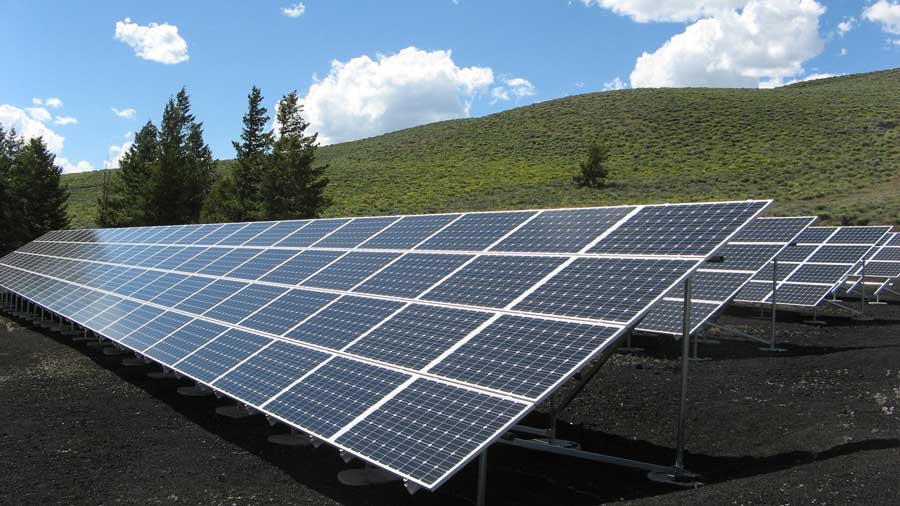
Built on six acres, the one-megawatt generator and its 3,500 solar panels will produce power to be sold into the province’s electrical grid, providing annual revenues for the band of $80,000 to $150,000, depending on energy demand and pricing.

The project cost $2.7 million, including connection costs and background studies, said Sam Minde, chief executive officer of the band-owned Neyaskweyahk Group of Companies Inc.

It was paid for with grants from the Western Economic Diversification Fund and the province’s Climate Leadership Plan, and, amid Ottawa’s green electricity contracting push, is expected to be connected to the grid by mid-December.

“It’s going to be the biggest distributed generation in Alberta,” he said.

Called the Sundancer generator, it was built and will be operated through a partnership with SkyFire Energy, reflecting how renewable power developers design better projects by combining diverse resources.

Minde said the project’s benefits extend beyond Ermineskin First Nation, one of four First Nations at Maskwacis, 20 km north of Ponoka, in a province where renewable energy surge could power thousands of jobs.

“Our nation is looking to do the best it can in business. It’s competitive, but at the same time, what is good for us is good for the region.

“If we’re creating jobs, we’re going to be building up our economy. And if you look at our region right now, we need to continue to create opportunities and jobs.”

Electricity prices are rock bottom right now, in the six to nine cents per kilowatt hour range, with recent Alberta solar contracts coming in below natural gas on cost. During the oilsands boom, when power demand was skyrocketing, the price was in the 16 to 18 cent range.

That means there is a lot of room for bigger returns for Ermineskin in the future, especially if pipelines such as TransMountain get going or the oilsands pick up again, and as Alberta solar growth accelerates in the years ahead.

The band is so confident that Sundancer will prove a success that there are plans to double it in size, a strategy echoed by community-scale efforts such as the Summerside solar project that demonstrate scalability. By next summer, a $1.5-million to $1.7-million project funded by the band will be built on another six acres nearby.

Minde said the project is an example of the community’s connection with the environment being used to create opportunities and embracing technologies that will likely figure large in the world’s energy future.


Related News

View more

Doug Ford's New Stance on Wind Power in Ontario

Ontario Wind Power Policy Shift signals renewed investment in renewable energy, wind farms, and grid resilience, aligning with climate goals, lower electricity costs, job creation, and turbine technology for cleaner, diversified power.


Key Points

A provincial pivot to expand wind energy, meet climate goals, lower costs, and boost jobs across Ontario’s power system.

✅ Diversifies Ontario's grid with scalable renewable capacity.

✅ Targets emissions cuts while stabilizing electricity prices.

✅ Spurs rural investment, supply chains, and skilled jobs.


Ontario’s energy landscape is undergoing a significant transformation as Premier Doug Ford makes a notable shift in his approach to wind power. This change represents a strategic pivot in the province’s energy policy, potentially altering the future of Ontario’s power generation, environmental goals, and economic prospects.

The Backdrop: Ford’s Initial Stance on Wind Power

When Doug Ford first assumed the role of Premier in 2018, his administration was marked by a strong stance against renewable energy projects, including wind power, with Ford later saying he was proud of tearing up contracts as part of this shift. Ford’s government inherited a legacy of ambitious renewable energy commitments from the previous Liberal administration under Kathleen Wynne, which had invested heavily in wind and solar energy. The Ford government, however, was critical of these initiatives, arguing that they resulted in high energy costs and a surplus of power that was not always needed.

In 2019, Ford’s government began rolling back several renewable energy projects, including wind farms, and was soon tested by the Cornwall wind farm ruling that scrutinized a cancellation. This move was driven by a promise to reduce electricity bills and cut what was perceived as wasteful spending on green energy. The cancellation of several wind projects led to frustration among environmental advocates and the renewable energy sector, who viewed the decision as a setback for Ontario’s climate goals.

The Shift: Embracing Wind Power

Fast forward to 2024, and Premier Ford’s administration is taking a markedly different approach. The recent policy shift, which moves to reintroduce renewable projects, indicates a newfound openness to wind power, reflecting a broader acknowledgment of the changing dynamics in energy needs and environmental priorities.

Several factors appear to have influenced this shift:

  1. Rising Energy Demands and Climate Goals: Ontario’s growing energy demands, coupled with the pressing need to address climate change, have necessitated a reevaluation of the province’s energy strategy. As Canada commits to reducing greenhouse gas emissions and transitioning to cleaner energy sources, wind power is increasingly seen as a crucial component of this strategy. Ford’s change in direction aligns with these national and global goals.

  2. Economic Considerations: The economic landscape has also evolved since Ford’s initial opposition to wind power. The cost of wind energy has decreased significantly over the past few years, making it a more competitive and viable option compared to traditional energy sources, as competitive wind power gains momentum in markets worldwide. Additionally, the wind energy sector promises substantial job creation and economic benefits, which are appealing in the context of post-pandemic recovery and economic growth.

  3. Public Opinion and Pressure: Public opinion and advocacy groups have played a role in shaping policy. There has been a growing demand from Ontarians for more sustainable and environmentally friendly energy solutions. The Ford administration has been responsive to these concerns, recognizing the importance of addressing public and environmental pressures.

  4. Technological Advancements: Advances in wind turbine technology have improved efficiency and reduced the impact on wildlife and local communities. Modern wind farms are less intrusive and more effective, addressing some of the concerns that were previously associated with wind power.

Implications of the Policy Shift

The implications of Ford’s shift towards wind power are far-reaching. Here are some key areas affected by this change:

  1. Energy Portfolio Diversification: By reembracing wind power, Ontario will diversify its energy portfolio, reducing its reliance on fossil fuels and increasing the proportion of renewable energy in the mix. This shift will contribute to a more resilient and sustainable energy system.

  2. Environmental Impact: Increased investment in wind power will contribute to Ontario’s efforts to combat climate change. Wind energy is a clean, renewable source that produces no greenhouse gas emissions during operation. This aligns with broader environmental goals and helps mitigate the impact of climate change.

  3. Economic Growth and Job Creation: The wind power sector has the potential to drive significant economic growth and create jobs. Investments in wind farms and associated infrastructure can stimulate local economies, particularly in rural areas where many wind farms are located.

  4. Energy Prices: While the initial shift away from wind power was partly motivated by concerns about high energy costs, including exposure to costly cancellation fees in some cases, the decreasing cost of wind energy could help stabilize or even lower electricity prices in the long term. As wind power becomes a larger component of Ontario’s energy supply, it could contribute to a more stable and affordable energy market.

Moving Forward: Challenges and Opportunities

Despite the positive aspects of this policy shift, there are challenges to consider, and other provinces have faced setbacks such as the Alberta wind farm scrapped by TransAlta that illustrate potential hurdles. Integrating wind power into the existing grid requires careful planning and investment in grid infrastructure. Additionally, addressing local concerns about wind farms, such as their impact on landscapes and wildlife, will be crucial to gaining broader acceptance.

Overall, Doug Ford’s shift towards wind power represents a significant and strategic change in Ontario’s energy policy. It reflects a broader understanding of the evolving energy landscape and the need for a sustainable and economically viable energy future. As the province navigates this new direction, the success of this policy will depend on effective implementation, ongoing stakeholder engagement, and a commitment to balancing environmental, economic, and social considerations, even as the electricity future debate continues among party leaders.


Related News

View more

Pandemic has already cost Hydro-Québec $130 million, CEO says

Hydro-Que9bec 2020 Profit Outlook faces COVID-19 headwinds as revenue drops, U.S. Northeast export demand weakens, and clean-energy infrastructure plans shift toward domestic investments, energy efficiency, EV charging stations, and grid upgrades to stabilize net income.


Key Points

A forecast of COVID-19 revenue declines, weaker U.S. exports, and a shift to energy efficiency and grid upgrades.

✅ Q1 profit fell 14%; net income $1.53B vs $1.77B

✅ Exports to U.S. Northeast weaker; revenue off ~$130M Mar-Jun

✅ Strategy: energy efficiency, EV charging, grid, dam upgrades


Hydro-Québec expects the coronavirus pandemic to chop “hundreds of millions of dollars” off 2020 profits, its new chief executive officer said.

COVID-19 has depressed revenue by about $130 million between March and June, Sophie Brochu said Monday, as residential electricity use rose even while overall consumption dropped. Shrinking electricity exports to the U.S. northeast are poised to compound the shortfall, she said.

“What we’re living through is not small. The impacts are real,” Brochu said on a conference call with reporters, noting that utilities such as Hydro One supported Ontario's COVID-19 response at the height of the pandemic. “I’m not talking about a billion. I’m talking about hundreds of millions. We have no idea how quickly the economy will restart. As we approach the fall we will have a better view.”

Hydro-Québec last month reported a 14-per-cent drop in first-quarter profit and warned full-year results would fall short of targets as the COVID-19 crisis weighs on power demand. Net income in the quarter was $1.53 billion compared with $1.77 billion a year ago, the company said.

Canada’s biggest electricity producer had earlier been targeting 2020 profit of between $2.8 billion and $3 billion, according to its current strategic plan and corporate structure currently in place.

The first quarter was the utility’s last under former CEO Eric Martel, who left to take over at jetmaker Bombardier Inc. Brochu, who previously ran Énergir, replaced him April 6.

To boost exports over time, Brochu said Hydro-Québec will look to strengthen ties with neighbours such as Ontario, where the Hydro One CEO is working to repair relations with government and investors, and the U.S. The CEO said she’s heartened by New York Governor Andrew Cuomo’s call last month for new power lines from Canada and upstate to promote clean energy.

“This is a clear, encouraging signal that must express itself through very concrete negotiations,” she said. “The United States is our backyard. This is true for Ontario, where key system staff lockdowns were even contemplated, and the Atlantic provinces as well. This is our ecosystem, and we intend to build on our footprint, on the relationships that we have.”

Though stricter environmental hurdles make it more complicated to get power lines built today than a decade ago, the CEO insists it’s still possible to sell electricity to neighbouring U.S. states.

“Is it more difficult today to build energy projects? The answer is yes,” she said. “Does this clog up the U.S. northeast market? Not at all. I believe this federation of ecosystems is very promising.”

In the meantime, Hydro-Québec is planning to speed up investments at home — for example, by building new charging stations that will be needed to serve a growing fleet of electric cars. The utility will also upgrade some of its Montreal-area facilities, as well as its massive dams on the Manicouagan River, Brochu said. The investments will result in additional capacity.

“Today we need to put water in the pump of Quebec, so we will concentrate our human and financial efforts here,” she said. “We are needed in Quebec.” 

Hydro-Québec is stepping up efforts to promote energy efficiency among its customer base, amid retroactive billing concerns, which Brochu said could postpone the need to build large dams.

“We have to move towards ‘no-regret moves.’ What’s a no-regret move? It’s energy efficiency,” Brochu said earlier Monday during a presentation to the Chamber of Commerce of Metropolitan Montreal, noting that Ontario debated peak rate relief for self-isolating customers. “This is healthy, it’s fundamental and it will contribute to Quebec’s economic rebound by lowering energy costs.”

Brochu also pledged to build a more diverse workforce after the company said last week that 8.2 per cent of staff belong to “visible and ethnic” minorities.

“This can be improved on,” she said. “What I’m expressing today is my determination, and that of the management team, to move the needle.”


Related News

View more

APS asks customers to conserve energy after recent blackouts in California

Arizona Energy Conservation Alert urges APS and TEP customers to curb usage during a heatwave, preventing rolling blackouts, easing peak demand, and supporting grid reliability by raising thermostats, delaying appliances, and pausing pool pumps.


Key Points

A utility request during extreme heat to cut demand and protect grid reliability, helping prevent outages.

✅ Raise thermostats to 80 F or higher during peak hours

✅ Delay washers, dryers, dishwashers until after 8 p.m.

✅ Pause pool pumps; switch off nonessential lights and devices


After excessive heat forced rolling blackouts for thousands of people across California Friday and Saturday, Arizona Public Service Electric is asking customers to conserve energy this afternoon and evening.

“Given the extended heat wave in the western United States and climate-related grid risks that utilities are monitoring, APS is asking customers to conserve energy due to extreme energy demand that is driving usage higher throughout the region with today’s high temperatures,” APS said in a statement.

Tucson Electric Power has made a similar request of customers in its coverage area.


APS is asking customers to conserve energy in the following ways Tuesday until 8 p.m.:

  • Raise thermostat settings to no lower than 80 degrees.
  • Turn off extra lights and avoid use of discretionary major appliances such as clothes washers, dryers and dishwashers.
  • Avoid operation of pool pumps.

The request from APS also came just hours after Arizona Corporation Commission Chairman Bob Burns sent a letter to electric utilities under the commission's umbrella, like APS, to see if they are in good shape or anticipate any problems given looming shortages in California. He requested the companies respond by noon Friday.


"The whole plan is to take a look at the system early in the Summer," Burns said. "Early May we look at the system, make sure we're ready and able to serve the public throughout the entire heat cycle."

Burns told ABC15 the Summer Preparedness workshop with utilities took place in May and the regulated utilities reported they were well equipped to meet the anticipated peaks of the Summer, even as supply-chain pressures mount across the industry. Tuesday's letter to the electric companies seeks to see if they are still able to "adequately, safely and reliably" serve customers through the heatwave, or if what happened in California could take place here.

"With the activities that are occurring over in California, including tight grid conditions that have repeatedly tested operators, we just want to double check," Burns said.

An APS representative told ABC15 they have adequate supply and reserve and don't anticipate any problems.

However, the rolling blackouts in California also caught the attention of Commissioner Lea Marquez Peterson. She is calling on the chairman to hold an emergency meeting amid wildfire concerns across California and the region.

"The risk to Arizonans and the fact that energy could be interrupted, that we had some kind of rolling blackout like California would have, would be really a public health issue," Peterson said. "It could be life and death in some cases for vulnerable populations."


Related News

View more

Ontario pitches support for electric bills

Ontario CEAP Program provides one-time electricity bill relief for residential consumers via local utilities, supports low-income households, aligns with COVID-19 recovery rates, and complements time-of-use pricing options and the winter disconnection ban.


Key Points

A one-time electricity bill credit for eligible Ontario households affected by COVID-19, available via local utilities.

✅ Apply through your local distribution company or utility

✅ One-time credit for overdue electricity bills from COVID-19

✅ Complements TOU options, OER, and winter disconnection ban


Applications for the CEAP program for Ontario residential consumers has opened. Residential customers across the province can now apply for funding through their local distribution company/utility.

On June 1st, our government announced a suite of initiatives to support Ontario’s electricity consumers amid changes for electricity consumers during the pandemic, including a $9 million investment to support low-income Ontarians through the COVID-19 Energy Assistance Program (CEAP). CEAP will provide a one-time payment to Ontarians who are struggling to pay down overdue electricity bills incurred during the COVID-19 outbreak.

These initiatives include:

  • $9 million for the COVID-19 Energy Assistance Program (CEAP) to support consumers struggling to pay their energy bills during the pandemic. CEAP will provide one-time payments to consumers to help pay down any electricity bill debt incurred over the COVID19 period. Applications will be available through local utilities in the upcoming months;
  • $8 million for the COVID-19 Energy Assistance Program for Small Business (CEAP-SB) to provide support to businesses struggling with bill payments as a result of the outbreak; and
  • An extension of the Ontario Energy Board’s winter disconnection ban until July 31, 2020 to ensure no one is disconnected from their natural gas or electricity service during these uncertain times.


More information about applications for the CEAP for Small Business will be coming later this summer, as electricity rates are about to change across Ontario for many customers.

In addition, the government recently announced that it will continue the suspension of time-of-use (TOU) electricity rates and, starting on June 1, 2020, customers will be billed based on a new fixed COVID-19 hydro rate of 12.8 cents per kilowatt hour. The COVID-19 Recovery Rate, which some warned in analysis could lead to higher hydro bills will be in place until October 31, 2020.

Later in the pandemic, Ontario set electricity rates at the off-peak price until February 7 to provide additional relief.

“Starting November 1, 2020, our government has announced Ontario electricity consumers will have the option to choose between time-of-use and tiered electricity pricing plan, following the Ontario Energy Board’s new rate plan prices and support thresholds announcement. We are proud to soon offer Ontarians the ability to choose an electricity plan that best suits for their lifestyle,” said Jim McDonell, MPP for Stormont–Dundas–South Glengarry.

The government will continue to subsidize electricity bills by 31.8 per cent through the Ontario Electricity Rebate.

The government is providing approximately $5.6 billion in 2020-21 as part of its existing electricity cost relief programs and conservation initiatives such as the Peak Perks program to help ensure more affordable electricity bills for eligible residential, farm and small business consumers.


Related News

View more

Sign Up for Electricity Forum’s Newsletter

Stay informed with our FREE Newsletter — get the latest news, breakthrough technologies, and expert insights, delivered straight to your inbox.

Electricity Today T&D Magazine Subscribe for FREE

Stay informed with the latest T&D policies and technologies.
  • Timely insights from industry experts
  • Practical solutions T&D engineers
  • Free access to every issue

Download the 2025 Electrical Training Catalog

Explore 50+ live, expert-led electrical training courses –

  • Interactive
  • Flexible
  • CEU-cerified