New Wind Power Facility Unveiled

By


Substation Relay Protection Training

Our customized live online or in‑person group training can be delivered to your staff at your location.
  • Live Online
  • 12 hours Instructor-led
  • Group Training Available
Regular Price:
$699
Coupon Price:
$599
Reserve Your Seat Today
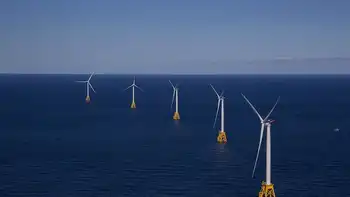
Manitoba Hydro has unveiled its first wind monitoring facility near Minnedosa, one of seven sites that will gather specific information about wind conditions in the province. The wind monitoring process will assist in determining the best location for potential future wind turbines for generating electricity.

Premier Gary Doer, Minister of Energy, Science and Technology Tim Sale, and Bob Brennan, President and CEO of Manitoba Hydro participated in the official unveiling of the 60 metre wind monitoring tower, located just south west of Minnedosa, along highway 10.

"Our government recognizes that the development of clean energy sources benefits the environment while providing economic development opportunities for our province," said Doer. "We congratulate Manitoba Hydro for having the vision to examine wind power generation and the benefits it brings with it. The corporation's leadership reinforces Manitoba's reputation as a leader in the development of clean energy."

"Wind power generation represents a promising opportunity for Manitoba and for the future," said Tim Sale, Minister responsible for Manitoba Hydro. "These monitoring sites will provide us with the information to make informed decisions about the future of wind power in Manitoba. We look forward to the results as we continue to develop and build upon our clean energy resources."

Hydro President and CEO Bob Brennan said that the utility is interested in exploring the potential for wind energy to add to its portfolio of energy supplies serving Manitobans. "Wind production complements our hydroelectric system, particularly in low water years and we want to assess the economic and technical issues of utilizing renewable wind power to provide an additional source of electricity production."

The tower will gather weather data for a period of at least a year. Mounted on it are five anonometers to record wind speed data at different heights, as well as three wind vanes, one barometer and one temperature gauge. The weather data is logged on an ongoing basis and downloaded daily for analysis. Consistent, high wind speed is the critical element in assessing the suitability of any particular location for placement of a wind turbine.

Modern wind turbines are sized to produce about .66 to 2.5 megawatts of electricity, and are usually clustered in "wind farms" made up of 10 to 300 turbines. A one-megawatt wind turbine produces enough electrical energy to supply about 250 residences.

A second monitoring site near Grandview is expected to be operational by April 12. The land acquisition phase for the remaining five sites is underway, with all the towers expected to be up and running by June.

Related News
U.S. Launches $250 Million Program To Strengthen Energy Security For Rural Communities

DOE RMUC Cybersecurity Program supports rural, municipal, and small investor-owned utilities with grants, technical assistance, grid resilience, incident response, workforce training, and threat intelligence sharing to harden energy systems and protect critical infrastructure.


Key Points

A $250M DOE program providing grants to boost rural and municipal utilities' cybersecurity and incident response.

✅ Grants and technical assistance for grid security

✅ Enhances incident response and threat intel sharing

✅ Builds cybersecurity workforce in rural utilities


The U.S. Department of Energy (DOE) today issued a Request for Information (RFI) seeking public input on a new $250 million program to strengthen the cybersecurity posture of rural, municipal, and small investor-owned electric utilities.

Funded by President Biden’s Bipartisan Infrastructure Law and broader clean energy funding initiatives, the Rural and Municipal Utility Advanced Cybersecurity Grant and Technical Assistance (RMUC) Program will help eligible utilities harden energy systems, processes, and assets; improve incident response capabilities; and increase cybersecurity skills in the utility workforce. Providing secure, reliable power to all Americans, with a focus on equity in electricity regulation across communities, will be a key focus on the pathway to achieving President Biden’s goal of a net-zero carbon economy by 2050. 

“Rural and municipal utilities provide power for a large portion of low- and moderate-income families across the nation and play a critical role in ensuring the economic security of our nation’s energy supply,” said U.S. Secretary of Energy Jennifer M. Granholm. “This new program reflects the Biden Administration's commitment to improving energy reliability and connecting our nation’s rural communities to resilient energy infrastructure and the transformative benefits that come with it.” 

Nearly one in six Americans live in a remote or rural community. Utilities in these communities face considerable obstacles, including difficulty recruiting top cybersecurity talent, inadequate infrastructure, as the aging U.S. power grid struggles to support new technologies, and lack of financial resources needed to modernize and harden their systems. 

The RMUC Program will provide financial and technical assistance to help rural, municipal, and small investor-owned electric utilities improve operational capabilities, increase access to cybersecurity services, deploy advanced cyber security technologies, and increase participation of eligible entities in cybersecurity threat information sharing programs and coordination with federal partners initiatives. Priority will be given to eligible utilities that have limited cybersecurity resources, are critical to the reliability of the bulk power system, or those that support our national defense infrastructure. 

The Office of Cybersecurity, Energy Security, and Emergency Response (CESER), which advances U.S. energy security objectives, will manage the RMUC Program, providing $250 million dollars in BIL funding over five years. To help inform Program implementation, DOE is seeking input from the cybersecurity community, including eligible utilities and representatives of third parties and organizations that support or interact with these utilities. The RFI seeks input on ways to improve cybersecurity incident preparedness, response, and threat information sharing; cybersecurity workforce challenges; risks associated with technologies deployed on the electric grid; national-scale initiatives to accelerate cybersecurity improvements in these utilities; opportunities to strengthen partnerships and energy security support efforts; the selection criteria and application process for funding awards; and more. 


Related News

View more

The Cool Way Scientists Turned Falling Raindrops Into Electricity

Raindrop Triboelectric Energy Harvesting converts falling water into electricity using Teflon (PTFE) on indium tin oxide and an aluminum electrode, forming a transient water bridge; a low frequency nanogenerator for renewable, static electricity harvesting.


Key Points

A method using PTFE, ITO, and an aluminum electrode to turn raindrop impacts into low frequency electrical power.

✅ PTFE on ITO boosts charge transfer efficiency.

✅ Water bridge links electrodes for rapid discharge.

✅ Low frequency output suits continuous energy harvesting.


Scientists at the City University of Hong Kong have used a Teflon-coated surface and a phenomenon called triboelectricity to generate a charge from raindrops. “Here we develop a device to harvest energy from impinging water droplets by using an architecture that comprises a polytetrafluoroethylene [Teflon] film on an indium tin oxide substrate plus an aluminium electrode,” they explain in their new paper in Nature as a step toward cheap, abundant electricity in the long term.

Triboelectricity itself is an old concept. The word means “friction electricity”—from the Greek tribo, to rub or wear down, which is why a diatribe tires you out—and dates back a long, long time. Static electricity is the most famous kind of triboelectric, and related work has shown electricity from the night sky can be harvested as well in niche setups. In most naturally occurring kinds, scientists have studied triboelectric in order to avoid its effects, like explosions inside of grain silos or hospital workers touching off pure oxygen. (Blowing sand causes an electric field, and NASA even worries about static when astronauts eventually land on Mars.)

One of the most studied forms of intentional and useful triboelectric is in systems such as ocean wave generators where the natural friction of waves meets nanogenerators of triboelectric energy. These even already use Teflon, which has natural conductivity that makes it ideal for this job. But triboelectricity is chaotic, and harnessing it generally involves a bunch of complicated, intersecting variables that can vary with the hourly weather. Promises of static electricity charging devices have often been, well, so much hot, sandy wind.

The scientists at City University of Hong Kong used triboelectric ideas to turn falling raindrops into energy. They say previous versions of the same idea were not very efficient, with materials that didn’t allow for high-fidelity transfer of electrical charge. (Many sources of renewable energy aren’t yet as efficient to turn into power, both because of developing technology and because their renewability means even less efficient use could be better than, for example, fossil fuels, and advances in renewable energy storage could help.)

“[A]chieving a high density of electrical power generation is challenging,” the team explains in its paper. “Traditional hydraulic power generation mainly uses electromagnetic generators that are heavy, bulky, and become inefficient with low water supply.” Diversifying how power is generated by water sources such as oceans and rivers is good for the existing infrastructure as well as new installations.

The research team found that as simulated raindrops fell on their device, the way the water accumulated and spread created a link between their two electrodes, one Teflon-coated and the other aluminum. This watery de facto wire link closes the loop and allows accumulated energy to move through the system. Because it’s a mechanical setup, it’s not limited to salty seawater, and because the medium is already water, its potential isn’t affected by ambient humidity either.

Raindrop energy is very low frequency, which means this tech joins many other existing pushes to harvest continuously available, low frequency natural energy, including underwater 'kites' that exploit steady currents. To make an interface that increases “instantaneous power density by several orders of magnitude over equivalent devices,” as the researchers say they’ve done here, could represent a major step toward feasibility in triboelectric generation.


Related News

View more

Can California Manage its Solar Boom?

California Duck Curve highlights midday solar oversupply and steep evening peak demand, stressing grid stability. Solutions include battery storage, demand response, diverse renewables like wind, geothermal, nuclear, and regional integration to reduce curtailment.


Key Points

A mismatch between midday solar surplus and evening demand spikes, straining the grid without storage and flexibility.

✅ Midday solar oversupply forces curtailment and wasted clean energy.

✅ Evening ramps require fast, fossil peaker plants to stabilize load.

✅ Batteries, demand response, regional trading flatten the curve.


California's remarkable success in adopting solar power, including a near-100% renewable milestone, has created a unique challenge: managing the infamous "duck curve." This distinctive curve illustrates a growing mismatch between solar electricity generation and the state's energy demands, creating potential problems for grid stability and ultimately threatening to slow California's progress in the fight against climate change.


The Shape of the Problem

The duck curve arises from a combination of high solar energy production during midday hours and surging energy demand in the late afternoon and evening when solar power declines. During peak solar hours, the grid often has an overabundance of electricity, and curtailments are increasing as a result, while as the sun sets, demand surges when people return home and businesses ramp up operations. California's energy grid operators must scramble to make up this difference, often relying on fast-acting but less environmentally friendly power sources.


The Consequences of the Duck Curve

The increasing severity of the duck curve has several potential consequences for California:

  • Grid Strain: The rapid ramp-up of power sources to meet evening demand puts significant strain on the electrical grid. This can lead to higher operational costs and potentially increase the risk of blackouts during peak demand times.
  • Curtailed Energy: To avoid overloading the grid, operators may sometimes have to curtail excess solar energy during midday, as rising curtailment reports indicate, essentially wasting clean electricity that could have been used to displace fossil fuel generation.
  • Obstacle to More Solar: The duck curve can make it harder to add new solar capacity, as seen in Alberta's solar expansion challenges, for fear of further destabilizing the grid and increasing the need for fossil fuel-based peaking plants.


Addressing the Challenge

California is actively seeking solutions to mitigate the duck curve, aligning with national decarbonization pathways that emphasize practicality. Potential strategies include:

  • Energy Storage: Deploying large-scale battery storage can help soak up excess solar electricity during the day and release it later when demand peaks, smoothing out the duck curve.
  • Demand Flexibility: Encouraging consumers to shift their energy use to off-peak hours through incentives and smart grid technologies can help reduce late-afternoon surges in demand.
  • Diverse Power Sources: While solar is crucial, a balanced mix of energy sources, including geothermal, wind, and nuclear, can improve grid stability and reduce reliance on rapid-response fossil fuel plants.
  • Regional Cooperation: Integrating California's grid with neighboring states can aid in balancing energy supply and demand across a wider geographical area.


The Ongoing Solar Debate

The duck curve has become a central point of debate about the future of California's energy landscape. While acknowledging the challenge, solar advocates argue for continued expansion, backed by measures like a bill to require solar on new buildings, emphasizing the urgent need to transition away from fossil fuels. Grid operators and some utility companies call for a more cautious approach, emphasizing grid reliability and potential costs if the problem isn't effectively managed.


Balancing California's Needs and its Green Ambitions

Finding the right path forward is essential; it will determine whether California can continue to lead the way in solar energy adoption while ensuring a reliable and affordable electricity supply. Successfully navigating the duck curve will require innovation, collaboration, and a strong commitment to building a sustainable energy system, as wildfire smoke impacts on solar continue to challenge generation predictability.


Related News

View more

Hinkley C nuclear reactor roof lifted into place

Hinkley Point C dome lift marks a nuclear reactor milestone in Somerset, as EDF used Big Carl crane to place a 245-tonne steel roof, enabling 2027 startup amid costs, delays, and precision indoor welding.


Key Points

A 245-tonne dome lifted onto Hinkley Point C's first reactor, finishing the roof and enabling fit-out for a 2027 startup.

✅ 245-tonne steel dome lifted by Big Carl onto 44m-high reactor

✅ Indoor welding avoided weather defects seen at Flamanville

✅ Cost now £33bn; first power targeted by end of 2027


Engineers have lifted a steel roof onto a building which will house the first of two nuclear reactors at Hinkley Point in Somerset.

Hundreds of people helped with the delicate operation to get the 245-tonne steel dome into position.

It means the first reactor can be installed next year, ready to be switched on in June 2027.

Engineers at EDF said the "challenging job" was completed in just over an hour.

They first broke the ground on the new nuclear station in March 2017. Now, some 10,000 people work on what is Europe's largest building site.

Yet many analysts note that Europe is losing nuclear power even as demand for reliable energy grows.

They have faced delays from Covid restrictions and other recent setbacks, and the budget has doubled to £33bn, so getting the roof on the first of the two reactor buildings is a big deal.

EDF's nuclear island director Simon Parsons said it was a "fantastic night".

"Lifting the dome into place is a celebration of all the work done by a fantastic team. The smiles on people's faces this morning were something else.

"Now we can get on with the fitting of equipment, pipes and cables, including the first reactor which is on site and ready to be installed next year."

Nuclear minister Andrew Bowie hailed the "major milestone" in the building project, citing its role in the UK's green industrial revolution ambitions.

He said: "This is a key part of the UK Government's plans to revitalise nuclear."

But many still question whether Hinkley Point C will be worth all the money, especially after Hitachi's project freeze in Britain, with Roy Pumfrey of the Stop Hinkley campaign describing the project as "shockingly bad value".


Why lift the roof on?

The steel dome is bigger than the one on St Paul's Cathedral in London.

To lift it onto the 44-metre-high reactor building, they needed the world's largest land-based crane, dubbed Big Carl by engineers.

So why not just build the roof on top of the building?

The answer lies in a remote corner of Normandy in France, near a village called Flamanville.

EDF has been building a nuclear reactor there since 2007, ten years before they started in west Somerset.

The project is now a decade behind schedule and has still not been approved by French regulators.

Why? Because of cracks found in the precision welding on the roof of the reactor building.

In nuclear-powered France, they built the roof in situ, out in the open. 

Engineers have decided welding outside, exposed to wind and rain, compromised the high standards needed for a nuclear reactor.

So in Somerset they built a temporary workshop, which looks like a fair sized building itself. All the welding has been done inside, and then the completed roof was lifted into place.


Is it on time or on budget?

No, neither. When Hinkley C was first approved a decade ago, EDF said it would cost £14bn.

Four years later, in 2017, they finally started construction. By now the cost had risen to £19.5bn, and EDF said the plant would be finished by the end of 2025.

Today, the cost has risen to £33bn, and it is now hoped Hinkley C will produce electricity by the end of 2027.

"Nobody believes it will be done by 2027," said campaigner Roy Pumfrey.

"The costs keep rising, and the price of Hinkley's electricity will only get dearer," they added.

On the other hand, the increase in costs is not a problem for British energy bill payers, or the UK government.

EDF agreed to pay the full cost of construction, including any increases.

When I met Grant Shapps, then the UK Energy Secretary, at the site in April, he shrugged off the cost increases.

He said: "I think we should all be rather pleased it is not the British tax payer - it is France and EDF who are paying."

In return, the UK government agreed a set rate for Hinkley's power, called the Strike Price, back in 2013. The idea was this would guarantee the income from Hinkley Point for 35 years, allowing investors to get their money back.


Will it be worth the money?

Back in 2013, the Strike Price was set at £92.50 for each megawatt hour of power. At the time, the wholesale price of electricity was around £50/MWh, so Hinkley C looked expensive.

But since then, global shocks like the war in Ukraine have increased the cost of power substantially, and advocates argue next-gen nuclear could deliver smaller, cheaper, safer designs.


Related News

View more

Bangladesh develops nuclear power with IAEA Assistance

Bangladesh Rooppur Nuclear Power Plant advances nuclear energy with IAEA support and ROSATOM construction, boosting energy security, baseload capacity, and grid reliability; 2400 MW units aid development, regulatory compliance, and newcomer infrastructure milestones.


Key Points

A 2400 MW nuclear project in Rooppur, built with IAEA guidance and ROSATOM, to boost Bangladesh's reliable power.

✅ Two units totaling 2400 MW for stable baseload supply

✅ IAEA Milestones and INIR reviews guide safe deployment

✅ ROSATOM builds; national regulator strengthens oversight


The beginning of construction at Bangladesh’s first nuclear power reactor on 30 November 2017 marked a significant milestone in the decade-long process to bring the benefits of nuclear energy to the world’s eighth most populous country. The IAEA has been supporting Bangladesh on its way to becoming the third ‘newcomer’ country to nuclear power in 30 years, following the United Arab Emirates in 2012 and Belarus in 2013.

Bangladesh is in the process of implementing an ambitious, multifaceted development programme to become a middle-income country by 2021 and a developed country by 2041. Vastly increased electricity production, with the goal of connecting 2.7 million more homes to the grid by 2021, is a cornerstone of this push for development, and nuclear energy will play a key role in this area, said Mohammad Shawkat Akbar, Managing Director of Nuclear Power Plant Company Bangladesh Limited. Bangladesh is also working to diversify its energy supply to enhance energy security, reduce its dependence on imports and on its limited domestic resources, he added.

#google# In the region, India's nuclear program is taking steps to get back on track, underscoring broader momentum.

“Bangladesh is introducing nuclear energy as a safe, environmentally friendly and economically viable source of electricity generation,” said Akbar.  The plant in Rooppur, 160 kilometres north-west of Dhaka, will consist of two units, with a combined power capacity of 2400 MW(e). It is being built by a subsidiary of Russia’s State Atomic Energy Corporation ROSATOM. The first unit is scheduled to come online in 2023 and the second in 2024, reflecting progress similar to the UK's latest nuclear power station developments.  “This project will enhance the development of the social, economic, scientific and technological potential of the country,” Akbar said.

The country’s goal of increased electricity production via nuclear energy will soon be a reality, Akbar said. “For 60 years, Bangladesh has had a dream of building its own nuclear power plant. The Rooppur Nuclear Power Plant will provide not only a stable baseload of electricity, but it will enhance our knowledge and allow us to increase our economic efficiency.


Milestones for nuclear

Bangladesh is among around 30 countries that are considering, planning or starting the introduction of nuclear power, with milestones at nuclear projects worldwide offering context for this progress. The IAEA assists them in developing their programmes through the Milestones Approach — a methodology that provides guidance on working towards the establishment of nuclear power in a newcomer country, including the associated infrastructure. It focuses on pointing out gaps, if any, in countries’ progress towards the introduction of nuclear power.

The IAEA has been supporting Bangladesh in developing its nuclear power infrastructure, including in establishing a regulatory framework and developing a radioactive waste-management system. This support has been delivered under the IAEA technical cooperation programme and is partially funded through the Peaceful Uses Initiative.

Nuclear infrastructure is multifaceted, containing governmental, legal, regulatory and managerial components, in addition to the physical infrastructure. The Milestones Approach consists of three phases, with a milestone to be reached at the end of each.

The first phase involves considerations before a decision is taken to start a nuclear power programme and concludes with the official commitment to the programme. The second phase entails preparatory work for the contracting and construction of a nuclear power plant, as seen in Bulgaria's nuclear project planning, ending with the commencement of bids or contract negotiations for the construction. The final phase includes activities to implement the nuclear power plant, such as the final investment decision, contracting and construction. The duration of these phases varies by country, but they typically take between 10 and 15 years.

“The IAEA Milestones Approach is a guiding document and the Integrated Work Plan (IWP) is the important means of bringing all of the stakeholders in Bangladesh together to ensure the fulfilment of all safety, security, and safeguards requirements of the Rooppur NPP project,” said Akbar. “This IWP enabled Bangladesh to develop a holistic approach to implementing IAEA guidance as well as cooperating with national stakeholders and other bilateral partners towards the development of a national nuclear power programme.”

When completed, the two units of the Rooppur Nuclear Power Plant will have a combined power capacity of 2400 MW(e). (Photo: Arkady Sukhonin/Rosatom)


INIR Mission

The Integrated Nuclear Infrastructure Review (INIR) is a holistic peer review to assist Member States in assessing the status of their national infrastructure for introducing nuclear power. The IAEA completed its first INIR mission to Bangladesh in November 2011, making recommendations on how to develop a plan to establish the nuclear infrastructure. Nearly five years later, in May 2016, a follow-up mission was conducted, which noted the progress made — Bangladesh had established a nuclear regulatory body, had chosen a site for the power plant and had completed site characterization and environmental impact assessment.

“The IAEA and other bodies, including those from experienced countries, can and do provide support, but the responsibility for safety and security will lie with the Government,” said Dohee Hahn, Director of the IAEA’s Division of Nuclear Power, at the ceremony for the pouring of the first nuclear safety-related concrete at Rooppur on 30 November 2017. “The IAEA stands ready to continue supporting Bangladesh in developing a safe, secure, peaceful and sustainable nuclear power programme.”

Supporting Infrastructure for Introducing a Nuclear Power Plant in Bangladesh: the IAEA Assists with the Review of Regulatory Guidance on Site Evaluation

How the IAEA Assists Newcomer Countries in Building Their Way to Sustainable Energy

"Exciting times for nuclear power," IAEA Director General Says


Related News

View more

Are we ready for electric tractors?

Electric tractors are surging, with battery-powered models, grid-tethered JD GridCON, and solar-charged designs delivering autonomous guidance, high efficiency, low maintenance, quiet operation, robust PTO compatibility, and durability for sustainable, precision agriculture.


Key Points

Electric tractors use battery or grid power to run implements with high efficiency, low noise, and minimal maintenance.

✅ Battery, grid-tethered, or solar-charged power options

✅ Lower operating costs, reduced noise, fewer moving parts

✅ Autonomous guidance, PTO compatibility, and quick charging


Car and truck manufacturers are falling off the fossil fuel bandwagon in droves and jumping on the electric train.

Now add tractors to that list.

Every month, another e-tractor announcement comes across our desks. Environmental factors drive this trend, along with energy efficiency, lower maintenance, lower noise level and motor longevity, and even autonomous weed-zapping robots are emerging.

Let’s start with the Big Daddy of them all, the 400 horsepower JD GridCON. This tractor is not a hybrid and it has no hassle with batteries. The 300 kilowatts of power come to the GridCON through a 1,000 metre extension cord connected to the grid, including virtual power plants or an off-field generator. A reel on the tractor rolls the cable in and out. The cable is guided by a robotic arm to prevent the tractor from running over it.

It uses a 700 volt DC bus for electric power distribution onboard and for auxiliary implements. It uses a cooling infrastructure for off-board electrical use. Total efficiency of the drive train is around 85 percent. A 100 kilowatt electric motor runs the IVT transmission. There’s an auxiliary outlet for implements powered by an electric motor up to 200 kW.

GridCON autonomously follows prescribed routes in the field at speeds up to 12 m.p.h., leveraging concepts similar to fleet management solutions for coordination. It can also be guided manually with a remote control when manoeuvring the tractor to enter a field. Empty weight is 8.5 tonnes, which is about the same as a 6195R but with double the power. Deere engineers say it will save about 50 percent in operating costs compared to battery powered tractors.

Solectrac
Two California-built all-battery powered tractors are finally in full production. While the biggest is only 40 horsepower, these are serious tractors that may foretell the future of farm equipment.

The all-electric 40 h.p. eUtility tractor is based on a 1950s Ford built in India. Solectrac is able to buy the bare tractor without an engine, so it can create a brand new electric tractor with no used components for North American customers. One tractor has already been sold to a farmer in Ontario. | Solectrac photo
The tractors are built by Solectrac, owned by inventor Steve Heckeroth, who has been doing electric conversions on cars, trucks, race cars and tractors for 25 years. He said there are three main reasons to take electric tractors seriously: simplicity, energy efficiency and longevity.

“The electric motor has only one moving part, unlike small diesel engines, which have over 300 moving parts,” Heckeroth said, adding that Solectrac tractors are not halfway compromise hybrids but true electric machines that get their power from the sun or the grid, particularly in hydro-rich regions like Manitoba where clean electricity is abundant, whichever is closest.

Neither tractor uses hydraulics. Instead, Heckeroth uses electric linear actuators. The ones he installs provide 1,000 pounds of dynamic load and 3,000 lb. static loads. He uses linear actuators because they are 20 times more efficient than hydraulics.

The eUtility and eFarmer are two-wheel drive only, but engineers are working on compact four-wheel drive electric tractors. Each tractor carries a price tag of US$40,000. Because production numbers are still limited, both tractors are available on a first to deposit basis. One e-tractor has already been sold and delivered to a farmer in Ontario.

The eUtility is a 40 h.p. yard tractor that accepts all Category 1, 540 r.p.m. power take-off implements on the rear three-point hitch, except those requiring hydraulics. An optional hydraulic pump can be installed for $3,000 for legacy implements that require hydraulics. For that price, a dedicated electricity believer might instead consider converting the implement to electric.

“The eUtility is actually a converted new 1950s Ford tractor made in a factory in India that was taken over after the British were kicked out in 1948,” Heckeroth said.

“I am able to buy only the parts I need and then add the motor, controller and batteries. I had to go to India because it’s one of the few places that still makes geared transmissions. These transmissions work the best for electric tractors. Gear reduction is necessary to keep the motor in the most efficient range of about 2,000 r.p.m. It has four gears with a high and low range, which covers everything from creep to 25 m.p.h.

On his eUtility, a single 30 kWh onboard battery pack provides five to eight hours of run time, depending on loads. It can carry two battery packs. The Level 2 quick charge gives an 80 percent charge for one pack in three hours. Two packs can receive a full charge overnight with support from home batteries like Powerwall for load management.

The integrated battery management system protects the batteries during charging and discharging, while backup fuel cell chargers can keep storage healthy in remote deployments. Batteries are expected to last about 10 years, depending on the number of operating cycles and depth of discharge.

Exchangeable battery packs are available to keep the tractor running through the full work day. These smaller 20 kWh packs can be mounted on the rear hitch to balance the weight of the optional front loader or carried in the optional front loader to balance the weight of heavy implements mounted on the rear hitch.

The second tractor is the 20 kWh eFarmer, which features high visibility for row crop farms at a fraction of the cost of diesel fuel tractors. The 30 h.p. eFarmer is basically just a tube frame with the necessary components attached. A simple joystick controls steering, speed and brakes.

Harvest
Introduced to the North American public this spring by Motivo Engineering in California, the Harvest tractor is simply a big battery on wheels. The complex electrical system takes power in through a variety of renewable energy sources, such as solar panels with smart solar inverters enabling optimized PV integration, water wheels, wind turbines or even intermittent electrical grids. It stores electrical power on-board and delivers it when and where required, putting power out to a large number of electrical tools and farm implements. It operates in AC or DC modes.


Related News

View more

Sign Up for Electricity Forum’s Newsletter

Stay informed with our FREE Newsletter — get the latest news, breakthrough technologies, and expert insights, delivered straight to your inbox.

Electricity Today T&D Magazine Subscribe for FREE

Stay informed with the latest T&D policies and technologies.
  • Timely insights from industry experts
  • Practical solutions T&D engineers
  • Free access to every issue

Download the 2025 Electrical Training Catalog

Explore 50+ live, expert-led electrical training courses –

  • Interactive
  • Flexible
  • CEU-cerified