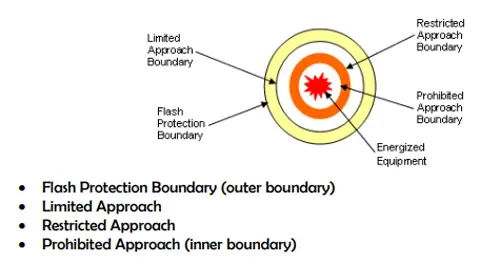
NFPA 70E Training - 2027 Edition - Arc Flash and Electrical Safety Course
Our customized live online or in‑person group training can be delivered to your staff at your location.

- Live Online
- 6 hours Instructor-led
- Group Training Available
Regular Price:
$199
Coupon Price:
$149
Brady Road Landfill Gas Project seeks DBFO bidders for biogas and methane capture, flaring, and waste-to-energy solutions, including electricity generation, heat recovery, and fleet fuel, cutting greenhouse gases and advancing sustainability in Winnipeg.
What You Need to Know
A city DBFO to capture and flare landfill biogas, enabling power, heat, or fuel uses and cutting methane emissions.
- 20-year DBFO contract to collect and flare Brady Road gas
- Flexible end-uses: power, heat, or vehicle fuel
- Safety-critical methane capture and contaminant cleanup
- Potential U of M partnership to offset gas use
The City of Winnipeg is proposing a landfill gas and resource recovery project that could turn thousands of tonnes of harmful greenhouse gases into a renewable energy resource.
The city is currently asking for bidders to design, build, finance and operate a project at the Brady Road landfill to collect and flare gas for a 20-year term.
Proposals from companies wanting to use the gas from the landfill, similar to the Toronto biogas plan approach seen elsewhere, are being accepted until February 26, after which the city will have an evaluation period.
“There’s a number of ideas out there. Really the whole idea of the proposal is that we want the market to tell us what they think is the best thing to do,” explained Darryl Drohomerski, manager of the solid wastes department for the City of Winnipeg.
“We’re not the experts in it at all, we’re putting it out so that companies bidding on it would have the expertise to do that work.”
The requirements of the proposal are flexible enough to allow bidders to use the gas as they wish, so long as their design is able to flare 1,000 standard cubic feet per metre for their 20-year term. The technology to extract the gas from the landfill is similar to drilling oil wells and is essentially the same with each company. What separates the bidders is what they would like to do with the gas once it has been extracted, as seen at the Cache Creek landfill project example, where different end uses showcase varied approaches.
“The landfill needs to be engineered with a series of gas wells extracting the biogas as it is produced,” explained Jan Oleszkiewicz, professor of civil engineering at the University of Manitoba.
“The gas may then be used to run generators directly or can be used as it is cleaned from contaminants.”
Oleszkiewicz further explained that the procedure is fairly complex and significantly adds to the costs of operating a landfill.
“Careful operation is necessary as this gas is explosive when mixed with air,” said Oleszkiewicz. Two of the most standard uses for the gas are to convert it into electricity or into fuel for heating buildings.
“A company could build a generating station to produce electricity, or you could do things like convert it into a gas like clean fuel from waste that you would use to run a fleet of buses or something like that,” said Drohoerski.
The gas can be easily converted into electricity, as demonstrated by a Montana landfill project that powers homes, although it would not be enough to fill the high energy demand posed by a large city such as Winnipeg said Oleskiewicz.
“However biogas extraction from landfills appears to be the right thing to do due to the current concern for reducing the amount of greenhouse-effect producing gases released to the atmosphere, with examples like a Sudbury green energy project showing the benefits,” said Oleszkiewicz. Bidders also have the option proposing a system of recovering and reusing material destined for disposal. “There are a number of new firms out there that will do things like take all of your garbage and convert it into an energy source, including Plasco waste-to-power demonstrations that cities have piloted, or a heat source that... may be beneficial to a city at large over what we’re doing right now,” said Drohoerski.
“In the U.S., for example, there are a lot of landfills in large cities that have what’s called a waste-to-energy generation plant in place.... All the garbage is put into a giant incinerator and the garbage is burned, and then is converted into electricity.”
The University of Manitoba has expressed interest in partnering with the City of Winnipeg on the project.
“We could offset almost half of the university’s natural gas consumption. It’s amazing. That project will pay for itself in less than five years. It’s just an incredible opportunity for saving money,” said Mike Ferley, U of M energy advocate, in an interview with the Manitoban in October 2008.
Ferley said that working on this project would improve the university’s sustainability drastically. “This is a $15 million project and if we were to fund (the project) out of endowment funds we’d be looking very green. Super green.”



Similar projects have been done in cities across Canada, such as Vancouver, Edmonton and Calgary.
The city is hoping for construction to begin this September, though some form of operation is predicted to start earlier in the year.
Related News
Related News

EasyPower Webinars - August and September Schedule
EasyPower Webinars deliver expert training on electrical power systems, covering arc flash, harmonics, grounding, overcurrent…
View more
Ukraine's parliament backs amendments to electricity market law
Ukraine Electricity Market Price Caps empower the regulator, the National Commission, to set marginal prices…
View more
Hydro One reports $1.1B Q2 profit boosted by one-time gain due to court ruling
Hydro One Q2 Earnings surge on a one-time gain from a court ruling on a…
View more
Electricity prices rise more than double EU average in first half of 2021
Estonia energy prices 2021 show sharp electricity hikes versus the EU average, mixed natural gas…
View more
Heat Exacerbates Electricity Struggles for 13,000 Families in America
Energy Poverty in Extreme Heat exposes vulnerable households to heatwaves, utility shutoffs, and unreliable grid…
View more
Experts Question Quebec's Push for EV Dominance
Quebec EV transition plan aims for 2 million electric vehicles by 2030 and bans new…
View more
Sign Up for Electricity Forum’s Newsletter
Stay informed with our FREE Newsletter — get the latest news, breakthrough technologies, and expert insights, delivered straight to your inbox.
Electricity Today T&D Magazine Subscribe for FREE

Stay informed with the latest T&D policies and technologies.
- Timely insights from industry experts
- Practical solutions T&D engineers
- Free access to every issue

