NFPA 70E Training - 2027 Edition - Arc Flash Safety Compliance
Our customized live online or in‑person group training can be delivered to your staff at your location.

- Live Online
- 6 hours Instructor-led
- Group Training Available
Regular Price:
$199
Coupon Price:
$149
WASHINGTON
—
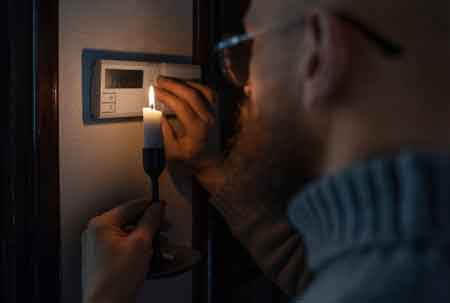
Winter Storm Fern swept across the United States, prompting heavy snow, freezing rain, and power outages that left more than 1 million electricity customers without power across multiple regions.
A powerful winter storm sweeping large portions of the United States left more than one million electricity customers without power on Sunday as heavy snow, ice, and frigid temperatures battered infrastructure and strained grid operations, echoing vulnerabilities previously exposed during major cold-weather failures such as the Texas power system collapse.
At A Glance
• Winter Storm Fern knocks out power for over one million US customers
• Snow and ice cause line damage and complicate restoration efforts
• Transportation disruptions escalate as travel infrastructure deteriorates
Storm Fern Strains Electrical Infrastructure Nationwide
From Texas through the Midwest and into the Northeast, Winter Storm Fern delivered prolonged icy conditions that placed extraordinary stress on electrical systems. Ice accumulation and falling trees repeatedly brought down power lines, interrupting distribution networks and plunging homes and businesses into darkness.
Officials confirmed outages across the South, Midwest, and Eastern Seaboard, with restoration crews operating in hazardous conditions. In Washington, DC, residents woke to subzero temperatures, ice-covered streets, and widespread reminders of how vulnerable power infrastructure can be during extreme cold, conditions similar in scale to recent events where a bomb cyclone left hundreds of thousands without power
“The weight of the ice brought down lines in several districts,” said a regional energy official. “We are working day and night to restore service where it is safe to do so.”
Ice and Snow Slow Power Restoration Efforts
Repair crews faced significant obstacles reaching damaged lines as snow-covered roadways and fallen trees blocked access routes. In major cities such as New York and Philadelphia, transit disruptions and debris made access to key distribution hubs more difficult. Outside urban areas, rural communities experienced longer restoration times as utilities prioritized high-density outage zones.
“With conditions this severe, safety is our top priority,” said a utility operations manager. “We have to ensure crews can reach sites safely and that line repairs will hold once power is reenergized.”
Meteorologists warned that temperatures are expected to remain below freezing for several days, limiting repair windows and keeping electricity and heating demand elevated across affected regions, a pattern consistent with broader trends documented during the wave of nationwide electricity outages.
Daily Life Disrupted as Travel and Services Falter
The storm’s impact extended well beyond power outages. Airports from Chicago to Atlanta experienced cascading delays and cancellations as icy runways grounded flights and disrupted operations. Hundreds of flights were delayed or canceled, turning major transportation hubs into bottlenecks.
Community warming centers opened in several cities to assist residents without heat. In suburban and rural areas, emergency responders urged residents to limit outdoor exposure and to conserve generator fuel, warning of carbon monoxide risks when generators are used improperly.
School districts across multiple states shifted to remote learning or announced closures due to unsafe travel conditions and power outages in school buildings.
Utilities Mobilize Crews and Emergency Support
Electric utility providers deployed thousands of line workers from neighboring states to assist with restoration. Mutual aid agreements enabled the rapid deployment of specialized crews to restore critical transmission and distribution assets in the hardest hit areas.
“We have crews on the ground and additional teams arriving each hour to accelerate restoration,” a utility spokesperson said. “Public safety remains the priority as we work toward full service restoration.”
State emergency management agencies coordinated closely with utilities and local governments. Several governors declared states of emergency to unlock funding, resources, and logistical support for restoration and public safety operations.
Electricity Demand Climbs as Cold Intensifies
Sustained cold drove electricity demand sharply higher as residents relied heavily on heating systems. Low temperatures also contributed to generation outages at some facilities, further tightening supply during peak demand periods.
In certain regions, grid operators reported that reserve margins narrowed significantly as demand surged. Analysts noted that the storm’s broad geographic reach strained resources more than localized winter events, reinforcing concerns about how extreme weather is increasingly affecting the power grid.
Outlook Remains Uncertain as Storm Moves East
As Winter Storm Fern continues eastward, energy officials expect high demand and the potential for additional outages. Residents are being urged to prepare for extended service interruptions and to follow guidance issued by local utilities.
Utility crews and emergency workers continue round-the-clock restoration efforts as the nation confronts one of the most severe and widespread winter storms in recent years.
Related News
Iran turning thermal power plants to combined cycle to save energy
Iran Combined-Cycle Power Plants drive energy efficiency, cut greenhouse gases, and expand megawatt capacity by…
View more
Nuclear helps Belgium increase electricity exports in 2019
Belgium Energy Mix 2019 shows strong nuclear output, rising offshore wind, net electricity exports, and…
View more

Ontario pitches support for electric bills
Ontario CEAP Program provides one-time electricity bill relief for residential consumers via local utilities, supports…
View more
Heatwave Sparks Unprecedented Electricity Demand Across Eastern U.S
Eastern U.S. Heatwave Electricity Demand surges to record peak load, straining the power grid, lifting…
View more
Disrupting Electricity? This Startup Is Digitizing Our Very Analog Electrical System
Solid-State AC Switching reimagines electrification with silicon-based, firmware-driven controls, smart outlets, programmable circuit breakers, AC-DC…
View more
The nuclear power dispute driving a wedge between France and Germany
Franco-German Nuclear Power Divide shapes EU energy policy, electricity market reform, and decarbonization strategies, as…
View more
Sign Up for Electricity Forum’s Newsletter
Stay informed with our FREE Newsletter — get the latest news, breakthrough technologies, and expert insights, delivered straight to your inbox.
Electricity Today T&D Magazine Subscribe for FREE

Stay informed with the latest T&D policies and technologies.
- Timely insights from industry experts
- Practical solutions T&D engineers
- Free access to every issue

