Zambia, Tanzania, Kenya agree 400 MW power line

By Reuters


CSA Z463 Electrical Maintenance -

Our customized live online or in‑person group training can be delivered to your staff at your location.

  • Live Online
  • 6 hours Instructor-led
  • Group Training Available
Regular Price:
$249
Coupon Price:
$199
Reserve Your Seat Today
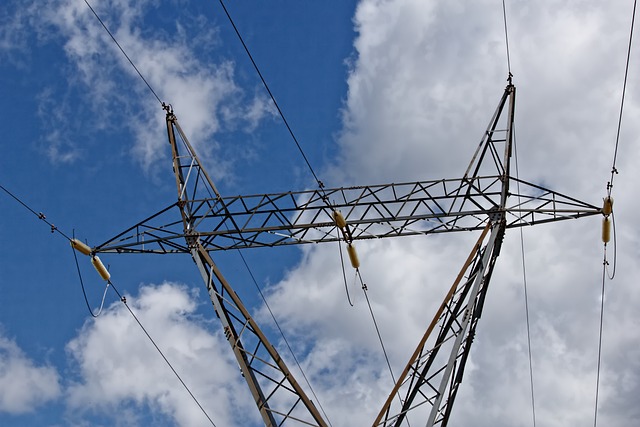
Zambia, Tanzania and Kenya signed an agreement recently to construct a 400-megawatt power inter-connector line linking the three African countries at a cost of $323 million.

The project is due to start in 2004 and be completed in 2006, said a statement released after the energy ministers of the three countries signed a memorandum of understanding in the Zambian capital Lusaka. The statement said the power line would link the Zambian town of Serenje with Mbeya in Tanzania and Nairobi in Kenya. Officials said power would be exported from Zambia to the other two countries.

"When the project is complete, the line will be capable of transferring up to 400 megawatts of power. Preparatory work on the project has started and feasibility studies will end by December 2003," the statement said.

"The three governments have committed themselves to the joint mobilisation of investment funds from both the private and public sector necessary for implementing the project," it added.

Zambia's energy minister George Mpombo told Reuters that the power line project was aimed at enhancing electricity trade and that it was also aimed at supporting communications and rural electrification in the three countries. "The World Bank has already agreed to provide some funds for the project and some of it will come from the private sector," Mpombo said.

Zambia has great potential in electricity generation and transmission because its large river network is suitable for power generation. The country exports power to South Africa, Zimbabwe, Botswana and the Democratic Republic of Congo.

Related News
Ontario Energy minister downplays dispute between auditor, electricity regulator

Ontario IESO Accounting Dispute highlights tensions over public sector accounting standards, auditor general oversight, electricity market transparency, KPMG advice, rate-regulated accounting, and an alleged $1.3B deficit understatement affecting Hydro bills and provincial finances.


Key Points

A PSAS clash between Ontario's auditor general and the IESO, alleging a $1.3B deficit impact and transparency failures.

✅ Auditor alleges deficit understated by $1.3B

✅ Dispute over PSAS vs US-style accounting

✅ KPMG support, transparency and co-operation questioned


The bad blood between the Ontario government and auditor general bubbled to the surface once again Monday, with the Liberal energy minister downplaying a dispute between the auditor and the Crown corporation that manages the province's electricity market, even as the government pursued legislation to lower electricity rates in the province.

Glenn Thibeault said concerns raised by auditor general Bonnie Lysyk during testimony before a legislative committee last week aren't new and the practices being used by the Independent Electricity System Operator are commonly endorsed by major auditing firms.

"(Lysyk) doesn't like the rate-regulated accounting. We've always said we've relied on the other experts within the field as well, plus the provincial controller," Thibeault said.

#google#

"We believe that we are following public sector accounting standards."

Thibeault said that Ontario Power Generation, Hydro One and many other provinces and U.S. states use the same accounting practices.

"We go with what we're being told by those who are in the field, like KPMG, like E&Y," he said.

But a statement from Lysyk's office Monday disputed Thibeault's assessment.

"The minister said the practices being used by the IESO are common in other jurisdictions," the statement said.

"In fact, the situation with the IESO is different because none of the six other jurisdictions with entities similar to the IESOuse Canadian Public Sector Accounting Standards. Five of them are in the United States and use U.S. accounting standards."

Lysyk said last week that the IESO is using "bogus" accounting practices and her office launched a special audit of the agency late last year after the agency changed their accounting to be more in line with U.S. accounting, following reports of a phantom demand problem that cost customers millions.

Lysyk said the accounting changes made by the IESO impact the province's deficit, understating it by $1.3 billion as of the end of 2017, adding that IESO "stalled" her office when it asked for information and was not co-operative during the audit.

Lysyk's full audit of the IESO is expected to be released in the coming weeks and is among several accounting disputes her office has been engaged in with the Liberal government over the past few years.

Last fall, she accused the government of purposely obscuring the true financial impact of its 25% hydro rate cut by keeping billions in debt used to finance that plan off the province's books. Lysyk had said she would audit the IESO because of its role in the hydro plan's complex accounting scheme.

"Management of the IESO and the board would not co-operate with us, in the sense that they continually say they're co-operating, but they stalled on giving us information," she said last week.

Terry Young, a vice-president with the IESO, said the agency has fully co-operated with the auditor general. The IESO opened up its office to seven staff members from the auditor's office while they did their work.

"We recognize the work that she's doing and to that end we've tried to fully co-operate," he said. "We've given her all of the information that we can."

Young said the change in accounting standards is about ensuring greater transparency in transactions in the energy marketplace.

"It's consistent with many other independent electricity system operators are doing," he said.

Lysyk also criticized IESO's accounting firm, KPMG, for agreeing with the IESO on the accounting standards. She was critical of the firm billing taxpayers for nearly $600,000 work with the IESO in 2017, compared to their normal yearly audit fee of $86,500.

KPMG spokeswoman Lisa Papas said the accounting issues that IESO addressed during 2017 were complex, contributing to the higher fees.

The accounting practices the auditor is questioning are a "difference of professional judgement," she said.

"The standards for public sector organizations such as IESO are principles-based standards and, accordingly, require the exercise of considerable professional judgement," she said in a statement.

"In many cases, there is more than one acceptable approach that is compliant with the applicable standards."

Progressive Conservative energy critic Todd Smith said the government isn't being transparent with the auditor general or taxpayers, aligning with calls for cleaning up Ontario's hydro mess in the sector.

"Obviously, they have some kind of dispute but the auditor's office is saying that the numbers that the government is putting out there are bogus.

Those are her words," he said. "We've always said that we believe the auditor general's are the true numbers for the
province of Ontario."

NDP energy critic Peter Tabuns said the Liberal government has decided to "play with accounting rules" to make its books look better ahead of the spring election, despite warnings that electricity prices could soar if costs are pushed into the future.


Related News

View more

Wind turbine firms close Spanish factories as Coronavirus restrictions tighten

Spain Wind Turbine Factory Shutdowns disrupt manufacturing as Vestas, Siemens Gamesa, and Nordex halt Spanish plants amid COVID-19 lockdowns, straining supply chains and renewables projects across Europe, with partial operations and maintenance continuing.


Key Points

COVID-19 lockdowns pause Spanish wind factories by Vestas, Siemens Gamesa, and Nordex, disrupting supply chains.

✅ Vestas, Siemens Gamesa, Nordex halt Spanish manufacturing

✅ Service and maintenance continue under safety protocols

✅ Supply chain and project timelines face delays in Europe


Europe’s largest wind turbine makers on Wednesday said they had shut down more factories in Spain, a major hub for the continent’s renewables sector, in response to an almost total lockdown in the country to contain the coronavirus outbreak as the Covid-19 crisis disrupts the sector.

Denmark’s Vestas, the world No.1, has suspended production at its two Spanish plants, a spokesman told Reuters, adding that its service and maintenance business was still working. Vestas has also paused manufacturing and construction in India, which is under a nationwide lockdown too, he said, and similar disruptions could stall U.S. utility solar projects this year.

Top rival Siemens Gamesa, known for its offshore wind turbine lineup, suspended production at six Spanish factories on Monday, bringing total closures there to eight, a spokeswoman said.

Four components factories are still partially up and running, at Reinosa on the north coast, Cuenca near Madrid, Mungia and Siguiero, she added.

Germany’s Nordex, the No.8 globally which is 36% owned by Spain’s Acciona, has now shuttered all of its production in Spain, even as new projects like Enel’s 90MW build move ahead, including two nacelle casing factories in Barasoain and Vall d’Uixo, as well as a rotor blade site in Lumbier.

“Production is no longer active,” a spokeswoman said in response to a Reuters query.

The new closures take the number of idled wind power factories on the continent to 19, all in Spain and Italy, the European countries worst hit by the pandemic, with investments at risk across the sector.

Spain is second only to Italy in terms of numbers of coronavirus-related fatalities and restrictions have become even stricter in the country’s third week of lockdown at a time when renewables surpassed fossil fuels for the first time in Europe.

“Some factories have temporarily paused activity as a precautionary step to strengthen sanitary measures within the sites and guarantee full compliance with government recommendations,” industry association WindEurope said, noting that wind power grows in some markets despite the pandemic.


Related News

View more

Bitcoin mining uses so much electricity that 1 city could curtail facility's power during heat waves

Medicine Hat Bitcoin Mining Facility drives massive electricity demand and energy use, leveraging natural gas and nearby wind power; Hut 8 touts economic growth, while critics cite carbon emissions, renewables integration, and climate impact.


Key Points

A Hut 8 project in Alberta that mines bitcoin at scale, consuming up to 60 MW and impacting energy and emissions.

✅ Consumes more than 60 MW, rivaling citywide electricity use

✅ Sited by natural gas plant; wind turbines nearby

✅ Economic gains vs. carbon emissions and climate risks


On the day of the grand opening of the largest bitcoin mining project in the country, the weather was partly cloudy and 15 C. On a Friday afternoon like this one, the new facility uses as much electricity as all of Medicine Hat, Alta., a city of more than 60,000 people and home to several large industrial plants.

The vast amount of electricity needed for bitcoin mining is why the city of Medicine Hat has championed the economic benefits of the project, while environmentalists say they are wary of the significant energy use.

Toronto-based Hut 8 has spent more than $100 million to develop the 4½-hectare site on the northern edge of the city. It has 56 shipping containers, each filled with 180 computer servers that digitally mine for bitcoin around the clock.

The company said it has already mined more than 3,300 bitcoins in Alberta, including at its much smaller site in Drumheller. On average, the Medicine Hat facility mines about 20 bitcoins per day. The value of bitcoin can fluctuate daily, but has sold recently for around $9,000.

The bitcoin mining facility is located right beside the city of Medicine Hat's new natural gas-fired power plant and four wind turbines are a short distance away. The bitcoin plant can consume more than 60 megawatts of power, more than 10 times more electricity used by any other facility in the city, according to the mayor.

That's why, in the event of a summer heat wave, the city has provisions in place to pull the plug on the electricity it provides to Hut 8, mirroring utility pauses on crypto loads seen elsewhere, so there won't be any blackouts for residents, according to the mayor.

Still, some say the bitcoin mining industry wastes far too much energy

"It's a huge magnitude when you talk about the carbon emissions," said Saeed Kaddoura, an analyst with the Pembina Institute, an environmental think-tank. "Moving forward, there needs to be some consideration on what the environmental impact of this is."

Medicine Hat owns its own natural gas and electricity generation and distribution businesses. The city leases the land to Hut 8 and the facility employs 40 full-time workers. Add up the economic benefits and the city of Medicine Hat will receive a significant financial boost from the new project, says Ted Clugston, the city's mayor.

Financial details of the city's deal with Hut 8 are not disclosed.

For more than a century, the city has attracted business by offering low-cost energy, and the mayor said this project is no different.

"They could have gone anywhere in the world and they chose Medicine Hat," said Clugston. "[Hut 8] is not here for renewable energy because it is not reliable. They need gas-fired generation and we have it in spades."

Environmental groups are concerned by the sheer amount of energy consumed by bitcoin mining, with some utilities warning they can't serve new energy-intensive customers right now, especially in places like Medicine Hat where most of the electricity is produced by fossil fuels.

The bitcoin system is designed, so only a limited number of the cryptocurrency can be mined everyday. Over time, as more miners compete for a decreasing number of available bitcoins, facilities will have to use more electricity compared to the amount of the cryptocurrency they collect.

"The way the bitcoin algorithm works is that it's designed to waste as much electricity as possible. And the more popular bitcoin becomes, the more electricity it wastes," said Keith Stewart, a spokesperson for Greenpeace.

Stewart questions whether natural gas should be used to produce a digital product.

"If you live in Alberta, you want to have heat and light, those types of things. I don't think bitcoin is a necessity of life for anyone," he said.

The CEO of Hut 8 completely disagrees, arguing the cryptocurrency is essential.  

"Bitcoin was created during the financial crisis. It has really served a purpose in terms of providing the opportunity for people who don't necessarily trust their government or their central banks," said Andrew Kiguel.


Related News

View more

Ontario announces SMR plans to four reactors at Darlington

Ontario Darlington SMR Expansion advances four GE Hitachi BWRX-300 reactors with OPG, adding 1,200 MW of baseload nuclear power to support electrification, grid reliability, and clean energy growth across Ontario and Saskatchewan.


Key Points

Plan to build four BWRX-300 SMRs at Darlington, delivering 1,200 MW of clean, reliable baseload power under OPG.

✅ Four GE Hitachi BWRX-300 units, 1,200 MW total

✅ Shared infrastructure cuts costs and timelines

✅ Supports electrification, grid reliability, net zero


The day after Ontario announced it would be building an additional 4,800 megawatts of nuclear reactors at Bruce Nuclear Generating Station, the province announced it would be dramatically expanding its planned rollout of small modular reactors at its Darlington Nuclear Generating Station, and confirmed plans to refurbish Pickering B as part of its broader strategy.

Ontario Power Generation OPG was always going to be the first to build the GE-Hitachi BWRX-300 small modular reactor SMR, with the U.S.’s Tennessee Valley Authority among others like SaskPower and several European nations following suit. But the OPG was originally going to build just one. On July 7, OPG and the Province of Ontario announced they would be bumping that up to four units of the BWRX-300.

The Ontario government is working with Ontario Power Generation (OPG) to commence planning and licensing for three additional small modular reactors (SMRs), for a total of four SMRs at the Darlington nuclear site. Once deployed, these four units would produce a total 1,200 megawatts (MW) of electricity, equivalent to powering 1.2 million homes, helping to meet increasing demand from electrification and fuel the province’s strong economic growth, the Ontario Ministry of Energy said in a release.

“Our government’s open for business approach has led to unprecedented investments across the province — from electric vehicles and battery manufacturing to critical minerals to green steel,” said Todd Smith, Minister of Energy. “Expanding Ontario’s world-leading SMR program will ensure we have the reliable, affordable and clean electricity we need to power the next major international investment, the new homes we are building and industries as they grow and electrify.”

For the first time since 2005, Ontario’s electricity demand is rising. While the government has implemented its plan to meet rising electricity demand this decade, the experts at Ontario’s Independent Electricity System Operator have recommended the province advance new nuclear generation and pursue life-extension at Pickering NGS to provide reliable, baseload power to meet increasing electricity needs in the 2030s and beyond.

Subject to Ontario Government and Canadian Nuclear Safety Commission (CNSC) regulatory approvals on construction, the additional SMRs could come online between 2034 and 2036. That is the same timeframe that SaskPower is looking at for its first, and possibly second, units.

The initial unit is expected to go online in 2028 following Ontario’s first SMR groundbreaking at Darlington.

The Darlington site, which already hosts four reactors, was originally considered for an expansion of “large nuclear,” which is why OPG was already well on its way for site approvals of additional nuclear power generation. The plan changed to one, singular, SMR. Now that has been updated to four.

The announcement has significant impact on Saskatchewan, and its plans to build four of its own SMRs. The timing would allow Ontario Power Generation to apply learnings from the construction of the first unit to deliver cost savings on subsequent units. This is also the strategy SaskPower is following – allow Ontario to build the first, then learn from that experience.

Building multiple units will also allow common infrastructure such as cooling water intake, transmission connection and control room to be utilized by all four units instead of just one, reducing costs even further, the Ministry said.

“A fleet of SMRs at the Darlington New Nuclear Site is key to meeting growing electricity demands and net zero goals,” said Ken Hartwick, OPG President and CEO. “OPG has proven its large nuclear project expertise through the on-time, on budget Darlington Refurbishment project. By taking a similar approach to building a fleet of SMRs, we will deliver cost and schedule savings, and power 1.2 million homes from this site by the mid-2030s.”

The Darlington SMR project is situated on the traditional and treaty territories of the seven Williams Treaties First Nations and is also located within the traditional territory of the Huron Wendat peoples. OPG is actively engaging and consulting with potentially impacted Indigenous communities, including exploring economic opportunities in the Darlington SMR project such as commercial participation and employment.

The Ministry noted, “Ontario’s robust nuclear supply chain is uniquely positioned to support SMR development and deployment in Ontario, Canada and globally. Building additional SMRs at Darlington would provide more opportunities for Ontario companies and broader economic benefits as suppliers of nuclear equipment, components, and services to make further investments to expand their operation to serve the growing SMR market both domestically and abroad.”

Supporting new SMR development and investing in nuclear power is part of the Ontario government’s larger plan, aligned with a Canadian interprovincial nuclear initiative that brings provinces together, to prepare for electricity demand in the 2030s and 2040s that will build on Ontario’s clean electricity advantage and ensure the province has the power to maintain it’s position as leader in job creation and a magnet for the industries of the future, the Ministry said.

In February, World Nuclear News (WNN) reported that Poland was considering up to 79 small modular reactors of the same design as OPG and SaskPower. And on June 5, it reported, “Canada’s Ontario Power Generation will provide operator services to Poland’s Orlen Synthos Green Energy under a letter of intent signed between the partners, extending their existing cooperation on the deployment of small modular reactors.”

WNN added, “The letter of intent is aimed at concluding future agreements under which OPG and its subsidiaries could provide operator services for SMR reactors to OSGE in connection with the deployment of SMRs in Poland and other European countries. The partnership would include a number of SMR-related activities including: development and deployment; operations and maintenance; operator training; commissioning; and regulatory support.”


Related News

View more

BOE Says UK Energy Price Guarantee is Key for Next Rates Call

UK Market Stability Outlook remains febrile as the Bank of England, Treasury, and OBR forecasts shape fiscal policy, interest rates, gilt yields, inflation, energy bills, and pound sterling, with Oct. 31 guidance to reassure investors.


Key Points

A view of investor confidence as BOE policy, fiscal plans, and energy aid shape inflation and interest rates.

✅ Markets await Oct. 31 fiscal statement and OBR projections

✅ Energy support design drives inflation and disposable income

✅ Pound weakness adds imported inflation; rates seen up 75 bps


Bank of England Deputy Governor Dave Ramsden said financial markets are still unsettled about the outlook for the UK and that a Treasury statement due on Oct. 31 may provide some reassurance.

Speaking to the Treasury Committee in Parliament, Ramsden said officials in government and the central bank are dealing with huge economic shocks, notably the surge in energy prices that came with Russia’s attack on Ukraine. Investors are reassessing where interest rates and the fiscal stance are headed.

“Markets remain quite febrile,” Ramsden told members of Parliament in London on Monday. “Things have not settled down yet.”

He described the events following Prime Minister Liz Truss’s ill-fated fiscal statement on Sept. 23, which set out a series of tax cuts funded by borrowing that spooked investors and triggered a rout in UK assets. Ramsden said those events damaged the UK’s credibility among investors, but reversing that program and Truss’s decision to step aside have helped the nation regain confidence.

“Credibility is hard won and easily lost,” Ramsden said. “That credibility is being recovered. That has to be followed through. A return to the kind of stability around policy making and around the framing of fiscal events will be really important.”

He said the issue with the Sept. 23 statement was that “it had one side of the fiscal arithmetic in it” and that the decision to include forecasts from the Office for Budget Responsibility will help underpin the confidence investors have in assessing the UK budget due out next week, including potential moves to end the link between gas and electricity prices for consumers.

“What we are going to get on Oct. 31 will be very important,” Ramsden said, “as it will address measures such as the price cap on household energy bills and other fiscal choices.”

“My sense is that will take account of all the statements on both the revenue and on the spending side.”

The central bank already was getting some information from Chancellor of the Exchequer Jeremy Hunt’s team about the fiscal statement due. Hunt said last week he’d curtail government plans to subsidize household fuel bills in April, when a 16% decrease in energy bills is anticipated, instead of letting it run as long as planned and replace it with a more targeted program. 

“To the extent possible, we will obviously have a little bit of time to take account of that before we make our decisions later next week,” Ramsden said.

With Truss stepping down in the next day and handing power to Rishi Sunak, it isn’t certain the Oct. 31 statement will go ahead as planned. Ramsden’s remarks confirm reports that Hunt is preparing to make the statement, amid a free electricity debate in the industry, even before Sunak names his team.

Any hint about what sort of package Hunt will offer on energy is crucial to the BOE’s forecasts. Without aid for energy, consumers will be exposed to high winter heating and electricity costs and to the full force of whatever happens in natural gas and electricity markets, and that will have a big impact on how much disposable income is available to households.

The energy plan, alongside the energy security bill, “will be a key element, as obviously it will have a bearing on the path for inflation, which is critical, but also how much additional support relative to what we were assuming at the time of the September MPC there will be for households at different points in the income distribution,” Ramsden added.

Investors currently expect the BOE to hike rates by 75 basis points next week.

Ramsden also said the BOE is watching the pound’s decline to assess how that changes the outlook for inflation.

“We have to take account of it,” Ramsden said. “When sterling deprreciaties that feeds through to imported inflation. It’s fallen quite significantly. The overall trend is down.”


Related News

View more

27,000 Plus More Clean Energy Jobs Lost in May

U.S. Clean Energy Job Losses highlight COVID-19 impacts on renewable energy, solar, wind, and energy efficiency, with PPP fatigue, unemployment, and calls for Congressional stimulus, per Department of Labor data analyzed by E2.


Key Points

Pandemic-driven layoffs across renewable, solar, wind, and efficiency sectors, risking recovery without federal aid.

✅ Over 620,500 clean energy jobs lost in three months

✅ Energy efficiency, solar, and wind hit hardest nationwide

✅ Industry urges Congress for stimulus, tax credit relief


As Congress this week begins debating economic stimulus support for the energy industry, a new analysis of unemployment data shows the biggest part of America's energy economy - clean energy - lost another 27,000 jobs in May, bringing the total number of clean energy workers who have lost their jobs in the past three months to more than 620,500.

While May saw an improvement in new unemployment claims over March and April, the findings represent the sector's third straight month of significant job losses across solar, wind, energy efficiency, clean vehicles and other industries. With coronavirus cases once again rising in many states and companies beginning to run out of the Payroll Protection Program (PPP) funding that has helped small businesses keep workers employed, and as households confront pandemic power shut-offs that heighten energy insecurity, the report increases concerns the sector will be unable to resume its economy-leading jobs growth in the short- or long-term without a significant policy response.

Given the size and scope of the clean energy industry, such a sustained loss would cast a pall on the nation's overall economic recovery, as shifting electricity demand during COVID-19 complicates forecasts, according to the analysis of the Department of Labor's May unemployment data from E2 (Environmental Entrepreneurs), E4TheFuture and the American Council on Renewable Energy (ACORE).

Prior to COVID-19, clean energy - including energy efficiency, solar and wind generation, clean vehicles and related sectors - was among the U.S. economy's biggest and fastest-growing employment sectors, growing 10.4% since 2015 to nearly 3.4 million jobs at the end of 2019. That made clean energy by far the biggest employer of workers in all energy occupations, employing nearly three times as many people as the fossil fuel industry. For comparison, coal mining employs about 47,000 workers, even as clean energy projects in coal communities aim to revitalize local economies.

The latest monthly analysis for the groups by BW Research Partnership runs contrary to recent Bureau of Labor Statistics (BLS) reports, which indicated that a more robust economic rebound was underway, even as high fuel prices haven't spurred a green shift in adoption, while also acknowledging misclassifications and serious reporting difficulties in its own data.

Bob Keefe, Executive Director at E2, said:

"May's almost 30,000 clean energy jobs loss is sadly an improvement in the rate of jobs shed but make no mistake: There remains huge uncertainty and volatility ahead. It will be very tough for clean energy to make up these continuing job losses without support from Congress. Lawmakers must act now. If they do, we can get hundreds of thousands of these workers back on the job today and build a better, cleaner, more equitable economy for tomorrow. And who doesn't want that?"

Pat Stanton, Policy Director at E4TheFuture, said:

"Most of the time, energy efficiency workers need to go inside homes, businesses and other buildings to get the job done. Since they couldn't do that during COVID lockdowns, they couldn't work. Now states are opening up. But utilities, contractors and building owners need to protect employees and occupants from possible exposure to the virus and need more clarity about potential liabilities."

Gregory Wetstone, President and CEO of ACORE, said:

"In May, we saw thousands of additional renewable energy workers join the ranks of the unemployed, further underscoring the damage COVID-19 is inflicting on our workforce. Since the pandemic began, nearly 100,000 renewable energy workers have lost their jobs. We need help from Congress to get American clean energy workers back to work. With commonsense measures like temporary refundability and a delay in the phasedown of renewable energy tax credits, Congress can help restore these good-paying jobs so the renewable sector can continue to provide the affordable, pollution-free power American consumers and businesses want and deserve."

Phil Jordan, Vice President and Principal at BW Research Partnership, said:

"We understand the challenges and limitations of data collection for BLS in the middle of a global pandemic. But any suggestion that a strong employment rebound is underway in the United States simply is not reflected in the clean energy sector right now. And with PPP expiring, that only increases uncertainty in the months ahead."

The report comes as both the Senate Committee on Energy and Natural Resources and the House Energy and Commerce Committee are considering clean energy stimulus to restart the U.S. economy, and amid assessments of mixed results from the climate law shaping expectations, and as lawmakers in both the House and Senate are increasing calls for supporting clean energy workers and businesses, including this bicameral letter signed by 57 members of Congress and another signed today by 180 House members.

Industries Hit Hardest

According to the analysis, energy efficiency lost more jobs than any other clean energy sector for the third consecutive month in May, shedding about 18,900 jobs. These workers include electricians, HVAC technicians who work with high-efficiency systems, and manufacturing employees who make Energy Star appliances, LED lighting systems and efficient building materials.

Renewable energy, including solar and wind, lost nearly 4,300 jobs in May.

Clean grid and storage and clean vehicles manufacturing -- including grid modernization, energy storage, car charging and electric and plug-in hybrid vehicle manufacturing -- lost a combined 3,200 jobs in May, as energy crisis impacts electricity, gas, and EVs in several ways.

The clean fuels sector lost more than 650 jobs in May.

States and Localities Hit Across Country

California continues to be the hardest hit state in terms of total job losses, losing 4,313 jobs in May and more than 109,700 since the COVID-19 crisis began. Florida was the second hardest hit state in May, losing an additional 2,563 clean energy jobs, while Georgia, Texas, Washington, and Michigan all suffered more than 1,000 job losses across the sector. An additional 12 states saw at least 500 clean energy unemployment filings, and reports like Pennsylvania's clean energy jobs analysis provide added context, according to the latest analysis.

For a full breakdown of clean energy job losses in each state, along with a list of the hardest hit counties and metro areas, see the full analysis here.


Related News

View more

Sign Up for Electricity Forum’s Newsletter

Stay informed with our FREE Newsletter — get the latest news, breakthrough technologies, and expert insights, delivered straight to your inbox.

Electricity Today T&D Magazine Subscribe for FREE

Stay informed with the latest T&D policies and technologies.
  • Timely insights from industry experts
  • Practical solutions T&D engineers
  • Free access to every issue

Download the 2025 Electrical Training Catalog

Explore 50+ live, expert-led electrical training courses –

  • Interactive
  • Flexible
  • CEU-cerified