Data Driven Intelligence for Proactive Grid Reliability
By Nico Payne, PE, San Diego Gas & Electric Company
By Nico Payne, PE, San Diego Gas & Electric Company

Request for Quotation Service
Buyers Submit Free RFQs to top suppliers, no obligation.
Suppliers Browse real project RFQs directly from buyers.
Trust Electricity Forum 40 years connection buyers and suppliers.
Data driven intelligence integrates power quality waveforms, AMI 2.0 telemetry, relay data, and SME-informed AI models to detect incipient faults, reduce SAIDI exposure, and convert distribution precursors into controlled operational decisions.
Data driven intelligence in distribution operations redefines how utilities manage failure risk. It is not a reporting enhancement layered on top of protection systems. It is a control boundary that determines whether degradation is intercepted early or allowed to mature into an outage event.
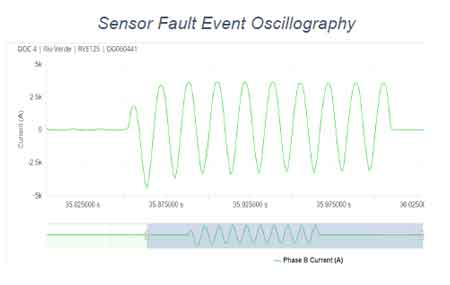
Conventional SCADA and relay schemes identify abrupt faults. They do not reliably surface sub-cycle waveform distortions, insulation breakdown signatures, conductor stress, or vegetation contact precursors building over time. When those signals remain unmanaged, reliability metrics are shaped after the fact rather than governed before interruption.
The operational exposure is not a lack of telemetry. It is fragmented data driven intelligence. Power quality monitors that sample at 1,024 samples per cycle, AMI 2.0 waveform streams at 32 kHz, relay oscillography, and outage logs are often in separate analytical domains. Without alignment with topology and asset identity, data volume increases, but decision clarity does not.
Data driven intelligence must sit between signal detection and field dispatch. Classification confidence thresholds determine whether a patrol is justified or deferred. If thresholds are too permissive, crews are sent into noise. If too restrictive, incipient conditions evolve into sustained outages.
In one large distribution deployment, waveform-based precursor detection contributed to measurable SAIDI reduction, avoided dozens of potential outages, and enabled location accuracy within a tenth of a mile for underground components. The impact was not theoretical. It was realized through disciplined model validation and targeted patrol issuance.
Stay informed with our FREE Asset Intelligence & Predictive Maintenance Newsletter — get the latest news, breakthrough technologies, and expert insights, delivered straight to your inbox.
This approach aligns with Predictive Grid Intelligence, where precursor detection is tied directly to circuit topology and risk prioritization rather than generic alarm streams.
Real time data pipelines that unify power quality waveforms, AMI 2.0 telemetry, and relay oscillography enable predictive analytics grounded in SME-informed artificial intelligence and machine learning models. The objective is not to analyze data in isolation, but to convert precursor signatures into actionable insights that support informed decisions at the feeder level, where threshold discipline determines whether a patrol is dispatched or risk is allowed to escalate.
Incipient faults are not visible to traditional protection schemes. They manifest as high-frequency anomalies, momentary disturbances, or repeated transient signatures that precede catastrophic failure. They do not trip breakers. They accumulate risk.
Model credibility becomes the central engineering issue. SME-informed classification models trained on large labeled event libraries must sustain high recall and precision while preserving threshold discipline. A nominal 90 percent performance rate may appear strong, but at scale across tens of thousands of endpoints, a 10 percent error band can lead to dispatch fatigue or undetected escalations.
When integrated with Grid Observability, waveform intelligence transitions from isolated detection to network-aware context, allowing operators to evaluate device health relative to load flow, switching configuration, and seasonal stress.
Consider an underground tee connector exhibiting precursor signatures for two weeks. If classified and localized early, a controlled maintenance window isolates ten customers for planned replacement. If ignored, the same component fails during peak load, creating hundreds of thousands of customer minutes of interruption, secondary equipment stress, and potential protection miscoordination.
That difference defines decision gravity.
Data driven intelligence compresses the time between anomaly detection and asset intervention. It narrows patrol regions compared to undetermined-outage patrol scenarios and reduces exposure to broad switching sequences.
This discipline is reinforced by Distribution Fault Detection Sensors, where event classification integrates with feeder segmentation and restoration strategy.
The expansion of AMI 2.0 waveform capabilities introduces both opportunities and constraints. Thirty-two kilohertz waveform sampling enables precursor detection at a scale previously confined to substation power quality monitors. However, ingesting that volume without architectural discipline can lead to computational bottlenecks and misaligned inference timing.
Microservice-based ingestion and event-labeling pipelines enable subject matter experts to continuously refine models while maintaining operational throughput. More than raw analytics, the system must sustain automated correlation between waveform signatures and physical spans, vaults, or lateral segments.
This data driven intelligence architecture extends into Grid Endpoint Monitoring, where endpoint-level telemetry becomes actionable only when reconciled with digital circuit configuration.
Every data driven intelligence deployment faces a tradeoff between sensitivity and dispatch cost. Increasing precursor sensitivity surfaces more potential failures but expands patrol issuance. Reducing sensitivity conserves labor but increases the probability of forced outages.
Model uncertainty also persists around rare event classes, such as conductor slaps during high winds, harmonic distortion from inverter-based resources, or temporary vegetation contact that clears before a sustained interruption. Misclassification in these edge cases can distort risk scoring.
Integration with Predictive Maintenance for Utilities requires disciplined feedback loops where patrol findings recalibrate model thresholds rather than merely confirming prior assumptions.
Protection systems will always trip when thresholds are exceeded. Data driven intelligence intervenes before those thresholds are reached. It converts waveform anomalies into risk-ranked work orders, aligns detection with topology-aware location, and narrows the physical search domain.
Download our FREE Electrical Training Catalog and explore a full range of expert-led electrical training courses.

When tied to Utility Device Fleet Management, the approach evolves from single-event detection to fleet-level asset health governance, enabling operators to prioritize replacement programs based on precursor density rather than age alone.
The strategic shift is clear. Protection reacts. Data driven intelligence governs.
Explore 50+ live, expert-led electrical training courses –