Latest Metering, AMI & Edge Intelligence Articles
AMI Communications and Network Resiliency
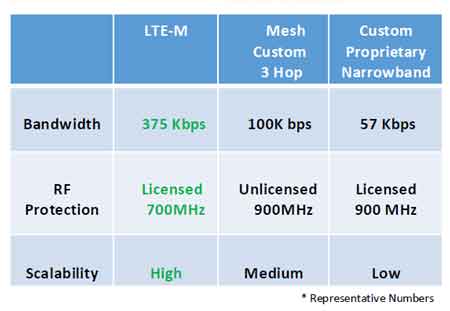
AMI Communications determines whether advanced metering infrastructure can support LTE-M, private LTE, licensed-spectrum reliability, and scalable bandwidth for DER integration, real-time telemetry, and resilient distribution control under grid-stress conditions.
AMI Communications determines whether a metering system functions as a billing network or as a grid operations backbone. As utilities replace aging AMI 1.0 deployments, the communications decision becomes structural. The network selected today defines telemetry limits, DER visibility, and restoration performance for decades.
Early AMI programs relied heavily on proprietary RF mesh systems. These networks were optimized for low-bandwidth meter reads and predictable interval data. They were not designed for…
View more
Sign Up for Electricity Forum’s Metering, AMI & Edge Intelligence Newsletter
Stay informed with our FREE Metering, AMI & Edge Intelligence Newsletter — get the latest news, breakthrough technologies, and expert insights, delivered straight to your inbox.
Advanced Metering Infrastructure for Utility Data Governance
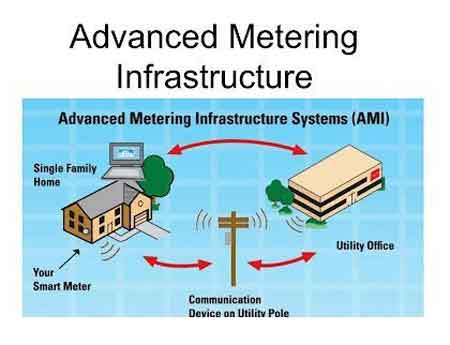
Advanced metering infrastructure is the enterprise system that unifies meters, communications, headend platforms, and data governance into a coordinated operational framework. It establishes how interval reads, voltage measurements, device status, and event telemetry move through the utility organization.
Advanced metering infrastructure is no longer a billing modernization initiative. It is the structural backbone that governs how field telemetry is ingested, validated, stored, and exposed to operational platforms.
At enterprise scale, architecture becomes a reliability variable. A deployment of several million meters transmitting at fixed intervals produces billions of structured records annually. At that volume, storage design, ingestion cadence, schema discipline,…
View more

AMI Integration and Modular Metering
AMI integration determines whether advanced metering infrastructure can coordinate cloud head end systems, API data exchange, multi HES orchestration, and ADMS connectivity without losing control during DER growth, telemetry surges, or vendor transition.
AMI integration determines whether a metering platform functions as a closed billing stack or as an operational control layer connected to the broader distribution system. As utilities modernize head end systems and expand DER visibility, integration design becomes a reliability issue rather than an IT preference.
Early AMI deployments were vertically integrated. The meter, communications network, head end system, and data management platform were delivered by a…
View more
Intelligent Connectivity Architecture for AMI, DER, and Grid Modernization
Intelligent connectivity defines the hybrid AMI 2.0 network platform that integrates private LTE, RF mesh, peer-to-peer transformer clusters, DER telemetry, and edge intelligence to deliver full device coverage, predictable latency, and resilient grid modernization control.
Intelligent connectivity is not a communications upgrade. It is the engineering framework for building the next-generation network platform that connects AMI 2.0, DER coordination, distribution automation, and edge computing into a unified operational system.
When meters become grid-edge sensors, local gateways, and distributed computing nodes, the network platform determines whether modernization initiatives operate as isolated data streams or as a synchronized control infrastructure. Connectivity becomes…
View more
AMI Meter as a Distribution Grid Edge Control Node
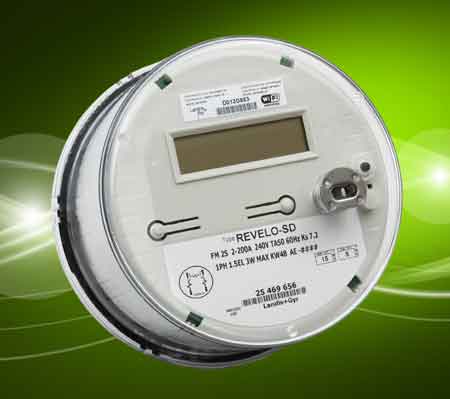
AMI meter operates as a grid-edge measurement device that captures interval consumption, voltage magnitude, current flow, outage events, and localized power-quality conditions at the service point. Its authority begins at the sensing layer, not at the enterprise system.
An AMI meter is fundamentally a precision electrical instrument installed at scale. While billing accuracy remains essential, the device's engineering relevance now extends to voltage validation, phase imbalance detection, and transformer loading approximation. Its ubiquity across the feeder creates a distributed sensing mesh at the lowest voltage tier.
When treated solely as a meter-to-cash component, the hardware’s sensing capacity is underutilized. The…
View more
AMI Metering Network Interoperability
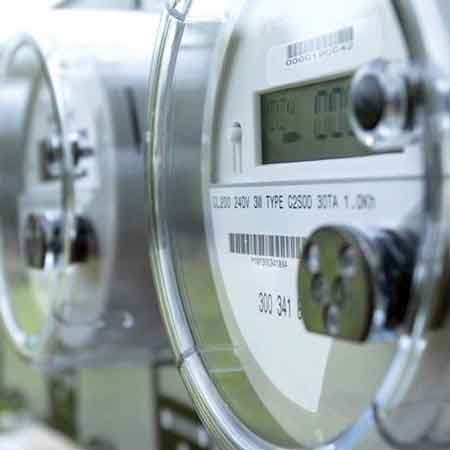
AMI metering establishes interoperable smart meter networks and standards-based field area communications that reduce vendor lock-in, enforce consistent cybersecurity controls, and preserve grid visibility as distributed energy penetration and endpoint scale accelerate.
AMI deployments are no longer defined by interval data collection. They now operate as a structural control layer that influences outage restoration sequencing, DER coordination, voltage management, and procurement strategy. When metering architecture limits interoperability, it narrows operational flexibility across the distribution system.
Duke Energy and National Grid have demonstrated that AMI 2.0 interoperability is not a procurement preference but a system risk decision. Migrating legacy endpoints onto…
View more
AMI Operational Sensor Network for Grid Telemetry
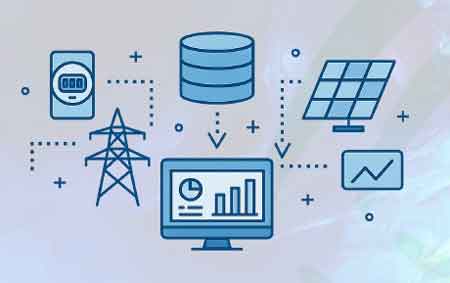
An AMI operational sensor network becomes operationally decisive when interval meters transition from billing endpoints to distributed telemetry nodes influencing switching, voltage control, and DER integration decisions.
The engineering boundary is not deployment scale. It is whether the network produces time synchronized, trustworthy voltage and event data at latency levels compatible with distribution control workflows.
Utilities that treat AMI as a passive data system create observational blind spots at the feeder edge. Utilities that treat it as structured telemetry create an operational sensor layer dense enough to influence protection, restoration, and hosting capacity strategy.
AMI operational sensor network role…
View more