Latest Grid Data Foundations & AI Infrastructure Articles
Autonomous Utility Networks for Deterministic Grid Operations
Autonomous Utility Networks preserve deterministic grid control by synchronizing SCADA telemetry, AI inferencing, utility WAN architecture, and DER cybersecurity to prevent latency drift, switching misoperation, and cascading operational instability under high traffic growth.
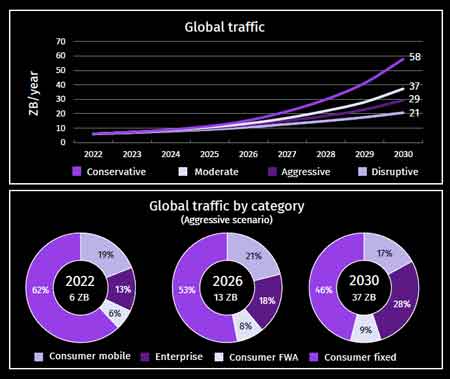
Autonomous Utility Networks define whether automated grid control remains deterministic when traffic growth, distributed AI workloads, and cyber exposure compress operational decision windows beyond human reaction time. The engineering decision is not whether to automate. The question is whether deterministic authority survives the scale of automation.
Traffic projections toward 2173 exabytes per month and sustained 20 percent WAN growth introduce timing pressure that traditional supervisory architectures were…
View more
Sign Up for Electricity Forum’s Grid Data Foundations & AI Infrastructure Newsletter
Stay informed with our FREE Grid Data Foundations & AI Infrastructure Newsletter — get the latest news, breakthrough technologies, and expert insights, delivered straight to your inbox.
Agentic Operations for Electric Utilities in Deterministic Infrastructure Control
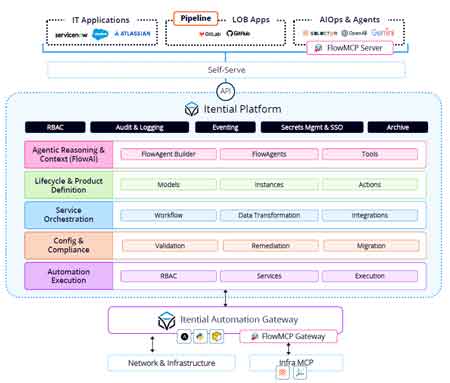
Agentic Operations for Electric Utilities define how deterministic orchestration, RBAC enforcement, and audit validated workflows allow AI agents to trigger remediation without surrendering OT control authority or creating cascading grid instability.
Control authority in utility OT environments cannot be delegated casually. As AI systems begin to reason across telemetry, configuration states, and change records, the central engineering decision emerges: at what point can reasoning systems be permitted to execute infrastructure actions without destabilizing regulated networks?
In large utility environments, infrastructure spans more than 100,000 assets, hundreds of substations, telecom networks, and integrated observability platforms. Automation alone cannot manage this scale. Yet…
View more
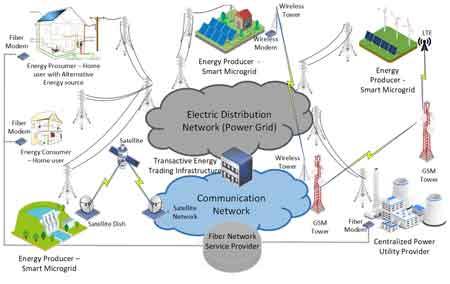
Utility Network Automation Architecture For Deterministic AI Ops
Utility network automation architecture governs deterministic provisioning, config drift control, AI orchestration, and ITSM integrated remediation to prevent unstable switching, audit gaps, and cascading network failures across substations and telecom domains.
Utility network automation architecture is not an IT efficiency initiative. It is an operational control boundary that determines whether telecom and substation networks can be trusted to execute switching, protection coordination, and remote remediation under AI assisted conditions.
Utility network automation architecture as an operational control boundary
In large service territories exceeding 50,000 square miles, with more than 100,000 infrastructure assets and hundreds of substations, manual provisioning and…
View more

SCADA Cybersecurity: Protecting Utility Grid Control Systems
SCADA cybersecurity protects grid control systems from unauthorized commands, data manipulation, and operational disruption. Without proper authentication, encryption, and network segmentation, attackers can interfere with switching, protection, and real-time grid control.
Grid reliability depends on trust. Every breaker operation, relay command, and switching instruction issued through supervisory control and data acquisition SCADA systems carries immediate physical consequences. When that trust is compromised, attackers do not merely access data. They gain the ability to influence equipment behavior, disrupt protection coordination, and interfere with operational decisions that maintain system stability.
These systems operate as part of critical infrastructure operational control systems, where…
View more
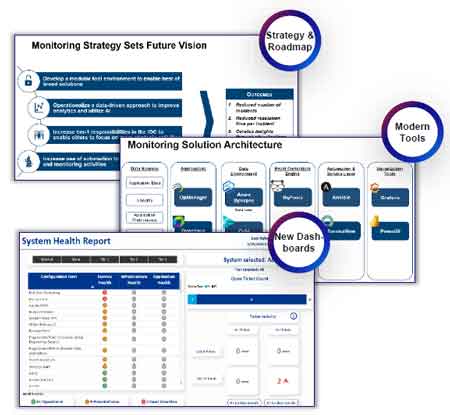
Buy vs Build Event Correlation Platform for Utility OT Observability
Buy vs Build Event Correlation Platform decisions define how utilities govern OT telemetry, alarm noise reduction, root cause analysis, and automated remediation under regulatory constraints. Procurement errors can cascade into misoperation risk and false incident escalation.
The procurement decision is not about software preference. It is about where operational accountability resides when correlation logic determines incident priority inside a regulated control environment. In a utility network operations center, event correlation defines whether telemetry becomes actionable intelligence or unmanaged noise.
Modern grid operations generate high volume alarms across SCADA, WAN infrastructure, DER telemetry, cybersecurity systems, and automation platforms. Without structured correlation,…
View more
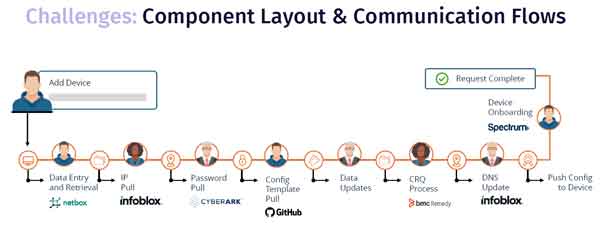
AIOps for Electric Utilities in Deterministic Grid Remediation
AIOps for Electric Utilities applies alarm correlation, deterministic orchestration, and governed automated remediation to reduce false positives, preserve OT control authority, and prevent cascading instability across substations and grid networks.
Control room instability rarely begins with equipment failure. It begins when alarm density exceeds human discrimination capacity and automated responses trigger without sufficient context. At scale, false positives are not nuisance events. They are latent instability vectors.
AIOps for Electric Utilities exists to compress noise before execution authority is exercised. It binds telemetry ingestion, alarm correlation, deterministic workflow sequencing, and governed remediation into a constrained control loop. The objective is…
View more
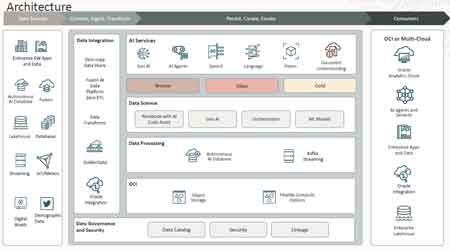
Integrated AI Driven Data Solutions for Utility OT Control Architecture
Integrated AI Driven Data Solutions unify AMI, ADMS, SCADA, and billing data into governed cloud and edge pipelines that preserve OT boundaries, enable real time forecasting, DER detection, and anomaly billing control, and reduce model drift that can destabilize feeder operations.
Integrated AI Driven Data Solutions are not about analytics capability. They determine whether artificial intelligence can influence feeder control, billing integrity, and DER coordination without degrading operational confidence. Once model outputs enter switching logic or load forecasting, probabilistic inference becomes part of the live grid authority.
Utilities operate within layered data domains that were never designed for unified inference.…
View more