Power Line Monitoring System for Continuous Grid Visibility
By Kawika Lawlor, System Protection Manager, SDG&E
By Kawika Lawlor, System Protection Manager, SDG&E
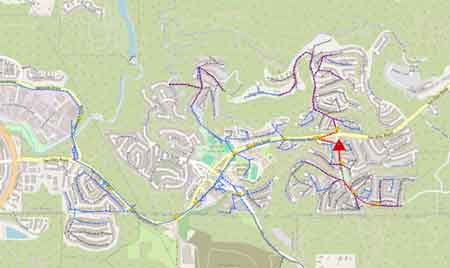

A power line monitoring system uses line sensors, fault-indicator communication, current and voltage monitoring, sag and temperature sensors, communication networks, and analytics software to provide utilities with continuous visibility into feeder conditions, enabling faster fault detection and improved grid reliability.
This monitoring technology allows utilities to observe electrical conditions along distribution and transmission circuits using sensors installed directly on conductors and feeder structures. The devices measure current flow, voltage levels, conductor temperature, and line behavior so operators can understand how circuits are performing while they remain energized.
Traditional awareness of feeder conditions relied largely on substation telemetry and customer outage reports. That approach leaves long sections of the distribution system effectively invisible until a protection device operates or customers lose service. A monitoring system closes this visibility gap by installing sensing devices directly on the line, allowing operations centers to receive measurements from the locations where faults, abnormal loading, or thermal stress actually occur.
The operational distinction is important. Inspection programs periodically evaluate infrastructure through visual assessments of poles, insulators, and conductors. Monitoring systems continuously measure electrical and mechanical conditions via sensors installed directly on the line, allowing utilities to observe circuit behavior in real time rather than only during scheduled inspection cycles.
Think you know Vision AI, Inspection & Field Intelligence? Take our quick, interactive quiz and test your knowledge in minutes.
The sensors transmit information through radio, cellular, or utility network infrastructure so that operations staff can analyze feeder behavior as conditions change.
Many utilities deploy systems based on Line Sensors for Utilities to improve operational awareness along distribution circuits.
Continuous monitoring changes how operators understand circuit performance. Instead of waiting for a breaker operation or a customer outage call, the control center can see electrical conditions evolving across the feeder.
Line sensors provide measurements revealing loading trends, phase imbalance, and abnormal current conditions that may precede a fault or equipment failure.
This concept is closely related to the broader monitoring architecture described in Power Grid Monitoring Systems.
Utilities also deploy sensor networks that support Distribution Line Monitoring across multiple segments of the feeder.
With this visibility, operators can determine whether a disturbance originated upstream or downstream, reducing uncertainty when dispatching crews.
One of the most important operational benefits of a monitoring system is improved fault detection and location. When a fault occurs on an overhead circuit, the disturbance propagates along the line. Sensors and fault-indicating communication systems record the disturbance and report it to the control center.
Multiple devices along a feeder create a sequence of observations that helps utilities determine where the fault occurred. Instead of patrolling the entire circuit, crews can focus on a specific section of line.
The underlying engineering logic of this capability is explained in Electrical Fault Detection.
Utilities often extend this capability with distributed devices that function as Grid Edge Sensors.
Improved fault visibility can significantly reduce restoration time and improve outage response efficiency.
Monitoring systems also provide awareness of the physical condition of conductors that influence system reliability. When the current increases, the conductor temperature rises, and the sag increases as the metal expands.
Temperature sensors and sag monitors measure these conditions directly. Utilities can detect when thermal loading approaches levels that may threaten clearance limits, especially during peak load periods or extreme weather.
Continuous measurement through Real Time Line Monitoring allows operators to understand how loading conditions change throughout the day.
These measurements help utilities balance operational flexibility with safety margins for conductor clearance.
The final function of a power line monitoring system is operational intelligence. Sensor data collected across multiple feeders creates a dataset that reveals patterns in loading, disturbances, and equipment behavior.
Utilities analyze this information to identify recurring disturbances, equipment stress, or environmental conditions that influence reliability. Over time, this analysis supports maintenance planning and targeted upgrades.
This data driven approach supports strategies described in Predictive Maintenance for Utilities.
Instead of reacting to failures after service interruptions occur, utilities can identify emerging risk conditions and intervene earlier.
In operational terms, the decision to deploy a power line monitoring system is about whether the utility wants to manage feeders on an occasional basis or with continuous awareness. Inspection programs provide visual evidence of condition at intervals, while monitoring systems provide the electrical and mechanical data required to understand how the line behaves every minute it remains energized.
Stay informed with our FREE Vision AI, Inspection & Field Intelligence Newsletter — get the latest news, breakthrough technologies, and expert insights, delivered straight to your inbox.
Explore 50+ live, expert-led electrical training courses –