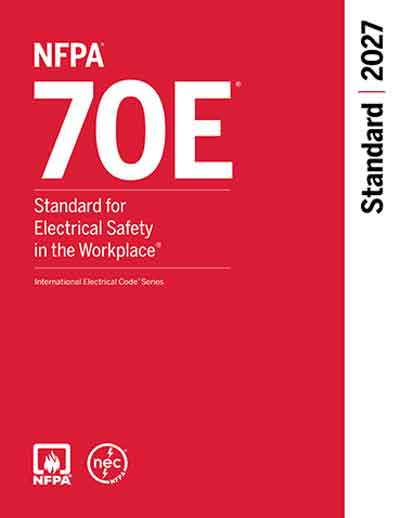
NFPA 70E Training - 2027 Edition - Arc Flash Safety Compliance
Our customized live online or in‑person group training can be delivered to your staff at your location.
- Live Online
- 6 hours Instructor-led
- Group Training Available
Regular Price:
$199
Coupon Price:
$149
China's decision this weekend to buy four Westinghouse nuclear reactors shows the continued attractiveness of U.S. technology but may also stir worries in Washington that America is selling its competitive advantage an industry at a time.
The transaction is also not big enough to make much of a difference in China's contribution to global warming or air pollution, as China's reliance on coal will continue to dwarf its use of nuclear energy in the years ahead, energy experts said.
The U.S. energy secretary, Samuel Bodman, and Ma Kai, the Chinese minister who oversees the National Development and Reform Commission, signed a memorandum of understanding in Beijing recently. The deal calls for China National Nuclear to buy the reactors from Westinghouse Electric, a company acquired by Toshiba, of Japan, this year.
Neither side announced a value for the reactors, but outside analysts have suggested that the total price might be $5 billion to $8 billion
Stephen Tritch, chief executive and president of Westinghouse, said that half of the value of the contract would be performed in China but that the work would nonetheless support 5,000 design, engineering and manufacturing jobs in the United States.
The extent of technology transfers also was not disclosed. But Tritch said the deal would make it possible for China to build future nuclear reactors with less help from overseas.
Bodman said at the signing ceremony, "The Chinese were very demanding." Vaughn Gilbert, a Westinghouse spokesman, said recently, "Technology transfer was a key element of our proposals, but we feel in this proposal and in others we have done that we do it in a way that is beneficial to the United States and to the countries in which we do business." Westinghouse prevailed in the bidding over Areva of France and AtomStroyExport of Russia. The Chinese government excluded General Electric, another big producer of nuclear reactors, when it decided early last year that it would buy pressurized water reactors in bidding this year and not the boiling water reactors that GE produces.
But GE has not given up in China and continues promoting its relatively new designs; the technology already produces 70 percent of Japan's nuclear energy.
China's purchase of U.S. nuclear technology could also stir security concerns in America, particularly after recent debates there over the Chinese oil company Cnooc's unsuccessful bid for Unocal and the Dubai company DP World's taking control of operations at U.S. ports. Those U.S. port operations were sold under U.S. political pressure.
But having a cabinet official like Bodman announce the deal could limit objections to the transaction, at least among Republicans on Capitol Hill, who have tended to be the most outspoken about technology transfers to China. The deal also was announced after the Congress adjourned for the year, which should mute political reaction.
American politicians may also be cautious about publicly criticizing the deal right away because of the possibility of an unspoken link between the nuclear technology deal and efforts by Treasury Secretary Henry Paulson Jr. to persuade China to allow faster appreciation of its currency, the yuan.
Michael Wessel, a commissioner of the United States-China Economic and Security Review Commission, which was created by the Congress to review bilateral relations, said that from the broad outlines of the deal, "it appears they are doing what other companies have done, which is to transfer the technology up front." But Tom Donnelly, another commissioner and a military specialist at the American Enterprise Institute, said that civilian nuclear reactors had very little military value for China, which has greater needs in miniaturizing its nuclear warheads and improving missile technology.
Westinghouse and its rivals still have a chance at further orders: the International Energy Agency predicted last month that Chinese nuclear power generation capacity would rise by 9,000 megawatts by 2015, to a total of 15,000 megawatts. The four reactors, which are to be completed by 2013, would each have a capacity of 1,100 megawatts.
But while the energy agency and others are advocating greater dependence on nuclear energy as a way to avoid the global warming gases emitted by burning fossil fuels, the reactor deal will do little to slow the rise in Chinese emissions. The agency projects that China will add 331,000 megawatts of coal-fired generating capacity by 2015, for a total of 638,000 megawatts. Such growth is the main reason China is expected to move past the United States in 2009 as the world's largest emitter of carbon dioxide, the main global warming gas.
Bodman announced separately in Beijing that Washington would collaborate with China in research on ways to make coal-fired plants more efficient and to capture and store the carbon dioxide released by the plants.
Related News
Wind Denmark - summer's autumn weather provides extraordinarily low electricity prices
Western Denmark Negative Electricity Prices stem from wind energy oversupply, grid congestion, and limited interconnector…
View more

Electricity Shut-Offs in a Pandemic: How COVID-19 Leads to Energy Insecurity, Burdensome Bills
COVID-19 Energy Burden drives higher electricity bills as income falls, intensifying energy poverty, utility shut-offs,…
View more
California Halts Energy Rebate Program Amid Trump Freeze
California energy rebate freeze disrupts heat pump incentives, HVAC upgrades, and climate funding, as federal…
View more

China's Data Centers Alone Will Soon Use More Electricity Than All Of Australia
Cloud Data Centers Environmental Impact highlights massive electricity use, carbon emissions, and cooling demands, with…
View more

Net-zero roadmap can cut electricity costs by a third in Germany - Wartsila
Germany net-zero roadmap charts coal phase-out by 2030, rapid renewables buildout, energy storage, and hydrogen-ready…
View more
PG&E keeps nearly 60,000 Northern California customers in the dark to reduce wildfire risk
PG&E Public Safety Power Shutoff reduces wildfire risk during extreme winds, triggering de-energization across the…
View more
Sign Up for Electricity Forum’s Newsletter
Stay informed with our FREE Newsletter — get the latest news, breakthrough technologies, and expert insights, delivered straight to your inbox.
Electricity Today T&D Magazine Subscribe for FREE

Stay informed with the latest T&D policies and technologies.
- Timely insights from industry experts
- Practical solutions T&D engineers
- Free access to every issue

