Substation Relay Protection Training
Our customized live online or in‑person group training can be delivered to your staff at your location.
- Live Online
- 12 hours Instructor-led
- Group Training Available
Regular Price:
$699
Coupon Price:
$599
Five years ago today, a multiday power interruption originating in Ohio affected 50 million people in seven states and Canada. Lives were lost, and the financial cost was estimated at $6 billion. Maryland escaped with minimal consequences, but will we be able to avoid a major impact next time? Unfortunately, our state and nation have done little to ensure that such a disaster will not happen again.
Recently, there has been much discussion about the fact that Maryland faces a critical shortage of electricity. As a state, we consume more energy than we generate, and in a few years, because of a lack of adequate and reliable transmission infrastructure, we will not be able even to import all of the electricity we need. Since demand for electricity is growing, if this problem is not addressed, experts and authorities agree that it will result in brownouts or blackouts by 2012.
Unfortunately, most citizens are ignoring this problem. Some are focused instead on rising electricity costs; others assume that the problem will be fixed. Both attitudes are shortsighted. If the looming electric reliability crisis is not addressed, we will not only suffer power shortages, but our local economy will be harmed, and electricity prices will rise even faster.
Maryland's economy depends on electricity. All enterprises and organizations - whether a doughnut shop, a business office, the local hospital or a military base - require an uninterrupted supply of electricity to operate. Imagine not only the loss of productivity but also the loss of revenues to the state when commerce is halted, even temporarily. The shortage of electricity also threatens job growth and has led to plant closings or decisions not to expand facilities. Backup electricity supply systems, essential to some operations because of the critical nature of their services, are costly to install and maintain.
Moreover, Marylanders pay a "congestion tax" because the flow of electricity into Maryland is constrained by the aging and inadequate regional grid that transmits it. We pay higher rates because the congested grid makes it difficult to import cheaper (and greener) electricity from the Midwest, where it is abundant and available. The Maryland Public Service Commission, which regulates the state's utilities, has estimated that in 2006, grid congestion cost the state's ratepayers $500 million.
Higher energy costs hamper the state's ability to attract new businesses as well as existing businesses' ability to compete. Our success in the military's base realignment and closure (BRAC) process will bring 60,000 jobs and 28,000 households to the state in the near future, including 25,000 jobs on military installations. While this is good for the state's economy, it will lead to a spike in the demand for electricity at a time when we face a capacity shortage.
Sen. Barbara A. Mikulski said, "The utility grid is one of the four pillars of BRAC." Yet, according to a 2008 federal report on the Department of Defense energy strategy, one of the main energy challenges the Pentagon faces is that military installations are vulnerable to extended power outages because they are almost completely dependent on fragile and vulnerable commercial grids.
The cost of doing nothing is too high for us to afford, and so we must take action.
First, as a state, we must encourage the building of transmission capacity because it can be accomplished in a relatively short time. According to the Public Service Commission, this is also the most attractive option economically. To add predictability to the process, the review of regulatory filings should be completed within a year.
Next, we must continue to conserve. Aggressive implementation of the state's ambitious EmPower Maryland program can go a long way to easing the electricity shortage.
Finally, policymakers and power suppliers need to address how to spur the market to build new generation in the state, especially from renewable sources, by resolving the uncertainty surrounding reliance on market forces. Maryland cannot afford to let the fear of whether or not the state will re-regulate deter companies from making needed infrastructure investments.
In the coming months, Maryland will be presented with opportunities to take steps that would prevent blackouts like that of Aug. 14, 2003. An informed public and a realistic and balanced review of these proposals will be needed to ensure that we have no further power outage anniversaries to observe.
Related News
Drought, lack of rain means BC Hydro must adapt power generation
BC Hydro drought operations address climate change impacts with hydropower scheduling, reservoir management, water conservation,…
View more
Here are 3 ways to find out where your electricity comes from
US energy mix shows how the electric grid blends renewables, fossil fuels, nuclear, and hydro,…
View more
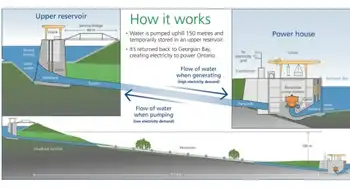
Multi-billion-dollar hydro generation project proposed for Meaford military base
Meaford Pumped Storage Project aims to balance the grid with hydro-electric generation, a hilltop reservoir,…
View more
Biden Imposes Higher Tariffs on Chinese Electric Cars and Solar Cells
U.S. Tariffs on Chinese EVs and Solar Cells target trade imbalances, subsidies, and intellectual property…
View more
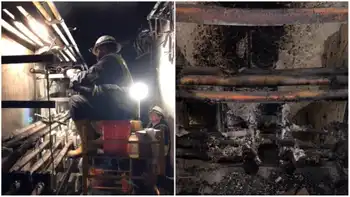
Investigation underway to determine cause of Atlanta Airport blackout
Atlanta Airport Power Outage disrupts Hartsfield-Jackson as an underground fire cripples switchgear redundancy, canceling flights…
View more
OpenAI Expands Washington Effort to Shape AI Policy
OpenAI Washington Policy Expansion spotlights AI policy, energy infrastructure, data centers, and national security, advocating…
View more
Sign Up for Electricity Forum’s Newsletter
Stay informed with our FREE Newsletter — get the latest news, breakthrough technologies, and expert insights, delivered straight to your inbox.
Electricity Today T&D Magazine Subscribe for FREE

Stay informed with the latest T&D policies and technologies.
- Timely insights from industry experts
- Practical solutions T&D engineers
- Free access to every issue

