LED global market should keep getting brighter and brighter

By Silicon Valley / San Jose Business Journal


Protective Relay Training - Basic

Our customized live online or in‑person group training can be delivered to your staff at your location.

  • Live Online
  • 12 hours Instructor-led
  • Group Training Available
Regular Price:
$699
Coupon Price:
$599
Reserve Your Seat Today
The lighting sector has an up-and-coming new field, thanks in part to aggressive global government mandates.

The global market for light-emitting diodes - known as LEDs - is projected to grow from $205 million in 2006 to $985 million in 2011, according to Mountain View-based market research group Strategies Unlimited.

Consumers can currently use the standard incandescent bulb, the fluorescent bulb, or LEDs (in which a current flows through a chip of semiconducting material).

Because of their durability and long life, LEDs are gaining acceptance as the most economical and efficient technology for traffic lights, flashlights, landscape-lighting and outdoor lighting. But there's plenty of room for growth there, and one of the fastest-growing fields in LEDs is the virtually nonexistent residential market, according analyst Vrinda Bhandarkar, who studies the LED market for Strategies Unlimited.

Bhandarkar projects a compound annual growth rate of 37 percent in the LED lighting industry, which will help lower the high price of LEDs and encourage more money to fund research for improving efficiencies.

That growth will feed companies along the LED line: manufacturers, distributors and lighting sellers.

One person banking on that growth is Morgan Hill's Fred Oliveri, who launched LED Starlight Inc. in January after months of research and product development with business contacts in China.

"Of all the options out there, they last the longest and use the least amount of energy. You don't have to worry about changing the lights very often, they don't generate heat, so you don't use as much A/C. The No. 1 problem with LEDs is the price," he says. "But there's not much competition, and I think it's the right thing to do for the environment."

A U.S. government measure passed in December -- The Renewable Fuels, Consumer Protection, and Energy Efficiency Act of 2007 -- requires 25 percent greater efficiency for light bulbs starting in 2012, progressing to 70 percent greater efficiency in 2020.

The U.S. measure aims to replace the country's estimated 4 billion incandescent light bulbs -- a switch that will save Americans up to $6 billion a year in electricity costs, reduce energy consumption by 8 percent, and create 10 percent less greenhouse gas emissions forecast for 2030, according to the American Council for an Energy Efficient Economy.

It's an obstacle for makers of incandescent bulbs, which some scientists say can't meet those targets, although researchers in Japan are trying.

Ireland, Canada and Australia have announced plans to ban incandescent bulbs completely starting as soon as 2009.

The global push to alternative lighting has environmentalists and researchers looking for the best replacement for incandescents, and a few leaders have emerged: fluorescents, halogen incandescents and LEDs.

"Ideally, the holy grail is for LED lighting to be a major source," says Ron Runkles, industry director of the National Electrical Manufacturers Association. "LEDs have the most potential right now of anything on the horizon of saving the most energy."

The appeal of LEDs in lighting is that laboratory tests have shown them to be longer lasting and more energy-efficient than incandescent bulbs and compact fluorescents - the corkscrew-shaped bulbs subsidized by groups such as Pacific Gas & Electric Co., which spent $116 million in 2007 to make CFLs more affordable.

A 75-watt incandescent light bulb lasts about 1,000 hours; a comparable CFL 8,000 to 10,000 hours; and an LED 35,000 hours, according to the U.S. Department of Energy's Office of Energy Efficiency and Renewable Energy.

Incandescents produce about 12 lumens per watt; CFLs around 55. LED bulbs have produced 121 lumens per watt in lab testing but haven't reached those efficiencies in consumer use, Bhandarkar says.

For the equivalent light output, an incandescent bulb would cost a dollar, a CFL less than $5 and an LED as much as $50.

Consequently, the DOE recommends CFLs to consumers because it says they achieve the highest efficiency for the lowest cost.

CFLs aren't perfect: They contain minor amounts of mercury, don't perform as efficiently in cold temperatures and can shatter in rough handling because they are made of glass. But many energy experts say they're the best option for now.

"CFL and fluorescents offer extremely high efficiency at very low prices. LED lighting is not there yet," Bhandarkar says. "That's why lots of people talk about CFL as an intermediate solution. The research in LED is going so fast that the efficiency and price should improve in the next few years."

Prices are already dropping. Bhandarkar says LEDs became 10 percent to 15 percent less expensive in 2007, and Phillips LED Lighting Division projects that the price of LEDs will continue to decline by at least 10 percent a year.

The interest in LEDs started in the second quarter of 2007, and by summer and fall customers began buying LEDs, says Rob Brooks, manager of the projects quotation department for Central Wholesale Electrical Distributors Inc. in Pleasanton. The company sells lighting to builders, contractors and lighting designers.

"There has been quite a bit of an increase in interest in LEDs but not as much of an increase in selling the product because it's still a bit expensive," Brooks says.

Customers similarly started asking for CFLs six to 8 years ago; now CFLs and fluorescents make up 70 percent of their business and incandescent just 5 percent, he says.

"There's now an emphasis on CFLs, and we're in the infancy of LEDs," Brooks says. "For a while, there's going to be a combination. Until LEDs get to the point where the cost gets down to where it's more efficient than CFLs, CFLs are going to continue to take the lion's share of business."

Ronnie Kweller, a spokeswoman for the Alliance to Save Energy, says one of the major obstacles to the adoption of more-efficient lighting is changing consumer behavior.

"What we try to convey is the lifetime cost of the bulbs is going to be much better," she says. "But soon, the inefficient products won't be on the market, so the decision will be made for them. In the meantime, we have to keep up education."

Phillips LED Lighting Division projects that within three to five years, LEDs will be competitive with compact fluorescents on ownership cost, which takes into account the price, longevity and energy savings.

"LEDs represent the most significant development in lighting since the invention of the electric light more than a century ago and we should expect the current rapid pace of change to continue," the report says.

There are some places where LEDs already making economic sense: places with 24-hour lighting (hospitals), with hard-to-reach fixtures (the Empire State Building, for one), colored lights (30 percent of U.S. traffic signals used LEDs in 2002), cold temperatures (commercial freezers or street lights in Michigan) and solar-panel powered lights (in rural areas off electric grids, such as in India, because solar panels and LEDs both run on DC currents).

According to "LEDs Magazine," consumers have already adopted LED lighting for the holidays. In 2003 less than 10 percent of holiday lights sold were LED, but in 2007 LEDs made up more than 90 percent of the market.

And other uses of LED are already widely accepted. The global LED market accounted for $4.2 billion in sales in 2006, when the size of the LED lighting market was added with other LED, such as phones, computers, televisions and signage.

Oliveri hopes his San Jose-based company can penetrate markets such as hospitals, governments and school districts before too many companies catch on to the potential growth of the LED market.

LED Starlight already offers 35 options from $3 to $50 each and has talked with potential customers throughout Silicon Valley.

"Everybody I'm competing with is little. I figure I have a three-year window before Phillips and GE take over the market," Oliveri says. "And that's OK. I'd help anybody out that wants to promote this because I believe in what I'm doing."

Related News
Ottawa won't oppose halt to Site C work pending treaty rights challenge

Site C Dam Injunction signals Ottawa's neutrality while B.C. reviews a hydroelectric dam project on the Peace River, amid First Nations treaty rights claims, federal approval defenses, and scrutiny of environmental assessment and Crown consultation.


Key Points

A legal request to pause Site C while courts weigh First Nations treaty rights, environmental review, and approvals.

✅ Ottawa neutral on injunction; still defends federal approvals

✅ First Nations cite treaty rights over Peace River territory

✅ B.C. jurisdiction, environmental assessment and Crown consultation at issue


The federal government is not going to argue against halting construction of the controversial Site C hydroelectric dam in British Columbia while a B.C. court decides if the project violates constitutionally protected treaty rights.


Work on Site C suspended prior to First Nations lawsuit

However a spokeswoman for Environment Minister Catherine McKenna said Monday the government will continue to defend the federal approval given for the project in December 2014, even though that approval was given using an environmental review process McKenna herself has said is fundamentally flawed.

The Site C project is an 1,100-megawatt dam and generating station on the Peace River in northern B.C. that will flood parts of the traditional territory of the West Moberly and Prophet River First Nations.

#google#

In January, they filed a civil court case against the provincial government, B.C. Hydro and the federal government asking a judge to decide if their rights were being violated by the dam. A few weeks later, West Moberly asked the court for an injunction to halt construction pending the outcome of the rights case, similar to other contested transmission projects like the Maine electricity corridor debate in New England.

On May 11, lawyers for Attorney General Jody Wilson-Raybould filed a notice that Canada would remain neutral on the question of the injunction, meaning Canada won't argue against the idea of postponing construction for months, if not years, while the rights case winds through the court.

Wilson-Raybould has been silent on Site C since being named Canada's minister of justice in 2015, but in 2012, when she was the B.C. regional chief for the Assembly of First Nations, she said the project was "running roughshod" over treaty rights. The Justice Department on Monday directed questions to Environment and Climate Change Canada.


Defence of environmental assessment

McKenna's spokeswoman, Caroline Theriault, said the injunction request is just a procedural step regarding construction and that it is B.C. jurisdiction not federal.

However, she said Canada will defend the environmental assessment and Crown consultation processes and the federally issued permits required for construction.


B.C. auditor general set to scrutinize Site C dam project

McKenna has legislation before the House of Commons to overhaul the process for environmental assessment of major projects like hydro dams and pipelines, arguing the former government's procedures had skewed too far towards proponents. The overhaul includes requiring traditional Indigenous knowledge be taken into account, a consideration also central to the Columbia River Treaty talks underway on both sides of the border.

However, Theriault said the commitment to overhaul the process also included a promise not to revisit projects that had already been approved, such as Site C.

"The federal environmental assessment process for the Site C project has already been upheld in other court actions," said Theriault.


'It feels kind of odd'

West Moberly Chief Roland Wilson said he was both excited and yet concerned by Canada's decision last week not to oppose the injunction.

"It feels kind of odd and makes me wonder what they're up to," Wilson said.

However he said all he has ever wanted was for the project to be stopped until the question of rights can be answered. Wilson said two previous dams on the Peace River already flooded 80 per cent of the functional land within West Moberly's territory and that Site C will flood half of what's left. That land is used for fishing and hunting and there is also concern the dam will allow mercury to leak into Moberly Lake, he said.


Retiree undaunted by steep odds against his petition to stop Site C dam

Construction began in 2015 and more than $2.4 billion has already been spent on a project that will at the earliest, not be completed until 2024 and will cost an estimated $10 billion total, with cost overrun risks underscored by the Muskrat Falls ratepayer agreement in Atlantic Canada.

The province continues to argue against the injunction and will also fight the rights case, even as Alberta suspends power purchase talks with B.C. over energy disputes. Premier John Horgan campaigned on a promise to review the Site C approval. A B.C. Utilities Commission report in November found there are alternatives to building it and that it will go over budget. Nevertheless Horgan in December said he had to let construction continue because cancelling the project would be too costly both for the province and its electricity consumers, despite the B.C. rate freeze announced around the same period.


Related News

View more

Smart grid and system improvements help avoid more than 500,000 outages over the summer

ComEd Smart Grid Reliability drives outage reduction across Illinois, leveraging smart switches, grid modernization, and peak demand programs to keep customers powered, improve power quality, and enhance energy savings during extreme weather and severe storms.


Key Points

ComEd's smart grid performance, cutting outages and improving power quality to enhance reliability and customer savings.

✅ Smart switches reroute power to avoid customer interruptions

✅ Fewer outages during extreme weather across northern Illinois

✅ Peak Time Savings rewards for reduced peak demand usage


While the summer of 2019 set records for heat and brought severe storms, ComEd customers stayed cool thanks to record-setting reliability during the season. These smart grid investments over the last seven years helped to set records in key reliability measurements, including frequency of outages metrics, and through smart switches that reroute power around potential problem areas, avoided more than 538,000 customer interruptions from June to August.

"In a summer where we were challenged by extreme weather, we saw our smart grid investments and our people continue to deliver the highest levels of reliability, backed by extensive disaster planning across utilities, for the families and businesses we serve," said Joe Dominguez, CEO of ComEd. "We're proud to deliver the most affordable, cleanest and, as we demonstrated this summer, most reliable energy to our customers. I want to thank our 6,000 employees who work around the clock in often challenging conditions to power our communities."

ComEd has avoided more than 13 million customer interruptions since 2012, due in part to smart grid and system improvements. The avoided outages have resulted in $2.4 billion in estimated savings to society. In addition to keeping energy flowing for residents, strong power reliability continues to help persuade industrial and commercial companies to expand in northern Illinois and Chicago. The GridWise Alliance recently recognized Illinois as the No. 2 state in the nation for its smart grid implementation.

"Our smart grid investments has vastly improved the infrastructure of our system," said Terry Donnelly, ComEd president and chief operating officer. "We review the system and our operations continually to make sure we're investing in areas that benefit the greatest number of customers, and to prepare for public-health emergencies as well. On a daily basis and during storms or to reduce wildfire risk when necessary, our customers are seeing fewer and fewer interruptions to their lives and businesses."

ComEd customers also set records for energy savings this summer. Through its Peak Time Savings program and other energy-efficiency programs offered by utilities, ComEd empowered nearly 300,000 families and individuals to lower their bills by a total of more than $4 million this summer for voluntarily reducing their energy use during times of peak demand. Since the Peak Time Savings program launched in 2015, participating customers have earned a total of more than $10 million in bill credits.


Related News

View more

India is now the world’s third-largest electricity producer

India Electricity Production 2017 surged to 1,160 BU, ranking third globally; rising TWh output with 334 GW capacity, strong renewables and thermal mix, 7% CAGR in generation, and growing demand, investments, and FDI inflows.


Key Points

India's 2017 power output reached 1,160 BU, third globally, supported by 334 GW capacity, rising renewables, and 7% CAGR.

✅ 1,160 BU generated; third after China and the US

✅ Installed capacity 334 GW; 65% thermal, rising renewables

✅ Generation CAGR ~7%; demand, FDI, investments rising


India now generates around 1,160.1 billion units of electricity in financial year 2017, up 4.72% from the previous year, and amid surging global electricity demand that is straining power systems. The country is behind only China which produced 6,015 terrawatt hours (TWh. 1 TW = 1,000,000 megawatts) and the US (4,327 TWh), and is ahead of Russia, Japan, Germany, and Canada.


India’s electricity production grew 34% over seven years to 2017, and the country now produces more energy than Japan and Russia, which had 27% and 8.77% more electricity generation capacity installed, respectively, than India seven years ago.

India produced 1,160.10 billion units (BU) of electricity–one BU is enough to power 10 million households (one household using average of about 3 units per day) for a month–in financial year (FY) 2017. Electricity production stood at 1,003.525 BU between April 2017-January 2018, according to a February 2018 report by India Brand Equity Foundation (IBEF), a trust established by the commerce ministry.

#google#

With a production of 1,423 BU in FY 2016, India was the third largest producer and the third largest consumer of electricity in the world, behind China (6,015 BU) and the United States (4,327 BU).

With an annual growth rate of 22.6% capacity addition over a decade to FY 2017, renewables beat other power sources–thermal, hydro and nuclear. Renewables, however, made up only 18.79% of India’s energy, up 68.65% since 2007, and globally, low-emissions sources are expected to cover most demand growth in the coming years. About 65% of installed capacity continues to be thermal.

As of January 2018, India has installed power capacity of 334.4 gigawatt (GW), making it the fifth largest installed capacity in the world after European Union, China, United States and Japan, and with much of the fleet coal-based, imported coal volumes have risen at times amid domestic supply constraints.

The government is targeting capacity addition of around 100 GW–the current power production of United Kingdom–by 2022, as per the IBEF report.


Electricity generation grew at 7% annually

India achieved a 34.48% growth in electricity production by producing 1,160.10 BU in 2017 compared to 771.60 BU in 2010–meaning that in these seven years, electricity production in India grew at a compound annual growth rate (CAGR) of 7.03%, while thermal power plants' PLF has risen recently amid higher demand and lower hydro.


Generation capacity grew at 10% annually

Of 334.5 GW installed capacity as of January 2018–up 60% from 132.30 GW in 2007–thermal installed capacity was 219.81 GW. Hydro and renewable energy installed capacity totaled 44.96 GW and 62.85 GW, respectively, said the report.

The CAGR in installed capacity over a decade to 2017 was 10.57% for thermal power, 22.06% for renewable energy–the fastest among all sources of power–2.51% for hydro power and 5.68% for nuclear power.


Growing demand, higher investments will drive future growth

Growing population and increasing penetration of electricity connections, along with increasing per-capita usage would provide further impetus to the power sector, said the report.

Power consumption is estimated to increase from 1,160.1 BU in 2016 to 1,894.7 BU in 2022, as per the report, though electricity demand fell sharply in one recent period.

Increasing investment remained one of the driving factors of power sector growth in the country.

Power sector has a 100% foreign direct investment (FDI) permit, which boosted FDI inflows in the sector.

Total FDI inflows in the power sector reached $12.97 billion (Rs 83,713 crore) during April 2000 to December 2017, accounting for 3.52% of FDI inflows in India, the report said.


Related News

View more

Jordan approves MOU to implement Jordan-Saudi Arabia electricity linkage

Jordan-Saudi Electricity Linkage Project connects NEPCO and Saudi National Electricity Company to launch feasibility studies, advancing cross-border grid interconnection, Arab electricity linkage goals, and enhancing power reliability, stability, and energy security in both countries.


Key Points

A bilateral grid interconnection by NEPCO and Saudi Electricity Co. to improve reliability and stability.

✅ Enables joint technical and financial feasibility studies

✅ Improves cross-border grid reliability and stability

✅ Part of Arab electricity linkage; supports energy security


The Jordanian Cabinet on has approved the memorandum of understanding to implement the electricity linkage project between Jordan and Saudi Arabia, echoing regional steps such as Lebanon's electricity sector reform to modernize power governance.

The memo will be signed between the National Electric Power Company(NEPCO) and the Saudi National Electricity Company, mirroring cross-border efforts like CEA-Mexico electricity cooperation to strengthen regional interconnections.

The agreement will enable the two sides to initiate technical and financial feasibility studies for the project, which aims to enhance the stability and reliability of electricity networks in both countries, aligning with measures to secure power such as Ireland's electricity supply plan pursued internationally.

The initial feasibility studies, which came as part of the comprehensive Arab electricity linkage issued by the Arab League in 2014, had shown the possibility of implementing the Jordanian-Saudi linkage, as electricity markets evolve in places like Alberta electricity market changes toward new designs.

Regional developments, including a Lebanon electricity goodwill gesture that sowed discord, underscore the complexities of power-sector reform.

Also on Wednesday, the Government approved the third amendment to the grant agreement provided by the EU for a programme of financial inclusion through improving the governance and the spread of micro-financing in Jordan.

Jordan and the EU signed the grant agreement on December 14, 2014 to support the general budget.

The Cabinet also approved the recommendations of the ministerial team tasked with overseeing the annual and financial plans of public credit funds in the Kingdom.

The recommendations included establishing a guidance office to introduce the governmental lending programmes and windows within Iradah centres affiliated with the Planning and International Cooperation Ministry.

The Council of Ministers decided to oblige the government institutions to execute all of their correspondences to the Jordan Customs Department (JCD) electronically.

The decision also includes cancelling the provision of 55 JCD services by conventional paper works and to be provided only online.

The council also approved the outcomes of the study to restructure the governmental body.

The outcomes proposed activating the Higher Health Council, cancelling the independence of the Vocational and Technical Employment Training Fund transferring its functions to the Employment and Development Fund, and activating the National ICT Centre.

The government has cancelled the National Fund to Support Sports and the Scientific Support Fund.


Related News

View more

Solar power growth, jobs decline during pandemic

COVID-19 Solar Job Losses are erasing five years of workforce growth, SEIA reports, with U.S. installations and capacity down, layoffs accelerating, 3 GW expected in Q2, and policy support key for economic recovery.


Key Points

COVID-19 Solar Job Losses describe the pandemic-driven decline in U.S. solar employment, installations, and capacity.

✅ SEIA reports a 38% national drop in solar jobs

✅ Q2 installs projected at 3 GW, below forecasts

✅ Layoffs outpace U.S. economy without swift policy aid


Job losses associated with the COVID-19 crisis have wiped out the past five years of workforce growth in the solar energy field, according to a new industry analysis.

The expected June 2020 solar workforce of 188,000 people across the United States is 114,000 below the pre-pandemic forecast of 302,000 workers, a shortfall tied to the solar construction slowdown according to the Solar Energy Industries Association, which said in a statement Monday that the solar industry is now losing jobs at a faster rate than the U.S. economy.

In Massachusetts, the loss of 4,284 solar jobs represents a 52 percent decline from previous projections, according to the association’s analysis.

The national 38 percent drop in solar jobs coincides with a 37 percent decrease in expected solar installations in the second quarter of 2020, and similar pressures have put wind investments at risk across the sector, the association stated. The U.S. is now on track to install 3 gigawatts of new capacity this quarter, though subsequent forecasts anticipated solar and storage growth as investments returned, and the association said the decrease from the expected capacity is equivalent to the electricity needed to power 288,000 homes.

“Thousands of solar workers are being laid off each week, but with swift action from Congress, we know that solar can be a crucial part of our economic recovery,” with proposals such as the Biden solar plan offering a potential policy path, SEIA President and CEO Abigail Ross Hopper said in a statement, as recent analyses point to US solar and wind growth under supportive policies.

Subsequent data showed record U.S. panel shipments as the market rebounded.


Related News

View more

Climate change poses high credit risks for nuclear power plants: Moody's

Nuclear Plant Climate Risks span flood risk, heat stress, and water scarcity, threatening operations, safety systems, and steam generation; resilience depends on mitigation investments, cooling-water management, and adaptive maintenance strategies.


Key Points

Climate-driven threats to nuclear plants: floods, heat, and water stress requiring resilience and mitigation.

✅ Flooding threats to safety and cooling systems

✅ Heat stress reduces thermal efficiency and output

✅ Water scarcity risks limit cooling capacity


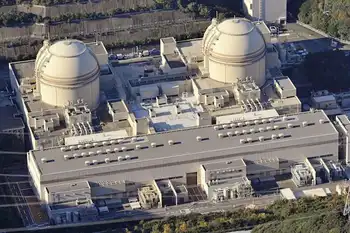
Climate change can affect every aspect of nuclear plant operations like fuel handling, power and steam generation and the need for resilient power systems planning, maintenance, safety systems and waste processing, the credit rating agency said.

However, the ultimate credit impact will depend upon the ability of plant operators to invest in carbon-free electricity and other mitigating measures to manage these risks, it added.
Close proximity to large water bodies increase the risk of damage to plant equipment that helps ensure safe operation, the agency said in a note.

Moody’s noted that about 37 gigawatts (GW) of U.S. nuclear capacity is expected to have elevated exposure to flood risk and 48 GW elevated exposure to combined rising heat, extreme heat costs and water stress caused by climate change.

Parts of the Midwest and southern Florida face the highest levels of heat stress, while the Rocky Mountain region and California face the greatest reduction in the availability of future water supply, illustrating the need for adapting power generation to drought strategies, it said.

Nuclear plants seeking to extend their operations by 20, or even 40 years, beyond their existing 40-year licenses in support of sustaining U.S. nuclear power and decarbonization face this climate hazard and may require capital investment adjustments, Moody’s said, as companies such as Duke Energy climate report respond to investor pressure for climate transparency.

“Some of these investments will help prepare for the increasing severity and frequency of extreme weather events, highlighting that the US electric grid is not designed for climate impacts today.”


Related News

View more

Sign Up for Electricity Forum’s Newsletter

Stay informed with our FREE Newsletter — get the latest news, breakthrough technologies, and expert insights, delivered straight to your inbox.

Electricity Today T&D Magazine Subscribe for FREE

Stay informed with the latest T&D policies and technologies.
  • Timely insights from industry experts
  • Practical solutions T&D engineers
  • Free access to every issue

Live Online & In-person Group Training

Advantages To Instructor-Led Training – Instructor-Led Course, Customized Training, Multiple Locations, Economical, CEU Credits, Course Discounts.

Request For Quotation

Whether you would prefer Live Online or In-Person instruction, our electrical training courses can be tailored to meet your company's specific requirements and delivered to your employees in one location or at various locations.