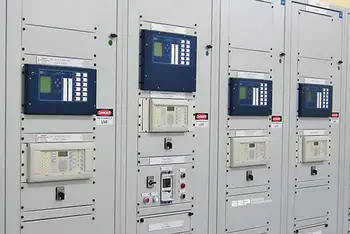
Protective Relay Training - Basic
Our customized live online or in‑person group training can be delivered to your staff at your location.
- Live Online
- 12 hours Instructor-led
- Group Training Available
Regular Price:
$699
Coupon Price:
$599
Canada's growing reliance on gas for power could mean higher prices for natural gas and electricity says the National Energy Board (NEB) in its Energy Market Assessment report, Natural Gas for Power: Issues and Implications.
The report, which discusses the growing use of gas-fired generation to meet Canada's burgeoning electricity needs, says that natural gas demand in Canada is expected to jump more than 10 percent by 2010 with about 42 percent of that growth earmarked for gas-fired generation. However, as the demand for natural gas in North America is expected to outpace traditional supply sources, already volatile natural gas prices, which have fallen recently, could climb over the long term.
"The growing use of natural gas for electricity raises a number of questions related to natural gas supply and cost and uncertainties surrounding the adequacy of energy infrastructure," said NEB Chairman Kenneth Vollman. "I think these are issues that warrant some discussion and debate by Canadians."
Nearly 10 percent of Canadian electricity generation is now fueled by natural gas, more than double the 1995 output. As this number grows, the price of electricity could be affected by the price of natural gas.
The increased use of natural gas for power is not only a Canadian phenomenon. Fueled by the growing demand for electricity and the relative ease of building new gas-fired plants, more than 200 000 MW or 96 percent of all new electricity generation capacity installed in the United States since 1998 is capable of using natural gas. Today, nearly half of electricity generation capacity south of the border is gas-fired.
The North American boom in gas-fired generation is largely attributed to relatively short construction times, low capital costs, low natural gas prices through the 1990s and the preference for natural gas because of its cleaner burning properties. Growth is expected to be particularly strong in Alberta, where about 40 percent of installed capacity is fired by natural gas and Ontario, where the provincial government has committed to phasing out 7 500 MW of coal-fired generation by 2009.
This substantial and rapid growth of natural gas for electricity raises questions about the adequacy of existing natural gas and electricity infrastructure. In some regions, new services and infrastructure may be needed, which means either absorbing the cost of construction or reserving capacity on pipelines currently being used for other natural gas services.
Another barrier that could put the brakes on the growth of gas-fired generation is the availability of adequate gas supplies at competitive prices.
With only marginal North American production growth expected through 2006, any increased demand for gas-fired generation would mean that less natural gas would be available for other consumers. The substantial amount of gas that is expected to be required for power generation in Ontario alone, will at the very least increase competition for natural gas in the region and likely cause associated costs to climb.
Related News

The Innovative Solution Bringing Electricity To Crisis Stricken Areas
Toyota and Honda Moving e delivers hydrogen backup power via a fuel cell bus, portable…
View more
Texas Authorizes Emergency Grid Backup Power
Texas officials granted emergency authority for the grid operator to direct data centers and large…
View more
The German economy used to be the envy of the world. What happened?
Germany's Economic Downturn reflects an energy crisis, deindustrialization risks, export weakness, and manufacturing stress, amid…
View more

UN: Renewable Energy Ambition in NDCs must Double by 2030
NDC Renewable Energy Ambition drives COP25 calls to align with the Paris Agreement, as IRENA…
View more

Duke solar solicitation nearly 6x over-subscribed
Duke Energy Carolinas Solar RFP draws 3.9 GW of utility-scale bids, oversubscribed in DEP and…
View more
Substation Maintenance Training
Substation Maintenance Training delivers live online instruction on testing switchgear, circuit breakers, transformers, protective relays,…
View more
Sign Up for Electricity Forum’s Newsletter
Stay informed with our FREE Newsletter — get the latest news, breakthrough technologies, and expert insights, delivered straight to your inbox.
Electricity Today T&D Magazine Subscribe for FREE

Stay informed with the latest T&D policies and technologies.
- Timely insights from industry experts
- Practical solutions T&D engineers
- Free access to every issue

