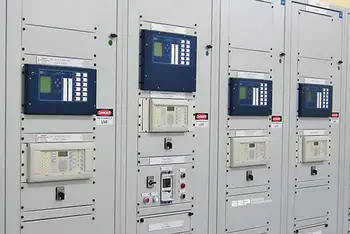
Protective Relay Training - Basic
Our customized live online or in‑person group training can be delivered to your staff at your location.
- Live Online
- 12 hours Instructor-led
- Group Training Available
Regular Price:
$699
Coupon Price:
$599
Do federal prosecutors in the Enron trial need the headache of calling Andrew Fastow, the Enron figure whom some view as the government's star witness?
A steady drumbeat of damaging testimony in the five-week-old criminal trial against the former chief executives Jeffrey Skilling and Kenneth Lay has led legal experts to praise the government case presented so far. That has raised questions about the risks prosecutors would run by putting Fastow, the former chief financial officer, on the stand.
Fastow, who has already pleaded guilty to many felonies, is raw meat in the eyes of defense lawyers, who have portrayed him as the chief architect of the only fraud that took place at Enron. They have described Fastow's actions as a "minor thievery" of tens of millions of dollars that was not big enough to sink the company and have contended that Fastow and his small cadre kept the major crime hidden from Skilling and Lay.
"If you're stealing from the house, you don't tell the boss," Michael Ramsey, Lay's lead lawyer, said of Fastow in his opening statement.
But Fastow could become important to reinforce damaging testimony already leveled against Skilling and to help strengthen a case against Lay that legal experts say is lacking.
"The government will be marshaling its efforts in the coming weeks to bolster its case against Lay, but it will be a tough task," said Christopher Bebel, a former federal prosecutor based in Houston.
Little in the government's case has played out as anticipated a few months ago. Legal experts had expected a drawn-out affair, delving deeply into Enron's books and accounting tactics, with Fastow serving as the jury's guide to the byzantine partnerships used to burnish the company's financial statements.
But prosecutors have avoided conflicting expert opinions on the maze of accounting rules and financial treatments. Instead, they have focused on what people said, both inside the company and to the public, in the two years leading up to Enron's collapse into bankruptcy in December 2001.
Prosecutors have presented what might be called a mosaic of specific instances in which witnesses said Skilling and Lay intentionally misled investors and Wall Street about the financial performance of individual Enron divisions and the company as a whole.
The result, experts said, is that Fastow, who would elicit aggressive cross-examination about the millions of dollars he stole from Enron and the myriad other blemishes on his character, may not be needed as a witness.
"Prosecutors have made their case, and from a strategic standpoint, Fastow's evidence offers more of the same," said David Berg, a specialist in white-collar crime in Houston.
Fastow's appearance on the stand seemed to diminish in importance last week with the testimony of David Delainey, the former chief executive of Enron's energy services retail unit. Delainey described a meeting in Skilling's office on March 29, 2001, at which he said a plan was devised to shift more than $200 million in losses from troubled retail contracts to another unit. The apparent intention was to mislead investors about the problems in the retail division.
While Skilling did not order Delainey to go forward with the plan, he did not stop it, either. The meeting was the strongest and most specific evidence yet linking Skilling to the sort of criminal conspiracy alleged by the government.
In October 2001, Delainey, still pained by the decision, commiserated with Greg Whalley, then the Enron president, about the transfer of the contracts. "Yeah, that was a little dirty," Delainey recalled Whalley telling him.
Paula Rieker, a former manager of investor relations and corporate secretary, also provided memorable testimony, including her contention that Skilling had told her to omit from a press release a mention that profit in the broadband business was coming from the sale of a stock of an outside company, not from broadband's core business.
Citing e-mail messages and handwritten notes, Rieker said Lay had lied to employees and analysts who questioned him about the company's cash position and his Enron stock holdings in late 2001.
But Rieker and Delainey suffer from the same problems that have cast some doubt on the strength of the government's prosecution so far. In building its case over four years, the government has rounded up a stable of cooperating witnesses, 16 of whom have pleaded guilty to Enron-related crimes.
The defense has sought to show that crucial witnesses like Rieker, Delainey and the former chief of the broadband unit, Kenneth Rice, were liars facing long prison terms and thus had strong motivation to shade their testimony to support allegations against Skilling and Lay.
Daniel Petrocelli, Skilling's lead lawyer, bore into Delainey on cross-examination, portraying his sudden crisis of conscience as all too convenient. Petrocelli also mocked Delainey for not having confronted Skilling for deceiving him about the troubled state of the retail unit before Delainey took it over.
"It was kind of like there was no honor among thieves?" Petrocelli asked. Delainey replied, "I guess."
"Why didn't you just quit?" Petrocelli asked Rieker, who was paid $5 million in 2000-1. "I considered it on a number of occasions," she said, but "I was very well compensated." She added, "I didn't have the nerve to quit."
Related News
Kenya on Course for $5 Billion Nuclear Plant to Power Industry
Kenya Nuclear Power Plant Project advances with environmental impact assessment, selecting Tana River County under…
View more
Nova Scotia can't order electric utility to lower power rates, minister says
Nova Scotia Power Rate Regulation explains how the privately owned utility is governed by the…
View more
Canada's looming power problem is massive but not insurmountable: report
Canada Net-Zero Electricity Buildout will double or triple power capacity, scaling clean energy, renewables, nuclear,…
View more
Data Centers May Increase Canadian Electricity Bills
Analysts warn that rising data-center and AI demand threatens to push energy infrastructure costs onto…
View more
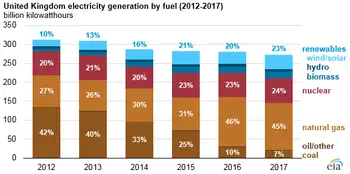
UK low-carbon electricity generation stalls in 2019
UK low-carbon electricity 2019 saw stalled growth as renewables rose slightly, wind expanded, nuclear output…
View more
South Africa's Eskom could buy less power from wind farms during lockdown
Eskom Wind Power Curtailment reflects South Africa's lockdown-driven drop in electricity demand, prompting grid-balancing measures…
View more
Sign Up for Electricity Forum’s Newsletter
Stay informed with our FREE Newsletter — get the latest news, breakthrough technologies, and expert insights, delivered straight to your inbox.
Electricity Today T&D Magazine Subscribe for FREE

Stay informed with the latest T&D policies and technologies.
- Timely insights from industry experts
- Practical solutions T&D engineers
- Free access to every issue

