By Hampton says people should check the http://www.publicpower.ca website regularly for updates on the issue and to sign the NDP's online petition.


NFPA 70e Training - Arc Flash

Our customized live online or in‑person group training can be delivered to your staff at your location.

  • Live Online
  • 6 hours Instructor-led
  • Group Training Available
Regular Price:
$199
Coupon Price:
$149
Reserve Your Seat Today
DRYDEN, ON. -- Ontario NDP Leader Howard Hampton  hascalled on Premier Eves to halt Hydro One's sale of 200,000 fixed-price customers to an Alberta company.

"These consumers chose to stay with a trusted power supplier in the midst of the government's dirty deal for privatizing and deregulating our hydro," Hampton said. "It's a betrayal of the highest order to abandon them and sell their contracts out of province."

Hydro One announced last Thursday it was selling its retail energy business for $48 million to a unit of Edmonton-based Epcor Utilities, effective April 30.

When Ontario Hydro was broken up, Hydro One retained the rights to the valued "Ontario Hydro" brand name and has sold fixed-price power contracts to 196,000 customers using the name "Ontario Hydro Energy" and flaunting its roots as a successor company to Ontario Hydro.

Now, without even waiting for public hearings on the privatization of Hydro One, these customers are being bundled up and sold to an Alberta company most will never have heard of.

"Premier Eves should halt this sale and call off the deregulation and privatization of Hydro until the people of Ontario have a chance to decide this issue in the next election," Hampton said.

Related News

Cabinet Of Ministers Of Ukraine - Prime Minister: Our Goal In The Energy Sector Is To Synchronize Ukraine's Integrated Power System With Entso-e

Ukraine's EU Energy Integration aims for ENTSO-E synchronization, electricity market liberalization, EU Green Deal alignment, energy efficiency upgrades, hydrogen development, and streamlined grid connections to accelerate reform, market pricing, and sustainable growth.


Key Points

Ukraine's EU Energy Integration syncs with ENTSO-E, liberalizes power markets, and aligns with the EU Green Deal.

✅ ENTSO-E grid synchronization and cross-border trade readiness

✅ Electricity market liberalization and market-based pricing

✅ EU Green Deal alignment: efficiency, hydrogen, coal regions


Ukraine's goal in the energy sector is to ensure the maximum integration of energy markets with EU markets, and in line with the EU plan to dump Russian energy that is reshaping the region, synchronization of Ukraine's integrated energy system with ENTSO-E while leaning on electricity imports as needed to maintain stability. Prime Minister Denys Shmyhal emphasized in his statement at the Fourth Ukraine Reform Conference underway through July 7-8 in Vilnius, the Republic of Lithuania.

The Head of Government presented a plan of reforms in Ukraine until 2030. In particular, energy sector reform and environmental protection, according to the PM, include the liberalization of the electricity market, with recent amendments to the market law guiding implementation, the simplification of connection to the electrical grid system and the gradual transition to market electricity prices, alongside potential EU emergency price measures under discussion, and the monetization of subsidies for vulnerable groups.

"Ukraine shares and fully supports the EU's climate ambitions and aims to synchronize its policies in line with the EU Green Deal, including awareness of Hungary's energy alignment with Russia to ensure coherent regional planning. The interdepartmental working group has determined priority areas for cooperation with the European Union: energy efficiency, hydrogen, transformation of coal regions, waste management," said the Prime Minister.

According to Denys Shmyhal, Ukraine has supported the EU's climate ambitions to move towards climate-neutral development by 2050 within the framework of the European Green Deal and should become an integral part of it in order not only to combat the effects of climate change in synergy with the EU but, as the country prepares for winter energy challenges and strengthens resilience, within the economic strategy development aimed to enhance security and create new opportunities for Ukrainian business, with continued energy security support from partners bolstering implementation.


Related News

View more

Looming Coal and Nuclear Plant Closures Put ‘Just Transition’ Concept to the Test

Just Transition for Coal and Nuclear Workers explains policy frameworks, compensation packages, retraining, and community support during decarbonization, plant closures, and energy shifts across Europe and the U.S., including Diablo Canyon and Uniper strategies.


Key Points

A policy approach to protect and retrain legacy power workers as coal and nuclear plants retire during decarbonization.

✅ Germany and Spain fund closures with compensation and retraining.

✅ U.S. lacks federal support; Diablo Canyon is a notable exception.

✅ Firms like Uniper convert coal sites to gas and clean energy roles.


The coronavirus pandemic has not changed the grim reality facing workers at coal and nuclear power plants in the U.S. and Europe. How those workers will fare in the years ahead will vary greatly based on where they live and the prevailing political winds.

In Europe, the retirement of aging plants is increasingly seen as a matter of national concern. Germany this year agreed to a €40 billion ($45 billion) compensation package for workers affected by the country's planned phaseout of coal generation by 2038, amid its broader exit from nuclear power as part of its energy transition. Last month the Spanish authorities agreed on a just transition plan affecting 2,300 workers across 12 thermal power plants that are due to close this year.

In contrast, there is no federal support plan for such workers in the U.S., said Tim Judson, executive director at the Maryland-based Nuclear Information and Resource Service, which lobbies for an end to nuclear and fossil-fuel power.

For all of President Donald Trump’s professed love of blue-collar workers in sectors such as coal, “where there are economic transitions going on, we’re terrible at supporting workers and communities,” Judson said of the U.S. Even at the state level, support for such workers is "almost nonexistent,” he said, “although there are a lot of efforts going on right now to start putting in place just transition programs, especially for the energy sector.”

One example that stands out in the U.S. is the support package secured for workers at utility PG&E's Diablo Canyon Power Plant, California's last operating nuclear power plant that is scheduled for permanent closure in 2025. “There was a settlement between the utility, environmental groups and labor unions to phase out that plant that included a very robust just transition package for the workers and the local community,” Judson said.

Are there enough clean energy jobs to replace those being lost?
Governments are more likely to step in with "just transition" plans where they have been responsible for plant closures in the first place. This is the case for California, Germany and Spain, all moving aggressively to decarbonize their energy sectors and pursue net-zero emissions policy goals.

Some companies are beginning to take a more proactive approach to helping their workers with the transition. German energy giant Uniper, for example, is working with authorities to save jobs by seeking to turn coal plants into lower-emissions gas-fired units.

Germany’s coal phaseout will force Uniper to shut down 1.5 gigawatts of hard-coal capacity by 2022, but the company has said it is looking at "forward-looking" options for its plants that "will be geared toward tomorrow's energy world and offer long-term employment prospects."

Christine Bossak, Uniper’s manager of external communications, told GTM this approach would be adopted in all the countries where Uniper operates coal plants.

Job losses are usually inevitable when a plant is closed, Bossak acknowledged. “But the extent of the reduction depends on the alternative possibilities that can be created at the site or other locations. We will take care of every single employee, should he or she be affected by a closure. We work with the works council and our local partners to find sustainable solutions.”

Diana Junquera Curiel, energy industry director for the global union federation IndustriALL, said such corporate commitments looked good on paper — but the level of practical support depends on the prevailing political sentiment in a country, as seen in Germany's nuclear debate over climate strategy.

Even in Spain, where the closure of coal plants was being discussed 15 years ago, a final agreement had to be rushed through at the last minute upon the arrival of a socialist government, Junquera Curiel said. An earlier right-wing administration had sat on the plan for eight years, she added.

The hope is that heel-dragging over just transition programs will diminish as the scale of legacy plant closures grows.

Nuclear industry facing a similar challenge as coal
One reason why government support is so important is there's no guarantee a burgeoning clean energy economy will be able to absorb all the workers losing legacy generation jobs. Although the construction of renewable energy projects requires large crews, it often takes no more than a handful of people to operate and maintain a wind or solar plant once it's up and running, Junquera Curiel observed.

Meanwhile, the job losses are unlikely to slow. In Europe, Austria and Sweden both closed their last coal-fired units recently, even as Europe loses nuclear capacity in key markets.

In the U.S., the Energy Information Administration's base-case prediction is that coal's share of power generation will fall from 24 percent in 2019 to 13 percent in 2050, while nuclear's will fall from 20 percent to 12 percent over that time horizon. The EIA has long underestimated the growth trajectory of renewables in the mix; only in 2020 did it concede that renewables will eventually overtake natural gas as the country's largest source of power.

The Institute for Energy Economics and Financial Analysis has predicted that even a coronavirus-inspired halt to renewables is unlikely to stop a calamitous drop in coal’s contribution to U.S. generation.

The nuclear sector faces a similar challenge as coal, albeit over a longer timeline. Last year saw the nuclear industry starting to lose capacity worldwide in what could be the beginning of a terminal decline, highlighted by Germany's shutdown of its last three reactors in 2023. Last week, the Indian Point Energy Center closed permanently after nearly half a century of cranking out power for New York City.*

“Amid ongoing debates over whether to keep struggling reactors online in certain markets, the industry position would be that governments should support continued operation of existing reactors and new build as part of an overall policy to transition to a sustainable clean energy system,” said Jonathan Cobb, senior communication manager at the World Nuclear Association.

If this doesn’t happen, plant workers will be hoping they can at least get a Diablo Canyon treatment. Based on the progress of just transition plans so far, that may depend on how they vote just as much as who they work for.


Related News

View more

Turkish powership to generate electricity from LNG in Senegal

Karpowership LNG powership in Senegal will supply 15% of the grid, a 235 MW floating power plant bound for Dakar, enabling fast deployment, base-load electricity, and cleaner natural gas generation for West Africa.


Key Points

A 235 MW floating plant supplying 15% of Senegal's grid with fast, reliable, lower-emission LNG electricity.

✅ 235 MW LNG-ready floating plant meets 15% of Senegal's demand

✅ Rapid deployment: commercial operations expected early October

✅ Cleaner natural gas conversion planned after six months


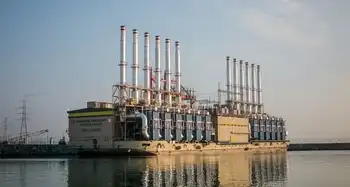
Turkey's Karpowership company, the designer and builder of the world's first floating power plants and the global brand of Karadeniz Holding, will meet 15% of Senegal's electricity needs from liquefied natural gas (LNG) with the 235-megawatt (MW) powership Ayşegül Sultan, which started its voyage from Turkey to Senegal, where an African Development Bank review of a coal plant is underway, on Sunday.

Karpowership, operating 22 floating power plants in more than 10 countries around the world, where France's first offshore wind turbine is now producing electricity, has invested over $5 billion in this area.

In a statement to members of the press at Karmarine Shipyard, Karpowership Trade Group Chair Zeynep Harezi said they aimed to provide affordable electricity to countries in need of electricity quickly and reliably, as projects like the Egypt-Saudi power link expand regional grids, adding that they could commission energy ships capable of generating the base electric charge of the countries, as tidal power in Nova Scotia begins supplying the grid, in a period of about a month.

Harezi recalled that Karpowership commissioned the first floating energy ship in 2007 in Iraq, followed by Lebanon, Ghana, Indonesia, Mozambique, Zambia, Gambia, Sierra Leone, Sudan, Cuba, Guinea Bissau and Senegal, while Scottish tidal power demonstrates marine potential as well. "We meet the electricity needs of 34 million people in many countries," she stressed. Harezi stated that the energy ships, all designed and produced by Turkish engineers, use liquid fuel, but all ships can covert to the second fuel.

Considering the impact of electricity production on the environment, Harezi noted that they plan to convert the entire fleet from liquid fuel to natural gas, with complementary approaches like power-to-gas in Europe helping integrate renewables. "With a capacity of 480 megawatts each, the world's largest floating energy vessels operate in Indonesia and Ghana. The conversion to gas has been completed in our project in Indonesia. We have also initiated the conversion of the Ghana vessel into gas," she said.

Harezi explained that they would continue to convert their fleets to natural gas in the coming period. "Our 235-MW floating electric vessel, the Ayşegül Sultan, sets sail today to meet 15% of Senegal's electricity needs on its own. After an approximately 20-day cruise, the vessel will reach Dakar, the capital of Senegal, and will begin commercial operation in early October," Harezi continued. "We plan to use liquid fuel as bridging fuel in the first six months. At the end of the first six months, we will start to produce electricity from LNG on our ship. Thus, Ayşegül Sultan will be the first project to generate electricity from LNG in Africa, while the world's most powerful tidal turbine is delivering power to the grid, officials said. Our floating power plant to be sent to Mozambique is designed to generate electricity from LNG. It is also scheduled to start operations in the next year."


Related News

View more

Covid-19 crisis hits solar and wind energy industry

COVID-19 Impact on US Renewable Energy disrupts solar and wind projects, dries up tax equity financing, strains supply chains, delays construction, and slows jobs growth amid limited federal stimulus and uncertain investor appetite.


Key Points

COVID-19 has slowed US clean energy growth by curbing tax equity, disrupting supply chains, and delaying projects.

✅ Tax equity dries up as investor profits fall

✅ Supply chain and construction face pandemic delays

✅ Policy aid and credit extensions sought by industry


Swinerton Renewable Energy had everything it needed to build a promising new solar farm in Texas. It lined up more than 2,000 acres for the $109 million project estimated to generate 400 jobs while under construction. By its completion date, the solar farm was expected to produce 200 megawatts of energy — enough to power about 25,000 homes — and generate big tax breaks for its investors as part of a government program to incentivize clean energy.

But the coronavirus pandemic put everything on hold. The solar farm’s backers aren’t sure they will make enough money from other investments during the pandemic-fueled downturn for those tax breaks to be worth it. So the project has been delayed at least six months.

“This is not a shortage of materials. It is not a pricing issue,” said George Hershman, president of Swinerton Renewable Energy. “Everything was pointing to successful projects.”

The coronavirus crisis is not only battering the oil and gas industry. It’s drying up capital and disrupting supply chains for businesses trying to move the country toward cleaner sources of energy.

While President Trump has promised lifelines for airlines and oil companies struggling with a drastic decrease in demand as Americans remain under stay-at-home orders, there is little focus in Washington on economic relief for this sector, despite a power coalition's call for action to address the pandemic — unlike during the Great Recession a decade ago, when Congress and the Obama administration earmarked an unprecedented sum for renewable energy and more efficient automobiles in a stimulus bill.

“We don’t want to lose our great oil companies,” Trump said during an April 1 news briefing. He so far has not made a similar promise to help wind and solar firms, and none of the four economic rescue and stimulus packages that Congress has passed to respond to the coronavirus crisis set aside any money for renewable energy specifically.

Sign up for our Coronavirus Updates newsletter to track the outbreak. All stories linked in the newsletter are free to access.

The impact of the crisis is already clear: About 106,000 clean-energy workers have already filed for unemployment in March alone, according to an analysis of Bureau of Labor Statistics data by Environmental Entrepreneurs, an advocacy group.

The layoffs are a blow to a sector that has prided itself on official projections that solar installers and wind turbine technicians would be the two fastest growing occupations over the next decade.

The job losses include not just wind and solar construction workers, but also those assembling electric cars and installing energy-efficient appliances, lighting, heating and air conditioning.

“These aren’t left-wing coastal hippies,” said Bob Keefe, executive director of Environmental Entrepreneurs. “These are construction workers who get up every day and lace up their boots and pull on their gloves and go to work putting insulation in our attics.”

Despite the economic turmoil, climate experts say the coronavirus pandemic could be an opportunity to make drastic shifts in the energy landscape, with green investments potentially driving a robust recovery. They say governments around the world should help fund renewable energy and use the turmoil in energy markets to remake the industry and slash carbon dioxide emissions, which will tumble 8 percent this year, according to the International Energy Agency.

The agency said that while global energy demand fell 3.8 percent in the first quarter, renewables were the only source to post an increase in demand, rising 1.5 percent thanks to new renewable power plants, low operating costs and priority on some electricity grids.

But many investors, who rely on a broad mix of investments, are spooked. “Everything is quiet because people want to see where we land with the current crisis, and people are holding on to cash,” said Daniel Klier, the global head of sustainable finance at HSBC bank. “As soon as people have a bit of confidence that the market is recovering, they can get projects going.”

Social distancing and the country’s stay-at-home orders are also having a deep effect on daily operations. The areas hardest hit are installing solar panels on rooftops and adding energy-efficiency measures inside homes — work that often requires face-to-face interactions. Sungevity, once one of the nation’s leading solar-installation companies, laid off 377 workers, most of its workforce, in late March, according to filings with California’s Employment Development Department. The company, which had emerged from a 2017 bankruptcy, cited economic conditions.

The push to promote a more fuel-efficient automobile fleet has also veered off track. The electric car maker Tesla was forced to shut down its factory in Fremont, Calif., just as it was turning up production on its new crossover vehicle, the Model Y.

Lockdown orders across the country led Tesla’s outspoken chief executive, Elon Musk, to launch into an expletive-laden rant during an earnings call last week in which Tesla posted a lukewarm profit of $16 million.

“To say that they cannot leave their house and they will be arrested if they do,” Musk said, “this is fascist.”

Sungevity and Tesla represent only a sliver of the economic pain in this sector across the country. The Solar Energy Industries Association had anticipated a growth in solar jobs, from 250,000 to 300,000, over the course of the year, said the group’s president, Abigail Ross Hopper. Now, she said, half the workforce is at risk.

“Shelter in place puts limitations on how people can work,” she said. “Literally, people don’t want other people inside their houses to fix electrical boxes. And there are no door-to-door sales.”

Bigger projects are also grappling with the pandemic economy, though not as severely. Hopper said the industry was geared up to increase the number of new solar farms, in part to take advantage of federal tax credits. “We were on track to do almost 20 gigawatts, which would have been the highest year yet,” Hopper said. That would have been enough to power about 3.7 million homes. Now she expects new projects will come closer to last year’s 13.27 gigawatts’ worth of new construction, after a report on utility-scale solar delays warned of widespread slowdowns, enough to run approximately 2.5 million homes.

Wind energy companies, too, are bracing for lost progress unless the federal government steps in. The American Wind Energy Association said projects that would add 25 gigawatts of wind power to the U.S. grid are at risk of being scaled back or canceled outright over the next two years because of the pandemic. Altogether, that work represents about 35,000 jobs.

“2019 was a good year for the wind industry,” said Tom Kiernan, the association’s chief executive. “We were expecting 2020 to be an even stronger year.”

One project put on the back burner: an enormous 9 gigawatt offshore wind venture led by the New York State Energy Research and Development Authority set to be completed by 2035.

With New York City besieged by coronavirus cases, the authority said it would comply with an executive order from Gov. Andrew M. Cuomo (D), “pausing” all on-site work on clean-energy projects until at least May 15. Michigan, New Jersey and Pennsylvania also delayed wind turbine projects by deeming construction on them nonessential.

The Danish offshore wind firm Orsted said that plans for offshore U.S. wind installations would move “at a slower pace than originally expected due to a combination of the Bureau of Ocean Energy Management’s prolonged analysis of the cumulative impacts from the build-out of US offshore wind projects, and now also COVID-19 effects.” The company told investors it expects delays on projects off the coasts of New York, New Jersey and Rhode Island totaling almost 3 gigawatts.

The supply chains have also taken a hit during the pandemic: Even if contractors can get the money to erect wind turbines or lay solar arrays, that doesn’t mean they will have the parts. At least two factories that make wind turbine parts — one in North Dakota and another in Iowa — were forced to pause production because of coronavirus outbreaks. Factory shutdowns in China have constrained solar supplies, too.

The key reason for delaying most big solar and wind projects is the use of tax credits known as “tax equity.” These allow investors, such as banks, to use the credits to directly offset their overall tax burdens. But if an investor doesn’t have enough profit to offset the credits, the tax equity could become worthless.

“If your profitability is going down, you don’t have the same appetite,” Hopper said.

Solar and wind industry leaders are pressing Congress and the Trump administration to extend the eligibility period for tax credits that are due to expire, with senators urging support for clean energy in relief packages, and to make the tax credits refundable, meaning the government would issue a check to investors who do not have enough profit to justify their investments.

Currently, big wind turbines get a 1.5 cents per kilowatt hour tax credit if construction begins before the end of this year. Tax credits for residential renewable energy — solar panels and small wind — phase out by the end of 2021, and debate over a potential solar ITC extension continues to shape expectations in the wind market.

The lack of attention to renewables in Congress’s relief efforts so far is in stark contrast to 2009, when the United States spent $112 billion to boost “green” energy, according to the World Resources Institute. The government’s package then provided a mixture of grants and loans for a variety of renewable energy ventures — including a $465 million loan Tesla used to get its Fremont factory off the ground.

This year, a handful of clean-energy firms, including a Connecticut-based manufacturer of fuel cells and an Ohio-based maker of energy-efficient lighting systems, took money from a federal small-business lending program, before funds ran dry in the middle of last month. Broadwind Energy, a maker of steel wind energy towers based outside Chicago, received $9.5 million in small-business loans, one of the biggest totals in the program.

So far, the Trump administration has shown far more eagerness to help American petroleum producers that the president said were “ravaged” by a sharp drop in energy demand. Last month, Trump met with oil executives at the White House, and Energy Secretary Dan Brouillette has floated the idea of bridge loans for struggling oil firms.

During negotiations for the last relief package, congressional Democrats tried to strike a deal to refill the nation’s Strategic Petroleum Reserve in exchange for extending the clean-energy incentives, but Senate Majority Leader Mitch McConnell (R-Ky.) rebuffed those calls.

“Democrats won’t let us fund hospitals or save small businesses unless they get to dust off the Green New Deal,” McConnell said in March.

Already, Democrats are signaling they will make a push again in the next round of stimulus spending.

“Relief and recovery legislation will shape our society for years to come,” said Rep. A. Donald McEachin (D-Va.), vice chair of the House Sustainable Energy and Environment Coalition, a caucus that supports renewable energy resources. “We must use these bills to build in a climate-smart way.”

But it remains unclear how much appetite the GOP will have for a deal. “I just don’t know how to handicap that at this point,” said Grant Carlisle, an analyst at the Natural Resources Defense Council, a major environmental group.

Kiernan, the head of the American Wind Energy Association, said his group has “gotten a very good reception with the administration and with the Hill” when it comes to coronavirus relief, but he declined to go into specifics.

In other parts of the world, governments have been providing support for renewables. The European Union has its own Green New Deal, and China is expected to support wind and solar to get the economy moving more quickly.

Some energy analysts note that big oil companies don’t have to wait for government stimulus. The price of oil is so low that they would be better off investing in wind and solar, they say.

“For all these oil companies, the returns on these renewable projects are better than what they can do in the oil and gas industry,” said Sarah Ladislaw, director of the energy program at the Center for Strategic and International Studies. “Now is a good time to do that and tell their investors.”

This fits in with their broader goals, analysts contend. After all, Royal Dutch Shell recently matched BP’s earlier promise to aim to be net-zero for carbon emissions by 2050.

Shell’s chief executive Ben van Beurden has said the company would try to protect its low-carbon Integrated Gas and New Energies division from the largest spending cuts as it sought to weather the pandemic. “We must maintain focus on the long term,” he said in a video message. “Society expects nothing less.”


Related News

View more

Soaring Electricity And Coal Use Are Proving Once Again, Roger Pielke Jr's "Iron Law Of Climate"

Global Electricity Demand Surge underscores rising coal generation, lagging renewables deployment, and escalating emissions, as nations prioritize reliable power; nuclear energy and grid decarbonization emerge as pivotal solutions to the electricity transition.


Key Points

A rapid post-lockdown rise in power consumption, outpacing renewables growth and driving higher coal use and emissions.

✅ Coal generation rises faster than wind and solar additions

✅ Emissions increase as economies prioritize reliable baseload power

✅ Nuclear power touted for rapid grid decarbonization


By Robert Bryce

As the Covid lockdowns are easing, the global economy is recovering and that recovery is fueling blistering growth in electricity use. The latest data from Ember, the London-based “climate and energy think tank focused on accelerating the global electricity transition,” show that global power demand soared by about 5% in the first half of 2021. That’s faster growth than was happening back in 2018 when electricity use was increasing by about 4% per year.

The numbers from Ember also show that despite lots of talk about the urgent need to reduce greenhouse gas emissions, coal demand for power generation continues to grow and emissions from the electric sector continue to grow: up by 5% over the first half of 2019. In addition, they show that while about half of the growth in electricity demand was met by wind and solar, as low-emissions sources are set to cover almost all new demand over the next three years, overall growth in electricity use is still outstripping the growth in renewables. 

The soaring use of electricity, and increasing emissions from power generation confirm the sage wisdom of Rasheed Wallace, the volatile former power forward with the Detroit Pistons and other NBA teams, and now an assistant coach at the  University of Memphis, who coined the catchphrase: “Ball don’t lie.” If Wallace or one of his teammates was called for a foul during a basketball game that he thought was undeserved, and the opposing player missed the ensuing free throws, Wallace would often holler, “ball don’t lie,” as if the basketball itself was pronouncing judgment on the referee’s errant call. 

I often think about Wallace’s catchphrase while looking at global energy and power trends and substitute my own phrase: numbers don’t lie.

Over the past few weeks Ember, BP, and the International Energy Agency have all published reports which come to the same two conclusions: that countries all around the world — and China's electricity sector in particular — are doing whatever they need to do to get the electricity they need to grow their economies. Second, they are using lots of coal to get that juice. 

As I discuss in my recent book, A Question of Power: Electricity and the Wealth of Nations, Electricity is the world’s most important and fastest-growing form of energy. The Ember data proves that. At a growth rate of 5%, global electricity use will double in about 14 years, and as surging electricity demand is putting power systems under strain around the world, the electricity sector also accounts for the biggest single share of global carbon dioxide emissions: about 25 percent. Thus, if we are to have any hope of cutting global emissions, the electricity sector is pivotal. Further, the soaring use of electricity shows that low-income people and countries around the world are not content to stay in the dark. They want to live high-energy lives with access to all the electronic riches that we take for granted.  

 Ember’s data clearly shows that decarbonizing the global electric grid will require finding a substitute for coal. Indeed, coal use may be plummeting in the U.S. and western Europe, where U.S. electricity consumption has been declining, but over the past two years, several developing countries including Mongolia, China, Bangladesh, Vietnam, Kazakhstan, Pakistan, and India, all boosted their use of coal. This was particularly obvious in China, where, between the first half of 2019 and the first half of 2021, electricity demand jumped by about 14%. Of that increase, coal-fired generation provided roughly twice as much new electricity as wind and solar combined. In Pakistan, electricity demand jumped by about 7%, and coal provided more than three times as much new electricity as nuclear and about three times as much as hydro. (Wind and solar did not grow at all in Pakistan over that period.) 

Hate coal all you like, but its century-long persistence in power generation proves its importance. That persistence proves that climate change concerns are not as important to most consumers and policymakers as reliable electricity. In 2010, Roger Pielke Jr. dubbed this the Iron Law of Climate Policy which says “When policies on emissions reductions collide with policies focused on economic growth, economic growth will win out every time.” Pielke elaborated on that point, saying the Iron Law is a “boundary condition on policy design that is every bit as limiting as is the second law of thermodynamics, and it holds everywhere around the world, in rich and poor countries alike. It says that even if people are willing to bear some costs to reduce emissions (and experience shows that they are), they are willing to go only so far.”

Over the past five years, I’ve written a book about electricity, co-produced a feature-length documentary film about it (Juice: How Electricity Explains the World), and launched a podcast that focuses largely on energy and power. I’m convinced that Pielke’s claim is exactly right and should be extended to electricity and dubbed the Iron Law of Electricity which says, “when forced to choose between dirty electricity and no electricity, people will choose dirty electricity every time.” I saw this at work in electricity-poor places all over the world, including India, Lebanon, and Puerto Rico. 

Pielke, a professor at the University of Colorado as well as a highly regarded author on the politics of climate change and sports governance, has since elaborated on the Iron Law. During an interview in Juice, he explained it thusly: “The Iron Law says we’re not going to reduce emissions by willingly getting poor. Rich people aren't going to want to get poorer, poor people aren't going to want to get poorer.” He continued, “If there is one thing that we can count on it is that policymakers will be rewarded by populations if they make people wealthier. We're doing everything we can to try to get richer as nations, as communities, as individuals. If we want to reduce emissions, we really have only one place to go and that's technology.”

Pielke’s point reminds me of another of my favorite energy analysts, Robert Rapier, who made a salient point in his Forbes column last week. He wrote, “Despite the blistering growth rate of renewables, it’s important to keep in mind that overall global energy consumption is growing. Even though global renewable energy consumption has increased by about 21 exajoules in the past decade, overall energy consumption has increased by 51 exajoules. Increased fossil fuel consumption made up most of this growth, with every category of fossil fuels showing increased consumption over the decade.” 

The punchline here – despite my tangential reference to Rasheed Wallace — is obvious: The claims that massive reductions in global carbon dioxide emissions must happen soon are being mocked by the numbers. Countries around the world are acting in their interest, particularly when it comes to their electricity needs and that is resulting in big increases in emissions. As Ember concludes in their report, wind and solar are growing, and some analyses suggest renewables could eclipse coal by 2025, but the “electricity transition” is “not happening fast enough.”

Ember explains that in the first half of 2021, wind and solar output exceeded the output of the world’s nuclear reactors for the first time. It also noted that over the past two years, “Nuclear generation fell by 2% compared to pre-pandemic levels, as closures at older plants across the OECD, especially amid debates over European nuclear trends, exceeded the new capacity in China.” While that may cheer anti-nuclear activists at groups like Greenpeace and Friends of the Earth, the truth is obvious: the only way – repeat, the only way – the electric sector will achieve significant reductions in carbon dioxide emissions is if we can replace lots of coal-fired generation with nuclear reactors and do so in relatively short order, meaning the next decade or so. Renewables are politically popular and they are growing, but they cannot, will not, be able to match the soaring demand for the electricity that is needed to sustain modern economies and bring developing countries out of the darkness and into modernity. 

Countries like China, Vietnam, India, and others need an alternative to coal for power generation. They need new nuclear reactors that are smaller, safer, and cheaper than the existing designs. And they need it soon. I will be writing about those reactors in future columns.


Related News

View more

Australian operator warns of reduced power reserves

Australia Electricity Supply Shortfall highlights AEMO's warning of reduced reserves as coal retirements outpace capacity, risking load shedding. Calls for 1GW strategic reserves and investment in renewables, storage, and dispatchable power in Victoria.


Key Points

It is AEMO's forecast of reduced reserves, higher outage risk, and a need for 1GW strategic backup capacity.

✅ Coal retirements outpacing firm, dispatchable capacity

✅ AEMO urges 1GW strategic reserves in Victoria and South Australia

✅ Investment needed: renewables, storage, grid and reliability services


Australia’s electricity operator has warned of threats to electricity supply including a shortfall in generation and reduced power reserves on the horizon.

The Australian Energy Market Operator (AEMO) has called for further investment in the country’s energy portfolio as retiring coal plants are replaced by intermittent renewables poised to eclipse coal, leaving the grid with less back-up capacity.

AEMO has said this increases the chances of supply interruption and load shedding.

It added the federal government should target 1GW of strategic reserves in the states most at risk – Victoria and South Australia, even as the Prime Minister has ruled out taxpayer-funded power plants in the current energy battle.

CEO of the Clean Energy Council, Kane Thornton, said the shortfall in generation, reflected in a short supply of electricity, was due a decade of indecisiveness and debate leading to a “policy vacuum”.

He added: “The AEMO report revealed that the new projects added to the system under the renewable energy target will help to improve reliability over the next few years.

“We need to accept that the energy system is in transition, with lessons from dispatchable power shortages in Europe, and long term policy is now essential to ensure private investment in the most efficient new energy technology and solutions.”


Related News

View more

Sign Up for Electricity Forum’s Newsletter

Stay informed with our FREE Newsletter — get the latest news, breakthrough technologies, and expert insights, delivered straight to your inbox.

Electricity Today T&D Magazine Subscribe for FREE

Stay informed with the latest T&D policies and technologies.
  • Timely insights from industry experts
  • Practical solutions T&D engineers
  • Free access to every issue

Live Online & In-person Group Training

Advantages To Instructor-Led Training – Instructor-Led Course, Customized Training, Multiple Locations, Economical, CEU Credits, Course Discounts.

Request For Quotation

Whether you would prefer Live Online or In-Person instruction, our electrical training courses can be tailored to meet your company's specific requirements and delivered to your employees in one location or at various locations.