Coal-fired plants still possible

By Knight Ridder Tribune


Substation Relay Protection Training

Our customized live online or in‑person group training can be delivered to your staff at your location.

  • Live Online
  • 12 hours Instructor-led
  • Group Training Available
Regular Price:
$699
Coupon Price:
$599
Reserve Your Seat Today
Key lawmakers clashed with Gov. Kathleen Sebelius' administration over its recent decision to reject two coal-burning power plants in western Kansas.

The lawmakers indicated they would try to adopt legislation to put the plants back on track.

"I believe that we will have some type of legislative package developed, either before the session starts or after the session begins, to address this issue," said Senate President Steve Morris, R-Hugoton.

But Kansas Health and Environment Secretary Roderick Bremby, who denied the plants because of concerns about global warming, told legislators that future guidelines on carbon dioxide emissions will be considered as power plants come in for permit renewals.

"We do need to take the next step in looking at a climate change action plan," said Bremby, although he said targeted goals for CO2 reductions would not be in the form of regulations.

Bremby faced the legislative equivalent of a firing squad as he was summoned to testify to a recently formed committee composed of only supporters of the two 700-megawatt plants.

"What force of law did you have (to deny the plants)? " asked Rep. Carl Holmes, R-Liberal, who serves as chairman of the Electric Generation Review Committee. Even though the state doesn't regulate carbon dioxide, Bremby said he denied the permits because the CO2 emissions from the plants would have harmed the health of Kansans and the environment.

"CO2 contributes to climate change, which contributes to global warming, which is harmful to all humans," he said.

Repeatedly, members of the committee asked Bremby if he intended to put in place regulations to limit CO2 in existing coal-burning power plants. Bremby said that the state needs to develop a plan to reduce emissions.

"We have an issue we need to deal with," he said.

At times, Bremby backed off answering questions because, he said, the proposal by Hays-based Sunflower Electric Power Corp. will probably be decided in court. Although called to the committee, Attorney General Paul Morrison declined to appear, citing the possibility of future litigation in the case.

Morrison wrote a letter to the panel saying he stood by his legal analysis that Bremby had the authority to deny the permits under Kansas law.

Earlier, Sunflower chief executive officer Earl Watkins Jr. urged legislators to reverse Bremby's decision by passing a law that would restrict the secretary's authority to regulate only what the federal government is allowed to regulate.

Watkins said Bremby's decision was a "callous disregard of the law" that will put the Kansas economy at risk because of "regulatory uncertainty." He said Bremby's order could cause higher electric rates for rural customers, business flight, and force Sunflower to build its next plant in Oklahoma or Texas. And Watkins and others called to testify by Holmes downplayed the effects of carbon dioxide emissions and global warming.

"Carbon dioxide is a substance that sustains life," Watkins said. Executives from Westar Energy and Kansas City Power & Light also testified that Kansas must have more coal-powered plants to meet increasing demand.

Related News
Ermineskin First Nation soon to become major electricity generator

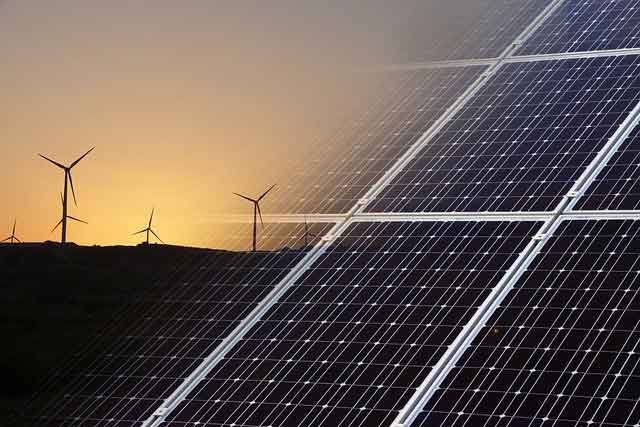
Ermineskin First Nation Solar Project delivers a 1 MW distributed generation array with 3,500 panels, selling power to Alberta's grid, driving renewable energy revenue, jobs, and regional economic development with partner SkyFire Energy.


Key Points

A 1 MW, 3,500-panel distributed generation plant selling power to Alberta's grid to support revenue and jobs.

✅ 1 MW array, 3,500 panels; grid-tied distributed generation

✅ Annual revenue projected at $80k-$150k, scalable

✅ Built with SkyFire Energy; expansion planned next summer


The switch will soon be flipped on a solar energy project that will generate tens of thousands of dollars for Ermineskin First Nation, while energizing economic development across Alberta, where selling renewables is emerging as a promising opportunity.

Built on six acres, the one-megawatt generator and its 3,500 solar panels will produce power to be sold into the province’s electrical grid, providing annual revenues for the band of $80,000 to $150,000, depending on energy demand and pricing.

The project cost $2.7 million, including connection costs and background studies, said Sam Minde, chief executive officer of the band-owned Neyaskweyahk Group of Companies Inc.

It was paid for with grants from the Western Economic Diversification Fund and the province’s Climate Leadership Plan, and, amid Ottawa’s green electricity contracting push, is expected to be connected to the grid by mid-December.

“It’s going to be the biggest distributed generation in Alberta,” he said.

Called the Sundancer generator, it was built and will be operated through a partnership with SkyFire Energy, reflecting how renewable power developers design better projects by combining diverse resources.

Minde said the project’s benefits extend beyond Ermineskin First Nation, one of four First Nations at Maskwacis, 20 km north of Ponoka, in a province where renewable energy surge could power thousands of jobs.

“Our nation is looking to do the best it can in business. It’s competitive, but at the same time, what is good for us is good for the region.

“If we’re creating jobs, we’re going to be building up our economy. And if you look at our region right now, we need to continue to create opportunities and jobs.”

Electricity prices are rock bottom right now, in the six to nine cents per kilowatt hour range, with recent Alberta solar contracts coming in below natural gas on cost. During the oilsands boom, when power demand was skyrocketing, the price was in the 16 to 18 cent range.

That means there is a lot of room for bigger returns for Ermineskin in the future, especially if pipelines such as TransMountain get going or the oilsands pick up again, and as Alberta solar growth accelerates in the years ahead.

The band is so confident that Sundancer will prove a success that there are plans to double it in size, a strategy echoed by community-scale efforts such as the Summerside solar project that demonstrate scalability. By next summer, a $1.5-million to $1.7-million project funded by the band will be built on another six acres nearby.

Minde said the project is an example of the community’s connection with the environment being used to create opportunities and embracing technologies that will likely figure large in the world’s energy future.


Related News

View more

Metering Pilot projects may be good example for Ontario utilities

Ontario Electricity Pricing Pilot Projects explore alternative rates beyond time-of-use, with LDCs and the Ontario Energy Board testing dynamic pricing, demand management, smart-meter billing, and residential customer choice to enhance service and energy efficiency.


Key Points

Ontario LDC trials testing alternatives to time-of-use rates to improve billing, demand response, and efficiency.

✅ Data shared across LDCs and Ontario Energy Board provincewide

✅ Tests dynamic pricing, peak/off-peak plans, demand management

✅ Insights to enhance customer choice, bills, and energy savings


The results from three electricity pilot projects being offered in southern Ontario will be valuable to utility companies across the province.

Ontario Energy Minister Glenn Thibeault was in Barrie on Tuesday to announce the pilot projects, which will explore alternative pricing plans for electricity customers from three different utility companies, informed by the electricity cost allocation framework guiding rate design.

"Everyone in the industry is watching to see how the pilots deliver.", said Wendy Watson, director of communications for Greater Sudbury Utilities.

"The data will be shared will all the LDCs [local distribution companies] in the province, and probably beyond...because the industry tends to share that kind of information."

Most electricity customers in the province are billed using time-of-use rates, including options like the ultra-low overnight rates that lower costs during off-peak periods, where the cost of electricity varies depending on demand.

The Ontario Energy Board said in a media release that the projects will give residential customers more choice in how much they pay for electricity at different times, reflecting changes for Ontario electricity consumers that expand plan options.

Pilot projects can help improve service

Watson says these kinds of projects give LDCs the chance to experiment and explore new ways of delivering their service, including demand-response initiatives like the Peak Perks program that encourage conservation.

"Any pilot project is a great way to see if in practice if the theory proves out, so I think it's great that the province is supporting these LDCs," she says.

GSU recently completed its own pilot project, the Home Energy Assessment and Retrofit (HEAR) program, which focused on customers who use electric baseboards to heat their homes, amid broader provincial support for electric bills to ease costs."We installed some measures, like programmable thermostats and a few other pieces of equipment into their house," Watson says. "We also made some recommendations about other things that they could do to make their homes more energy efficient."

At the end of the program, GSU provided customers with a report so that they could the see the overall impact on their energy consumption.

Watson says a report on the results of the HEAR program will be released in the near future, for other LDCs interested in new ways to improve their service.

"We think it's incumbent on every LDC...to see what ideas that they can come up with and get approved so they can best serve their customers."


Related News

View more

A New Era for Churchill Falls: Newfoundland and Labrador Secures Billions in Landmark Deal with Quebec

Churchill Falls NL-Quebec Agreement boosts hydropower revenues, revises power purchase pricing, expands transmission lines, and integrates Indigenous rights, enabling renewable energy growth, domestic supply, exports, and interprovincial collaboration on infrastructure and utility modernization.


Key Points

A renegotiated hydropower deal reallocating power and advancing projects with Indigenous benefits in NL and Quebec.

✅ Raises Hydro-Quebec price for Churchill Falls electricity

✅ Increases NL power share for domestic use and exports

✅ Commits joint projects and Indigenous participation safeguards


St. John's, Newfoundland and Labrador - In a historic development, Newfoundland and Labrador (NL) and Quebec have reached a tentative agreement over the controversial Churchill Falls hydroelectric project, amid Quebec's electricity ambitions and longstanding regional sensitivities, potentially unlocking hundreds of billions of dollars for the Atlantic province. The deal, announced jointly by Premier Andrew Furey and Quebec Premier François Legault, aims to rectify the decades-long imbalance in the original 1969 contract, which saw NL receive significantly less revenue than Quebec for the province's vast hydropower resources.

The core of the new agreement involves a substantial increase in the price that Hydro-Québec pays for electricity generated at Churchill Falls. This price hike, retroactive to January 1, 2025, is expected to generate billions in additional revenue for NL over the next several decades. The deal also includes provisions for:

  • Increased power allocation for NL: The province will gain a larger share of the electricity generated at Churchill Falls, allowing for increased domestic consumption and potential export opportunities through the sale and trade of power across regional markets.
  • Joint infrastructure development: Both provinces will collaborate on new energy projects, in line with Hydro-Québec's $185-billion plan to reduce fossil fuel reliance, including potential expansions to the Churchill Falls generating station and the development of new transmission lines.
  • Indigenous involvement: The agreement acknowledges the importance of Indigenous rights and seeks to ensure that Indigenous communities in both provinces benefit from the project.

This landmark deal represents a significant victory for NL, which has long argued that the original 1969 contract was grossly unfair. The province has been seeking to renegotiate the terms of the agreement for decades, citing the low price paid for electricity and the significant economic benefits that have accrued to Quebec.

Key Implications:

  • Economic Transformation: The influx of revenue from the new Churchill Falls agreement has the potential to significantly transform the economy of NL, though the legacy of Muskrat Falls costs tempers expectations before plans are finalized. The province can invest in critical infrastructure projects, such as healthcare, education, and transportation, as well as support economic diversification initiatives.
  • Energy Independence: The increased access to electricity will enhance NL's energy security and reduce its reliance on fossil fuels. This shift towards renewable energy aligns with the province's climate change goals, and in the context of Quebec's no-nuclear stance could attract new investment in sustainable industries.
  • Interprovincial Relations: The successful negotiation of this complex agreement demonstrates the potential for constructive collaboration between provinces on major infrastructure projects, as seen in recent NB Power-Hydro-Québec agreements to import more electricity. It sets a precedent for future interprovincial partnerships on issues of shared interest.

Challenges and Considerations:

  • Implementation: The successful implementation of the agreement will require careful planning and coordination between the two provinces.
  • Environmental Impact: The expansion of hydroelectric generation at Churchill Falls must be carefully assessed for its potential environmental impacts, including the effects on local ecosystems and Indigenous communities.
  • Public Consultation: It is crucial that the governments of NL and Quebec engage in meaningful public consultation throughout the implementation process to ensure that the benefits of the agreement are shared equitably across both provinces.

The Churchill Falls agreement marks a turning point in the history of energy development in Canada. It demonstrates the potential for provinces to work together to achieve mutually beneficial outcomes, even as Nova Scotia shifts toward wind and solar after stepping back from the Atlantic Loop, while also addressing historical inequities and ensuring a more equitable distribution of the benefits of natural resources.


Related News

View more

California Legislators Prepare Vote to Crack Down on Utility Spending

California Utility Spending Bill scrutinizes how ratepayer funds are used by utilities, targeting lobbying, advertising, wildfire prevention cost pass-throughs, and CPUC oversight to curb high electricity bills and increase accountability and transparency statewide.


Key Points

Legislation restricting utilities from using ratepayer money for lobbying and ads, with stronger CPUC oversight.

✅ Bans ratepayer-funded lobbying and political advertising

✅ Expands prohibited utility communications and influence spending

✅ Aims to curb bills, boost transparency, and CPUC accountability


California's legislators are about to vote on a bill that would impose stricter regulations on how utility companies spend the money they collect from ratepayers. This legislation directly responds to the growing discontent among Californians who are already grappling with high electricity bills, as Californians ask why electricity prices are soaring amid wildfire prevention efforts.

Consumer rights groups have been vehemently critical of how utilities have been allocating customer funds, amid growing calls for regulatory action from state officials. They allege that a substantial portion of this money is being funnelled into lobbying efforts and advertising campaigns that yield no direct benefits for the customers themselves.

The proposed bill would significantly broaden the definition of what constitutes prohibited advertising and political influence activities on the part of utility companies, separate from income-based fixed electricity charges proposals that affect rate design. This would effectively restrict the ways in which utilities can utilize customer funds for such purposes.

While consumer advocacy groups have favored the legislation, it has drawn opposition from utility companies and some labor unions, as lawmakers weigh overturning income-based utility charges in parallel debates. Opponents contend that it would hinder utilities' ability to communicate effectively with their customers and advocate for their interests. Additionally, they express concerns that the bill could result in job losses within the utility sector.

The vote on the bill is expected to take place on Monday. The outcome of the vote is uncertain, but it is sure to be a closely watched development for Californians struggling with the burden of high electricity bills, with many wondering about major changes to their electric bills in the near term.


California's Electricity Rates: A Burden for Residents

A recent report by the California Public Utilities Commission (CPUC) revealed that the average Californian household spends a significantly higher amount on electricity compared to the national average. This disparity in electricity rates can be attributed to a number of factors, including the financial costs associated with wildfire prevention measures, investments in renewable energy infrastructure, and maintenance of aging electrical grids, even as the state considers revamping electricity rates to clean the grid.


Examples of Utility Company Spending that Raise Concerns

Consumer rights groups have specifically highlighted instances where utility companies have used customer money to fund lavish executive compensation packages, sponsor professional sports teams, and finance political campaigns. They argue that these expenditures do not provide any tangible benefits to ratepayers and should not be funded through customer bills.


The Need for Accountability and Prioritization

Proponents of the bill believe that the legislation is necessary to ensure that utility companies are held accountable for how they spend customer funds. They believe that the stricter regulations would compel utilities to prioritize investments that directly improve the quality and reliability of electricity services for Californians, alongside discussions of income-based flat-fee utility bills that could reshape rate structures.

The impending vote on the bill underscores the ongoing tension between the need for reliable electricity services and the desire to keep utility rates affordable for Californians. The outcome of the vote is likely to have a significant impact on how utility companies operate in the state and how much Californians pay for their electricity.


Related News

View more

The UK’s energy plan is all very well but it ignores the forecast rise in global sea-levels

UK Marine Energy and Climate Resilience can counter sea level rise and storm surge with tidal power, subsea turbines, heat pumps, and flood barriers, delivering renewable electricity, stability, and coastal protection for the United Kingdom.


Key Points

Integrated use of tidal power, barriers, and heat pumps to curb sea level rise, manage storms, and green the UK grid.

✅ Tidal bridges and subsea turbines enhance baseload renewables

✅ Integrated barriers cut storm surge and river flood risk

✅ Heat pumps and marine heat networks decarbonize coastal cities


IN concentrating on electrically driven cars, the UK’s new ten-point energy plans, and recent UK net zero policies, ignores the elephant in the room.

It fails to address the forecast six-metre sea level rise from global warming rapidly melting the Greenland ice sheet.

Rising sea levels and storm surge, combined with increasingly heavy rainfall swelling our rivers, threaten not only hundreds of coastal communities but also much unprotected strategic infrastructure, including electricity systems that need greater resilience.

New nuclear power stations proposed in this United Kingdom plan would produce radioactive waste requiring thousands of years to safely decay.

This is hardly the solution for the Green Energy future, or the broader global energy transition, that our overlooked marine energy resource could provide.

Sea defences and barrier design, built and integrated with subsea turbines and heat pumps, can deliver marine-driven heat and power to offset the costs, not only of new Thames Barriers, but also future Severn, Forth and other barrages, while reducing reliance on high-GWP gases such as SF6 in switchgear across the grid.

At the Pentland Firth, existing marine turbine power could be enhanced by turbines deployed from new tidal bridges to provide much of UK’s electricity needs, as nations chart an electricity future that replaces fossil fuels, from its estimated 60 gigawatt capability.

Energy from Bluemull Sound could likewise be harvested and exported or used to enhance development around UK’s new space station at Unst.

The 2021 Climate Change Summit gives Glasgow the platform to secure Scotland’s place in a true green, marine energy future and help build an electric planet for the long term.

We must not waste this opportunity.

THERE is no vaccine for climate change.

It is, of course, wonderful news that such progress is being made in the development of Covid-19 vaccines but there is a risk that, no matter how serious the Covid crisis is, it is distracting attention, political will and resources from the climate crisis, a much longer term and more devastating catastrophe.

They are intertwined. As climate and ecological systems change, vectors and pathogens migrate and disease spreads.

What lessons can be learned from one to apply to the other?

Prevention is better than cure. We need to urgently address the climate crisis, charting a path to net zero electricity by the middle of the century, to help prevent future pandemics.

We are only as safe as the most vulnerable. Covid immunisation will protect the most vulnerable; to protect against the effects of climate change we need to look far more deeply. Global challenges require systemic change.

Neither Covid or climate change respect national borders and, for both, we need to value and trust science and the scientific experts and separate them from political posturing.


Related News

View more

Coronavirus puts electric carmakers on alert over lithium supplies

Western Lithium Supply Localization is accelerating as EV battery makers diversify from China, boosting lithium hydroxide sourcing in North America and Europe, amid Covid-19 disruptions and rising prices, with geothermal brines and local processing.


Key Points

An industry shift to source lithium and processing near EV hubs, reducing China reliance and supply chain risk.

✅ EV makers seek North American and European lithium hydroxide

✅ Prices rise amid Covid-19 and logistics constraints

✅ New extraction: geothermal and oilfield brine projects


The global outbreak of coronavirus will accelerate efforts by western carmakers to localise supplies of lithium for electric car batteries, according to US producer Livent.

The industry was keen to diversify away from China, which produces the bulk of the world’s lithium, a critical material for lithium-ion batteries, said Paul Graves, Livent’s chief executive.

“It’s a conversation that’s starting to happen that was not happening even six months ago,” especially in the US, the former Goldman Sachs banker added.

China produced about 79 per cent of the lithium hydroxide used in electric car batteries last year, according to consultancy CRU, a supply chain that has been disrupted by the virus outbreak and EV shortages in some markets.

Prices for lithium hydroxide rose 3.1 per cent last month, their first increase since May 2018, according to Benchmark Mineral Intelligence, due to the impact of the Covid-19 bug.

Chinese lithium producer Ganfeng Lithium, which supplies major carmakers from Tesla to Volkswagen, said it had raised prices by less than 10 per cent, due to higher production costs and logistical difficulties.

“We can get lithium from lots of places . . . is that really something we’re prepared to rely upon?” Mr Graves said. “People are going to relook at supply chains, including battery recycling initiatives that enhance resilience, and relook at their integrity . . . and they’re going to say is there something we need to do to change our supply chains to make them more shockproof?”

General Motors last week said it was looking to source battery minerals such as lithium and nickel from North America for its new range of electric cars that will use cells made in Ohio by South Korea’s LG Chem.

“Some of these critical minerals could be challenging to obtain; it’s not just cobalt you need to be concerned about but also battery-grade nickel and lithium as well,” said Andy Oury, a lead engineer for batteries at GM. “We’re doing all of this with an eye to sourcing as much of the raw material from North America as possible.”

However, George Heppel, an analyst at CRU, warned it would be difficult to compete with China on costs. “China is always going to be the most competitive place to buy battery raw materials. That’s not likely to change anytime soon,” he said.

Livent, which extracts lithium from brines in northern Argentina, is looking at extracting the mineral from geothermal resources in the US and also wants to build a processing plant in Europe.

The Philadelphia-based company is also working with Canadian start-up E3 Metals to extract lithium from brines in Alberta's oil and gasfields for new projects in Canada.

“We’ll look at doing more in the US and more in Europe,” said Mr Graves, underscoring evolving Canada-U.S. collaboration across EV supply chains.


Related News

View more

Sign Up for Electricity Forum’s Newsletter

Stay informed with our FREE Newsletter — get the latest news, breakthrough technologies, and expert insights, delivered straight to your inbox.

Electricity Today T&D Magazine Subscribe for FREE

Stay informed with the latest T&D policies and technologies.
  • Timely insights from industry experts
  • Practical solutions T&D engineers
  • Free access to every issue

Live Online & In-person Group Training

Advantages To Instructor-Led Training – Instructor-Led Course, Customized Training, Multiple Locations, Economical, CEU Credits, Course Discounts.

Request For Quotation

Whether you would prefer Live Online or In-Person instruction, our electrical training courses can be tailored to meet your company's specific requirements and delivered to your employees in one location or at various locations.