Substation Protection Training - Protect Transformers, Buses and Lines
Our customized live online or in‑person group training can be delivered to your staff at your location.
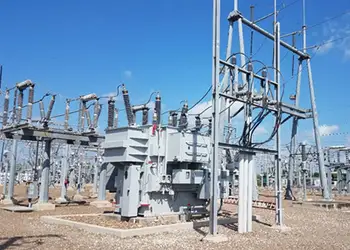
- Live Online
- 12 hours Instructor-led
- Group Training Available
Regular Price:
$799
Coupon Price:
$699
The stakes were raised in the game of nuclear chicken between Iran and the West, as the International Atomic Energy Agency sent its concerns about Tehran's nuclear program to the United Nations Security Council.
The move followed weeks of bickering among the agency's 35-country board members, two of whom, Russia and China, agreed to it only on condition that any action would be stalled until next month.
Tensions had been mounting since Iran removed the watchdog agency's seals on a nuclear research facility in January, underscoring fears that it may be developing nuclear weapons. European diplomats who had been negotiating to avert a crisis joined the U.S. in calling for Security Council action.
The Security Council has the power to impose sanctions or approve the use of force. But although the recent vote in Vienna passed by an overwhelming margin, with only Cuba, Syria and Venezuela opposed, and five abstentions, there is little idea of what might result from it.
After the vote, Iran announced it would immediately end its voluntary co-operation with the nuclear agency to curtail spot checks and that it would begin full-scale production of enriched uranium, which can be used to produce electricity or to help build nuclear bombs.
The council's resolution stresses that Iran has had "many failures and breaches of its obligations" to the nuclear non-proliferation treaty it endorsed in 1970, before launching a nuclear power program that raised suspicions it will eventually develop an atomic bomb.
The measure calls on Iran to freeze its uranium enrichment program, consider a halt to construction of a reactor that could produce weapons-grade plutonium, agree to grant the nuclear watchdog increased inspection powers, and allow it wider access to investigate illegal nuclear purchases, interview scientists and view documentation on "military-owned workshops" where nuclear activities might be carried out.
News of the referral was greeted with defiance in Tehran, and tough talk in the West.
In the United States, Republican Senator John McCain warned that military action could not be ruled out.
German Chancellor Angela Merkel said Iran had "blatantly crossed the line" in refusing to back down on its nuclear program, while its president threatened Israel and denied the Holocaust.
Iran's Deputy Foreign Minister Abbas Araghchi denounced the UN move as an "escalation" of the hostilities, and warned that Europe was also choosing a "line of confrontation" that could affect regional stability.
Some experts believe the rhetoric will give way to realism when the Security Council takes on the issue, as Washington has urged for several months.
"It's a foregone conclusion that Iran will continue its nuclear program," said Charles Ferguson, science and technology fellow at the New York-based Council on Foreign Relations. "Threats can create a self-fulfilling prophecy.
"The best approach would be for the U.S. to declare victory because the issue has reached the Security Council, and then pass a resolution giving the IAEA more authority and access," Ferguson said.
Neither sanctions nor the use of force are likely to be approved by China and Russia, two of the Security Council's powerful veto-bearing permanent members. But convincing Iran to bow to tougher rules could also be challenging.
In addition to its nuclear facilities, Tehran controls one of the largest missile inventories in the Middle East and has an infrastructure capable of producing new missile systems.
With a young and restless population, widespread poverty and unemployment, Iran has also been divided between pro-democratic factions and an entrenched cadre of religious leaders.
President Mahmoud Ahmadinejad, a hardliner, has played on nationalist sentiment to unite the country in support for his vision of Iran as a nuclear power.
"Ahmadinejad not only distrusts the West, he is not very fond of what it stands for," said Ali Ansari of the University of St. Andrews, an expert on contemporary Iran, in a recent article in the Independent.
Related News

Canada to spend $2M on study to improve Atlantic region's electricity grid
Atlantic Clean Power Superhighway outlines a federally backed transmission grid upgrade for Atlantic Canada, adding…
View more
Wall Street Backs Rick Perry’s $19 Billion Data Center Venture
Wall Street backs Rick Perry’s $19 billion nuclear-powered data center venture, Fermi America, combining nuclear…
View more
Blood Nickel and Canada's Role in Global Mining Sustainability
Blood Nickel spotlights ethical sourcing in the EV supply chain, linking nickel mining to human…
View more
New York and New England Need More Clean Energy. Is Hydropower From Canada the Best Way to Get it?
Canadian Hydropower Transmission delivers HVDC clean energy via New England Clean Energy Connect and Champlain…
View more
NY Governor Cuomo Announces Green New Deal Included in 2019 Executive Budget
New York Green New Deal accelerates clean energy and climate action, targeting carbon neutrality with…
View more
Coal demand dropped in Europe over winter despite energy crisis
EU Winter Energy Mix 2022-2023 shows renewables, wind, solar, and hydro overtaking coal and gas,…
View more
Sign Up for Electricity Forum’s Newsletter
Stay informed with our FREE Newsletter — get the latest news, breakthrough technologies, and expert insights, delivered straight to your inbox.
Electricity Today T&D Magazine Subscribe for FREE

Stay informed with the latest T&D policies and technologies.
- Timely insights from industry experts
- Practical solutions T&D engineers
- Free access to every issue

