BankÂ’s carports to provide solar energy for area homes

By Business Wire


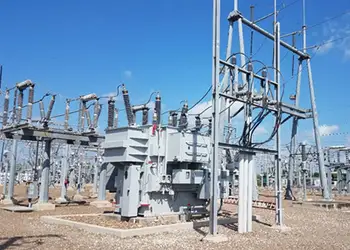
Substation Relay Protection Training

Our customized live online or in‑person group training can be delivered to your staff at your location.
  • Live Online
  • 12 hours Instructor-led
  • Group Training Available
Regular Price:
$699
Coupon Price:
$599
Reserve Your Seat Today
National Bank of Arizona (NBA), SolarCity and First Solar announced plans to build a 222 kilowatt (DC) solar installation in Phoenix, which will be the cityÂ’s second largest commercial solar installation to date.

The project, comprising two carport-mounted solar systems, will be the first commercial solar installation in Phoenix to utilize Tempe-based First SolarÂ’s advanced thin film modules. SolarCityÂ’s Phoenix office expects to complete the installation later this summer.

“National Bank of Arizona’s solar systems will leverage Arizona technology, installed by Arizona workers to turn Arizona sunlight into electricity for an Arizona business,” said Phoenix Mayor Phil Gordon. “This project is a great step toward a greener Phoenix and demonstrates our city’s potential as a leader in solar power generation.”

The solar systems will consist of 2,960 First Solar modules, and sit atop the carports in the parking lot at National Bank of ArizonaÂ’s headquarters on 24th St. in the Biltmore area of Phoenix. The systems will be expected to produce more than 350,000 kilowatt-hours of solar electricity annually, enough to power approximately 20-30 Phoenix-area homes.

“We felt that adopting solar power was one of the smartest things we could do as a company,” said Keith Maio, president of National Bank of Arizona. “It’s an investment in sustainability that reflects our commitment to Arizona. It also helps our bottom line. The solar systems will provide clean electricity equivalent to that needed to power 20 to 30 homes for the next 30 years.”

The project was made possible, in part, thanks to an incentive from the Salt River Project (SRP) EarthWise Solar Energy program.

“We are pleased that SRP’s EarthWise Solar incentive program could help to make this project happen,” said Lori Singleton, SRP manager of Sustainable Initiatives and Technologies. “National Bank is to be commended for their leadership in using Arizona’s sun to generate clean energy for this facility.”

First SolarÂ’s advanced, thin film modules are well suited for the project, as they perform well in ArizonaÂ’s high heat. The First Solar systems should allow NBA to offset the emission of more than 11 million pounds of greenhouse gases over its lifetime, the equivalent of planting more than 6,400 trees, or taking more than 1,400 cars off the road for a year.

“We’ve worked very hard, with partners like SolarCity, to make solar power more affordable,” said Lorraine Paskett, First Solar’s vice president of policy and market development. “It’s very exciting and rewarding to see a fellow Arizona business adopt our technology.”

SolarCity will handle design, permitting and installation, and will provide National Bank of Arizona with an Internet kiosk for its headquarters lobby, connected to SolarCityÂ’s SolarGuard monitoring system. The kiosk will allow bank employees and customers to view live data showing how much electricity the system generates, how much pollution it prevents and how much money it saves.

"NBA’s decision is a reflection of the changing economics of solar,” said Lyndon Rive, CEO of SolarCity. “We expect NBA’s solar installation to serve as a blueprint for other area companies seeking to take advantage of Arizona’s tremendous solar potential.”

National BankÂ’s Maio will join Mayor Gordon, SolarCityÂ’s Rive and First SolarÂ’s Paskett to unveil a rendering of the project and answer questions from guests at a small groundbreaking ceremony at NBA headquarters today. NBA customers, journalists and citizens interested in learning more about First Solar panels for their home or business are invited to attend.

Related News

Canadian Solar and Tesla contribute to resilient electricity system for Puerto Rico school

SunCrate Solar Microgrid delivers resilient, plug-and-play renewable power to Puerto Rico schools, combining Canadian Solar PV, Tesla Powerwall battery storage, and Black & Veatch engineering to ensure off-grid continuity during outages and disasters.


Key Points

A compact PV-and-battery system for resilient, diesel-free power and microgrid backup at schools and clinics.

✅ Plug-and-play, modular PV, inverter, and battery architecture

✅ Tesla Powerwall storage; Canadian Solar 325 W panels

✅ Scales via daisy-chain for higher loads and microgrids


Eleven months since their three-building school was first plunged into darkness by Hurricane Maria, 140 students in Puerto Rico’s picturesque Yabucoa district have reliable power. Resilient electricity service was provided Saturday to the SU Manuel Ortiz school through an innovative scalable, plug-and-play solar system pioneered by SunCrate Energy with Black & Veatch support. Known as a “SunCrate,” the unit is an effective mitigation measure to back up the traditional power supply from the grid. The SunCrate can also provide sustainable power in the face of ongoing system outages and future natural disasters without requiring diesel fuel.

The humanitarian effort to return sustainable electricity to the K-8 school, found along the island’s hard-hit southeastern coast, drew donated equipment and expertise from a collection of North American companies. Additional support for the Yabucoa project came from Tesla, Canadian Solar and Lloyd Electric, reflecting broader efforts to build a solar-powered grid in Puerto Rico after Hurricane Maria.

“We are grateful for this initiative, which will equip this school with the technology needed to become a resilient campus and not dependent on the status of the power grid. This means that if we are hit with future harmful weather events, the school will be able to open more quickly and continue providing services to students,” Puerto Rico Secretary of Education Julia Keleher said.

The SunCrate harnesses a scalable rapid-response design developed by Black & Veatch and manufactured by SunCrate Energy. Electricity will be generated by an array of 325-W CS6U-Poly modules from Canadian Solar. California-based Tesla contributed advanced battery energy storage through various Powerwall units capable of storing excess solar power and delivering it outside peak generation periods, with related experience from a virtual power plant in Texas informing deployment.  Lloyd Electric Co. of Wichita Falls, Texas, partnered to support delivery and installation of the SunCrate.

“As families in the region begin to prepare for the school year, this community is still impacted by the longest U.S. power outage in history,” said Dolf Ivener, a Midwestern entrepreneur who owns King of Trails Construction and SunCrate Energy, which is donating the SunCrate. “SunCrate, with its rapid deployment and use of renewable energy, should give this school peace of mind and hopefully returns a touch of long-overdue normalcy to students and their parents. When it comes to consistent power, SunCrate is on duty.”

The SunCrate is a portable renewable energy system conceived by Ivener and designed and tested by Black & Veatch. Its modular design uses solar PV panels, inverters and batteries to store and provide electric power in support of critical services such as police, fire, schools, clinics and other community level facilities.

A SunCrate can generate 23 to 156 kWh per day, and store 10 kWh to 135 kWh depending on configuration. A SunCrate’s power generation and storage capacity can be easily scaled through daisy-chained configurations to accommodate larger buildings and loads. Leveraging resources from Tesla, Canadian Solar, Lloyd Electric and Lord Electric, the unit in Yabucoa will provide an estimated 52 kWh of storable power without requiring use of costlier diesel-powered generators and cutting greenhouse gas emissions. Its capabilities allow the school to strengthen its function as a designated Community Emergency Response Center in the event of future natural disasters.

“Canadian Solar has a long history of using solar power to support humanitarian efforts aiding victims of social injustice and natural disasters, including previous donations to Puerto Rico after Hurricane Maria,” said Dr. Shawn Qu, Chairman and Chief Executive Officer of Canadian Solar. “We are pleased to make the difference for these schoolchildren in Yabucoa who have been without reliable power for too long.”

The SunCrate will also substantially lower the school’s ongoing electricity costs by providing a reliable source of renewable energy on site, as falling costs of solar batteries improve project economics overall.

“Through our experience providing engineering services in Puerto Rico for nearly 50 years, including dozens of specialized projects for local government and industrial clients, we see great potential for SunCrate as a source of resilient power for the Commonwealth’s remote schools and communities at large, underscoring the importance of electricity resilience across critical infrastructure,” said Charles Moseley, a Program Director in Black & Veatch’s water business. “We hope that the deployment of the SunCrate in Yabucoa sets a precedent for facility and municipal level migro-grid efforts on the island and beyond.”

SunCrate also has broad potential applications in conflict/post-conflict environments and in rural electrification efforts in the developing world, serving as a resilient source of electricity within hours of its arrival on site and could enable peer-to-peer energy within communities. Of particular benefit, the system’s flexibility cuts fuel costs to a fraction of a generator’s typical consumption when they are used around the clock with maintenance requirements.


Related News

View more

BC Hydro: 2021 was a record-breaking year for electricity demand

BC Hydro 2021 Peak Load Records highlight record-breaking electricity demand, peak load spikes, heat dome impacts, extreme cold, and shifting work-from-home patterns managed by a flexible hydroelectric system and climate-driven load trends.


Key Points

Record-breaking electricity demand peaks from extreme heat and cold that reshaped daily load patterns across BC in 2021.

✅ Heat dome and deep freeze drove sustained peak electricity demand

✅ Peak load built gradually, reflecting work-from-home behavior

✅ Flexible hydroelectric system adapts quickly to demand spikes


From June’s heat dome to December’s extreme cold, 2021 was a record-setting year, according to BC Hydro, and similar spikes were noted as Calgary's electricity use surged in frigid weather.

On Friday, the energy company released a new report on electricity demand, and how extreme temperatures over extended periods of time, along with growing scrutiny of crypto mining electricity use, led to record peak loads.

“We use peak loads to describe the electricity demand in the province during the highest load hour of each day,” Kyle Donaldson, BC Hydro spokesperson, said in a media release.

“With the heat dome in the summer and the sustained cold temperatures in December, we saw more record-breaking hours on more days last year than any other single year.”

According to BC Hydro, during summer, the Crown corporation recorded 19 of its top 25 all-time summer daily peak records — including breaking its all-time summer peak hourly demand record.

In December, which saw extremely cold temperatures and heavy snowfall, BC Hydro said its system experienced the highest and longest sustained load levels ever, as it activated its winter payment plan to assist customers.

Overall, BC Hydro says it has experienced 11 of its top 25 all-time daily peak records this winter, adding that Dec. 27 broke its all-time high peak hourly demand record.

“BC Hydro’s hydroelectric system is directly impacted by variations in weather, including drought conditions that require adaptation, and in 2021 more electricity demand records were broken than any other year prior, largely because of the back-to-back extreme temperatures lasting for days and weeks on end,” reads the report.

The energy company expects this trend to continue, noting that it has broken the peak record five times in the past five years, and other jurisdictions such as Quebec consumption record have also shattered consumption records.

It also noted that peak demand patterns have also changed since the first year of the COVID-19 pandemic, with trends seen during Earth Hour usage offering context.

“When the previous peak hourly load record was broken in January 2020, load displayed sharper increases and decreases throughout the day, suggesting more typical weather and behaviour,” said the report.

“In contrast, the 2021 peak load built up more gradually throughout the day, suggesting more British Columbians were likely working from home, or home for the holidays – waking up later and home earlier in the evening – as well as colder weather than average.”

BC Hydro also said “current climate models suggest a warming trend continuing in years to come which could increase demand year-round,” but noted that its flexible hydroelectric system can meet changes in demand quickly.


Related News

View more

Africa must quadruple power investment to supply electricity for all, IEA says

Africa Energy Investment must quadruple, says IEA, to deliver electricity access via grids, mini-grids, and stand-alone solar PV, wind, hydropower, natural gas, and geothermal, targeting $120 billion annually and 2.5% of GDP.


Key Points

Africa Energy Investment funds reliable, low-carbon electricity via grids, mini-grids, and renewables.

✅ Requires about $120B per year, or 2.5% of GDP

✅ Mix: grids, mini-grids, stand-alone solar PV and wind

✅ Targets reliability, economic growth, and electricity access


African countries will need to quadruple their rate of investment in their power sectors for the next two decades to bring reliable electricity to all Africans, as outlined in the IEA’s path to universal access analysis, an International Energy Agency (IEA) study published on Friday said.

If African countries continue on their policy trajectories, 530 million Africans will still lack electricity in 2030, the IEA report said. It said bringing reliable electricity to all Africans would require annual investment of around $120 billion and a global push for clean, affordable power to mobilize solutions.

“We’re talking about 2.5% of GDP that should go into the power sector,” Laura Cozzi, the IEA’s Chief Energy Modeller, told journalists ahead of the report’s launch. “India’s done it over the past 20 years. China has done it, with solar PV growth outpacing any other fuel, too. So it’s something that is doable.”

Taking advantage of technological advances and optimizing natural resources, as highlighted in a renewables roadmap, could help Africa’s economy grow four-fold by 2040 while requiring just 50% more energy, the agency said.

Africa’s population is currently growing at more than twice the global average rate. By 2040, it will be home to more than 2 billion people. Its cities are forecast to expand by 580 million people, a historically unprecedented pace of urbanization.

While that growth will lead to economic expansion, it will pile pressure on power sectors that have already failed to keep up with demand, with the sub-Saharan electricity challenge intensifying across the region. Nearly half of Africans - around 600 million people - do not have access to electricity. Last year, Africa accounted for nearly 70% of the global population lacking power, a proportion that has almost doubled since 2000, the IEA found.

Some 80% of companies in sub-Saharan Africa suffered frequent power disruptions in 2018, leading to financial losses that curbed economic growth.

The IEA recommended changing how power is distributed, with mini-grids and stand-alone systems like household solar playing a larger role in complementing traditional grids as targeted efforts to accelerate access funding gain momentum.

According to IEA Executive Director Fatih Birol, with the right government policies and energy strategies, Africa has an opportunity to pursue a less carbon-intensive development path than other regions.

“To achieve this, it has to take advantage of the huge potential that solar, wind, hydropower, natural gas and energy efficiency offer,” he said.

Despite possessing the world’s greatest solar potential, Africa boasts just 5 gigawatts of solar photovoltaics (PV), or less than 1% of global installed capacity, a slow green transition that underscores the scale of the challenge, the report stated.

To meet demand, African nations should add nearly 15 gigawatts of PV each year through 2040. Wind power should also expand rapidly, particularly in Ethiopia, Kenya, Senegal and South Africa. And Kenya should develop its geothermal resources.


Related News

View more

Ukraine Helps Spain Amid Blackouts

Ukraine-Spain Power Aid highlights swift international solidarity as Kyiv offers grid restoration expertise to Spain after unprecedented blackouts, aiding energy infrastructure recovery, interconnectors, and emergency response while operators restore power across Spain and Portugal.


Key Points

Ukraine sends grid experts to help Spain recover from blackouts, restore power, and reinforce energy infrastructure.

✅ Ukraine offers grid restoration expertise and emergency support.

✅ Partial power restored; cause of blackouts under investigation.

✅ EU funding and Ukrenergo bolster infrastructure resilience.


In a remarkable display of international solidarity, Ukraine has extended assistance to Spain as the country grapples with widespread power outages. On April 28, 2025, Spain and neighboring Portugal experienced unprecedented blackouts that disrupted daily life, including internet connectivity and subway operations. The two nations declared a state of emergency as they worked to restore power.

Ukraine's Offer of Assistance

In response to the crisis, Ukrainian President Volodymyr Zelensky reached out to Spanish Prime Minister Pedro Sánchez, offering support to help restore Spain's power grid. Zelensky emphasized Ukraine's extensive experience in managing energy challenges, particularly in fighting to keep the lights on during sustained Russian attacks on its energy infrastructure. He instructed Ukraine’s Energy Minister, Herman Haluschchenko, to mobilize technical experts to assist Spain swiftly. As of April 29, grid operators in both Spain and Portugal reported partial restoration of power, with recovery efforts ongoing. Authorities continue to investigate the cause of the outages. 

Ukraine's Energy Crisis: A Background

Ukraine's offer of assistance is particularly poignant given its own recent struggles with energy security. Throughout 2024, Russia launched numerous aerial strikes targeting Ukraine's energy infrastructure, including strikes on western Ukraine that severely damaged power generation facilities and transmission networks. These attacks led to significant challenges during the winter season, including widespread blackouts and difficulties in heating households, prompting efforts to keep the lights on this winter across the country. Despite these adversities, Ukraine managed to navigate the winter without major power shortages, thanks to rapid repairs and the resilience of its energy sector. 

International Support for Ukraine

The international community has played a crucial role in supporting Ukraine's energy sector, even as U.S. support for grid restoration has shifted, with continued aid from European partners. In July 2024, the European Union allocated nearly $110 million through the KfW Development Bank to modernize high-voltage substations and develop interconnectors with continental Europe's power system. This funding has been instrumental in repairing and restoring equipment damaged by Russian attacks and enhancing the protection of Ukraine's substations. Since the onset of the conflict, Ukraine's energy grid operator, Ukrenergo, has received international assistance totaling approximately €1.5 billion. 

A Gesture of Solidarity

Ukraine's offer to assist Spain underscores the deepening ties between the two nations and reflects a broader spirit of international cooperation. While Spain continues its recovery efforts, the support from Ukraine serves as a reminder of the importance of solidarity, and of Ukraine's electricity reserves that help prevent further outages in times of crisis. As both countries work towards restoring and securing their energy infrastructures, their collaboration highlights the shared challenges and mutual support that define the European community.

Ukraine's proactive stance in offering assistance to Spain amidst the recent blackouts exemplifies the strength of international partnerships and the shared commitment to new energy solutions that overcome energy challenges. As the situation develops, the continued cooperation between nations will be pivotal in ensuring energy security and resilience as winter looms over Ukraine once more.


Related News

View more

Time running out for Ontario to formally request Pickering nuclear power station extension

Pickering Nuclear Plant Extension faces CNSC approval as Ontario Power Generation pursues license renewal before the June 30, 2023 deadline, amid a 2025 capacity crunch and grid reliability risks from decommissioning and overlapping nuclear outages.


Key Points

A plan to run Pickering past 2024 to Sept 2026, pending CNSC license renewal to address Ontario's 2025 capacity gap.

✅ CNSC approval needed for operation beyond Dec 31, 2024

✅ OPG aims to file by June 30, 2023 deadline

✅ Extension targets grid reliability through 2026


Ontario’s electricity generator has yet to file an official application to extend the life of the Pickering nuclear power plant, more than eight months after the Ford government announced a plan to continue operating Pickering for longer.

As the province faces an electricity shortfall in 2025 and beyond, the Ford government scrambled to prolong the Pickering power plant until September 2026, in order to guarantee a steady supply of power as the province experiences a rise in demand and shutdowns at other nuclear power plants.

The life extension may come down to the wire, however, as the Canadian Nuclear Safety Commission (CNSC), the federal regulator tasked with approving or denying the extension, tells Global News the province has yet to file key paperwork.

The information is required for the application, including materials related to the proposed Pickering B refurbishment, and the government now has a month before the deadline runs out.

“The Commission requires that Ontario Power Generation submit specific information by June 30, 2023, if it intends to operate the Pickering Nuclear Generating Station beyond December 31, 2024,” the CNSC told Global News in a statement. “The Commission Registry has not yet received an application from Ontario Power Generation.”

If Ontario doesn’t receive the green light, the power plant which currently is responsible for 14 per cent of the province’s energy grid will be decommissioned in 2025, leaving the province with a significant electricity supply gap if replacement sources are not secured.

For its part, the Ford government doesn’t seem concerned about the impending timeline, even though the station was slated to close as planned, suggesting the Crown corporation responsible for the application will get it in on time.

“OPG is on track to submit their application before the end of June and has already started to submit supporting materials as part of the regulatory process toward clean power goals,” a spokesperson for energy minister Todd Smith said.


Related News

View more

As Maine debates 145-mile electric line, energy giant with billions at stake is absent

Hydro-Quebec NECEC Transmission Line faces Maine PUC scrutiny over clean energy claims, greenhouse gas emissions, spillage capacity, resource shuffling, and Massachusetts contracts, amid opposition from natural gas generators and environmental groups debating public need.


Key Points

A $1B Maine corridor for Quebec hydropower to Massachusetts, debated over emissions, spillage, and public need.

✅ Maine PUC weighing public need and ratepayer benefits

✅ Emissions impact disputed: resource shuffling vs new supply

✅ Hydro-Quebec spillage claims questioned without data


As Maine regulators are deciding whether to approve construction of a $1 billion electricity corridor across much of western Maine, the Canadian hydroelectric utility poised to make billions of dollars from the project has been absent from the process.

This has left both opponents and supporters of the line arguing about how much available energy the utility has to send through a completed line, and whether that energy will help fulfill the mission of the project: fighting climate change.

And while the utility has avoided making its case before regulators, which requires submitting to cross-examination and discovery, it has engaged in a public relations campaign to try and win support from the region's newspapers.

Government-owned Hydro-Quebec controls dams and reservoirs generating hydroelectricity throughout its namesake province. It recently signed agreements to sell electricity across the proposed line, named the New England Clean Energy Connect, to Massachusetts as part of the state's effort to reduce its dependence on fossil fuels, including natural gas.

At the Maine Public Utilities Commission, attorneys for Central Maine Power Co., which would build and maintain the line, have been sparring with the opposition over the line's potential impact on Maine and its electricity consumers. Leading the opposition is a coalition of natural gas electricity generators that stand to lose business should the line be built, as well as the Natural Resources Council of Maine, an environmental group.

That unusual alliance of environmental and business groups wants Hydro-Quebec to answer questions about its hydroelectric system, which they argue can't deliver the amount of electricity promised to Massachusetts without diverting energy from other regions.

In that scenario, critics say the line would not produce the reduction in greenhouse gas emissions that CMP and Hydro-Quebec have made a central part of their pitch for the project. Instead, other markets currently buying energy from Hydro-Quebec, such as New York, Ontario and New Brunswick, would see hydroelectricity imports decrease and have to rely on other sources of energy, including coal or oil, to make up the difference. If that happened, the total amount of clean energy in the world would remain the same.

Opponents call this possibility "greenwashing." Massachusetts regulators have described these circumstances as "resource shuffling."

But CMP spokesperson John Carroll said that if hydropower was diverted from nearby markets to power Massachusetts, those markets would not turn to fossil fuels. Rather they would seek to develop other forms of renewable energy "leading to further reductions in greenhouse gas emissions in the region."

Hydro-Quebec said it has plenty of capacity to increase its electricity exports to Massachusetts without diverting energy from other places.

However, Hydro-Quebec is not required to participate -- and has not voluntarily participated -- in regulatory hearings where it would be subject to cross examinations and have to testify under oath. Some participants wish it would.

At a January hearing at the Maine Public Utilities Commission, hearing examiner Mitchell Tannenbaum had to warn experts giving testimony to "refrain from commentary regarding whether Hydro-Quebec is here or not" after they complained about its absence when trying to predict potential ramifications of the line.

"I would have hoped they would have been visible and available to answer legitimate questions in all of these states through which their power is going to be flowing," said Dot Kelly, a member of the executive committee at the Maine Chapter of the Sierra Club who has participated in the line's regulatory proceedings as an individual. "If you're going to have a full and fair process, they have to be there."

[What you need to know about the CMP transmission line proposed for Maine]

While Hydro-Quebec has not presented data on its system directly to Maine regulators, it has brought its case to the press. Central to that case is the fact that it's "spilling" water from its reservoirs because it is limited by how much electricity it can export. It said that it could send more water through its turbines and lower reservoir levels, eliminating spillage and creating more energy, if only it had a way to get that energy to market. Hydro-Quebec said the line would make that possible, and, in doing so, help lower emissions and fight climate change.

"We have that excess potential that we need to use. Essentially, it's a good problem to have so long as you can find an export market," Hydro-Quebec spokesperson Serge Abergel told the Bangor Daily News.

Hydro-Quebec made its "spillage" case to the editorial boards of The Boston Globe, The Portland Press Herald and the BDN, winning qualified endorsements from the Globe and Press Herald. (The BDN editorial board has not weighed in on the project).

Opponents have questioned why Hydro-Quebec is willing to present their case to the press but not regulators.

"We need a better answer than 'just trust us,'" Natural Resources Council of Maine attorney Sue Ely said. "What's clear is that CMP and HQ are engaging in a full-court publicity tour peddling false transparency in an attempt to sell their claims of greenhouse gas benefits."

Energy generators aren't typically parties to public utility commission proceedings involving the building of transmission lines, but Maine regulators don't typically evaluate projects that will help customers in another state buy energy generated in a foreign country.

"It's a unique case," said Maine Public Advocate and former Democratic Senate Minority Leader Barry Hobbins, who has neither endorsed nor opposed the project. Hobbins noted the project was not proposed to improve reliability for Maine electricity customers, which is typically the point of new transmission line proposals evaluated by the commission. Instead, the project "is a straight shot to Massachusetts," Hobbins said.

Maine Public Utilities Commission spokesperson Harry Lanphear agreed. "The Commission has never considered this type of project before," he said in an email.

In order to proceed with the project, CMP must convince the Maine Public Utilities Commission that the proposed line would fill a "public need" and benefit Mainers. Among other benefits, CMP said it will help lower electricity costs and create jobs in Maine. A decision is expected in the spring.

Given the uniqueness of the case, even the commission seems unsure about how to apply the vague "public need" standard. On Jan. 14, commission staff asked case participants to weigh in on how it should apply Maine law when evaluating the project, including whether the hydroelectricity that would travel over the line should be considered "renewable" and whether Maine's own carbon reduction goals are relevant to the case.

James Speyer, an energy consultant whose firm was hired by natural gas company and project opponent Calpine to analyze the market impacts of the line, said he has testified before roughly 20 state public utility commissions and has never seen a proceeding like this one.

"I've never been in a case where one of the major beneficiaries of the PUC decision is not in the case, never has filed a report, has never had to provide any data to support its assertions, and never has been subject to cross examination," Speyer said. "Hydro-Quebec is like a black box."

Hydro-Quebec would gladly appear before the Maine Public Utilities Commission, but it has not been invited, said spokesperson Abergel.

"The PUC is doing its own process," Abergel said. "If the PUC were to invite us, we'd gladly intervene. We're very willing to collaborate in that sense."

But that's not how the commission process works. Individuals and organizations can intervene in cases, but the commission does not invite them to the proceedings, commission spokesperson Lanphear said.

CMP spokesperson Carroll dismissed concerns over emissions, noting that Hydro-Quebec is near the end of completing a more than 15-year effort to develop its clean energy resources. "They will have capacity to satisfy the contract with Massachusetts in their reservoirs," Carroll said.

While Maine regulators are evaluating the transmission line, Massachusetts' Department of Public Utilities is deciding whether to approve 20-year contracts between Hydro-Quebec and that state's electric utilities. Those contracts, which Hydro-Quebec has estimated could be worth close to $8 billion, govern how the utility sells electricity over the line.

Dean Murphy, a consultant hired by the Massachusetts Attorney General's office to review the contracts, testified before Massachusetts regulators that the agreements do not require a reduction in global greenhouse gas emissions. Murphy also warned the contracts don't actually require Hydro-Quebec to increase the total amount of energy it sends to New England, as energy could be shuffled from established lines to the proposed CMP line to satisfy the contracts.

Parties in the Massachusetts proceeding are also trying to get more information from Hydro-Quebec. Energy giant NextEra is currently trying to convince Massachusetts regulators to issue a subpoena to force Hydro-Quebec to answer questions about how its exports might change with the construction of the transmission line. Hydro-Quebec and CMP have opposed the motion.

Hydro-Quebec has a reputation for guarding its privacy, according to Hobbins.

"It would have been easier to not have to play Sherlock Holmes and try to guess or try to calculate without having a direct 'yes' or 'no' response from the entity itself," Hobbins said.

Ultimately, the burden of proving that Maine needs the line falls on CMP, which is also responsible for making sure regulators have all the information they need to make a decision on the project, said former Maine Public Utilities Commission Chairman Kurt Adams.

"Central Maine Power should provide the PUC with all the info that it needs," Adams said. "If CMP can't, then one might argue that they haven't met their burden."

'They treat HQ with nothing but distrust'

If completed, the line would bring 9.45 terawatt hours of electricity from Quebec to Massachusetts annually, or about a sixth of the total amount of electricity Massachusetts currently uses every year (and roughly 80 percent of Maine's annual load). CMP's parent company Avangrid would make an estimated $60 million a year from the line, according to financial analysts.

As part of its legally mandated efforts to reduce carbon emissions and fight climate change, Massachusetts would pay the $950 million cost of constructing the line. The state currently relies on natural gas, a fossil fuel, for nearly 70 percent of its electricity, a figure that helps explain natural gas companies' opposition to the project.

A panel of experts recently warned that humanity has 12 years to keep global temperatures from rising above 1.5 degrees Celsius and prevent the worst effects of climate change, which include floods, droughts and extreme heat.

The line could lower New England's annual carbon emissions by as much as 3 million metric tons, an amount roughly equal to Washington D.C.'s annual emissions. Opponents worry that reduction could be mostly offset by increases in other markets.

But while both sides have claimed they are fighting for the environment, much of the debate features giant corporations with headquarters outside of New England fighting over the future of the region's electricity market, echoing customer backlash seen in other utility takeovers.

Hydro-Quebec is owned by the people of Quebec, and CMP is owned by Avangrid, which is in turn owned by Spanish energy giant Iberdrola. Leading the charge against the line are several energy companies in the Fortune 500, including Houston-based Calpine and Florida-based NextEra Energy.

However, only one side of the debate counts environmental groups as part of its coalition, and, curiously enough, that's the side with fossil fuel companies.

Some environmental groups, including the Natural Resources Council of Maine and Environment Maine, have come out against the line, while others, including the Acadia Center and the Conservation Law Foundation, are still deciding whether to support or oppose the project. So far, none have endorsed the line.

"It is discouraging that some of the environmental groups are so opposed, but it seems the best is the enemy of the good," said CMP's Carroll in an email. "They seem to have no sense of urgency; and they treat HQ with nothing but distrust."

Much of the environmentally minded opposition to the project focuses on the impact the line would have on local wildlife and tourism.

Sandi Howard administers the Say NO To NECEC Facebook page and lives in Caratunk, one of the communities along the proposed path of the line. She said opposition to the line might change if it was proven to reduce emissions.

"If it were going to truly reduce global CO2 emissions, I think it would be be a different conversation," Howard said.


Not the first choice

Before Maine, New Hampshire had its own debate over whether it should serve as a conduit between Quebec and Massachusetts. The proposed Northern Pass transmission line would have run the length of the state. It was Massachusetts' first choice to bring Quebec hydropower to its residents.

But New Hampshire's Site Evaluation Committee unanimously voted to reject the Northern Pass project in February 2018 on the grounds that the project's sponsor, Eversource, had failed to prove the project would not interfere with local business and tourism. Though it was the source of the electricity that would have traveled over the line, Hydro-Quebec was not a party to the proceedings.

In its decision, the committee noted the project would not reduce emissions if it was not coupled with a "new source of hydropower" and the power delivered across the line was "diverted from Ontario and New York." The committee added that it was unclear if the power would be new or diverted.

The next month, Massachusetts replaced Northern Pass by selecting CMP's proposed line. As the project came before Maine regulators, questions about Hydro-Quebec and emissions persisted. Two different analyses of CMP's proposed line, including one by the Maine Public Utility Commission's independent consultant, found the line would greatly reduce New England's emissions.

But neither of those studies took into account the line's impact on emissions outside of New England. A study by Calpine's consultant, Energyzt, found New England's emissions reduction could be mostly offset by increased emissions in other areas, including New Brunswick and New York, that would see hydroelectricity imports shrink as energy was redirected to fulfill the contract with Massachusetts.

'They failed in any way to back up those spillage claims'

Hydro-Quebec seemed content to let CMP fight for the project alone before regulators for much of 2018. But at the end of the year, the utility took a more proactive approach, meeting with editorial boards and providing a two-page letter detailing its "spillage" issues to CMP, which entered it into the record at the Maine Public Utilities Commission.

The letter provided figures on the amount of water the utility spilled that could have been converted into sellable energy, if only Hydro-Quebec had a way to get it to market. Instead, by "spilling" the water, the company essentially wasted it.

Instead of sending water through turbines or storing it in reservoirs, hydroelectric operators sometimes discharge water held behind dams down spillways. This can be done for environmental reasons. Other times it is done because the operator has so much water it cannot convert it into electricity or store it, which is usually a seasonal issue: Reservoirs often contain the most water in the spring as temperatures warm and ice melts.

Hydro-Quebec said that, in 2017, it spilled water that could have produced 4.5 terawatt hours of electricity, or slightly more than half the energy needed to fulfill the Massachusetts contracts. In 2018, the letter continued, Hydro-Quebec spilled water that could have been converted into 10.4 terawatts worth of energy. The company said it didn't spill at all due to transmission constraints prior to 2017.


The contracts Hydro-Quebec signed with the Massachusetts utilities are for 9.45 terawatt hours annually for 20 years. In its letter, the utility essentially showed it had only one year of data to show it could cover the terms of the contract with "spilled" energy.

"Reservoir levels have been increasing in the last 15 years. Having reached their maximum levels, spillage maneuvers became necessary in 2017 and 2018," said Hydro-Quebec spokesperson Lynn St. Laurent.

By providing the letter through CMP, Hydro-Quebec did not have to subject its spillage figures to cross examination.

Dr. Shaleen Jain, a civil and environmental engineering professor at the University of Maine, said that, while spilled water could be converted into power generation in some circumstances, spills happen for many different reasons. Knowing whether spillage can be translated into energy requires a great deal of analysis.

"Not all of it can be repurposed or used for hydropower," Jain said.

In December, one of the Maine Public Utility Commission's independent consultants, Gabrielle Roumy, told the commission that there's "no way" to "predict how much water would be spilled each and every year." Roumy, who previously worked for Hydro-Quebec, added that even after seeing the utility's spillage figures, he believed it would need to divert energy from other markets to fulfill its commitment to Massachusetts.

"I think at this point we're still comfortable with our assumptions that, you know, energy would generally be redirected from other markets to NECEC if it were built," Roumy said.

In January, Tanya Bodell, the founder and executive director of consultant Energyzt, testified before the commission on behalf of Calpine that it was impossible to know why Hydro-Quebec was spilling without more data.

"There's a lot of details you'd have to look at in order to properly assess what the reason for the spillage is," Bodell said. "And you have to go into an hourly level because the flows vary across the year, within the month, the week, the days. ...And, frankly, it would have been nice if Hydro-Quebec was here and brought their model and allowed us to see how this could help them to sell more."

Even though CMP and Hydro-Quebec's path to securing approval of the project does not go through the Legislature, and despite a Maine court ruling that energized Hydro-Quebec's export bid, lawmakers have taken notice of Hydro-Quebec's absence. Rep. Seth Berry, D-Bowdoinham, the House chairman of the Joint Committee On Energy Utilities and Technology and a frequent critic of CMP, said he would like to see Hydro-Quebec "show up and subject their proposal to examination and full analysis and public examination by the regulators and the people of Maine."

"They're trying to sell an incredibly lucrative proposal, and they failed in any way to back up those spillage claims with defensible numbers and defensible analysis," Berry said.

Berry was part of a bipartisan group of Maine lawmakers that wrote a letter to Massachusetts regulators last year expressing concerns about the project, which included doubts about whether the line would actually reduce global gas emissions. On Monday, he announced legislation that would direct the state to create an independent entity to buy out CMP from its foreign investors.


'No benefit to remaining quiet'

Hydro-Quebec would like to provide answers, but "there is always a commercially sensitive information concern when we do these things," said spokesperson Abergel.

"There might be stuff we can do, having an independent study that looks at all of this. I'm not worried about the conclusion," Abergel said. "I'm worried about how long it takes."

Instead of asking Hydro-Quebec questions directly, participants in both Maine and Massachusetts regulatory proceedings have had to direct questions for Hydro-Quebec to CMP. That arrangement may be part of Hydro-Quebec's strategy to control its information, said former Maine Public Utilities Commissioner David Littell.

"From a tactical point of view, it may be more beneficial for the evidence to be put through Avangrid and CMP, which actually doesn't have that back-up info, so can't provide it," Littell said.

Getting information about the line from CMP, and its parent company Avangrid, has at times been difficult, opponents say.

In August 2018, the commission's staff warned CMP in a legal filing that it was concerned "about what appears to be a lack of completeness and timeliness by CMP/Avangrid in responding to data requests in this proceeding."

The trouble in getting information from Hydro-Quebec and CMP only creates more questions for Hydro-Quebec, said Jeremy Payne, executive director of the Maine Renewable Energy Association, which opposes the line in favor of Maine-based renewables.

"There's a few questions that should have relatively simple answers. But not answering a couple of those questions creates more questions," Payne said. "Why didn't you intervene in the docket? Why are you not a party to the case? Why won't you respond to these concerns? Why wouldn't you open yourself up to discovery?"

"I don't understand why they won't put it to bed," Payne said. "If you've got the proof to back it up, then there's no benefit to remaining quiet."


Related News

View more

Sign Up for Electricity Forum’s Newsletter

Stay informed with our FREE Newsletter — get the latest news, breakthrough technologies, and expert insights, delivered straight to your inbox.

Electricity Today T&D Magazine Subscribe for FREE

Stay informed with the latest T&D policies and technologies.
  • Timely insights from industry experts
  • Practical solutions T&D engineers
  • Free access to every issue

Download the 2025 Electrical Training Catalog

Explore 50+ live, expert-led electrical training courses –

  • Interactive
  • Flexible
  • CEU-cerified