B.C. Hydro Will Seek Rate Increase

By Vancouver Sun


Substation Relay Protection Training

Our customized live online or in‑person group training can be delivered to your staff at your location.

  • Live Online
  • 12 hours Instructor-led
  • Group Training Available
Regular Price:
$699
Coupon Price:
$599
Reserve Your Seat Today
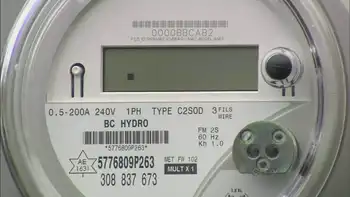
B.C. Hydro expects to lose money next year and will seek approval for a rate increase of up to 6.5 per cent -- its first in more than a decade, the Crown corporation said.

Hydro announced its plans after provincial budget documents tabled by Finance Minister Gary Collins revealed it will run a $70 million deficit in 2003 to 2004.

Hydro's latest three-year service plan forecasts that dry weather conditions in the parts of the province where Hydro's power-generating reservoirs are located will cause the corporation to go into the red.

The projected rate increases of between three to 6.5 per cent over three years will be needed "to meet its allowed return on equity," according to the service plan.

"We expect to make that revenue requirement application to the B.C. Utilities Commission in March 2004, Hydro spokeswoman Elisha Odowichuk said.

Odowichuk said Hydro is confident it will be able to meet its objective of achieving a $350 million return on equity by the end of fiscal 2003, which falls at the end of March.

She added, however, that the corporation will have to dip into its rate stabilization account for $65 million to do so. That will leave only $22 million in the stabilization account, a fund that B.C. Hydro pays into during years it makes profits from surplus electricity sales and draws from in years when it has to import more power than it sells.

After running a $70-million deficit in 2003 to 2004, Odowichuk said, Hydro projects it will earn a return of $125 million in 2004-2005 and $80 million in 2005 to 2006. Those amounts, however, would be below the corporation's allowed return on equity, which is why it wants a rate hike.

Energy Minister Richard Neufeld essentially paved the way for rate increases when he released the government's energy restructuring policy last November and returned to the utilities commission the authority to oversee Hydro's revenue requirements.

Related News
Can California Manage its Solar Boom?

California Duck Curve highlights midday solar oversupply and steep evening peak demand, stressing grid stability. Solutions include battery storage, demand response, diverse renewables like wind, geothermal, nuclear, and regional integration to reduce curtailment.


Key Points

A mismatch between midday solar surplus and evening demand spikes, straining the grid without storage and flexibility.

✅ Midday solar oversupply forces curtailment and wasted clean energy.

✅ Evening ramps require fast, fossil peaker plants to stabilize load.

✅ Batteries, demand response, regional trading flatten the curve.


California's remarkable success in adopting solar power, including a near-100% renewable milestone, has created a unique challenge: managing the infamous "duck curve." This distinctive curve illustrates a growing mismatch between solar electricity generation and the state's energy demands, creating potential problems for grid stability and ultimately threatening to slow California's progress in the fight against climate change.


The Shape of the Problem

The duck curve arises from a combination of high solar energy production during midday hours and surging energy demand in the late afternoon and evening when solar power declines. During peak solar hours, the grid often has an overabundance of electricity, and curtailments are increasing as a result, while as the sun sets, demand surges when people return home and businesses ramp up operations. California's energy grid operators must scramble to make up this difference, often relying on fast-acting but less environmentally friendly power sources.


The Consequences of the Duck Curve

The increasing severity of the duck curve has several potential consequences for California:

  • Grid Strain: The rapid ramp-up of power sources to meet evening demand puts significant strain on the electrical grid. This can lead to higher operational costs and potentially increase the risk of blackouts during peak demand times.
  • Curtailed Energy: To avoid overloading the grid, operators may sometimes have to curtail excess solar energy during midday, as rising curtailment reports indicate, essentially wasting clean electricity that could have been used to displace fossil fuel generation.
  • Obstacle to More Solar: The duck curve can make it harder to add new solar capacity, as seen in Alberta's solar expansion challenges, for fear of further destabilizing the grid and increasing the need for fossil fuel-based peaking plants.


Addressing the Challenge

California is actively seeking solutions to mitigate the duck curve, aligning with national decarbonization pathways that emphasize practicality. Potential strategies include:

  • Energy Storage: Deploying large-scale battery storage can help soak up excess solar electricity during the day and release it later when demand peaks, smoothing out the duck curve.
  • Demand Flexibility: Encouraging consumers to shift their energy use to off-peak hours through incentives and smart grid technologies can help reduce late-afternoon surges in demand.
  • Diverse Power Sources: While solar is crucial, a balanced mix of energy sources, including geothermal, wind, and nuclear, can improve grid stability and reduce reliance on rapid-response fossil fuel plants.
  • Regional Cooperation: Integrating California's grid with neighboring states can aid in balancing energy supply and demand across a wider geographical area.


The Ongoing Solar Debate

The duck curve has become a central point of debate about the future of California's energy landscape. While acknowledging the challenge, solar advocates argue for continued expansion, backed by measures like a bill to require solar on new buildings, emphasizing the urgent need to transition away from fossil fuels. Grid operators and some utility companies call for a more cautious approach, emphasizing grid reliability and potential costs if the problem isn't effectively managed.


Balancing California's Needs and its Green Ambitions

Finding the right path forward is essential; it will determine whether California can continue to lead the way in solar energy adoption while ensuring a reliable and affordable electricity supply. Successfully navigating the duck curve will require innovation, collaboration, and a strong commitment to building a sustainable energy system, as wildfire smoke impacts on solar continue to challenge generation predictability.


Related News

View more

B.C. Diverting Critical Minerals, Energy from U.S

Canadian Softwood Lumber Tariffs challenge British Columbia's forestry sector, strain U.S.-Canada trade, and risk redirecting critical minerals and energy resources, threatening North American supply chains, manufacturing, and energy security across integrated markets.


Key Points

Duties imposed by the U.S. on Canadian lumber, affecting BC forestry, trade flows, and North American energy security.

✅ U.S. duties strain BC forestry and cross-border supply chains

✅ Risks redirecting critical minerals and energy exports

✅ Tariff rollback could bolster North American energy security


British Columbia Premier David Eby has raised concerns that U.S. tariffs on Canadian softwood lumber are prompting the province to redirect its critical minerals and energy resources, while B.C. challenges Alberta's electricity export restrictions domestically, away from the United States. In a recent interview, Eby emphasized the broader implications of these tariffs, suggesting they could undermine North American energy security and put electricity exports at risk across the border.

Since 2017, the U.S. Department of Commerce has imposed tariffs on Canadian softwood lumber imports, alleging that Canadian producers benefit from unfair subsidies. These duties have been a persistent source of tension between the two nations, coinciding with Canadian support for energy and mineral tariffs and significantly impacting British Columbia's forestry sector—a cornerstone of the province's economy.

Premier Eby highlighted that the financial strain imposed by these tariffs not only jeopardizes the Canadian forestry industry but also has unintended repercussions for the United States. He pointed out that the economic challenges faced by Canadian producers might lead them to seek alternative markets for their critical minerals and energy resources, as tariff threats boost support for Canadian energy projects domestically, thereby reducing the supply to the U.S. British Columbia is endowed with an abundance of critical minerals essential for various industries, including technology and defense.

The potential redirection of these resources could have significant consequences for American industries that depend on a stable and affordable supply of critical minerals and energy. Eby suggested that the tariffs might incentivize Canadian producers to explore other international markets, even as experts advise against cutting Quebec's energy exports amid the tariff dispute, diminishing the availability of these vital resources to the U.S.

In light of these concerns, Premier Eby has advocated for a reassessment of the tariffs, urging a more cooperative approach between Canada and the United States. He contends that eliminating the tariffs would be mutually beneficial, aligning with views that Biden is better for Canada's energy sector and cross-border collaboration, ensuring a consistent supply of critical resources and fostering economic growth in both countries.

The issue of U.S. tariffs on Canadian softwood lumber remains complex and contentious, with far-reaching implications for trade relations and resource distribution between the two nations. As discussions continue, stakeholders on both sides of the border are closely monitoring the situation, noting that Ford has threatened to cut U.S. electricity exports amid trade tensions, recognizing the importance of collaboration in addressing shared economic and security challenges.


Related News

View more

Energy-hungry Europe to brighten profit at US solar equipment makers

European Solar Inverter Demand surges as photovoltaics and residential solar expand during the clean energy transition, driven by high natural gas prices; Germany leads, boosting Enphase and SolarEdge sales for rooftop systems and grid-tied installations.


Key Points

Rising European need for solar inverters, fueled by residential PV growth, high energy costs, and clean energy policies.

✅ Germany leads EU rooftop PV installations

✅ Enphase and SolarEdge see revenue growth

✅ High gas prices and policies spur adoption


Solar equipment makers are expected to post higher quarterly profit, benefiting from strong demand in Europe for critical components that convert energy from the sun into electricity, amid record renewable momentum worldwide.

The continent is emerging as a major market for solar firms as it looks to reduce its dependence on the Russian energy supply and accelerate its clean energy transition, with solar already reshaping power prices in Northern Europe across the region, brightening up businesses of companies such as Enphase Energy (ENPH.O) and SolarEdge Technologies (SEDG.O), which make solar inverters.

Wall Street expects Enphase and SolarEdge to post a combined adjusted net income of $323.8 million for the April-June quarter, a 56.7% jump from a year earlier, even as demand growth slows in the United States.

The energy crisis in Europe is not as acute as last year when Western sanctions on Russia severely crimped supplies, but prices of natural gas and electricity continue to be much higher than in the United States, Raymond James analyst Pavel Molchanov said.

As a result, demand for residential solar keeps growing at a strong pace in the region, with Germany being one of the top markets and solar adoption in Poland also accelerating in recent years across the region.

About 159,000 residential solar systems became operational in the first quarter in Germany amid a solar power boost that reflects policy and demand, a 146% rise from a year earlier, according to BSW solar power association.

Adoption of solar is also helping European homeowners have greater control over their energy costs as fossil fuel prices tend to be more volatile, Morningstar analyst Brett Castelli said.

SolarEdge, which has a bigger exposure to Europe than Enphase, said its first-quarter revenue from the continent more than doubled compared with last year.

In comparison, growth in the United States has been tepid due to lukewarm demand in states like Texas and Arizona where cheaper electricity prices make the economics of residential solar less attractive, even though solar is now cheaper than gas in parts of the U.S. market.

Higher interest rates following the U.S. Federal Reserve's recent actions to tame inflation are also weighing on demand, even as power outage risks rise across the United States.

Analysts also expect weakness in California where a new metering reform reduces the money credited to rooftop solar owners for sending excess power into the grid, underscoring how policy shifts can reshape the sector. The sunshine state accounts for nearly a third of the U.S. residential solar market.

Enphase will report its results on Thursday after the bell, while SolarEdge will release its second-quarter numbers on Aug. 1.


Related News

View more

840 million people have no electricity – World Bank must fund more energy projects

World Bank Energy Policy debates financing for coal, oil, gas, and renewables to fight energy poverty, expand grid reliability, ensure baseload power, and balance climate goals with development finance for affordable, reliable electricity access.


Key Points

It outlines the bank's stance on financing fossil fuels and renewables to expand affordable, reliable electricity.

✅ Focus on energy access, baseload reliability, and poverty alleviation

✅ Debate over coal, gas, and renewables in development finance

✅ Geopolitics: China and Russia fill funding gaps, raising risks


Why isn’t the World Bank using all available energy resources in its global efforts to fight poverty? That’s the question I’ve asked World Bank President David Malpass. Nearly two years ago, the multilateral development bank decided to stop supporting critical coal, oil and gas projects that help people in developing countries escape poverty.

Along with 11 other senators, and as a member who votes on whether to give U.S. taxpayer dollars to the World Bank, I am pressing the bank to lift these restrictions. Developing countries desperately need access to a steady supply of affordable, reliable clean electricity to support economic growth.

The World Bank has pulled funding for critical electricity projects in poor countries, including high-efficiency power stations that are fueled by coal, even as efforts to revitalize coal communities with clean energy have grown.

Despite Kosovo having the world’s fifth-largest reserves of coal, the bank announced it would only support new energy projects from renewable sources going forward. Kosovo’s Minister of Economic Development Valdrin Lluka responded: “We don’t have the luxury to do such experiments in a poor country such as Kosovo. … It is in our national security interest to secure base energy inside our country.”

The World Bank’s misguided move comes as 840 million people worldwide are living without electricity, including 70 percent of sub-Saharan Africa, and as the fall in global energy investment may lead to shortages.

Even more troubling, nearly 3 billion people in developing countries rely on fuels like wood and other biomass for cooking and home heating, resulting in serious health problems and premature deaths, and the pandemic saw widespread electricity shut-offs that deepened energy insecurity. In 2016, household smoke killed an estimated 2.6 million people.

The World Bank’s mission is to lift people out of poverty. The bank is now compromising that mission in favor of a political agenda targeting certain energy sources.

With the World Bank blocking financing to affordable and reliable energy projects, Russia and China are stepping up their investments in order to gain geopolitical leverage.

President Vladimir Putin is pursuing Russian oil and gas projects in Mozambique, Gabon, and Angola. China’s Belt and Road Initiative is supporting traditional energy resources, with 36 percent of its power projects from 2014 to 2017 involving coal. South Africa had to turn to the China Development Bank to fund its $1.5 billion coal-fired power plant.

There are real risks for countries partnering with China and Russia on these projects. Developing countries are facing what some are calling China’s “debt trap” diplomacy. These nations have also raised concerns over safety compliance, unfair business practices, and labor standards.

As the bank’s largest contributor, the United States has a duty to make sure U.S. taxpayer dollars are used wisely and effectively. Every U.S. dollar at the World Bank should make a difference for people in the developing world.

My colleagues and I have asked the bank to pursue an all-of-the-above energy strategy as it strives to achieve its mission to end extreme poverty and promote shared prosperity. We will take the bank’s response into account during the congressional appropriations process.

The United States is a top global energy producer. And yet Democrats running for president are pursuing anti-energy policies that would hurt not only the United States but the entire world, with implications for U.S. national security as well.

Utilizing our abundant energy resources has fueled an American energy renaissance and a booming U.S. economy, even as disruptions in coal and nuclear have strained the grid, with millions of new jobs and higher wages.

People who are struggling to survive and thrive in developing countries deserve the same opportunity to access affordable and reliable sources of power.

As Microsoft founder and global philanthropist Bill Gates has noted of renewables: "Many people experiencing energy poverty live in areas without access to the kind of grids that are needed to make those technologies cheap and reliable enough to replace fossil fuels."

Ultimately, there is a role for all sources of energy to help countries alleviate poverty and improve the education, health and wellbeing of their people.

The solution to ending energy poverty does not lie in limiting options, but in using all available options. The World Bank must recommit to ending extreme poverty by helping countries use all of the world’s abundant energy resources. Let’s end energy poverty now.


Related News

View more

California's Next Electricity Headache Is a Looming Shortage

California Electricity Reserve Mandate requires 3.3 GW of new capacity to bolster grid reliability amid solar power volatility, peak demand, and wildfire-driven blackouts, as CPUC directs PG&E, Edison, and Sempra to procure resource adequacy.


Key Points

A CPUC order for utilities to add 3.3 GW of reserves, safeguarding grid reliability during variable renewables and peaks

✅ 3.3 GW procurement to meet resource adequacy targets

✅ Focus on grid reliability during peak evening demand

✅ Prioritizes renewables, storage; limits new fossil builds


As if California doesn’t have enough problems with its electric service, now state regulators warn the state may be short on power supplies by 2021 if utilities don’t start lining up new resources now.

In the hopes of heading off a shortfall as America goes electric, the California Public Utilities Commission has ordered the state’s electricity providers to secure 3.3 additional gigawatts of reserve supplies. That’s enough to power roughly 2.5 million homes. Half of it must be in place by 2021 and the rest by August 2023.

The move comes as California is already struggling to accommodate increasingly large amounts of solar power that regularly send electricity prices plunging below zero and force other generators offline so the region’s grid doesn’t overload. The state is also still reeling from a series of deliberate mass blackouts that utilities imposed last month to keep their power lines from sparking wildfires amid strong winds. And its largest power company, PG&E Corp., went bankrupt in January.

Now as natural gas-fired power plants retire under the state’s climate policies, officials are warning the state could run short on electricity on hot evenings, when solar production fades and commuters get home and crank up their air conditioners. “We have fewer resources that can be quickly turned on that can meet those peaks,” utilities commission member Liane Randolph said Thursday before the panel approved the order to beef up reserves.

The 3.3 gigawatts that utilities must line up is in addition to a state rule requiring them to sign contracts for 15% more electricity than they expect to need. Some critics question the need for added supplies, particularly after the state went on a plant-building boom in the 2000s.

But California’s grid managers say the risk of a shortfall is real and could be as high as 4.7 gigawatts, especially during heat waves that test the grid again. Mark Rothleder, with the California Independent System Operator, said the 15% cushion is a holdover from the days before big solar and wind farms made the grid more volatile. Now it may need to be increased, he said.

“We’re not in that world anymore,” said Rothleder, the operator’s vice president of state regulatory affairs. “The complexity of the system and the resources we have now are much different.”

The state’s three major utilities, PG&E, Edison International and Sempra Energy, will be largely responsible for securing new supplies. The commission banned fossil fuels from being used at any new power generators built to meet the requirement — though it left the door open for expansions at existing ones.

Some analysts argue California is exporting its energy policies to Western states, making electricity more costly and less reliable.

PG&E said in an emailed statement that it was pleased the commission didn’t adopt an earlier proposal to require 4 gigawatts of additional resources. Edison similarly said it was “supportive.” Sempra didn’t immediately respond with comment.


Extending Deadlines

The pending plant closures are being hastened by a 2020 deadline requiring California’s coastal generators to stop using aging seawater-cooling systems. Some gas-fired power plants have said they’ll simply close instead of installing costly new cooling systems. So the commission on Thursday also asked California water regulators to extend the deadline for five plants.

The Sierra Club, meanwhile, called on regulators to turn away from fossil fuels altogether, saying their decision Thursday “sets California back on its progress toward a clean energy future.”

The move to push back the deadline also faces opposition from neighboring towns. Redondo Beach Mayor Bill Brand, whose city is home to one of the plants in line for an extension, told the commission it wasn’t necessary, since California utilities already have plenty of electricity reserves.

“It’s just piling on to that reserve margin,” Brand said.


Related News

View more

Western Canada drought impacting hydropower production as reservoirs run low

Western Canada Hydropower Drought strains British Columbia and Manitoba as reservoirs hit historic lows, cutting hydroelectric output and prompting power imports, natural gas peaking, and grid resilience planning amid climate change risks this winter.


Key Points

Climate-driven reservoir lows cut hydro in B.C. and Manitoba, prompting imports and backup gas to maintain reliability.

✅ Reservoirs at multi-year lows cut hydro generation capacity

✅ BC Hydro and Manitoba Hydro import electricity for reliability

✅ Natural gas turbines used; climate change elevates drought risk


Severe drought conditions in Western Canada are compelling two hydroelectricity-dependent provinces, British Columbia and Manitoba, to import power from other regions. These provinces, known for their reliance on hydroelectric power, are facing reduced electricity production due to low water levels in reservoirs this autumn and winter as energy-intensive customers encounter temporary connection limits.

While there is no immediate threat of power outages in either province, experts indicate that climate change is leading to more frequent and severe droughts. This trend places increasing pressure on hydroelectric power producers in the future, spurring interest in upgrading existing dams as part of adaptation strategies.

In British Columbia, several regions are experiencing "extreme" drought conditions as classified by the federal government. BC Hydro spokesperson Kyle Donaldson referred to these conditions as "historic," and a first call for power highlights the strain, noting that the corporation's large reservoirs in the north and southeast are at their lowest levels in many years.

To mitigate this, BC Hydro has been conserving water by utilizing less affected reservoirs and importing additional power from Alberta and various western U.S. states. Donaldson confirmed that these measures would persist in the upcoming months.

Manitoba is also facing challenges with below-normal levels in reservoirs and rivers. Since October, Manitoba Hydro has occasionally relied on its natural gas turbines to supplement hydroelectric production as electrical demand could double over the next two decades, a measure usually reserved for peak winter demand.

Bruce Owen, a spokesperson for Manitoba Hydro, reassured that there is no imminent risk of a power shortage. The corporation can import electricity from other regions, similar to how it exports clean energy in high-water years.

However, the cost implications are significant. Manitoba Hydro anticipates a financial loss for the current fiscal year, with more red ink tied to emerging generation needs, the second in a decade, with the previous one in 2021. That year, drought conditions led to a significant reduction in the company's power production capabilities, resulting in a $248-million loss.

The 2021 drought also affected hydropower production in the United States. The U.S. Department of Energy reported a 16% reduction in overall generation, with notable decreases at major facilities like Nevada's Hoover Dam, where production dropped by 25%.

Drought has long been a major concern for hydroelectricity producers, and they plan their operations with this risk in mind. Manitoba's record drought in 1940-41, for example, is a benchmark for Manitoba Hydro's operational planning to ensure sufficient electricity supply even in extreme low-water conditions.

Climate change, however, is increasing the frequency of such rare events, highlighting the need for more robust backup systems such as new turbine investments to enhance reliability. Blake Shaffer, an associate professor of economics at the University of Calgary specializing in electricity markets, emphasized the importance of hydroelectric systems incorporating the worsening drought forecasts due to climate change into their energy production planning.


Related News

View more

Sign Up for Electricity Forum’s Newsletter

Stay informed with our FREE Newsletter — get the latest news, breakthrough technologies, and expert insights, delivered straight to your inbox.

Electricity Today T&D Magazine Subscribe for FREE

Stay informed with the latest T&D policies and technologies.
  • Timely insights from industry experts
  • Practical solutions T&D engineers
  • Free access to every issue

Live Online & In-person Group Training

Advantages To Instructor-Led Training – Instructor-Led Course, Customized Training, Multiple Locations, Economical, CEU Credits, Course Discounts.

Request For Quotation

Whether you would prefer Live Online or In-Person instruction, our electrical training courses can be tailored to meet your company's specific requirements and delivered to your employees in one location or at various locations.