Bill seeks to expedite land leases for solar

By Las Vegas Sun


CSA Z462 Arc Flash Training - Electrical Safety Essentials

Our customized live online or in‑person group training can be delivered to your staff at your location.

  • Live Online
  • 6 hours Instructor-led
  • Group Training Available
Regular Price:
$249
Coupon Price:
$199
Reserve Your Seat Today
Solar energy could finally directly contribute to government coffers in Nevada if legislation proposed by Senate Majority Leader Harry Reid and Rep. Dean Heller becomes law.

But some solar companies are wary it could keep them from developing new energy plants if the same approach winds up applied to all Bureau of Land Management property.

The Nevada lawmakers this month introduced the American Solar Energy Pilot Leasing Act of 2010 in their respective houses. The legislation would designate two valleys in Lincoln County as solar pilot project areas where land leases would be auctioned to the highest-bidding solar developers. The legislation calls for Nevada and Lincoln to each get a quarter of the revenue from lease and royalty income from development on the land.

Reid said he wants to make this system the model for all leases of federal land for solar, but whether thatÂ’s the way to go is up for debate. Some in the solar industry fear they could lose their spot in line for land theyÂ’ve been doing studies on and waiting to lease for several years. And energy experts say extending the system to all land could lead to a backlog of parcels waiting to be leased, as happened when geothermal leases were first auctioned in 2007.

Some companies have been working on applications for rights of way to develop solar projects on parcels of BLM land across the southwest for several years. There are 305,000 acres under application in Nevada, according to BLM spokesman David Quick. The companies applying for that land have invested millions of dollars in environmental and resource surveys needed to support the companiesÂ’ development plans as they request permits to build and operate solar power plants. These rights-of-way leases are granted on a first-come, first-served basis.

Some in the solar industry oppose extending the auction process to all BLM land because they say it will slow down the very system it intends to speed up. There are about 9.6 million acres of prime solar land with excellent solar potential within 25 miles of an energy corridor in Nevada, according to BLM records.

But even if all the land under application from solar companies is excluded from the lease auctions, there could still be problems.

It would take years for the BLM to complete environmental studies on all the parcels solar developers want in Nevada. The draft environmental impact statement for the solar energy study zones, for example, was started a year ago and isnÂ’t expected to be completed for a few months. The final decision on whether all or parts of these zones should be made available for solar development isnÂ’t expected until next year.

In the meantime, solar developers are waiting for the land to come to auction. But winning the auction and getting permission to build the plant are two very different things.

The solar developers with the winning bids would still have to submit follow-up environmental assessments to show what impacts their projects would have.

Solar industry experts say they fear that while the parcels for lease are being chosen and evaluated by BLM, demand for land and developersÂ’ impatience will increase, causing the bidding price to skyrocket.

That is what happened in 2008 and 2009 when geothermal leases began to be auctioned by the BLM. The average price per acre in 2008 was $266, compared with about $13 an acre this year. Bids of $1,000 or more per acre have been placed every year since the auctions began, and the bidding was so frenzied in the 2009 auction it produced a record bid of $3,800 an acre.

The lease frenzy has since calmed, but solar developers say they donÂ’t have wiggle room in their budgets for pricey leases. Solar energy is already far more expensive than other types of renewable energy.

Further price increases would send electric utilities running to wind farms and hydropower, they say.

And they donÂ’t have time to wait for the prices to fall. Getting a project out the door quickly is key in the renewable energy business, where developers are scrambling to roll out projects in time for states such as California to meet their renewable energy portfolio standards. And the addition of just a couple of months, let alone a couple of years, could mean the difference between getting pivotal federally backed financing, tax credits and other incentives or nothing at all.


Reid and Heller, a Republican, are proposing two BLM tracts in Lincoln County — 10,945 acres in Dry Lake Valley and 2,845 acres in Delamar Valley — for solar development with expedited permitting.

Under the plan, solar developers would bid at auction for leases on parcels in designated solar development zones and would be expected to pay royalties on any income they generate there, although the legislation also allows for deferral or reduction of royalties for the first five years of the lease. The land is considered more valuable because the BLM will have completed most of the requisite resource analyses and environmental impact studies.

ItÂ’s not just the money that would go to the state and the county that makes this important. Fifteen percent of the revenue from leases, fees and royalties would go to BLMÂ’s renewable energy permit processing centers in Nevada, and 35 percent would be fed into a fund to mitigate the impacts of renewable energy development on public land in the state and county.

The system is modeled after that used for geothermal energy and mineral land leases on public land across the nation.

With the geothermal lease auctions, half of lease, fee and royalty revenues go to home states and a quarter of the revenues to home counties, with geothermal developers responsible for mitigation.

Since the law was implemented in 2007, Nevada counties have taken in nearly $17.8 million and the state has gotten about $35.6 million.

But efforts by Reid and Sen. John Ensign, R-Nev., to extend that revenue-sharing system to all wind and solar development on public land have failed to gain traction in Congress because they are attached to controversial environmental and energy bills.

Instead, Reid has focused his attention on this latest bill, which could serve as a model for future solar development on public land.

Both Lincoln County parcels are in areas designated in 2009 as “solar energy study areas,” vast stretches of prime solar development land that were evaluated by the BLM for environmental impacts and suitability for solar development. That land was intended to be split into parcels, the leases to which could be auctioned.

Solar energy study areas are scattered across several southwestern states and Colorado. In addition to the Dry Lake and Delamar Valley research study areas, there are six other solar energy research study areas in Nevada — near Amargosa Valley, south of Goldfield, west of Tonopah, north of Bunkerville and west of Lida Junction south of the Goldfield area.

The intent is to lease the best parcels within these areas to large-scale solar developers.

In this case, ReidÂ’s office worked with Lincoln County officials, environmentalists and hunters to zero in on the places where solar energy could be developed with the least detriment to people and wildlife.

The BLM is completing a draft comprehensive environmental impact statement that encompasses all the designated solar study areas, including the land proposed for the solar pilot project areas in this bill. The draft report should be completed this year, with the final record of decision on whether solar power is the best use of the land expected in 2011.

Currently solar developers cannot simply sign a lease for approved BLM land, but instead must undergo extensive application and permitting processes to get a lease through the existing rights-of-way process.

This process is designed for less exclusive land uses such as livestock grazing or laying pipes or transmission lines in slim corridors, but has been adapted by the BLM to solar and wind projects because the agency lacks any other congressionally mandated process.

The BLM recently released the first rent and royalties schedule for solar projects on its land. ItÂ’s based on the electrical capacity of the planned solar plant and rural agricultural land values in the home county.

Because of vast differences in land values in rural counties across the United States, rental rates on BLM rights of way vary greatly, from $7.85 per acre in Elko County to $3,139 per acre in Richmond County, N.Y.

Land in most Nevada counties, under existing leases of rights of way, would be rented for less than $50 per acre in 2010, but spike in mining country. Rent on BLM land in Storey County, for example, is $942 an acre this year.

Energy experts say the rents donÂ’t reflect the high value of land for new uses, such as solar and wind development. In Clark County, where land prices are high and solar development is expected to flourish, land would be rented for $94.17 an acre this year. But in nearby Lincoln County, which has tens of thousands of acres of land conducive to solar development, the rent would be just $15.69 an acre.

Under the proposed plan, the BLM would put the leases on the auction block, potentially raising the per-acre rent significantly.

But depending on the price, solar developers could recoup that added rent cost by spending less on site selection. Much of the key environmental assessments and resource studies on these parcels will have been completed by the BLM. This could save developers critical time and resources and give them a timing advantage over competition for power purchase agreements with utilities here and in California.

Related News

Europe Stores Electricity in Natural Gas Pipes

Power-to-gas converts surplus renewable electricity into green hydrogen or synthetic methane via electrolysis and methanation, enabling seasonal energy storage, grid balancing, hydrogen injection into gas pipelines, and decarbonization of heat, transport, and industry.


Key Points

Power-to-gas turns excess renewable power into hydrogen or methane for storage, grid support, and clean fuel.

✅ Enables hydrogen injection into existing natural gas networks

✅ Balances grids and provides seasonal energy storage capacity

✅ Supplies low-carbon fuels for industry, heat, and heavy transport


Last month Denmark’s biggest energy firm, Ørsted, said wind farms it is proposing for the North Sea will convert some of their excess power into gas. Electricity flowing in from offshore will feed on-shore electrolysis plants that split water to produce clean-burning hydrogen, with oxygen as a by-product. That would supply a new set of customers who need energy, but not as electricity. And it would take some strain off of Europe’s power grid as it grapples with an ever-increasing share of hard-to-handle EU wind and solar output on the grid.

Turning clean electricity into energetic gases such as hydrogen or methane is an old idea that is making a comeback as renewable power generation surges and crowds out gas in Europe. That is because gases can be stockpiled within the natural gas distribution system to cover times of weak winds and sunlight. They can also provide concentrated energy to replace fossil fuels for vehicles and industries. Although many U.S. energy experts argue that this “power-to-gas” vision may be prohibitively expensive, some of Europe’s biggest industrial firms are buying in to the idea.

European power equipment manufacturers, anticipating a wave of renewable hydrogen projects such as Ørsted’s, vowed in January that, as countries push for hydrogen-ready power plants across Europe, all of their gas-fired turbines will be certified by next year to run on up to 20 percent hydrogen, which burns faster than methane-rich natural gas. The natural gas distributors, meanwhile, have said they will use hydrogen to help them fully de-carbonize Europe’s gas supplies by 2050.

Converting power to gas is picking up steam in Europe because the region has more consistent and aggressive climate policies and evolving electricity pricing frameworks that support integration. Most U.S. states have goals to clean up some fraction of their electricity supply; coal- and gas-fired plants contribute a little more than a quarter of U.S. greenhouse gas emissions. In contrast, European countries are counting on carbon reductions of 80 percent or more by midcentury—reductions that will require an economywide switch to low-carbon energy.

Cleaning up energy by stripping the carbon out of fossil fuels is costly. So is building massive new grid infrastructure, including transmission lines and huge batteries, amid persistent grid expansion woes in parts of Europe. Power-to-gas may be the cheapest way forward, complementing Germany’s net-zero roadmap to cut electricity costs by a third. “In order to reach the targets for climate protection, we need even more renewable energy. Green hydrogen is perceived as one of the most promising ways to make the energy transition happen,” says Armin Schnettler, head of energy and electronics research at Munich-based electric equipment giant Siemens.

Europe already has more than 45 demonstration projects to improve power-to-gas technologies and their integration with power grids and gas networks. The principal focus has been to make the electrolyzers that convert electricity to hydrogen more efficient, longer-lasting and cheaper to produce.

The projects are also scaling up the various technologies. Early installations converted a few hundred kilowatts of electricity, but manufacturers such as Siemens are now building equipment that can convert 10 megawatts, which would yield enough hydrogen each year to heat around 3,000 homes or fuel 100 buses, according to financial consultancy Ernst & Young.

The improvements have been most dramatic for proton-exchange membrane electrolyzers, which are akin to the fuel cells used in hydrogen vehicles (but optimized to produce hydrogen rather than consume it). The price of proton-exchange electrolyzers has dropped by roughly 40 percent during the past decade, according to a study published in February in Nature Energy. They are also five times more compact than older alkaline electrolysis plants, enabling onsite hydrogen production near gas consumers, and they can vary their power consumption within seconds to operate on fluctuating wind and solar generation.

Many European pilot projects are demonstrating “methanation” equipment that converts hydrogen to methane, too, which can be used as a drop-in replacement for natural gas. Europe’s electrolyzer plants, however, are showing that methanation is not as critical to the power-to-gas vision as advocates long believed. Many electrolyzers are injecting their hydrogen directly into natural gas pipelines—something that U.S. gas firms forbid—and they are doing so without impacting either the gas infrastructure or natural gas consumers.

Europe’s first large-scale hydrogen injection began in eastern Germany in 2013 at a two-megawatt electrolyzer installed by Essen-based power firm E.ON. Germany has since ratcheted up the amount of hydrogen it allows in natural gas lines from an initial 2 percent by volume to 10 percent, in a market where renewables now outpace coal and nuclear in Germany, and other European states have followed suit with their own hydrogen allowances. Christopher Hebling, head of hydrogen technologies at the Freiburg-based Fraunhofer Institute for Solar Energy Systems, predicts that such limits will rise to the 20-percent level anticipated by Europe’s turbine manufacturers.

Moving renewable hydrogen and methane via natural gas pipelines promises to cut the cost of switching to renewable energy. For example, gas networks have storage caverns whose reserves could be tapped to run gas-fired electric generation power plants during periods of low wind and solar output. Hebling notes that Germany’s gas network can store 240 terawatt-hours of energy—roughly 25 times more energy than global power grids can presently store by pumping water uphill to refill hydropower reservoirs. Repurposing gas infrastructure to help the power system could save European consumers 138 billion euros ($156 billion) by 2050, according to Dutch energy consultancy Navigant (formerly Ecofys).

For all the pilot plants and promise, renewable hydrogen presently supplies a tiny fraction of Europe’s gas. And, globally, around 4 percent of hydrogen is supplied via electrolysis, with the bulk refined from fossil fuels, according to the International Renewable Energy Agency.

Power-to-gas is catching up, however. According to the February Nature Energy study, renewable hydrogen already pays for itself in some niche applications, and further electrolyzer improvements will progressively extend its market. “If costs continue to decline as they have done in recent years, power-to-gas will become competitive at large scale within the next decade,” says study co-author Gunther Glenk, an economist at the Technical University of Munich.

Glenk says power-to-gas could scale up faster if governments guaranteed premium prices for renewable hydrogen and methane, as they did to mainstream solar and wind power.

Tim Calver, an energy storage researcher turned consultant and Ernst & Young’s executive director in London, agrees that European governments need to step up their support for power-to-gas projects and markets. Calver calls the scale of funding to date, “not proportionate to the challenge that we face on long-term decarbonization and the potential role of hydrogen.”


Related News

View more

USDA Grants $4.37 Billion for Rural Energy Upgrades

USDA Rural Energy Infrastructure Funding boosts renewable energy, BESS, and transmission upgrades, delivering grid modernization, resilience, and clean power to rural cooperatives through loans and grants aligned with climate goals, decarbonization, and energy independence.


Key Points

USDA Rural Energy Infrastructure Funding is a $4.37B program advancing renewables, BESS, and grid upgrades for rural power.

✅ Loans and grants for cooperatives modernizing rural grids.

✅ Prioritizes BESS to integrate wind and solar reliably.

✅ Upgrades transmission to cut losses and boost grid stability.


The U.S. Department of Agriculture (USDA) has announced a major investment of $4.37 billion aimed at upgrading rural electric cooperatives across the nation. This funding will focus on advancing renewable energy projects, enhancing battery energy storage systems (BESS), and upgrading transmission infrastructure to support a grid overhaul for renewables nationwide.

The USDA’s Rural Development initiative will provide loans and grants to cooperatives, supporting efforts to transition to cleaner energy sources that help rural America thrive, improve energy resilience, and modernize electrical grids in rural areas. These upgrades are expected to bolster the reliability and efficiency of energy systems, making rural communities more resilient to extreme weather events and fostering the expansion of renewable energy.

The funding will primarily support energy storage technologies, such as BESS, which allow excess energy from renewable sources like wind energy, solar, and hydropower technology to be stored and used during periods of high demand or when renewable generation is low. These systems are critical for integrating more renewable energy into the grid, ensuring a stable and sustainable power supply.

In addition to energy storage, the USDA’s investment will go toward enhancing the transmission networks that carry electricity across rural regions, aligning with a recent rule to boost renewable transmission across the U.S. By upgrading these systems, the USDA aims to reduce energy losses, improve grid stability, and ensure that rural communities have reliable access to power, particularly in remote and underserved areas.

This investment aligns with the Biden administration’s broader climate and clean energy goals, focusing on reducing greenhouse gas emissions and fostering sustainable energy practices, including next-generation building upgrades that lower demand. The USDA's support will also promote energy independence in rural areas, enabling local cooperatives to meet the energy demands of their communities while decreasing reliance on fossil fuels.

The funding is expected to have a far-reaching impact, not only reducing carbon footprints but also creating jobs in the renewable energy and construction sectors. By modernizing energy infrastructure, rural electric cooperatives can expand access to clean, affordable energy while contributing to the nationwide shift toward a more sustainable energy future.

The USDA’s commitment to supporting rural electric cooperatives marks a significant step in the transition to a more resilient and sustainable energy grid, mirroring grid modernization projects in Canada seen in recent years. By investing in renewables and modernizing transmission and storage systems, the government aims to improve energy access and reliability in rural communities, ultimately driving the growth of a cleaner, more energy-efficient economy.

As part of the initiative, the USDA has also highlighted its commitment to helping rural cooperatives navigate the challenges of implementing new technologies and infrastructure. The agency has pledged to provide technical assistance, ensuring that cooperatives have the resources and expertise needed to successfully complete these projects.

In conclusion, the USDA’s $4.37 billion investment represents a significant effort to improve the energy landscape of rural America. By supporting the development of renewable energy, energy storage, and transmission upgrades, the USDA is not only fostering a cleaner energy future but also enhancing the resilience of rural communities. This initiative will contribute to the nationwide transition toward a sustainable, low-carbon economy, ensuring that rural areas are not left behind in the global push for renewable energy.


Related News

View more

Class-action lawsuit: Hydro-Québec overcharged customers up to $1.2B

Hydro-QuE9bec Class-Action Lawsuit alleges overbilling and monopoly abuse, citing RE9gie de l'E9nergie rate increases, Quebec Superior Court filings, and calls for refunds on 2008-2013 electricity bills to residential and business customers.


Key Points

Quebec class action alleging Hydro-QuE9bec overbilled customers in 2008-2013, seeking court-ordered refunds.

✅ Filed in Quebec Superior Court; certification pending.

✅ Alleges up to $1.2B in overcharges from 2008-2013.

✅ Questions RE9gie de l'E9nergie rate approvals and data.


A group representing Hydro-Québec customers has filed a motion for a class-action lawsuit against the public utility, alleging it overcharged customers over a five-year period.

Freddy Molima, one of the representatives of the Coalition Peuple allumé, accuses Hydro-Québec of "abusing its monopoly."

The motion, which was filed in Quebec Superior Court, claims Hydro-Québec customers paid more than they should have for electricity between 2008 and 2013, to the tune of nearly $1.2 billion, even as Hydro-Québec later refunded $535 million to customers in a separate case. 

The coalition has so far recruited nearly 40,000 participants online as part of its plan to sue the public utility.

A lawyer representing the group said Quebec's energy board, the Régie de l'énergie, also recently approved Hydro-Québec rate increases for residential and business customers without knowing all the facts, even as Manitoba Hydro hikes face opposition in regulatory hearings.

"There's certain information provided to the Régie that isn't true," said Bryan Furlong. "Hydro-Québec has not been providing the Régie the proper numbers."

In its motion, the group asks that overcharged clients be retroactively reimbursed.

Hydro-Québec denies allegations

Hydro-Québec, for its part, denies it ever overbilled any of its clients, while other utilities such as Hydro One plan to redesign bills to improve clarity.

"All our efficiencies have been returned to the government through our profits, and to Quebecers we have billed exactly what we agreed to bill," said spokesperson Serge Abergel, adding that the utility won't seek a rate hike next year according to its current plans.

Quebec Energy Minister Pierre Moreau also came to the public utility's defence, saying it has no choice but to comply with the  energy board's regulations, while customer protections are in focus as Hydro One moves to reconnect 1,400 customers in Ontario.

The group says the public utility has overbilled clients by up to $1.2 billion. (Radio-Canada)

It would be "shocking" if customers were charged too much money, he added.

"I know for a fact that Hydro-Québec is respecting the decision of this body," he said.

While the motion has been filed, the group cannot say how much each customer would receive if the class-action lawsuit goes ahead because it all depends on how much electricity was consumed by each client over that five-year period.

The coalition plans to present its motion to a judge next February.


Related News

View more

Russia to triple electricity supplies to China

Amur-Heihe ETL Power Supply Tripling will expand Russia-China electricity exports, extending 750 MW DC full-load hours to stabilize northeast China grids amid coal shortages, peak demand spikes, and cross-border energy security concerns.


Key Points

Russia will triple electricity via Amur-Heihe ETL, boosting 750 MW DC operations to relieve shortages in northeast China.

✅ 500 kV converter station increases full-load hours from 5 to 16

✅ Supports Heilongjiang, Liaoning, and Jilin grids amid coal shortfall

✅ Cross-border 750 MW DC link enhances reliability, peak demand coverage


Russia will triple electricity supplies via the Amur-Heihe electric transmission line (ETL) starting October 1, China Central Television has reported, a move seen within broader shifts in China's electricity sector by observers.

"Starting October 1, the overhead convertor substation of 500 kW (750 MW DC) will increase its daily time of operation with full loading from 5 to 16 hours per day," the TV channel said.

"This measure will make it possible to dramatically ease the situation with the electricity supply," the report said. Electricity from this converting station is used in three northeastern provinces of China - Heilongjiang, Liaoning and Jilin, while regional markets are strained as India rations coal supplies amid surging demand today. In 29 years, Russia supplied over 30 bln kilowatt hours of electricity, according to the channel.

The Amur-Heihe overhead transnational power line was constructed for increasing electricity exports to China, where projections see electricity to meet 60% of energy use by 2060 according to Shell. It was commissioned in 2012. Its maximum capacity is 750 MW.

China’s Jiemian News reported on September 27 that, amid nationwide power cuts affecting grids, 20 regions were limited in electricity supplies to a various extent due to the ongoing coal deficit. In particular, in China’s northeastern provinces, restrictions on power consumption were imposed not only on industrial enterprises, but also on households, as well as on office premises, raising concerns for U.S. solar supply chains among downstream manufacturers.

Later, China’s financial media Zhongxin Jingwei noted that the coal deficit had been triggered by price hikes brought on by tightened national environmental standards and efforts to reduce coal power production across the country. Reduced coal imports amid disruptions in the work of foreign suppliers due to the coronavirus pandemic was an additional reason, and earlier power demand drops as factories shuttered compounded imbalances.


Related News

View more

Parked Electric Cars Earn $1,530 From Europe's Power Grids

Vehicle-to-Grid Revenue helps EV owners earn income via V2G, demand response, and ancillary services by exporting stored energy, supporting grid balancing, smart charging, and renewable integration with two-way charging infrastructure.


Key Points

Income EV owners earn by selling battery power to the grid for balancing, response, and flexibility services.

✅ Earn up to about $1,530 annually in Denmark trials

✅ Requires V2G-compatible EVs and two-way smart chargers

✅ Provides ancillary services and supports renewable integration


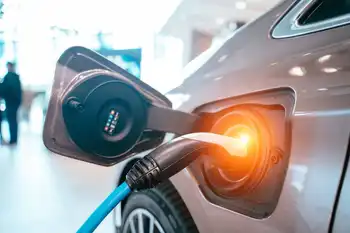
Electric car owners are earning as much as $1,530 a year just by parking their vehicle and feeding excess power back into the grid, effectively selling electricity back to the grid under V2G schemes.

Trials in Denmark carried out by Nissan and Italy’s biggest utility Enel Spa showed how batteries inside electric cars could, using vehicle-to-grid technology, help balance supply and demand at times and provide a new revenue stream for those who own the vehicles.

Technology linking vehicles to the grid marks another challenge for utilities already struggling to integrate wind and solar power into their distribution system. As the use of plug-in cars spreads, grid managers will have to pay closer attention and, with proper management, to when motorists draw from the system and when they can smooth variable flows.

For example, California's grid stability efforts include leveraging EVs as programs expand.

“If you blindingly deploy in the market a massive number of electric cars without any visibility or control over the way they impact the electricity grid, you might create new problems,” said Francisco Carranza, director of energy services at Nissan Europe in an interview with Bloomberg New Energy Finance.


While the Tokyo-based automaker has trials with more than 100 cars across Europe, only those in Denmark are able to earn money by feeding power back into the grid. There, fleet operators collected about 1,300 euros ($1,530) a year using the two-way charge points, said Carranza.

Restrictions on accessing the market in the U.K. means the company needs to reach about 150 cars before they can get paid for power sent back to the grid. That could be achieved by the end of this year, he said.

“It’s feasible,” he said. “It’s just a matter of finding the appropriate business model to deploy the business wide-scale.’’

Electric car demand globally is expected to soar, challenging state power grids and putting further pressure on grid operators to find new ways of balancing demand. Power consumption from vehicles will grow to 1,800 terawatt-hours in 2040 from just 6 terawatt-hours now, according to Bloomberg New Energy Finance.


Related News

View more

Ford deal to build electric cars in Oakville comes amid $500M government cash to upgrade plant

Ford Oakville EV investment secures government funding, Unifor deal, and plant retooling, channeling $500 million plus $1.98 billion for Canadian electric vehicle manufacturing, Windsor engine contracts, and 2025 production, strengthening Ontario's auto industry.


Key Points

Government and Ford will retool Oakville for EVs, creating jobs under a Unifor deal and Windsor engine work.

✅ $500M government funding for plant retooling

✅ Ford commits $1.98B; five new EVs by 2025

✅ Unifor deal adds Windsor engine work, jobs


The federal government and Ontario have pledged to spend up to $500 million to make the Ford plant in Oakville, Ont., able to build electric vehicles, aligning with efforts to capitalize on the U.S. EV pivot underway.

The future of the plant has been a key question for Canada's automotive industry, as moves like GM's Ontario EV deal point to broader changes, ever since the Unifor union started negotiating with the automaker for a new three-year pact to cover the company's Canadian workforce.

The two sides struck a deal a few hours after a midnight strike deadline on Tuesday morning, one that will see the company commit $1.98 billion to build five new electric vehicles and an engine contract that could yield new EV jobs in Windsor, Ont.

Ford has previously committed to spending $11 billion US to develop and manufacture electric vehicles, but so far all of that money was earmarked for Ford plants in Mexico and the company's home state of Michigan.

"With Oakville gaining such a substantial portion of Ford's planned investment, the assembly plant and its workers are better set for employment going forward," said Sam Fiorani, vice-president of global forecasting at AutoForecast Solutions.

Unifor's 'unique' Ford deal includes 5 new electric vehicles in Oakville, engine for Windsor plants
Currently, the plant builds the Ford Edge and Lincoln Nautilus, but concerns over the plant's future emerged earlier this year when a report suggested Ford was contemplating scrapping the Edge altogether. The new vehicles will come as welcome news for the plant, even as Fiorani says he worries that demand for the electric vehicles (EV) has so far not lived up to the hype.

"The EV market is coming, and Ford looks to be preparing for it. However, the demand is just not growing in line with the proposed investment from all vehicle manufacturers," he said.

Plant needs upgrade first
And the plant can't simply flip a switch and start building an entirely new type of vehicle. It will require a major retooling, and that will require time — and cash — to happen, which is where government cash comes in, as seen with a Niagara Region battery plant supporting the EV supply chain.

As first reported by the Toronto Star, the two branches of government have committed to spent up to $500 million combined to upgrade the plant so that it can build electric vehicles.

"The retooling will begin in 2024 with vehicles rolling off the line in 2025," Unifor president Jerry Dias said. "So we know this is a decades-long commitment."

It's not clear what portion of the cash will come from what branch of government, but CBC News has previously reported that Wednesday's throne speech is expected to contain a number of policies aimed at beefing up Canada's electric vehicle industry, as EV assembly deals are putting Canada in the race, both on the consumer side and for businesses that build them.

Ontario's minister of economic development and trade welcomed the news of a tentative deal on Tuesday and confirmed that Queen's Park legislators stand ready to do their part, as shown by Honda's Ontario battery investment moves in the province.

"Our government will always work with our federal colleagues, workers and the auto sector to ensure the right conditions are in place for the industry to remain stable today and seize the new opportunities of tomorrow," a spokesperson for Vic Fedeli told CBC News in an emailed statement Tuesday.


Related News

View more

Sign Up for Electricity Forum’s Newsletter

Stay informed with our FREE Newsletter — get the latest news, breakthrough technologies, and expert insights, delivered straight to your inbox.

Electricity Today T&D Magazine Subscribe for FREE

Stay informed with the latest T&D policies and technologies.
  • Timely insights from industry experts
  • Practical solutions T&D engineers
  • Free access to every issue

Download the 2025 Electrical Training Catalog

Explore 50+ live, expert-led electrical training courses –

  • Interactive
  • Flexible
  • CEU-cerified