Brazilian Government Confirms Threat of New Energy Crisis

By


Arc Flash Training CSA Z462 - Electrical Safety Essentials

Our customized live online or in‑person group training can be delivered to your staff at your location.

  • Live Online
  • 6 hours Instructor-led
  • Group Training Available
Regular Price:
$249
Coupon Price:
$199
Reserve Your Seat Today
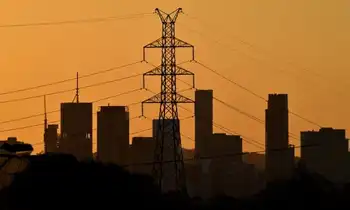
Brazil runs the risk of facing an energy crisis by 2007 similar to the one that forced it to ration electricity sharply between 2001 and 2002, the government recently asserted.

The giant of South America could suffer severe energy shortages should its economy expand more than 5.5 percent after 2004, an evantuality which would require its taking precautions and stimulating new forms of investment in the sector, Energy and Mines Minister Dilma Roussef said.

"A shortage is one possible scenario, but it's not certain," Rousseff said at the opening of a forum on the electrical energy sector in Sao Paulo. "We work from the worst possible scenario in order to plan better."

This forecast of maximum economic growth forms part of a strategy for avoiding future risks on the basis of long-term planning, the minister said.

The new concessions for construction of electrical-generating plants are to be based on the lowest rate for consumers and not on the energy companies' earnings rates, he said.

A 2007 shortage should be avoided if all of the government's public works projects are built.

Several of these projects are behind schedule or have been dropped by developers due to delays caused by red tape and the need to obtain environmental permits.

The energy supply should be adequate until 2007, but from then on the country will run the risk of shortages and rationing anew, the Brazilian Basic Infrastructure and Industry Association (ABIIB) said.

The projects underway, which have already been put out for bid and suffered delays due to a lack of investor confidence, will allow for the yearly generation of 7,000 megawatts.

According to ABIIB estimates, Brazil needs to invest at least $4.8 billion annually through 2020 to sustain moderate economic growth and avoid rationing.

The increase in electrical generation of 5,000 megawatts per year means the country will practically have to double its current installed capacity of 90,000 megawatts.

Brazil suffered severe rationing in 2001 and part of 2002 that contributed to a cooling off of the economy, which has grown an average of 1.5 percent annually over recent years.

Related News
Trump Tariff Threat Delays Quebec's Green Energy Bill

Quebec Energy Bill Tariff Delay disrupts Canada-U.S. trade, renewable energy investment, hydroelectric expansion, and clean technology projects, as Trump tariffs on aluminum and steel raise costs, threatening climate targets and green infrastructure timelines.


Key Points

A policy pause in Quebec from U.S. tariff threats, disrupting clean investment, hydro expansion, and climate targets.

✅ Tariff risk inflates aluminum and steel project costs.

✅ Quebec delays clean energy legislation amid trade uncertainty.

✅ Hydroelectric reliance complicates emissions reduction timelines.


The Trump administration's tariff threat has had a significant impact on Quebec's energy sector, with tariff threats boosting support for projects even as the uncertainty resulted in the delay of a critical energy bill. Originally introduced to streamline energy development and tackle climate change, the bill was meant to help transition Quebec towards greener alternatives while fostering economic growth. However, the U.S. threat to impose tariffs on Canadian goods, including energy products, introduced a wave of uncertainty that led to a pause in the bill's legislative process.

Quebec’s energy bill had ambitious goals of transitioning to renewable sources like wind, solar, and hydroelectric power. It sought to support investments in clean technologies and the expansion of the province's clean energy infrastructure, as the U.S. demand for Canadian green power continues to grow across the border. Moreover, it emphasized the reduction of carbon emissions, an important step towards meeting Quebec's climate targets. At its core, the bill aimed to position the province as a leader in green energy development in Canada and globally.

The interruption caused by President Donald Trump's tariff rhetoric has, however, cast a shadow over the legislation. Tariffs, if enacted, would disproportionately affect Canada's energy exports, with electricity exports at risk under growing tensions, particularly in sectors like aluminum and steel, which are integral to energy infrastructure development. These tariffs could increase the cost of energy-related projects, thereby hindering Quebec's ability to achieve its renewable energy goals and reduce carbon emissions in a timely manner.

The tariff threat was seen as a part of the broader trade tensions between the U.S. and Canada, a continuation of the trade war that had escalated under Trump’s presidency. In this context, the Quebec government was forced to reconsider its legislative priorities, with policymakers citing concerns over the potential long-term consequences on the energy industry, as leaders elsewhere threatened to cut U.S.-bound electricity to exert leverage. With the uncertainty around tariffs and trade relations, the government opted to delay the bill until the geopolitical situation stabilized.

This delay underscores the vulnerability of Quebec’s energy agenda to external pressures. While the provincial government had set its sights on an ambitious green energy future, it now faces significant challenges in ensuring that its projects remain economically viable under the cloud of potential tariffs, even as experts warn against curbing Quebec's exports during the dispute. The delay in the energy bill also reflects broader challenges faced by the Canadian energy sector, which is highly integrated with the U.S. market.

The situation is further complicated by the province's reliance on hydroelectric power, a cornerstone of its energy strategy that supplies markets like New York, where tariffs could spike New York energy prices if cross-border flows are disrupted. While hydroelectric power is a clean and renewable source of energy, there are concerns about the environmental impact of large-scale dams, and these concerns have been growing in recent years. The tariff threat may prompt a reevaluation of Quebec’s energy mix and force the government to balance its environmental goals with economic realities.

The potential imposition of tariffs also raises questions about the future of North American energy cooperation. Historically, Canada and the U.S. have enjoyed a symbiotic energy relationship, with significant energy trade flowing across the border. The energy bill in Quebec was designed with the understanding that cross-border energy trade would continue to thrive. The Trump administration's tariff threat, however, casts doubt on this stability, forcing Quebec lawmakers to reconsider how they proceed with energy policy in a more uncertain trade environment.

Looking forward, Quebec's energy sector will likely need to adjust its strategies to account for the possibility of tariffs, while still pushing for a sustainable energy future, especially if Biden outlook for Canada's energy proves more favorable for the sector in the medium term. It may also open the door for deeper discussions about diversification, both in terms of energy sources and trade partnerships, as Quebec seeks to mitigate the impact of external threats. The delay in the energy bill, though unfortunate, may serve as a wake-up call for Canadian lawmakers to rethink how they balance environmental goals with global trade realities.

Ultimately, the Trump tariff threat highlights the delicate balance between regional energy ambitions and international trade dynamics. For Quebec, the delay in the energy bill could prove to be a pivotal moment in shaping the future of its energy policy.


Related News

View more

Its Electric Grid Under Strain, California Turns to Batteries

California Battery Storage is transforming grid reliability as distributed energy, solar-plus-storage, and demand response mitigate rolling blackouts, replace peaker plants, and supply flexible capacity during heat waves and evening peaks across utilities and homes.


Key Points

California Battery Storage uses distributed and utility batteries to stabilize power, shift solar, and curb blackouts.

✅ Supplies flexible capacity during peak demand and heat waves

✅ Enables demand response and replaces gas peaker plants

✅ Aggregated assets form virtual power plants for grid support


Last month as a heat wave slammed California, state regulators sent an email to a group of energy executives pleading for help to keep the lights on statewide. “Please consider this an urgent inquiry on behalf of the state,” the message said.

The manager of the state’s grid was struggling to increase the supply of electricity because power plants had unexpectedly shut down and demand was surging. The imbalance was forcing officials to order rolling blackouts across the state for the first time in nearly two decades.

What was unusual about the emails was whom they were sent to: people who managed thousands of batteries installed at utilities, businesses, government facilities and even homes. California officials were seeking the energy stored in those machines to help bail out a poorly managed grid and reduce the need for blackouts.

Many energy experts have predicted that batteries could turn homes and businesses into mini-power plants that are able to play a critical role in the electricity system. They could soak up excess power from solar panels and wind turbines and provide electricity in the evenings when the sun went down or after wildfires and hurricanes, which have grown more devastating because of climate change in recent years. Over the next decade, the argument went, large rows of batteries owned by utilities could start replacing power plants fueled by natural gas.

But that day appears to be closer than earlier thought, at least in California, which leads the country in energy storage. During the state’s recent electricity crisis, more than 30,000 batteries supplied as much power as a midsize natural gas plant. And experts say the machines, which range in size from large wall-mounted televisions to shipping containers, will become even more important because utilities, businesses and homeowners are investing billions of dollars in such devices.

“People are starting to realize energy storage isn’t just a project or two here or there, it’s a whole new approach to managing power,” said John Zahurancik, chief operating officer at Fluence, which makes large energy storage systems bought by utilities and large businesses. That’s a big difference from a few years ago, he said, when electricity storage was seen as a holy grail — “perfect, but unattainable.”

On Friday, Aug. 14, the first day California ordered rolling blackouts, Stem, an energy company based in the San Francisco Bay Area, delivered 50 megawatts — enough to power 20,000 homes — from batteries it had installed at businesses, local governments and other customers. Some of those devices were at the Orange County Sanitation District, which installed the batteries to reduce emissions by making it less reliant on natural gas when energy use peaks.

John Carrington, Stem’s chief executive, said his company would have provided even more electricity to the grid had it not been for state regulations that, among other things, prevent businesses from selling power from their batteries directly to other companies.

“We could have done two or three times more,” he said.

The California Independent System Operator, which manages about 80 percent of the state’s grid, has blamed the rolling blackouts on a confluence of unfortunate events, including extreme weather impacts on the grid that limited supply: A gas plant abruptly went offline, a lack of wind stilled thousands of turbines, and power plants in other states couldn’t export enough electricity. (On Thursday, the grid manager urged Californians to reduce electricity use over Labor Day weekend because temperatures are expected to be 10 to 20 degrees above normal.)

But in recent weeks it has become clear that California’s grid managers also made mistakes last month, highlighting the challenge of fixing California’s electric grid in real time, that were reminiscent of an energy crisis in 2000 and 2001 when millions of homes went dark and wholesale electricity prices soared.

Grid managers did not contact Gov. Gavin Newsom’s office until moments before it ordered a blackout on Aug. 14. Had it acted sooner, the governor could have called on homeowners and businesses to reduce electricity use, something he did two days later. He could have also called on the State Department of Water Resources to provide electricity from its hydroelectric plants.

Weather forecasters had warned about the heat wave for days. The agency could have developed a plan to harness the electricity in numerous batteries across the state that largely sat idle while grid managers and large utilities such as Pacific Gas & Electric scrounged around for more electricity.

That search culminated in frantic last-minute pleas from the California Public Utilities Commission to the California Solar and Storage Association. The commission asked the group to get its members to discharge batteries they managed for customers like the sanitation department into the grid. (Businesses and homeowners typically buy batteries with solar panels from companies like Stem and Sunrun, which manage the systems for their customers.)

“They were texting and emailing and calling us: ‘We need all of your battery customers giving us power,’” said Bernadette Del Chiaro, executive director of the solar and storage association. “It was in a very last-minute, herky-jerky way.”

At the time of blackouts on Aug. 14, battery power to the electric grid climbed to a peak of about 147 megawatts, illustrating how virtual power plants can rapidly scale, according to data from California I.S.O. After officials asked for more power the next day, that supply shot up to as much as 310 megawatts.

Had grid managers and regulators done a better job coordinating with battery managers, the devices could have supplied as much as 530 megawatts, Ms. Del Chiaro said. That supply would have exceeded the amount of electricity the grid lost when the natural gas plant, which grid managers have refused to identify, went offline.

Officials at California I.S.O. and the public utilities commission said they were working to determine the “root causes” of the crisis after the governor requested an investigation.

Grid managers and state officials have previously endorsed the use of batteries, using AI to adapt as they integrate them at scale. The utilities commission last week approved a proposal by Southern California Edison, which serves five million customers, to add 770 megawatts of energy storage in the second half of 2021, more than doubling its battery capacity.

And Mr. Zahurancik’s company, Fluence, is building a 400 megawatt-hour battery system at the site of an older natural gas power plant at the Alamitos Energy Center in Long Beach. Regulators this week also approved a plan to extend the life of the power plant, which was scheduled to close at the end of the year, to support the grid.

But regulations have been slow to catch up with the rapidly developing battery technology.

Regulators and utilities have not answered many of the legal and logistical questions that have limited how batteries owned by homeowners and businesses are used. How should battery owners be compensated for the electricity they provide to the grid? Can grid managers or utilities force batteries to discharge even if homeowners or businesses want to keep them charged up for their own use during blackouts?

During the recent blackouts, Ms. Del Chiaro said, commercial and industrial battery owners like Stem’s customers were compensated at the rates similar to those that are paid to businesses to not use power during periods of high electricity demand. But residential customers were not paid and acted “altruistically,” she said.


Related News

View more

BC Hydro rebate and B.C. Affordability Credit coming as David Eby sworn in as premier

BC Affordability & BC Hydro Bill Credits provide inflation relief and cost of living support, lowering electricity bills for families and small businesses through automatic utility credits and income-tested tax rebates across British Columbia.


Key Points

BC relief lowering electricity bills and offering rebates to help families and businesses facing inflation.

✅ $100 credit for residential BC Hydro users; applied automatically.

✅ Avg $500 bill credit for small and medium commercial customers.

✅ Income-based BC Affordability Credit via CRA in January.


The new B.C. premier announced on Friday morning families and small businesses in B.C. will get a one-time cost of living credit on their BC Hydro bill this fall, and a new B.C. Affordability Credit in January.

Eby focused on the issue of affordability in his speech following being sworn in as B.C.’s 37th premier, including electricity costs addressed by BC Hydro review recommendations that aim to keep power affordable.

A BC Hydro bill credit of $100 will be provided to all eligible residential and commercial electricity customers, including those who receive their electricity service indirectly from BC Hydro through FortisBC or a municipal utility.

“People and small businesses across B.C. are feeling the squeeze of global inflation,” Eby said.

“It’s a time when people need their government to continue to be there for them. That’s why we’re focused on helping people most impacted by the rising costs we’re seeing around the world – giving people a bit of extra credit, especially at a time of year when expenses can be quick to add up.”

Eby takes over as premier of the province with a growing number of concerns piling up on his plate, even as the province advances grid development and job creation projects to support long-term growth.

Economists in the province have warned of turbulent economic times ahead due to global economic pressures and power supply challenges tied to green energy ambitions.

The one-time $100 cost of living credit works out to approximately one month of electricity for a family living in a detached home or more than two months of electricity for a family living in an apartment.

Commercial ratepayers, including small and medium businesses like restaurants and tourism operators, will receive a one-time bill credit averaging $500 as B.C. expands EV charging infrastructure to accelerate electrification.

The amount will be based on their prior year’s electricity consumption.

British Columbians will have the credit automatically applied to their electricity accounts.

BC Hydro customers will have the credit applied in early December. Customers of FortisBC and municipal utilities will likely begin to see their bill credits applied early in the new year.

‘I proudly and unreservedly turn to the tallest guy in the room’: John Horgan on David Eby

The B.C. Affordability Credit is separate and will be based on income.

Eligible people and families will automatically receive the new credit through the Canada Revenue Agency, the same way the enhanced Climate Action Tax Credit was received in October.

An eligible person making an income of up to $36,901 will receive the maximum BC Affordability Credit with the credit fully phasing out at $79,376.

An eligible family of four with a household income of $43,051 will get the maximum amount, with the credit fully phasing out by $150,051.

This additional support means a family of four can receive up to an additional $410 in early January 2023 to help offset some of the added costs people are facing, while EV owners can access more rebates for home and workplace charging to reduce transportation expenses.

“Look for B.C.’s new Affordability Credit in your bank account in January 2023,” Eby said.

“We know it won’t cover all the bills, but we hope the little bit extra helps folks out this winter.”

Eby’s swearing-in marks a change at the premier’s office but not a shift in focus.

The premier expects to continue on with former premier John Horgan’s mandate with a focus on affordability issues and clean growth supported by green energy investments from both levels of government.

In a ceremony held in the Musqueam Community Centre, Eby made a commitment to make meaningful improvements in the lives of British Columbians and continue work with First Nations communities, with clean-tech growth underscored by the B.C. battery plant announcement made with the prime minister.

The ceremony was the first-ever swearing-in hosted by a First Nation in British Columbia.

“British Columbia is a wonderful place to call home,” Eby said.

“At the same time, people are feeling uncertain about the future and worried about their families. I’m proud of the work done by John Horgan and our government to put people first. And there’s so much more to do. I’m ready to get to work with my team to deliver results that people will be able to see and feel in their lives and in their communities.”


Related News

View more

Philippines Reaffirms Clean Energy Commitment at APEC Summit

Philippines Clean Energy Commitment underscores APEC-aligned renewables, energy transition, and climate resilience, backed by policy incentives, streamlined regulation, technology transfer, and public-private investments to boost energy security, jobs, and sustainable growth.


Key Points

It is the nation's pledge to scale renewables and build climate resilience through APEC-aligned energy policy.

✅ Policy incentives, PPPs, and streamlined permits

✅ Grid upgrades, storage, and smart infrastructure

✅ Regional cooperation on tech transfer and capacity building


At the recent Indo-Pacific Economic Cooperation (APEC) Summit, the Philippines reiterated its dedication to advancing clean energy initiatives as part of its sustainable development agenda. This reaffirmation underscores the country's commitment to mitigating climate change impacts, promoting energy security, and fostering economic resilience through renewable energy solutions, with insights from an IRENA study on the power crisis informing policy direction.

Strategic Goals and Initiatives

During the summit, Philippine representatives highlighted strategic goals aimed at enhancing clean energy adoption and sustainability practices. These include expanding renewable energy infrastructure, accelerating energy transition efforts toward 100% renewables targets, and integrating climate resilience into national development plans.

Policy Framework and Regulatory Support

The Philippines has implemented a robust policy framework to support clean energy investments and initiatives. This includes incentives for renewable energy projects, streamlined regulatory processes, and partnerships with international stakeholders, such as ADFD-IRENA funding initiatives, to leverage expertise and resources in advancing sustainable energy solutions.

Role in Regional Cooperation

As an active participant in regional economic cooperation, the Philippines collaborates with APEC member economies to promote knowledge sharing, technology transfer, and capacity building in renewable energy development, as over 30% of global electricity is now generated from renewables, reinforcing the momentum. These partnerships facilitate collective efforts to address energy challenges and achieve mutual sustainability goals.

Economic and Environmental Benefits

Investing in clean energy not only reduces greenhouse gas emissions but also stimulates economic growth and creates job opportunities in the renewable energy sector. The Philippines recognizes the dual benefits of transitioning to cleaner energy sources, with projects like the Aboitiz geothermal financing award illustrating private-sector momentum, contributing to long-term economic stability and environmental stewardship.

Challenges and Opportunities

Despite progress, the Philippines faces challenges such as energy access disparities, infrastructure limitations, and financing constraints in scaling up clean energy projects, amid regional signals like India's solar slowdown and coal resurgence that underscore transition risks. Addressing these challenges requires innovative financing mechanisms, public-private partnerships, and community engagement to ensure inclusive and sustainable development.

Future Outlook

Moving forward, the Philippines aims to accelerate clean energy deployment through strategic investments, technology innovation, and policy coherence, aligning with the U.S. clean energy market trajectory toward majority share to capture emerging opportunities. Embracing renewable energy as a cornerstone of its economic strategy positions the country to attract investments, enhance energy security, and achieve resilience against global energy market fluctuations.

Conclusion

The Philippines' reaffirmation of its commitment to clean energy at the APEC Summit underscores its leadership in promoting sustainable development and addressing climate change challenges. By prioritizing renewable energy investments and fostering regional cooperation, the Philippines aims to build a resilient energy infrastructure that supports economic growth and environmental sustainability. As the country continues to navigate its energy transition journey, collaboration and innovation will be key in realizing a clean energy future that benefits present and future generations.


Related News

View more

How utilities are using AI to adapt to electricity demands

AI Load Forecasting for Utilities leverages machine learning, smart meters, and predictive analytics to balance energy demand during COVID-19 disruptions, optimize grid reliability, support demand response, and stabilize rates for residential and commercial customers.


Key Points

AI predicts utility demand with ML and smart meters to improve reliability and reduce costs.

✅ Adapts to rapid demand shifts with accurate short term forecasts

✅ Optimizes demand response and distributed energy resources

✅ Reduces outages risk while lowering procurement and operating costs


The spread of the novel coronavirus that causes COVID-19 has prompted state and local governments around the U.S. to institute shelter-in-place orders and business closures. As millions suddenly find themselves confined to their homes, the shift has strained not only internet service providers, streaming platforms, and online retailers, but the utilities supplying power to the nation’s electrical grid, which face longer, more frequent outages as well.

U.S. electricity use on March 27, 2020 was 3% lower than it was on March 27, 2019, a loss of about three years of sales growth. Peter Fox-Penner, director of the Boston University Institute for Sustainable Energy, asserted in a recent op-ed that utility revenues will suffer because providers are halting shutoffs and deferring rate increases. Moreover, according to research firm Wood Mackenzie, the rise in household electricity demand won’t offset reduced business electricity demand, mainly because residential demand makes up just 40% of the total demand across North America.

Some utilities are employing AI and machine learning for the energy transition to address the windfalls and fluctuations in energy usage resulting from COVID-19. Precise load forecasting could ensure that operations aren’t interrupted in the coming months, thereby preventing blackouts and brownouts. And they might also bolster the efficiency of utilities’ internal processes, leading to reduced prices and improved service long after the pandemic ends.

Innowatts
Innowatts, a startup developing an automated toolkit for energy monitoring and management, counts several major U.S. utility companies among its customers, including Portland General Electric, Gexa Energy, Avangrid, Arizona Public Service Electric, WGL, and Mega Energy. Its eUtility platform ingests data from over 34 million smart energy meters across 21 million customers in more than 13 regional energy markets, while its machine learning algorithms analyze the data to forecast short- and long-term loads, variances, weather sensitivity, and more.

Beyond these table-stakes predictions, Innowatts helps evaluate the effects of different rate configurations by mapping utilities’ rate structures against disaggregated cost models. It also produces cost curves for each customer that reveal the margin impacts on the wider business, and it validates the yield of products and cost of customer acquisition with models that learn the relationships between marketing efforts and customer behaviors (like real-time load).

Innowwatts told VentureBeat that it observed “dramatic” shifts in energy usage between the first and fourth weeks of March. In the Northeast, “non-essential” retailers like salons, clothing shops, and dry cleaners were using only 35% as much energy toward the end of the month (after shelter-in-place orders were enacted) versus the beginning of the month, while restaurants (excepting pizza chains) were using only 28%. In Texas, conversely, storage facilities were using 142% as much energy in the fourth week compared with the first.

Innowatts says that throughout these usage surges and declines, its clients took advantage of AI-based load forecasting to learn from short-term shocks and make timely adjustments. Within three days of shelter-in-place orders, the company said, its forecasting models were able to learn new consumption patterns and produce accurate forecasts, accounting for real-time changes.

Innowatts CEO Sid Sachdeva believes that if utility companies had not leveraged machine learning models, demand forecasts in mid-March would have seen variances of 10-20%, significantly impacting operations.

“During these turbulent times, AI-based load forecasting gives energy providers the ability to … develop informed, data-driven strategies for future success,” Sachdeva told VentureBeat. “With utilities and energy retailers seeing a once-in-a-lifetime 30%-plus drop in commercial energy consumption, accurate forecasting has never been more important. Without AI tools, utilities would see their forecasts swing wildly, leading to inaccuracies of 20% or more, placing an enormous strain on their operations and ultimately driving up costs for businesses and consumers.”

Autogrid
Autogrid works with over 50 customers in 10 countries — including Energy Australia, Florida Power & Light, and Southern California Edison — to deliver AI-informed power usage insights. Its platform makes 10 million predictions every 10 minutes and optimizes over 50 megawatts of power, which is enough to supply the average suburb.

Flex, the company’s flagship product, predicts and controls tens of thousands of energy resources from millions of customers by ingesting, storing, and managing petabytes of data from trillions of endpoints. Using a combination of data science, machine learning, and network optimization algorithms, Flex models both physics and customer behavior, automatically anticipating and adjusting for supply and demand patterns through virtual power plants that coordinate distributed assets.

Autogrid also offers a fully managed solution for integrating and utilizing end-customer installations of grid batteries and microgrids. Like Flex, it automatically aggregates, forecasts, and optimizes capacity from assets at sub-stations and transformers, reacting to distribution management needs while providing capacity to avoid capital investments in system upgrades.

Autogrid CEO Dr. Amit Narayan told VentureBeat that the COVID-19 crisis has heavily shifted daily power distribution in California, where it’s having a “significant” downward impact on hourly prices in the energy market. He says that Autogrid has also heard from customers about transformer failures in some regions due to overloaded circuits, which he expects will become a problem in heavily residential and saturated load areas during the summer months (as utilities prepare for blackouts across the U.S. when air conditioning usage goes up).

“In California, [as you’ll recall], more than a million residents faced wildfire prevention-related outages in PG&E territory in 2019,” Narayan said, referring to the controversial planned outages orchestrated by Pacific Gas & Electric last summer. “The demand continues to be high in 2020 in spite of the COVID-19 crisis, as residents prepare to keep the lights on and brace for a similar situation this summer. If a 2019 repeat happens again, it will be even more devastating, given the health crisis and difficulty in buying groceries.”

AI making a difference
AI and machine learning isn’t a silver bullet for the power grid — even with predictive tools at their disposal, utilities are beholden to a tumultuous demand curve and to mounting climate risks across the grid. But providers say they see evidence the tools are already helping to prevent the worst of the pandemic’s effects — chiefly by enabling them to better adjust to shifted daily and weekly power load profiles.

“The societal impact [of the pandemic] will continue to be felt — people may continue working remotely instead of going into the office, they may alter their commute times to avoid rush hour crowds, or may look to alternative modes of transportation,” Schneider Electric chief innovation officer Emmanuel Lagarrigue told VentureBeat. “All of this will impact the daily load curve, and that is where AI and automation can help us with maintenance, performance, and diagnostics within our homes, buildings, and in the grid.”


Related News

View more

Prime minister, B.C. premier announce $1B B.C. battery plant

Maple Ridge Lithium-Ion Battery Plant will be a $1B E-One Moli clean-tech facility in Canada, manufacturing high-performance cells for tools and devices, with federal and provincial funding, creating 450 jobs and boosting battery supply chains.


Key Points

A $1B E-One Moli facility in B.C. producing lithium-ion cells, backed by federal and provincial funding.

✅ $204.5M federal and up to $80M B.C. support committed

✅ E-One Moli to create 450 skilled jobs in Maple Ridge

✅ High-performance cells for tools, medical devices, and equipment


A lithium-ion battery cell production plant costing more than $1 billion will be built in Maple Ridge, B.C., Prime Minister Justin Trudeau and Premier David Eby jointly announced on Tuesday.

Trudeau and Eby say the new E-One Moli facility will bolster Canada's role as a global leader in clean technology, as recent investments in Quebec's EV battery assembly illustrate today.

It will be the largest factory in Canada to manufacture such high-performance batteries, Trudeau said during the announcement, amid other developments such as a new plant in the Niagara Region supporting EV growth.

The B.C. government will contribute up to $80 million, while the federal government plans to contribute up to $204.5 million to the project. E-One Moli and private sources will supply the rest of the funding. 

Trudeau said B.C. has long been known for its innovation in the clean-technology sector, and securing the clean battery manufacturing project, alongside Northvolt's project near Montreal, will build on that expertise.

"The world is looking to Canada. When we support projects like E-One Moli's new facility in Maple Ridge, we bolster Canada's role as a global clean-tech leader, create good jobs and help keep our air clean," he said.

"This is the future we are building together, every single day. Climate policy is economic policy."

Nelson Chang, chairman of E-One Moli Energy, said the company has always been committed to innovation and creativity as creator of the world's first commercialized lithium-metal battery.

E-One Moli has been operating a plant in Maple Ridge since 1990. Its parent company, Taiwan Cement Corp., is based in Taiwan.

"We believe that human freedom is a chance for us to do good for others and appreciate life's fleeing nature, to leave a positive impact on the world," Chang said.

"We believe that [carbon dioxide] reduction is absolutely the key to success for all future businesses," he said.

The new plant will produce high-performance lithium-cell batteries found in numerous products, including vacuums, medical devices, and power and gardening tools, aligning with B.C.'s grid development and job plans already underway, and is expected to create 450 jobs, making E-One Moli the largest private-sector employer in Maple Ridge.

Eby said every industry needs to find ways to reduce their carbon footprint to ensure they have a prosperous future and every province should do the same, with resource plays like Alberta's lithium supporting the EV supply chain today.

It's the responsible thing to do given the record wildfires, extreme heat, and atmospheric rivers that caused catastrophic flooding in B.C., he said, with large-scale battery storage in southwestern Ontario helping grid reliability.

"We know that this is what we have to do. The people who suggest that we have to accept that as the future and stop taking action are simply wrong."

Trudeau, Eby and Chang toured the existing plant in Maple Ridge, east of Vancouver, before making the announcement.

The prime minister wove his way around several machines and apologized to technicians about the commotion his visit was creating.

The Canadian Taxpayers Federation criticized the federal and B.C. governments for the announcement, saying in a statement the multimillion-dollar handout to the battery firm will cost taxpayers hundreds of thousands of dollars for each job.

Federation director Franco Terrazzano said the Trudeau government has recently given "buckets of cash" to corporations such as Volkswagen, Stellantis, the Ford Motor Company and Northvolt.

"Instead of raising taxes on ordinary Canadians and handing out corporate welfare, governments should be cutting red tape and taxes to grow the economy," said Terrazzano. 

Construction is expected to start next June, as EV assembly deals put Canada in the race, and the company plans for the facility to be fully operational in 2028.


Related News

View more

Sign Up for Electricity Forum’s Newsletter

Stay informed with our FREE Newsletter — get the latest news, breakthrough technologies, and expert insights, delivered straight to your inbox.

Electricity Today T&D Magazine Subscribe for FREE

Stay informed with the latest T&D policies and technologies.
  • Timely insights from industry experts
  • Practical solutions T&D engineers
  • Free access to every issue

Live Online & In-person Group Training

Advantages To Instructor-Led Training – Instructor-Led Course, Customized Training, Multiple Locations, Economical, CEU Credits, Course Discounts.

Request For Quotation

Whether you would prefer Live Online or In-Person instruction, our electrical training courses can be tailored to meet your company's specific requirements and delivered to your employees in one location or at various locations.