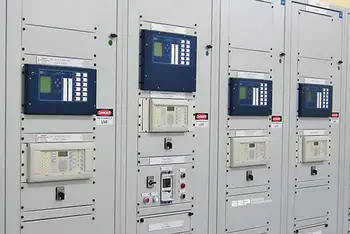
Protective Relay Training - Basic
Our customized live online or in‑person group training can be delivered to your staff at your location.
- Live Online
- 12 hours Instructor-led
- Group Training Available
Regular Price:
$699
Coupon Price:
$599
Federal regulators Tuesday handed energy companies a victory by ruling that California's power grid operator cannot give special treatment to the state's electricity buyers.
Energy companies had complained that the California Independent System Operator, overseen since early this year by appointees of Gov. Gray Davis, was giving his administration's power brokers unfair breaks by providing advance notice of the state's electricity needs.
"We're pleased," said Patrick Dorinson, spokesman for Mirant, which along with Reliant Energy had complained to the Federal Energy Regulatory Commission. "Our goal all along has been to ensure a properly functioning competitive market where everyone is treated equally."
ISO spokeswoman Stephanie McCorkle said state officials were no longer getting or needing any breaks.
A spokesman for the California Department of Water Resources, which buys the state's power, said the agency initially worked closely with grid operators to learn its new role in the energy market.
"Early on there needed to be more coordination to get our bearings straight," said spokesman Oscar Hidalgo. "We're far away from that point today. Really, the order isn't anything that is going to impact us greatly."
The state was thrust into the power business in January when the state's market meltdown drained cash from the major utilities.
The state argued that its unique role buying power for the utilities entitled it to special treatment. Federal regulators disagreed and said it will be treated as any other power scheduling coordinator.
"They've been neither fish nor fowl, and no one knew what rules applied to them," said ISO board member and consumer advocate Mike Florio.
Rep. Doug Ose, R-Woodland, said the federal order will end a relationship that "cost California ratepayers millions of dollars."
Ose said grid officials favored more expensive power the state bought for the utilities over cheaper market power, perhaps to help Davis avoid embarrassment over selling surplus contract power at a loss.
Florio said that "was happening but episodically, and not for a large amount of megawatts," costing less than $1 million. "In the power market that's the change you don't stoop down to pickup."
Hidalgo said the state's power costs have continued to fall, from $1.4 billion in February to $415 million in October.
Related News

Could selling renewable energy be Alberta's next big thing?
Alberta Renewable Energy Procurement is surging as corporate PPAs drive wind and solar growth, with…
View more
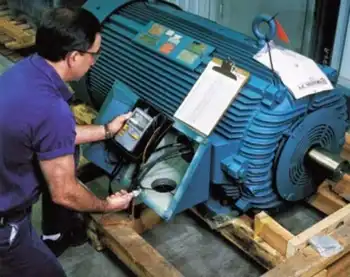
Electric Motor Testing Training
Electric Motor Testing Training covers on-line and off-line diagnostics, predictive maintenance, condition monitoring, failure analysis,…
View more
Manitoba Hydro scales back rate increase next year
Manitoba Hydro 3.5 Percent Rate Increase proposes a smaller electricity rate hike under Public Utilities…
View more

Hydro One extends ban on electricity disconnections until further notice
Hydro One Disconnection Ban Extension keeps Ontario electricity customers connected during COVID-19, extending the moratorium…
View more
Alberta Leads the Way in Agrivoltaics
Agrivoltaics in Alberta integrates solar energy with agriculture, boosting crop yields and water conservation. The…
View more

Learn how fees and usage impacts your electricity bill in new online CER tool
CER Interactive Electricity Bill Tool compares provincial electricity prices, fees, taxes, and usage. Explore household…
View more
Sign Up for Electricity Forum’s Newsletter
Stay informed with our FREE Newsletter — get the latest news, breakthrough technologies, and expert insights, delivered straight to your inbox.
Electricity Today T&D Magazine Subscribe for FREE

Stay informed with the latest T&D policies and technologies.
- Timely insights from industry experts
- Practical solutions T&D engineers
- Free access to every issue

