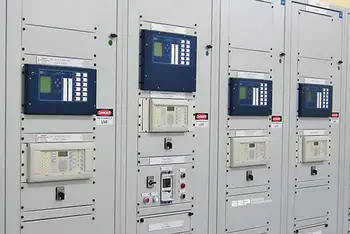
Protective Relay Training - Basic
Our customized live online or in‑person group training can be delivered to your staff at your location.
- Live Online
- 12 hours Instructor-led
- Group Training Available
Regular Price:
$699
Coupon Price:
$599
Far from its recent crisis of having too little power, California's commitment to purchase electricity could leave it with a surplus so large that consumers could pay up to $3.9 billion for unneeded electricity, a state analysis has found (AP/Houston Chronicle, Nov. 24).
The Department of Water Resources analysis compared the state's purchasing commitments under long-term power contracts negotiated earlier this year against estimates of electricity demand and market costs through 2010. It found that power purchased by the state at an average price of $75 per megawatt-hour is expected to sell for an average of $16 per megawatt-hour. Power surpluses are likely to reach their peak in 2004 and then decline through 2010.
Part of the reason for the new, larger surplus estimates is that many large industrial users have stopped buying power from utilities, turning to private energy companies instead. As a result, electricity demand is now expected to be about one-third what it was projected to be when the state contracts were signed. "We have essentially put ourselves in an energy straitjacket which will cost us billions of dollars over the next several years," said WIlliam B. Marcus, chief economist for JBS Energy (Los Angeles Times, Nov. 23).
Meanwhile, Californians are relishing the chance to string their holiday lights this year, after last year's energy crunch prompted state officials to call for a moratorium on festive light displays to conserve energy. "We understand it's going to be a very special holiday season, and we're not asking people to do without holiday lights," said Stephanie McCorkle, spokeswoman for the California Independent System Operator, which manages the state's power grid. But ISO will still encourage Californians to dim the lights during periods of peak demand, she added.
Holiday lights use about 1,000 megawatts of energy, about the same amount produced by a typical nuclear power plant (AP/New York Times, Nov. 23). -- AGR
Related News

This Floating Hotel Will Generate Electricity By Rotating All Day
Floating Rotating Eco Hotel harnesses renewable energy via VAWTAU, recycles rainwater for greywater, and follows…
View more
Ontario Providing Support for Industrial and Commercial Electricity Consumers During COVID-19
Ontario Global Adjustment Deferral provides COVID-19 relief to industrial and commercial electricity consumers, holding GA…
View more
Trump's Proposal on Ukraine's Nuclear Plants Sparks Controversy
Ukraine Nuclear Plant Ownership Proposal outlines U.S. management of Ukrainian reactors amid the Russia-Ukraine war,…
View more
Energy-hungry Europe to brighten profit at US solar equipment makers
European Solar Inverter Demand surges as photovoltaics and residential solar expand during the clean energy…
View more
New Texas will bill electric vehicle drivers an extra $200 a year
Texas EV Registration Fee adds a $200 annual charge under Senate Bill 505, offsetting lost…
View more
Is Hydrogen The Future For Power Companies?
Hydrogen Energy Transition accelerates green hydrogen, electrolyzers, renewables, and fuel cells, as the EU and…
View more
Sign Up for Electricity Forum’s Newsletter
Stay informed with our FREE Newsletter — get the latest news, breakthrough technologies, and expert insights, delivered straight to your inbox.
Electricity Today T&D Magazine Subscribe for FREE

Stay informed with the latest T&D policies and technologies.
- Timely insights from industry experts
- Practical solutions T&D engineers
- Free access to every issue

