



By About Northern Power Systems. Northern Power Systems designs, builds, and installs highly reliable, state-of-the-art power solutions for industrial, commercial, government, and not-for-profit customers using a full range of thoroughly tested technolog


Protective Relay Training - Basic

Our customized live online or in‑person group training can be delivered to your staff at your location.

  • Live Online
  • 12 hours Instructor-led
  • Group Training Available
Regular Price:
$699
Coupon Price:
$599
Reserve Your Seat Today
AMERICAN CANYON, CA, and WAITSFIELD, VT - Vermont-based Northern Power Systems, Inc., announced today that it has been commissioned to design, build and install an ultra-reliable $1.9 million power system at the main California facility of Pokka USA, a contract bottler of a wide variety of branded American soft drinks and other beverages.

The advanced 1-megawatt system - believed to be the first of its kind in California - will produce basic and standby electricity to run the bottling lines, as well as hot water for Pokka's pasteurization processes. The new on-site power system for the bottling facility, which is located approximately 50 miles from San Francisco in Marin County, is expected to pay for itself in energy savings in approximately two years.

The turnkey cogeneration system consists of a natural gas-fired generator and a sophisticated heat recovery process, to convert waste heat from electricity generation equipment and exhaust into the hot water necessary for pasteurization. The system, scheduled for installation in August, will deliver approximately 70% of Pokka's electricity and 30% of its hot water needs. It will also include advanced power electronics and controls designed to protect the bottler's automated production lines from utility blackouts, and other power failures or disruptions.

Northern said that, once the system is fully operational, this advanced cogeneration system will reduce Pokka's annual energy bill by over $800,000.

These savings more than offset the large increase in power-related costs that resulted from last summer's energy crisis in California. The system is expected to produce electricity at an average cost of 6 cents per kilowatt-hour, compared to current utility rates of close to 15 cents per kilowatt-hour. By recovering the waste heat from the generator, and using it to produce hot water, the system will also reduce the facility's boiler gas bill by 25%. In addition, the cogeneration system will contribute to savings by minimizing plant downtime and product spoilage resulting from utility power outages.

Northern's cogeneration power system for Pokka is also considered a "green" system. In recovering waste heat, the system's overall fuel efficiency rises to more than 75%, compared to typical efficiencies of 30-35% from utility-produced power. Such increased efficiency thus reduces greenhouse gas emissions by up to 45%. These higher fuel efficiencies also qualify Pokka's new system for a $600,000 incentive rebate from the Self-Generation Incentive Program of the California Public Utility Commission (CPUC). This program was put in place in 2001 to encourage on-site generation to reduce peak demand and avoid rolling blackouts such as those experienced during the state's most recent energy crisis. For Pokka, the $600,000 CPUC incentive rebate reduces its capital investment by 30% and lowers the installation's payback to about two years.

Pokka selected Northern, a leader in distributed, alternative and renewable power systems, to build this innovative system to ensure that its plant stays up and running 24/7, in light of continuing uncertainties over the availability and reliability of utility power. In the last two years, Pokka has experienced 24 utility power outages and disruptions, including a six-hour power failure in March of this year. Such power outages result in lost output, product spoilage, supply chain scheduling disruptions, and employee safety concerns.

Northern Power's advanced control system will protect Pokka's lines from most if not all of these outages and their related costs. In normal operation, the system will run in tandem with the utility grid to supply power to the plant. In the event of an outage, the control system will seamlessly transfer the plant's critical operations from the utility to the on-site generation system. By isolating the plant's critical operations from the utility grid, Northern's system will keep Pokka's main operating capabilities up and running - without interruption - right through a grid failure.

"While we want to believe that the energy situation of the past two years was an aberration," said Dan Hancock, Pokka USA's vice president of operations, "we cannot run our business on such hope. The power losses - both in past years and as recently as just last month - dramatized for us the critical need to implement a plan for ensuring reliable, quality power at stable and reasonable prices. Northern's system will ensure that these needs are met, making it an extremely sound investment, a necessary step in maintaining the quality of our products and a good example of how Pokka's commitment to being 'green' can also be cost-effective."

Jito Coleman, president and CEO of Northern, stated, "We are fortunate to work with a company whose people not only recognize the importance of power reliability for business security, but can also appreciate the growing need to be environmentally conscious. All of us at Northern are happy to help Pokka reach its goals through the turnkey design and installation of this innovative cogeneration system."

About Pokka USA. Pokka USA is a contract bottling facility owned by Pokka Corp., a Japanese food and beverage company.


Related News

California avoids widespread rolling blackouts as heat strains power grid

California Heat Wave Grid Emergency sees CAISO issue Stage 3 alerts as record demand, extreme heat, and climate change strain renewable energy; conservation efforts avert rolling blackouts and protect grid reliability statewide.


Key Points

A grid emergency in California's heat wave, with CAISO Stage 3 alerts amid record demand and risk of rolling blackouts.

✅ CAISO triggered Stage 3 alerts, then downgraded by 8 pm PT

✅ Record 52,061 MW demand; conservation reduced grid stress

✅ Extreme heat and climate change heightened outage risks


California has avoided ordering rolling blackouts after electricity demand reached a record-high Tuesday night from excessive heat across the state, even as energy experts warn the U.S. grid faces mounting climate stresses. 

The California Independent System Operator, which oversees the state’s electrical grid, imposed its highest level energy emergency on Tuesday, a step that comes before ordering rolling blackouts and allows the state to access emergency power sources.

The Office of Emergency Services also sent a text alert to residents requesting them to conserve power. The operator downgraded the Stage 3 alert around 8:00 p.m. PT on Tuesday and said that “consumer conservation played a big part in protecting electric grid reliability,” and in bolstering grid resilience overall.

The state capital of Sacramento reached 116 degrees Fahrenheit on Tuesday, according to the National Weather Service, surpassing a record that was set almost 100 years ago. And nearly a half-dozen cities in the San Francisco Bay Area tied or set all-time highs, the agency said.

CAISO said peak power demand on Tuesday reached 52,061 megawatts, surpassing a previous high of 50,270 megawatts on July 24, 2006, while nearby B.C. electricity demand has also hit records during extreme weather.

While the operator did not order rolling blackouts, three Northern California cities saw brief power outages, and severe storms have caused similar disruptions statewide in recent months. As of 7:00 am PT on Wednesday, nearly 8,000 customers in California were without power, according to PowerOutage.us. 

Gov. Gavin Newsom, in a Twitter video on Tuesday, warned the temperatures across California were unprecedented and the state is headed into the worst part of the heat wave, which is on track to be the hottest and longest on record for September.

“The risk for outages is real and it’s immediate,” Newsom said. “These triple-digit temperatures throughout much of the state are leading, not surprisingly, to record demand on the energy grid.”

The governor urged residents to pre-cool their homes earlier in the day when more power is available and turn thermostats to 78 degrees or higher after 4:00 pm PT. “Everyone has to do their part to help step up for just a few more days,” Newsom said.

The possibility for widespread outages reflects how power grids in California and other states are becoming more vulnerable to climate-related disasters such as heat waves, storms and wildfires across California.

California, which has set a goal to transition to 100% carbon-free electricity by 2045, has shuttered a slew of gas power plants in the past few years, leaving the state increasingly dependent on solar energy.

At times, the state has produced a clean energy surplus during peak solar generation, underscoring the challenges of balancing supply and demand.

The megadrought in the American West has generated the driest two decades in the region in at least 1,200 years, and human-caused climate change has fueled the problem, scientists said earlier this year. Conditions will likely continue through 2022 and persist for years.


Related News

View more

The Haves and Have-Nots of Electricity in California

California Public Safety Power Shutoffs highlight wildfire prevention as PG&E outages disrupt schools, businesses, and rural communities, driving generator use, economic hardship, and emergency preparedness across Northern California during high-wind events.


Key Points

Utility outages to reduce wildfire risk during extreme winds, impacting homes and businesses in high-risk California.

✅ PG&E cuts power during high winds to prevent wildfires

✅ Costs rise for generators, fuel, batteries, and spoiled food

✅ Rural, low-income communities face greater economic losses


The intentional blackout by California’s largest utility this week put Forest Jones out of work and his son out of school. On Friday morning Mr. Jones, a handyman and single father, sat in his apartment above a tattoo parlor waiting for the power to come back on and for school to reopen.

“I’ll probably lose $400 or $500 dollars because of this,” said Mr. Jones, who lives in the town of Paradise, which was razed by fire last year and is slowly rebuilding. “Things have been really tough up here.”

Millions of people were affected by the blackout, which spanned the outskirts of Silicon Valley to the forests of Humboldt County near the Oregon border. But the outage, which the power company said was necessary to reduce wildfire risk across the region, also drew a line between those who were merely inconvenienced and those who faced a major financial hardship.

To have the lights on, the television running and kitchen appliances humming is often taken for granted in America, even as U.S. grid during coronavirus questions persisted. During California’s blackout it became an economic privilege.

The economic impacts of the shut-off were especially acute in rural, northern towns like Paradise, where incomes are a fraction of those in the San Francisco Bay Area.

Both wealthy and poorer areas were affected by the blackout but interviews across the state suggested that being forced off the grid disproportionately hurt the less affluent. One family in Humboldt County said they had spent $150 on batteries and water alone during the shutdown.

“To be prepared costs money,” Sue Warhaftig, a massage therapist who lives in Mill Valley, a wealthy suburb across the Golden Gate Bridge from San Francisco. Ms. Warhaftig spent around two days without electricity but said she had been spared from significant sacrifices during the blackout.

She invested in a generator to keep the refrigerator running and to provide some light. She cooked in the family’s Volkswagen camper van in her driveway. At night she watched Netflix on her phone, which she was able to charge with the generator. Her husband, a businessman, is in London on a work trip. Her two sons, both grown, live in Southern California and Seattle.

“We were inconvenienced but life wasn’t interrupted,” Ms. Warhaftig said. “But so many people’s lives were.

Pacific Gas & Electric restored power to large sections of Northern California on Friday, including Paradise, where the electricity came back on in the afternoon. But hundreds of thousands of people in other areas remained in the dark. The carcasses of burned cars still littered the landscape around Paradise, where 86 people died in the Camp Fire last year, some of them while trying to escape.

Officials at power company said that by Saturday they hoped to have restored power to 98 percent of the customers who were affected.

The same dangerous winds that spurred the shut-off in Northern California have put firefighters to work in the south. The authorities in Los Angeles County ordered the evacuation of nearly 100,000 people on Friday as the Saddleridge Fire burned nearly 5,000 acres and destroyed 25 structures. The Sandalwood Fire, which ignited Thursday in Riverside County, had spread to more than 800 acres and destroyed 74 structures by Friday afternoon.

While this week’s outage was the first time many customers in Northern California experienced a deliberate power shut-off, residents in and around Paradise have had their power cut four times in recent months, residents say.

Many use a generator, but running one has become increasingly expensive with gasoline now at more than $4 a gallon in California.

On Friday, Dennis and Viola Timmer drove up the hill to their home in Magalia, a town adjacent to Paradise, loaded with $102 dollars of gasoline for their generators. It was their second gasoline run since the power went out Tuesday night.

The couple, retired and on a fixed income after Mr. Timmer’s time in the Navy and in construction, said the power outage had severely limited their ability to do essential tasks like cooking, or to leave the house.

“You know what it feels like? You’re in jail,” said Ms. Timmer, 72. “You can’t go anywhere with the generators running.”

Since the generators are not powerful enough to run heat or air conditioning, the couple slept in their den with an electric space heater.

“It’s really difficult because you don’t have a normal life,” Ms. Timmer said. “You’re trying to survive.”

To be sure, the shutdown has affected many people regardless of economic status, and similar disruptions abroad, like a London power outage that disrupted routines, show how widespread such challenges can be. The areas without power were as diverse as the wealthy suburbs of Silicon Valley, the old Gold Rush towns of the Sierra Nevada, the East Bay of San Francisco and the seaside city of Arcata.

Ms. Cahn’s cellphone ran out of power during the blackout and even when she managed to recharge it in her car cell service was spotty, as it was in many areas hit by the blackout.

Accustomed to staying warm at night with an electric blanket, Ms. Cahn slept under a stack of four blankets.

“I’m doing what I have to do which is not doing very much,” she said.

Further south in Marin City, Chanay Jackson stood surrounded by fumes from generators still powering parts of the city.

She said that food stamps were issued on the first of the month and that many residents who had to throw away food were out of luck.

“They’re not going to issue more food stamps just because the power went out,” Ms. Jackson said. “So they’re just screwed until next month.”

Strong winds have many times in the past caused power lines to come in contact with vegetation, igniting fires that are then propelled by the gusts, and hurricanes elsewhere have crippled infrastructure with Louisiana grid rebuild after Laura according to state officials. This was the case with the Camp Fire.

Since higher elevations had more extreme winds many of the neighborhoods where power was turned off this week were in hills and canyons, including in the Sierra Nevada.

The shut-off, which by one estimate affected a total of 2.5 million people, has come under strong criticism by residents and politicians, and warnings from Cal ISO about rolling blackouts as the power grid strained. The company’s website crashed just as customers sought information about the outage. Gov. Gavin Newsom called it unacceptable. But his comments were nuanced, criticizing the way the shut-off was handled, not the rationale for it. Mr. Newsom and others said the ravages of the Camp Fire demanded preventive action to prevent a reoccurrence.

Yet the calculus of trying to avoid deadly fires by shutting off power will continue to be debated as California enters its peak wildfire season, even as electricity reliability during COVID-19 was generally maintained for most consumers.

In the city of Grass Valley, Matthew Gottschalk said he and his wife realized that a generator was essential when they calculated that they had around $500 worth of food in their fridge.

“I don’t know what we would have done,” said Mr. Gottschalk, whose power went out Tuesday night.

His neighbors are filling coolers with ice. Everyone is hoping the power will come back on soon.

“Ice is going to run out and gas is going to run out,” he said.


Related News

View more

Geothermal Power Plant In Hawaii Nearing Dangerous Meltdown?

Geothermal Power Plant Risks include hydrogen sulfide leaks, toxic gases, lava flow hazards, well blowouts, and earthquake-induced releases at sites like PGV and the Geysers, threatening public health, grid reliability, and environmental safety.


Key Points

Geothermal Power Plant Risks include toxic gases, lava impacts, well failures, and induced quakes that threaten health.

✅ Hydrogen sulfide exposure can cause rapid pulmonary edema.

✅ Lava can breach wells, venting toxic gases into communities.

✅ Induced seismicity may disrupt grids near PGV and the Geysers.


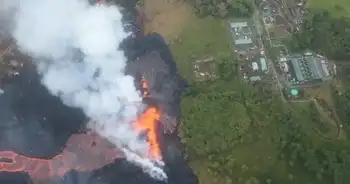
If lava reaches Hawaii’s PGV geothermal power plant, it could release of deadly hydrogen sulfide gas. That’s the latest potential danger from the Kilauea volcanic eruption in Hawaii. Residents now fear that lava flow will trigger a meltdown at the Puna Geothermal Venture (PGV) power plant that would release even more toxic gases into the air.

Nobody knows what will happen if lava engulfs the PGV because magma has never engulfed a geothermal power plant, Reuters reported. A geothermal power plant uses steam and gas heated by lava deep in the earth to run turbines that make electricity.

The PGV power plant produces 25% of the power used on Hawaii’s “Big Island.” The plant is considered a source of clean energy because geothermal plants burn no fossil fuels and produce little pollution under normal circumstances, even as nuclear retirements like Three Mile Island reshape low-carbon options.


The Potential Danger from Geothermal Energy

The fear is that the lava would release chemicals used to make electricity at the plant. The PGV has been shut down and authorities moved an estimated 60,000 gallons of flammable liquids away from the facility. They also shut down wells that extract steam and gas used to run the turbines.

Another potential danger is that lava would open the wells and release clouds of toxic gases from them. The wells are typically sealed to prevent the gas from entering the atmosphere.

The most significant threat is hydrogen sulfide, a highly toxic and flammable gas that is colorless. Hydrogen sulfide normally has a rotten egg smell which people might not detect when the air is full of smoke. That means people can breathe hydrogen sulfide in without realizing they have been exposed.

The greatest danger from hydrogen sulfide is pulmonary edema; the accumulation of fluid in the lungs, which causes a person to stop breathing. People have died of pulmonary edema after just a few minutes of exposure to hydrogen sulfide gas. Many victims become unconscious before the gas kills them. Long-term dangers that survivors of pulmonary edema face include brain damage.

Hydrogen sulfide can also cause burns to the skin that are similar to frostbite. Persons exposed to hydrogen sulfide can also suffer from nausea, headaches, severe eye burns, and delirium. Children are more vulnerable to hydrogen sulfide because it is a heavy gas that stays close to the ground.


Geothermal Danger Extends Far Beyond Hawaii

The danger from geothermal energy extends far beyond Hawaii. The world’s largest collection of geothermal power plants is located at the Geysers in California’s Wine Country, and regulatory timelines such as the postponed closure of three Southern California plants can affect planning.

The Geysers field contains 350 steam production wells and 22 power plants in Sonoma, Lake, and Mendocino counties. Disturbingly, the Geysers are located just north of the heavily-populated San Francisco Bay Area and just west of Sacramento, where preemptive electricity shutdowns have been used during extreme fire weather. Problems at the Geysers might lead to significant blackouts because the field supplies around 20% of the green energy used in California.

Another danger from geothermal power is earthquakes because many geothermal power plants inject wastewater into hot rock deep below to produce steam to run turbines, a factor under review as SaskPower explores geothermal in new settings. A geothermal project in Switzerland created Earthquakes by injecting water into the Earth, Zero Hedge reported. A theoretical threat is that quakes caused by injection would cause the release of deadly gases at a geothermal power plant.

The dangers from geothermal power might be much greater than its advocates admit, potentially increasing reliance on natural-gas-based electricity during supply shortfalls.


Related News

View more

Ontario Drops Starlink Deal, Eyes Energy Independence

Ontario Starlink Contract Cancellation underscores rising tariffs, trade tensions, and retaliation, as SpaceX's Elon Musk loses a rural broadband deal; Ontario pivots to procurement bans, energy resilience, and nuclear power to boost grid independence.


Key Points

Ontario ended a C$100M Starlink deal over U.S. tariffs, prompting a shift to rural broadband alternatives.

✅ Triggered by U.S. tariffs; Ontario adopts retaliatory procurement bans.

✅ Ends plan to connect 15,000 rural homes and businesses with broadband.

✅ Signals push for energy resilience, nuclear power, and grid independence.


In a decisive move, Ontario Premier Doug Ford announced the cancellation of a C$100 million contract with Elon Musk's Starlink, a subsidiary of SpaceX, in direct response to U.S. President Donald Trump's imposition of tariffs on Canadian imports. This action underscores the escalating trade tensions between Canada and the United States, a theme highlighted during Ford's Washington meeting on energy tariffs earlier this month, and highlights Ontario's efforts to safeguard its economic interests.

The now-terminated agreement, established in November, aimed to provide high-speed internet access to 15,000 homes and businesses in Ontario's remote areas. Premier Ford's decision to "rip up" the contract signifies a broader strategy to distance the province from U.S.-based companies amid the current trade dispute. He emphasized, "Ontario won't do business with people hell-bent on destroying our economy."

This move is part of a series of retaliatory measures by Canadian provinces, including Ford's threat to cut electricity exports to the U.S., following President Trump's announcement of a 25% tariff on nearly all Canadian imports, excluding oil, which faces a 10% surcharge. These tariffs, set to take effect imminently, have prompted concerns about potential economic downturns in Canada. In response, Prime Minister Justin Trudeau declared that Canada would impose 25% tariffs on C$155 billion worth of U.S. goods, aiming to exert pressure on the U.S. administration to reconsider its stance.

Premier Ford's actions reflect a broader sentiment of economic nationalism, as he also announced a ban on American companies from provincial contracts until the U.S. tariffs are lifted. He highlighted that Ontario's government and its agencies allocate $30 billion annually on procurement, and reiterated his earlier vow to fire the Hydro One CEO and board as part of broader reforms aimed at efficiency.

The cancellation of the Starlink contract raises concerns about the future of internet connectivity in Ontario's rural regions. The original deal with Starlink was seen as a significant step toward bridging the digital divide, offering high-speed internet to underserved communities. With the contract's termination, the province faces the challenge of identifying alternative solutions to fulfill this critical need.

Beyond the immediate implications of the Starlink contract cancellation, Ontario is confronting broader challenges in ensuring the resilience and independence of its energy infrastructure. The province's reliance on external entities for critical services, such as internet connectivity and energy, has come under scrutiny, as Canada's electricity exports are at risk amid ongoing trade tensions and policy uncertainty.

Premier Ford has expressed a commitment to expanding Ontario's capacity to generate nuclear power as a means to bolster energy self-sufficiency. While this strategy aims to reduce dependence on external energy sources, it presents its own set of challenges that critics argue require cleaning up Ontario's hydro mess before new commitments proceed. Developing nuclear infrastructure requires substantial investment, rigorous safety protocols, and long-term planning. Moreover, the integration of nuclear power into the province's energy mix necessitates careful consideration of environmental impacts and public acceptance.

The concept of "Trump-proofing" Ontario's electricity grid involves creating a robust and self-reliant energy system capable of withstanding external political and economic pressures. Achieving this goal entails diversifying energy sources, including building on Ontario's electricity deal with Quebec to strengthen interties, investing in renewable energy technologies, and enhancing grid infrastructure to ensure stability and resilience.

However, the path to energy independence is fraught with complexities. Balancing the immediate need for reliable energy with long-term sustainability goals requires nuanced policy decisions, including Ontario's Supreme Court challenge to the global adjustment fee and related regulatory reviews to clarify cost impacts. Additionally, fostering collaboration between government entities, private sector stakeholders, and the public is essential to navigate the multifaceted challenges associated with overhauling the province's energy framework.

Ontario's recent actions, including the cancellation of the Starlink contract, underscore the province's proactive stance in safeguarding its economic and infrastructural interests amid evolving geopolitical dynamics. While such measures reflect a commitment to self-reliance, they also highlight the intricate challenges inherent in reducing dependence on external entities. As Ontario charts its course toward a more autonomous future, strategic planning, investment in sustainable technologies, and collaborative policymaking will be pivotal in achieving long-term resilience and prosperity.


Related News

View more

Rio Tinto Completes Largest Off-Grid Solar Plant in Canada's Northwest Territories

Rio Tinto Off-Grid Solar Power Plant showcases renewable energy at the Diavik Diamond Mine in Canada's Northwest Territories, cutting diesel use, lowering carbon emissions, and boosting remote mining resilience with advanced photovoltaic technology.


Key Points

A remote solar PV plant at Diavik mine supplying clean power while cutting diesel use, carbon emissions, and costs.

✅ Largest off-grid solar in Northwest Territories

✅ Replaces diesel generators during peak solar hours

✅ Enhances sustainability and lowers operating costs


In a significant step towards sustainable mining practices, Rio Tinto has completed the largest off-grid solar power plant in Canada’s Northwest Territories. This groundbreaking achievement not only highlights the company's commitment to renewable energy, as Canada nears 5 GW of solar capacity nationwide, but also sets a new standard for the mining industry in remote and off-grid locations.

Located in the remote Diavik Diamond Mine, approximately 220 kilometers south of the Arctic Circle, Rio Tinto's off-grid solar power plant represents a technological feat in harnessing renewable energy in challenging environments. The plant is designed to reduce reliance on diesel fuel, traditionally used to power the mine's operations, and mitigate carbon emissions associated with mining activities.

The decision to build the solar power plant aligns with Rio Tinto's broader sustainability goals and commitment to reducing its environmental footprint. By integrating renewable energy sources like solar power, a strategy that renewable developers say leads to better, more resilient projects, the company aims to enhance energy efficiency, lower operational costs, and contribute to global efforts to combat climate change.

The Diavik Diamond Mine, jointly owned by Rio Tinto and Dominion Diamond Mines, operates in a remote region where access to traditional energy infrastructure is limited, and where, despite lagging solar demand in Canada, off-grid solutions are increasingly vital for reliability. Historically, diesel generators have been the primary source of power for the mine's operations, posing logistical challenges and environmental impacts due to fuel transportation and combustion.

Rio Tinto's investment in the off-grid solar power plant addresses these challenges by leveraging abundant sunlight in the Northwest Territories to generate clean electricity directly at the mine site. The solar array, equipped with advanced photovoltaic technology, which mirrors deployments such as Arvato's first solar plant in other sectors, is capable of producing a significant portion of the mine's electricity needs during peak solar hours, reducing reliance on diesel generators and lowering overall carbon emissions.

Moreover, the completion of the largest off-grid solar power plant in Canada's Northwest Territories underscores the feasibility and scalability of renewable energy solutions, from rooftop arrays like Edmonton's largest rooftop solar to off-grid systems in remote and resource-intensive industries like mining. The success of this project serves as a model for other mining companies seeking to enhance sustainability practices and operational resilience in challenging geographical locations.

Beyond environmental benefits, Rio Tinto's initiative is expected to have positive economic and social impacts on the local community. By reducing diesel consumption, the company mitigates air pollution and noise levels associated with mining operations, improving environmental quality and contributing to the well-being of nearby residents and wildlife.

Looking ahead, Rio Tinto's investment in renewable energy at the Diavik Diamond Mine sets a precedent for responsible resource development and sustainable mining practices in Canada, where solar growth in Alberta is accelerating, and globally. As the mining industry continues to evolve, integrating renewable energy solutions like off-grid solar power plants will play a crucial role in achieving long-term environmental sustainability and operational efficiency.

In conclusion, Rio Tinto's completion of the largest off-grid solar power plant in Canada's Northwest Territories marks a significant milestone in the mining industry's transition towards renewable energy. By harnessing solar power to reduce reliance on diesel generators, the company not only improves operational efficiency and environmental stewardship but also adds to momentum from corporate power purchase agreements like RBC's Alberta solar deal, setting a positive example for sustainable development in remote regions. As global demand for responsible mining practices grows, initiatives like Rio Tinto's off-grid solar project demonstrate the potential of renewable energy to drive positive change in resource-intensive industries.


Related News

View more

Tackling climate change with machine learning: Covid-19 and the energy transition

Covid-19 Energy Transition and Machine Learning reshape climate change policy, electricity planning, and grid operations, from demand forecasting and decarbonization strategies in Europe to scalable electrification modeling and renewable integration across Africa.


Key Points

How the pandemic reshapes energy policy and how ML improves planning, demand forecasts, and grid reliability in Africa.

✅ Pandemic-driven demand shifts strain grid operations and markets

✅ Policy momentum risks rollback; favor future-oriented decarbonization

✅ ML boosts demand prediction, electrification, and grid reliability in Africa


The impact of Covid-19 on the energy system was discussed in an online climate change workshop that also considered how machine learning can help electricity planning in Africa.

This year’s International Conference on Learning Representations event included a workshop held by the Climate Change AI group of academics and artificial intelligence industry representatives, which considered how machine learning can help tackle climate change and highlighted advances by European electricity prediction specialists working in this field.

Bjarne Steffen, senior researcher at the energy politics group at ETH Zürich, shared his insights at the workshop on how Covid-19 and the accompanying economic crisis are affecting recently introduced ‘green’ policies. “The crisis hit at a time when energy policies were experiencing increasing momentum towards climate action, especially in Europe, and in proposals to invest in smarter electricity infrastructure for long-term resilience,” said Steffen, who added the coronavirus pandemic has cast into doubt the implementation of such progressive policies.

The academic said there was a risk of overreacting to the public health crisis, as far as progress towards climate change goals was concerned.


Lobbying

“Many interest groups from carbon-intensive industries are pushing to remove the emissions trading system and other green policies,” said Steffen. “In cases where those policies are having a serious impact on carbon-emitting industries, governments should offer temporary waivers during this temporary crisis, instead of overhauling the regulatory structure.”

However, the ETH Zürich researcher said any temptation to impose environmental conditions to bail-outs for carbon-intensive industries should be resisted. “While it is tempting to push a green agenda in the relief packages, tying short-term environmental conditions to bail-outs is impractical, given the uncertainty in how long this crisis will last,” he said. “It is better to include provisions that will give more control over future decisions to decarbonize industries, such as the government taking equity shares in companies.”

Steffen shared with pv magazine readers an article published in Joule which can be accessed here, and which articulates his arguments about how Covid-19 could affect the energy transition.


Covid-19 in the U.K.

The electricity system in the U.K. is also being affected by Covid-19, even as the U.S. electric grid grapples with climate risks, according to Jack Kelly, founder of London-based, not-for-profit, greenhouse gas emission reduction research laboratory Open Climate Fix.

“The crisis has reduced overall electricity use in the U.K.,” said Kelly. “Residential use has increased but this has not offset reductions in commercial and industrial loads.”

Steve Wallace, a power system manager at British electricity system operator National Grid ESO recently told U.K. broadcaster the BBC electricity demand has fallen 15-20% across the U.K. The National Grid ESO blog has stated the fall-off makes managing grid functions such as voltage regulation more challenging.

Open Climate Fix’s Kelly noted even events such as a nationally-coordinated round of applause for key workers was followed by a dramatic surge in demand, stating: “On April 16, the National Grid saw a nearly 1 GW spike in electricity demand over 10 minutes after everyone finished clapping for healthcare workers and went about the rest of their evenings.”

Climate Change AI workshop panelists also discussed the impact machine learning could have on improving electricity planning in Africa. The Electricity Growth and Use in Developing Economies (e-Guide) initiative funded by fossil fuel philanthropic organization the Rockefeller Foundation aims to use data to improve the planning and operation of electricity systems in developing countries.

E-Guide members Nathan Williams, an assistant professor at the Rochester Institute of Technology (RIT) in New York state, and Simone Fobi, a PhD student at Columbia University in NYC, spoke about their work at the Climate Change AI workshop, which closed on Thursday. Williams emphasized the importance of demand prediction, saying: “Uncertainty around current and future electricity consumption leads to inefficient planning. The weak link for energy planning tools is the poor quality of demand data.”

Fobi said: “We are trying to use machine learning to make use of lower-quality data and still be able to make strong predictions.”

The market maturity of individual solar home systems and PV mini-grids in Africa mean more complex electrification plan modeling is required, similar to integrating AI data centers into Canada's grids at scale.


Modeling

“When we are doing [electricity] access planning, we are trying to figure out where the demand will be and how much demand will exist so we can propose the right technology,” added Fobi. “This makes demand estimation crucial to efficient planning.”

Unlike many traditional modeling approaches, machine learning is scalable and transferable. Rochester’s Williams has been using data from nations such as Kenya, which are more advanced in their electrification efforts, to train machine learning models to make predictions to guide electrification efforts in countries which are not as far down the track.

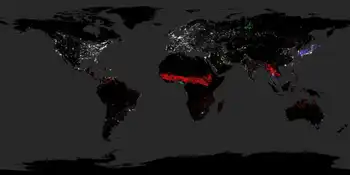
Williams also discussed work being undertaken by e-Guide members at the Colorado School of Mines, which uses nighttime satellite imagery and machine learning to assess the reliability of grid infrastructure in India, where new algorithms to prevent ransomware-induced blackouts are also advancing.


Rural power

Another e-Guide project, led by Jay Taneja at the University of Massachusetts, Amherst – and co-funded by the Energy and Economic Growth program on development spending based at Berkeley – uses satellite imagery to identify productive uses of electricity in rural areas by detecting pollution signals from diesel irrigation pumps.

Though good quality data is often not readily available for Africa, Williams added, it does exist.

“We have spent years developing trusting relationships with utilities,” said the RIT academic. “Once our partners realize the value proposition we can offer, they are enthusiastic about sharing their data … We can’t do machine learning without high-quality data and this requires that organizations can effectively collect, organize, store and work with data. Data can transform the electricity sector, as shown by Canadian projects to use AI for energy savings, but capacity building is crucial.”


Related News

View more

Sign Up for Electricity Forum’s Newsletter

Stay informed with our FREE Newsletter — get the latest news, breakthrough technologies, and expert insights, delivered straight to your inbox.

Electricity Today T&D Magazine Subscribe for FREE

Stay informed with the latest T&D policies and technologies.
  • Timely insights from industry experts
  • Practical solutions T&D engineers
  • Free access to every issue

Download the 2025 Electrical Training Catalog

Explore 50+ live, expert-led electrical training courses –

  • Interactive
  • Flexible
  • CEU-cerified