NFPA 70B Training - 2026 Edition - Electrical Maintenance Program Compliance
Our customized live online or in‑person group training can be delivered to your staff at your location.
- Live Online
- 12 hours Instructor-led
- Group Training Available
Regular Price:
$699
Coupon Price:
$599
You can feel the electricity in the halls of Hilco Industrial these days. That's because of the unprecedented results of a just-completed auction sale of unused surplus gas turbine generators and other plant equipment for Calpine Corporation, a major North American power company.
The auction, which was held in Las Vegas on November 16, 2006, brought $48 million in sales. Among the 130 lots auctioned were eight unused turbine and generator sets, each of which is capable of generating from 45 megawatts to 180 megawatts of power. Ancillary plant equipment was also sold.
Michigan-based Hilco Industrial, LLC was engaged to sell Calpine's surplus assets. A simultaneous on-site and on-line auction strategy garnered the $48 million result. Approximately $25 million was generated by on-line buyers from around the world who participated using Hilco's HilCast(R) webcast auction technology. This is believed to be a world record for industrial equipment sold via an on-line auction according to Hilco Industrial CEO Robert Levy. He should know. Levy is a 27-year veteran of machinery and equipment auctions and a pioneer in the use of Internet-based auctions.
"In all my years," says Levy, "I have never seen larger online bids for specific pieces of industrial equipment. We had $10 million bids for generator sets and some bidders took multiple units."
In order to assure a truly level playing field for Internet bidders, who were competing with bidders at the Las Vegas auction site, Hilco employed its HilCast(R) conversational webcast technology. As in any traditional theater-style auction, on-site bidders view each item being auctioned on a large video projection screen while an auctioneer asks for and calls-out bids to the seated audience. The HilCast(R) auction system provides on-line bidders with the same images via a conventional web browser, but they hear and can communicate in real time with the auctioneer and on-site audience over a high-quality international telephone line.
The use of voice communications via a live phone line eliminates the need for on-line bidders to type-in their bids, which can cause time delays and the potential for missed bids. Using Hilco's technology, on-line participants are able to engage in the same open outcry bidding process as on-site bidders.
The auction drew bidders from the United States, Canada, the United Kingdom, India, China, Brazil and other nations. In order to attract as many qualified bidders as possible, Hilco executed a multifaceted international marketing campaign about 60 days in advance of the auction date. At one point, says Levy, we were fielding 200 calls per day from interested parties.
To qualify as a bidder, prospective buyers had to pass certain financial tests and meet other U.S. government-imposed requirements. Each bidder was then required to register with Hilco Industrial and submit a deposit reflecting the amount they expected to bid for certain items. Generator set bidders were required to submit a deposit of at least $1 million. There were 36 such bidders. "We set the requirement bar quite high for all bidders," observed Levy. "We wanted to be absolutely certain that all bidders were serious buyers and that every bid received was legitimate. After all, unused 180 megawatt generator sets are not your typical auction item."
Just how much is 180 megawatts? By comparison, the new Liuhong Hydropower Station being built on the Meigu River in Sichuan Province, People's Republic of China, will have an installed capacity of 180 megawatts, and is expected to supply 797 million kilowatt hours of electricity a year for China. If wind power is your thing, consider that it would take about 120 wind turbines to generate 180 megawatts, which would be enough to power about 180,000 homes.
Related News
UCP scraps electricity price cap, some will see $7 bill increase this month
Edmonton Electricity Rate Increase signals Alberta RRO changes as the UCP ends the NDP price…
View more

Solar Now ‘cheaper Than Grid Electricity’ In Every Chinese City, Study Finds
China Solar Grid Parity signals unsubsidized industrial and commercial PV, rooftop solar, and feed-in tariff…
View more

New Hampshire rejects Quebec-Massachusetts transmission proposal
Northern Pass Project faces rejection by New Hampshire regulators, halting Hydro-Quebec clean energy transmission lines…
View more
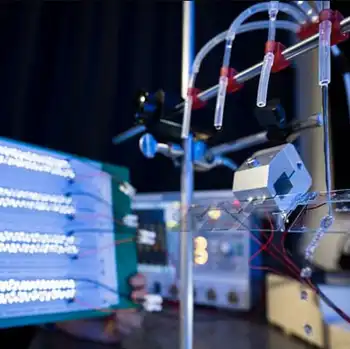
The Cool Way Scientists Turned Falling Raindrops Into Electricity
Raindrop Triboelectric Energy Harvesting converts falling water into electricity using Teflon (PTFE) on indium tin…
View more

EPA Policy to limit telework emerges during pandemic
EPA Telework Policy restricts remote work, balancing work-from-home guidance during the COVID-19 pandemic with flexible…
View more

Alberta Carbon tax is gone, but consumer price cap on electricity will remain
Alberta Electricity Rate Cap stays despite carbon tax repeal, keeping the Regulated Rate Option at…
View more
Sign Up for Electricity Forum’s Newsletter
Stay informed with our FREE Newsletter — get the latest news, breakthrough technologies, and expert insights, delivered straight to your inbox.
Electricity Today T&D Magazine Subscribe for FREE
Stay informed with the latest T&D policies and technologies.
- Timely insights from industry experts
- Practical solutions T&D engineers
- Free access to every issue