Contract for electricity signed in Iraq

By By Spc. Joshua Hutcheson with contributions by Master Sgt. Kelly Tyler


Arc Flash Training CSA Z462 - Electrical Safety Essentials

Our customized live online or in‑person group training can be delivered to your staff at your location.
  • Live Online
  • 6 hours Instructor-led
  • Group Training Available
Regular Price:
$249
Coupon Price:
$199
Reserve Your Seat Today
The first commercial contract in Iraq since the fall of the previous regime, to provide electricity to the country, has been signed in Baghdad between Karadeniz Energy Group, the Coalition Provisional Authority in Iraq and Iraqi energy commission.

The deal specifies that the Karadeniz Energy Group, a Turkish company, will supply electricity to Iraq for 24 months at $ 3 million a month for 50 megawatts of power, up to $4.5 million a month for 75 megawatts of power.

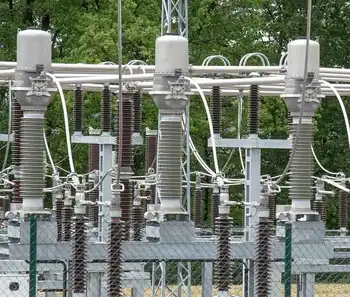
The purchase adds extra power critical to the country while its electrical infrastructure is being repaired. Electrical power substations were a key target of sabotage during the war. Additionally, looting after the war left many structures in disrepair.

“Even before the war the system was not able to produce enough electricity to meet demand,” said Stephen Browning, deputy director for infrastructure, CPA.

According to Maj. Roosevelt Samuel, 101st Airborne Division assistant division engineer, Iraq is operating at a greater-than 35-percent electricity deficit. Parts of the country experience power outages of up to 12-hours a day. The purchase of the extra wattage brings the country closer to the goal of 252 megawatts a day, which will allow predictable three-hours on, three- hours off schedule for electricity throughout Iraq.

“There is a greater than 35 percent energy deficit throughout Iraq,” Samuel said. “This long-standing deficit is largely due to the condition of the existing electrical infrastructure, and also partly due to looting that occurred after the war.”

The majority of the damage affected the power plants that distribute power throughout the country, according to Samuel. The purchase of the extra 50 megawatts a day from Turkey augments and supplements the existing production of power until those “crippling” structures can be repaired.

With the new contract the CPA will have the country operating at pre-war levels by the end of September and hopes to exceed pre-war levels by next summer, Browning said.

“We’re working very hard for the people of Iraq,” he said. “But we are not generating enough to meet demand, which is why we’re looking to import.”

It has not been easy, we have more negotiations ahead with other companies,” said Brig. Gen. Frank Helmick, assistant division commander, operations, 101st Airborne Division (Air Assault).

Besides the international deal with Turkey, the CPA and Iraqi energy commission are looking to their neighbors to the south, east and west to further augment their output. Talks are also being held with electricity companies in Kuwait, Jordan, Syria and Saudi Arabia, Browning said.

“Power is one of the top two problems of Iraq, it impacts everything we do,” Helmick said.

The goal of the 101st is to improve the quality of life for everybody in Iraq. Electricity is only one of the things that need to be repaired or improved.

“The 101st will be relentless,” Helmick said. “We’re up to the task, we will not rest.”

Related News

Ukraine Resumes Electricity Exports

Ukraine Electricity Exports resume as the EU grid links stabilize; ENTSO-E caps, megawatt capacity, renewables, and infrastructure repairs enable power flows to Moldova, Poland, Slovakia, and Romania despite ongoing Russian strikes.


Key Points

Resumed cross-border power sales showing grid stability under ENTSO-E limits and surplus generation.

✅ Exports restart to Moldova; Poland, Slovakia, Romania next.

✅ ENTSO-E cap limits to 400 MW; more capacity under negotiation.

✅ Revenues fund grid repairs after Russian strikes.


Ukraine began resuming electricity exports to European countries on Tuesday, its energy minister said, a dramatic turnaround from six months ago when fierce Russian bombardment of power stations plunged much of the country into darkness in a bid to demoralize the population.

The announcement by Energy Minister Herman Halushchenko that Ukraine was not only meeting domestic consumption demands but also ready to restart exports to its neighbors was a clear message that Moscow’s attempt to weaken Ukraine by targeting its infrastructure did not work.

Ukraine’s domestic energy demand is “100%” supplied, he told The Associated Press in an interview, and it has reserves to export due to the “titanic work” of its engineers and international partners.

Russia ramped up infrastructure attacks in September, when waves of missiles and exploding drones destroyed about half of Ukraine's energy system, even as it built lines to reactivate the Zaporizhzhia plant in occupied territory. Power cuts were common across the country as temperatures dropped below freezing and tens of millions struggled to keep warm.

Moscow said the strikes were aimed at weakening Ukraine’s ability to defend itself, and both sides have floated a possible agreement on power plant attacks amid mounting civilian harm, while Western officials said the blackouts that caused civilians to suffer amounted to war crimes. Ukrainians said the timing was designed to destroy their morale as the war marked its first anniversary.


Ukraine had to stop exporting electricity in October to meet domestic needs.

Engineers worked around the clock, often risking their lives to come into work at power plants and keep the electricity flowing. Kyiv’s allies also provided help. In December, U.S. Secretary of State Antony Blinken announced $53 million in bilateral aid to help the country acquire electricity grid equipment, on top of $55 million for energy sector support.

Much more work remains to be done, Halushchenko said. Ukraine needs funding to repair damaged generation and transmission lines, and revenue from electricity exports would be one way to do that.

The first country to receive Ukraine’s energy exports will be Moldova, he said.

Besides the heroic work by engineers and Western aid, warmer temperatures are enabling the resumption of exports by making domestic demand lower, and across Europe initiatives like virtual power plants for homes are helping balance grids. Nationwide consumption was already down at least 30% due to the war, Halushchenko said, with many industries having to operate with less power.

Renewables like solar and wind power also come into play as temperatures rise, taking some pressure off nuclear and coal-fired power plants.

But it’s unclear if Ukraine can keep up exports amid the constant threat of Russian bombardment.

“Unfortunately now a lot of things depend on the war,” Halushchenko said. “I would say we feel quite confident now until the next winter.”

Exports to Poland, Slovakia and Romania are also on schedule to resume, he said.

“Today we are starting with Moldova, and we are talking about Poland, we are talking about Slovakia and Romania,” Halushchenko added, noting that how much will depend on their needs.

“For Poland, we have only one line that allows us to export 200 megawatts, but I think this month we will finish another line which will increase this to an additional 400 MW, so these figures could change,” he said.

Export revenue will depend on fluctuating electricity prices in Europe, where stunted hydro and nuclear output may hobble recovery efforts. In 2022, while Ukraine was still able to export energy, Ukrainian companies averaged 40 million to 70 million euros a month depending on prices, Halushchenko said.

“Even if it’s 20 (million euros) it’s still good money. We need financial resources now to restore generation and transmission lines,” he said.

Ukraine has the ability to export more than the 400 megawatt capacity limit imposed by the European Network of Transmission System Operators for Electricity, or ENTSO-E, and rising EU wind and solar output is reshaping cross-border flows. “We are in negotiations to increase this cap because today we can export even more, we have the necessary reserves in the system,” the minister said.

The current capacity limit is in line with what Ukraine was exporting in September 2022 before Ukraine diverted resources to meet domestic needs amid the Russian onslaught.


Related News

View more

PG&E Wildfire Assistance Program Accepting Applications for Aid

PG&E Wildfire Assistance Program offers court-approved aid and emergency grants for Northern California wildfires and Camp Fire victims, covering unmet needs, housing, and essentials; apply online by November 15, 2019 under Chapter 11-funded eligibility.


Key Points

A $105M, court-approved aid fund offering unmet-needs payments and emergency support for 2017-2018 wildfire victims.

✅ $5,000 Basic Unmet Needs per household, self-certified

✅ Supplemental aid for extreme circumstances after basic grants

✅ Apply online; deadline November 15, 2019; identity required


Beginning today, August 15, 2019, those displaced by the 2017 Northern California wildfires and 2018 Camp fire can apply for aid through an independently administered Wildfire Assistance Program funded by Pacific Gas and Electric Company (PG&E). PG&E’s $105 million fund, approved by the judge in PG&E’s Chapter 11 cases and related bankruptcy plan, is intended to help those who are either uninsured or need assistance with alternative living expenses or other urgent needs. The court-approved independent administrator is set to file the eligibility criteria as required by the court and will open the application process.

“Our goal is to get the money to those who most need it as quickly as possible. We will prioritize wildfire victims who have urgent needs, including those who are currently without adequate shelter,” said Cathy Yanni, plan administrator. Yanni is partnering with local agencies and community organizations to administer the fund, and PG&E also supports local communities through property tax contributions to counties.

“We appreciate the diligent work of the fund administrator in quickly establishing a way to distribute these funds and ensuring the program supports those with the most immediate needs. PG&E is focused on helping those impacted by the devastating wildfires in recent years and strengthening our energy system to reduce wildfire risks and prevent utility-caused catastrophic fires. We feel strongly that helping these communities now is the right thing to do,” said Bill Johnson, CEO and President of PG&E Corporation.

Applicants can request a “Basic Unmet Needs” payment of $5,000 per household for victims who establish basic eligibility requirements and self-certify that they have at least $5,000 of unmet needs that have not been compensated by the Federal Emergency Management Agency (FEMA). Payments are to support needs such as water, food, prescriptions, medical supplies and equipment, infant formula and diapers, personal hygiene items, and transportation fuels beyond what FEMA covered in the days immediately following the declared disasters, aligning with broader health and safety actions the company has taken.

Those who receive basic payments may also qualify for a “Supplemental Unmet Needs” payment. These funds will be available only after “Basic Unmet Needs” payments have been issued. Supplemental payments will be available to individuals and families who currently face extreme or extraordinary circumstances as compared to others who were impacted by the 2017 and 2018 wildfires, including areas affected by power line-related fires across California.

To qualify for the payments, applicants’ primary residence must have been within the boundary of the 2017 Northern California wildfires or the 2018 Camp fire in Butte County. Applicants also must establish proof of identity and certify that they are not requesting payments for an expense already paid for by FEMA.

Applicants can find more information and apply for assistance at https://www.norcalwildfireassistanceprogram.com/. The deadline to file for aid is November 15, 2019.

The $105 million being provided by PG&E was made available from the company’s cash reserves. PG&E will not seek cost recovery from its customers, and its rates are set to stabilize in 2025 according to recent guidance.


Related News

View more

Canada Finalizes Clean Electricity Regulations for 2050

Canada Clean Electricity Regulations align climate policy with grid reliability, scaling renewables, energy storage, and low-carbon power to reach net-zero by 2050 while maintaining affordability through federal incentives, provincial flexibility, and investment.


Key Points

Nationwide rules to decarbonize power by 2050, capping emissions and protecting grid reliability and affordability.

✅ Net-zero electricity by 2050 with strict emissions limits

✅ Provincial flexibility and federal investments to cut costs

✅ Scales renewables, storage, and clean firm power for reliability


Canada's final Clean Electricity Regulations, unveiled in December 2024, alongside complementary provincial frameworks such as Ontario's clean electricity regulations that guide provincial implementation, represent a critical step toward ensuring a sustainable and reliable energy future. With electricity demand set to rise as the country’s population and economy grow, the Canadian government has put forward a robust plan that balances climate goals with the need for reliable, affordable power.

The regulations are designed to reduce greenhouse gas emissions from the electricity sector, which is already one of Canada's cleanest, with 85% of its electricity sourced from renewable energies like hydro, wind, and solar, and growing attention to clean grids and batteries nationwide. The target is to achieve net-zero emissions in electricity generation by 2050, a goal that will support the country’s broader climate ambitions.

One of the central goals of the Clean Electricity Regulations is to make sure that Canada’s power grid can accommodate future demand in light of a critical electrical supply crunch identified by analysts, while ensuring that emissions are cut effectively. The regulations set strict pollution limits but allow flexibility for provinces and territories to meet these goals in ways that suit their local circumstances. This approach recognizes the diverse energy resources across Canada, from the large-scale hydroelectric capacity in Quebec to the growing wind and solar projects in the West.

A key benefit of these regulations is the assurance that they will not result in higher electricity rates for most Canadians. In fact, according to government analyses, and resources like the online CER bill tool that explain how fees and usage affect charges, the regulations are expected to have a neutral or even slightly positive impact on electricity costs. This is due in part to significant federal investments in the electricity sector, totaling over $60 billion. These investments are intended to support the transition to clean electricity while minimizing costs for consumers.

The shift to clean electricity is also expected to generate significant savings for Canadian households. As energy prices continue to fluctuate, clean electricity, especially from renewable sources, is becoming more cost-competitive compared to fossil fuels. Over the next decade, this transition is expected to result in $15 billion in total savings for Canadians, with 84% of households projected to benefit from lower energy bills. The savings are a result of federal incentives aimed at encouraging the adoption of efficient electric appliances, vehicles, and heating systems.

Moreover, reducing emissions from the electricity sector will play a major role in cutting Canada’s overall greenhouse gas pollution. By 2050, it’s estimated that these regulations will reduce nearly 181 megatonnes of emissions, which is equivalent to removing over 55 million cars from the road. This is a crucial step in meeting Canada’s climate targets and mitigating the impacts of climate change, such as extreme weather events, which have already led to significant economic losses.

The economic benefits extend beyond savings on energy bills. The regulations and the broader clean electricity strategy will create substantial job opportunities. The clean energy sector, which includes jobs in wind, solar, and nuclear power, is poised for massive growth, and provinces like Alberta have outlined a path to clean electricity to support that momentum. It’s estimated that by 2030, the transition to clean electricity could create 400,000 new jobs, with further job growth projected for the years to come. These jobs are expected to include roles in both the construction and operation of new energy infrastructure, many of which will be unionized positions offering good wages and benefits.

To help meet the rising demand for clean energy, the government’s strategy emphasizes technological innovation and the integration of new energy sources, including market design updates such as proposed market changes that can enable investment. Renewable energy technologies such as wind and solar power have become increasingly cost-competitive, and their continued development is expected to reduce the overall cost of electricity generation. The regulations also encourage the adoption of energy storage solutions, which are essential for managing the intermittent nature of renewable energy sources.

In addition to the environmental and economic benefits, the Clean Electricity Regulations will help improve public health. Air pollution from fossil fuel power generation is a major contributor to respiratory illnesses and other health issues. By transitioning to clean energy sources, Canada can reduce harmful air pollutants, leading to better health outcomes and a lower burden on the healthcare system.

As Canada moves toward a net-zero electricity grid, including the federal 2035 target that some have criticized as changing goalposts in Saskatchewan, the Clean Electricity Regulations represent a comprehensive and flexible approach to managing the energy transition. With significant investments in clean energy technologies and the adoption of policies that ensure affordable electricity for all Canadians, the government is setting the stage for a cleaner, more sustainable future. These efforts will not only help Canada meet its climate goals but also create a thriving clean energy economy that benefits workers, businesses, and families across the country.


Related News

View more

Reconciliation and a Clean Electricity Standard

Clean Electricity Standard (CES) sets utility emissions targets, uses tradable credits, and advances decarbonization via technology-agnostic benchmarks, carbon capture, renewable portfolio standards, upstream methane accounting, and cap-and-trade alternatives in reconciliation policy.


Key Points

CES sets utility emissions targets using tradable credits and benchmarks to drive power-sector decarbonization.

✅ Annual clean energy targets phased to 2050

✅ Tradable credits for compliance across utilities

✅ Includes upstream methane and lifecycle emissions


The Biden Administration and Democratic members of Congress have supported including a clean electricity standard (CES) in the upcoming reconciliation bill. A CES is an alternative to pricing carbon dioxide through a tax or cap-and-trade program and focuses on reducing greenhouse gas emissions produced during electricity generation by establishing targets, while early assessments show mixed results so far. In principle, it is a technology-agnostic approach. In practice, however, it pushes particular technologies out of the market.

The details of the CES are still being developed, but recent legislation may provide insight into how the CES could operate. In May, Senator Tina Smith and Representative Ben Ray Luján introduced the Clean Energy Standard Act of 2019 (CESA), while Minnesota's 100% carbon-free mandate offers a state-level parallel, and in January 2020, the House Energy and Commerce Committee released a discussion draft of the Climate Leadership and Environmental Action for our Nation’s (CLEAN) Future Act. Both bills increase the clean energy target annually until 2050 in order to phase out emissions. Both bills also create a credit system where clean sources of electricity as determined by a benchmark, carbon dioxide emitted per kilowatt-hour, receive credits. These credits may be transferred, sold, and auctioned so utilities that fail to meet targets can procure credits from others, as large energy customers push to accelerate clean energy globally.

The bills’ benchmarks vary, and while the CLEAN Future Act allows natural gas-fired generators to receive partial credits, CESA does not. Under both bills, these generators would be expected to install carbon capture technology to continue meeting increasing targets for clean electricity generation. Both bills go beyond considering the emissions resulting from generation and include upstream emissions for natural gas-fired generators. Natural gas, a greenhouse gas, that is leaked upstream of a generator during transportation is to be included among its emissions. The CLEAN Future Act also calls for newly constructed hydropower generators to account for the emissions associated with the facility’s construction despite producing clean electricity. These additional provisions demonstrate not only the CES’s inability to fully address the issue of emissions but also the slippery slope of expanding the program to include other markets, echoing cost and reliability concerns as California exports its energy policies across the West.

A majority of states have adopted clean energy, electricity, or renewable portfolio standards, with some considering revamping electricity rates to clean the grid, leaving legislators with plenty of examples to consider. As they weigh their options, legislators should consider if they are effectively addressing the problem at hand, economy-wide emissions reductions, and at what cost, drawing on examples like New Mexico's 100% clean electricity bill to inform trade-offs.


Related News

View more

Plan to End E-Vehicle Subsidies Sparks Anger in Germany

Germany EV Subsidy Cut triggers budget-crisis fallout in the automotive industry, after a constitutional court ruling; EV incentives end, threatening electromobility adoption, manufacturer competitiveness, 2030 targets, and demand amid Chinese competition and weak global growth.


Key Points

A sudden end to Germany's EV incentives due to a budget shortfall after a court ruling, hurting automakers and adoption.

✅ Ends buyer rebates amid budget crisis ruling

✅ Risks 2030 EV targets and industry competitiveness

✅ Weak demand and China competition intensify


The German government has faced a backlash after abruptly ending an electric car subsidy scheme in a blow to the already struggling automotive industry.

The scheme is one of the casualties of a budget crisis caused by a shock constitutional court ruling in November that upended the government's spending plans.

The economy ministry said Saturday that Sunday would be the last day prospective buyers could apply for the scheme, which paid out thousands of euros per customer to partially cover the cost of buying an electric car today.

A spokesman for the ministry admitted it was an "unfortunate situation" for consumers who had been hoping to take advantage of the subsidy, but it had no choice "because there is no longer enough money available."

Analyst Ferdinand Dudenhoeffer from the Center for Automotive Research warned the decision could have dramatic consequences amid a Europe EV slump already pressuring demand.

"The competitiveness of [auto] manufacturers will now be severely damaged," Dudenhoeffer told the Rheinische Post newspaper.

The Handelsblatt business daily had already warned that scrapping the scheme risked jeopardizing Germany's plans to get 15 million electric cars on the road by 2030, even though the EU EV share grew during lockdowns earlier in the pandemic.

"This goal was already considered extremely unrealistic. Now it seems completely illusory," it wrote.

In the UK, analysts warn that electric cars could cost more if a post-Brexit deal is not reached, underscoring wider market uncertainties.

A total of around 10 billion euros ($1.1 billion) has been paid out since 2016 under the scheme for around 2.1 million electric vehicles, according to the economy ministry.

Germany's flagship automotive industry, including Volkswagen, has been struggling with the transition to electromobility due to a weak global economy and low levels of demand.

In addition, it is facing a serious challenge from homegrown rivals in China, one of its most important markets, as France moves to discourage Chinese EVs with new rules.

"The Chinese are massively expanding their car industry because they have customers. Our manufacturers no longer have any," Dudenhoeffer said, as France's incentive rules make the market tougher for Chinese brands.

Germany's highest court decided last month that the government had broken a constitutional debt rule when it transferred 60 billion euros earmarked for pandemic support to a climate fund.

The bombshell ruling blew a huge hole in spending plans and plunged Chancellor Olaf Scholz's three-way coalition into turmoil.

After adopting an emergency budget for 2023, Scholz and his junior coalition partners battled for weeks before finally finding an agreement for 2024.


Related News

View more

Canada in top 10 for hydropower jobs, but doesn't rank on other renewables

Canada Renewable Energy Jobs rank top 10 in hydropower, says IRENA, but trail in solar PV, wind power, and liquid biofuels; clean tech growth, EV manufacturing, and Canada Infrastructure Bank funding signal broader carbon-neutral opportunities.


Key Points

Canada counts 61,130 clean energy roles, top 10 in hydropower, with potential in solar, wind, biofuels, and EV manufacturing.

✅ 61,130 clean energy jobs in Canada per IRENA

✅ Top 10 share in hydropower employment

✅ Growth expected in solar, wind, biofuels, and EVs


Canada has made the top 10 list of countries for the number of jobs in hydropower, but didn’t rank in three other key renewable energy technologies, according to new international figures.

Although Canada has only two per cent of the global workforce, it had one of the 10 largest slices of the world’s jobs in hydropower in 2019, says the Abu Dhabi-based International Renewable Energy Agency (IRENA)

Canada didn’t make IRENA’s other top-10 employment lists, for solar photovoltaic (PV) technology, where solar power lags by international standards, liquid biofuels or wind power, released Sept. 30. Figures from the agency show the whole sector represents 61,130 jobs across Canada, or 0.5 per cent of the world’s 11.5 million jobs in renewables.

The numbers show Canada needs to move faster to minimize the climate crisis, including by joining trade blocs that put tariffs on high-carbon goods, argued the Victoria-based BC Sustainable Energy Association after reviewing IRENA’s report. The Canadian Renewable Energy Association also said it showed the country has untapped job creation potential, even as growth projections were scaled back after Ontario scrapped a clean energy program.

But other clean tech advocates say there’s more to the story. When tallying clean energy jobs, it's worth a broader look, Clean Energy Canada argued, pointing to the recent Ford-Unifor deal that includes a $1.8-billion commitment to produce electric vehicles in Oakville, Ont.

Natural Resources Minister Seamus O'Regan’s office also pointed out the renewables employment figures from IRENA are proportional to global population. “While Canada's share of the global clean energy job market is in line with our population size, we produce almost 2.7 per cent of the world’s total primary renewable energy supply. As only 0.5 per cent of the global population, we punch above our weight,” said O'Regan's press secretary, Ian Cameron.

Canada joined IRENA in January 2019 and the country has been described by the association as an “important market” for renewables over the long term.

On Thursday, Prime Minister Justin Trudeau announced a new $10-billion “Growth Plan” to be run by the Canada Infrastructure Bank that would include “$2.5 billion for clean power to support renewable generation and storage and to transmit clean electricity between provinces, territories, and regions, including to northern and Indigenous communities.” The infrastructure bank's plan is expected to create 60,000 jobs, the government said, and in Alberta an Alberta renewables surge could power 4,500 jobs as projects scale up.

World ‘building the renewable energy revolution now’

A powerful renewables sector is not just about job creation. It is also imperative if we are to meet global climate objectives, according to the Intergovernmental Panel on Climate Change. Renewable energy sources have to make up at least a 63 per cent share of the global electricity market by mid-century to battle the more extreme effects of climate change, it said.

“The IRENA report shows that people all over of the world are building the renewable energy revolution now,” said Tom Hackney, policy adviser for the BC Sustainable Energy Association.

“Many people in Canada are doing so, too. But we need to move faster to minimize climate change. For example, at the level of trade policy, a great idea would be to develop low-carbon trading blocs that put tariffs on goods with high embodied carbon emissions.”

Canadian Renewable Energy Association president and CEO Robert Hornung said the IRENA jobs review highlights “significant job creation potential” in Canada. As governments explore how to stimulate economic recovery from the impact of the COVID-19 pandemic, said Hornung, it's important to “capitalize on Canada's untapped renewable energy resources.”

In Canada, 82 per cent of the electricity grid is already non-emitting, noted Sarah Petrevan, policy director for Clean Energy Canada.

With the federal government committing to a 90 per cent non-emitting grid by 2030, said Petrevan, more wind and solar deployment can be expected, even though solar demand has lagged in recent years, especially in the Prairies where renewables are needed to help with Canada’s coal-fired power plant phase out.

One example of renewables in the Prairies, where the provinces are poised to lead growth, is the Travers Solar project, which is expected to be constructed in Alberta through 2021, and is being touted as “Canada's largest solar farm.”

But renewables are only “one part of the broader clean energy sector,” said Petrevan. Clean Energy Canada has outlined how Canada could be electric and clean with the right choices, and has calculated clean tech supports around 300,000 jobs, projected to grow to half a million by 2030.

“We’re talking about a transition of our energy system in every sense — not just in the power we produce. So while the IRENA figures provide global context, they reflect only a portion of both our current reality and the opportunity for Canada,” she said.

The organization’s research has shown that manufacturing of electric vehicles would be one of the fastest-growing job creators over the next decade. Putting a punctuation mark on that is a recent $1.8-billion deal with Ford Motor Company of Canada to produce five models of electric vehicles in Oakville, Ont.

China ‘remains the clear leader’ in renewables jobs

With 4.3 million renewable energy jobs in 2019, or 38 per cent of all renewables jobs, China “remains the clear leader in renewable energy employment worldwide,” the IRENA report states. China has the world's largest population and the second-largest GDP.

The country is also by far the world’s largest emitter of carbon pollution, at 28 per cent of global greenhouse gas emissions, and has significant fossil fuel interests. Chinese President Xi Jinping called for a “green revolution” last month, and pledged to “achieve carbon neutrality before 2060.”

China holds the largest proportion of jobs in hydropower, with 29 per cent of all jobs, followed by India at 19 per cent, Brazil at 11 per cent and Pakistan at five per cent, said IRENA.

Canada, with 32,359 jobs in the industry, and Turkey and Colombia hold two per cent each of the world’s hydropower jobs, while Myanmar and Russia hold three per cent each and Vietnam has four per cent.

China also dominates the global solar PV workforce, with 59 per cent of all jobs, followed by Japan, the United States, India, Bangladesh, Vietnam, Malaysia, Brazil, Germany and the Philippines. There are 4,261 jobs in solar PV in Canada, IRENA calculated, and the country is set to hit a 5 GW solar milestone as capacity expands, out of a global workforce of 3.8 million jobs.

In wind power, China again leads, with 44 per cent of all jobs. Germany, the United States and India come after, with the United Kingdom, Denmark, Mexico, Spain, the Philippines and Brazil following suit. Canada has 6,527 jobs in wind power out of 1.17 million worldwide.

As for liquid biofuels, Brazil leads that industry, with 34 per cent of all jobs. Indonesia, the United States, Colombia, Thailand, Malaysia, China, Poland, Romania and the Philippines fill out the top 10. There are 17,691 jobs in Canada in liquid biofuels.


Related News

View more

Sign Up for Electricity Forum’s Newsletter

Stay informed with our FREE Newsletter — get the latest news, breakthrough technologies, and expert insights, delivered straight to your inbox.

Electricity Today T&D Magazine Subscribe for FREE

Stay informed with the latest T&D policies and technologies.
  • Timely insights from industry experts
  • Practical solutions T&D engineers
  • Free access to every issue

Download the 2025 Electrical Training Catalog

Explore 50+ live, expert-led electrical training courses –

  • Interactive
  • Flexible
  • CEU-cerified