NC cooperatives send crews to KY to restore power

By Associated Press


NFPA 70e Training - Arc Flash

Our customized live online or in‑person group training can be delivered to your staff at your location.
  • Live Online
  • 6 hours Instructor-led
  • Group Training Available
Regular Price:
$199
Coupon Price:
$149
Reserve Your Seat Today
Five of North Carolina's electric cooperatives have sent crews to help restore electricity in Kentucky after a winter storm caused widespread power outages.

The deployment of crews is part of a mutual aid agreement between the nation's nearly 1,000 electric cooperatives to help one another during emergencies, such as natural disasters.

Crews from North Carolina include the Blue Ridge EMC in Lenoir, Central EMC of Sanford, EnergyUnited of Statesville, Pee Dee EMC of Wadesboro, and Rutherford EMC of Forest City.

Power outages from the recent ice storm are continuing to rise in Kentucky as utility crews struggle with the second-worst disruption of power in state history. On January 28, officials said at least 473,000 customers were without power.

Related News
Heathrow Airport Power Outage: Vulnerabilities Flagged Days Before Disruption

Heathrow Airport Power Outage 2025 disrupted operations with mass flight cancellations and diversions after a grid failure, exposing infrastructure resilience gaps, crisis management flaws, and raising passenger compensation and safety oversight concerns.


Key Points

A grid failure closed Heathrow, causing mass cancellations and diversions, exposing resilience and communication lapses.

✅ Grid fire triggered airport-wide shutdown

✅ 1,400+ flights canceled or diverted

✅ Inquiry probes resilience, communication, compensation


On March 21, 2025, Heathrow Airport, Europe's busiest, suffered a catastrophic power outage, similar to another high-profile outage seen at major events, that led to the cancellation and diversion of over 1,400 flights, affecting nearly 300,000 passengers and costing airlines an estimated £100 million. The power failure, triggered by a fire at an electricity substation in west London, left Heathrow with a significant operational crisis. This disruption is even more significant considering that Heathrow is one of the most expensive airports globally, which raises concerns about its infrastructure resilience and broader electricity system resilience across Europe.

In a parliamentary committee meeting, Heathrow officials admitted that vulnerabilities in the airport’s power supply were flagged just days before the outage. Nigel Wicking, Chief Executive of the Heathrow Airline Operators' Committee (HAOC), informed MPs that concerns regarding power resilience had been raised on March 15, following disruptions caused by cable thefts impacting runway lights. Despite these warnings, the airport’s management did not address the vulnerabilities urgently, even as UK net zero policies continue to reshape infrastructure planning, which ultimately led to the disastrous outage.

The airport was closed for a day, with serious consequences for not only airlines but also the surrounding community and businesses. British Airways alone faced millions of pounds in losses, and passengers experienced significant emotional distress, missing vital life events like weddings and funerals due to flight cancellations. The committee is now questioning officials from National Grid and Scottish and Southern Electricity Networks to better understand why Heathrow’s infrastructure failed, in the context of a cleaner grid following the British carbon tax that reduced coal use, how it communicated with affected parties, and what measures will be taken to compensate impacted passengers.

Heathrow’s Chief Executive, Thomas Woldbye, defended the closure decision, stating it would have been disastrous to keep the airport open under such circumstances. He noted that continuing operations would have left tens of thousands of passengers stranded and would have posed safety risks due to the failure of fire surveillance and CCTV systems. However, Wicking, representing the airlines, pointed out that Heathrow’s lack of resilience was unacceptable given the amount spent on the airport, emphasizing the need for better infrastructure, including addressing SF6 in switchgear during upgrades, and more transparent management practices.

Looking forward, the MPs intend to investigate the airport’s emergency preparedness, why the resilience review from 2018 wasn’t shared with airlines, and whether enough preventative measures were in place amid surging data demand that could strain electricity supplies. The outcome of this inquiry could have lasting effects on how Heathrow and other major airports handle their infrastructure and crisis management systems, as drought-driven hydro challenges demonstrate the wider climate stresses on power networks.


Related News

View more

Study: US Power Grid Has More Blackouts Than ENTIRE Developed World

US Power Grid Blackouts highlight aging infrastructure, rising outages, and declining reliability per DOE and NERC data, with weather-driven failures, cyberattack risk, and underinvestment stressing utilities, transmission lines, and modernization efforts.


Key Points

US power grid blackouts are outages caused by aging grid assets, severe weather, and cyber threats reducing reliability.

✅ DOE and NERC data show rising outage frequency and duration.

✅ Weather now drives 68-73% of major failures since 2008.

✅ Modernization, hardening, and cybersecurity investments are critical.


The United States power grid has more blackouts than any other country in the developed world, according to new data and U.S. blackout warnings that spotlight the country’s aging and unreliable electric system.

The data by the Department of Energy (DOE) and the North American Electric Reliability Corporation (NERC) shows that Americans face more power grid failures lasting at least an hour than residents of other developed nations.

And it’s getting worse.

Going back three decades, the US grid loses power 285 percent more often than it did in 1984, when record keeping began, International Business Times reported. The power outages cost businesses in the United States as much as $150 billion per year, according to the Department of Energy.

Customers in Japan lose power for an average of 4 minutes per year, as compared to customers in the US upper Midwest (92 minutes) and upper Northwest (214), University of Minnesota Professor Massoud Amin told the Times. Amin is director of the Technological Leadership Institute at the school.

#google#

The grid is becoming less dependable each year, he said.

“Each one of these blackouts costs tens of hundreds of millions, up to billions, of dollars in economic losses per event,” Amin said. “… We used to have two to five major weather events per year [that knocked out power], from the ‘50s to the ‘80s. Between 2008 and 2012, major outages caused by weather, reflecting extreme weather trends, increased to 70 to 130 outages per year. Weather used to account for about 17 to 21 percent of all root causes. Now, in the last five years, it’s accounting for 68 to 73 percent of all major outages.”

As previously reported by Off The Grid News, the power grid received a “D+” grade on its power grid report card from the American Society of Civil Engineers (ASCE) in 2013. The power grid grade card rating means the energy infrastructure is in “poor to fair condition and mostly below standard, with many elements approaching the end of their service life.” It further means a “large portion of the system exhibits significant deterioration” with a “strong risk of failure.”

“America relies on an aging electrical grid and pipeline distribution systems, some of which originated in the 1880s,” the 2013 ASCE report read. “Investment in power transmission has increased since 2005, but ongoing permitting issues, weather events, and limited maintenance have contributed to an increasing number of failures and power interruptions.”

As The Times noted, the US power grid as it exists today was built shortly after World War II, with the design dating back to Thomas Edison. While Edison was a genius, he and his contemporaries could not have envisioned all the strains the modern world would place upon the grid and the multitude of tech gadgets many Americans treat as an extension of their body. While the drain on the grid has advanced substantially, the infrastructure itself has not.

There are approximately 5 million miles of electrical transmission lines throughout the United States, and thousands of power generating plants dot the landscape. The electrical grid is managed by a group of 3,300 different utilities and serve about 150 million customers, The Times said. The entire power grid system is currently valued at $876 billion.

Many believe the grid is vulnerable to an attack on substations and other threats.

Former Department of Homeland Security Secretary Janet Napolitano once said that a power grid cyber attack is a matter of “when” not “if,” as Russians hacked utilities incidents have shown.


Related News

View more

France hopes to keep Brussels sweet with new electricity pricing scheme

France Electricity Pricing Mechanism aligns with EU rules, leveraging nuclear energy and EDF profits, avoiding Contracts for Difference, redistributing windfalls to industry and households, targeting €70/MWh amid electricity market reform and Brussels oversight.


Key Points

A framework to keep power near €70/MWh by reclaiming EDF windfalls and redistributing them under EU market rules.

✅ Targets average price near €70/MWh from 2026

✅ Skims EDF profits above €78-80 and €110/MWh thresholds

✅ Aligns with EU rules; avoids nuclear CfDs and state aid clashes


France has unveiled a new electricity pricing mechanism, hoping to defuse months of tension over energy subsidies with Brussels and its neighbors.

The strain has included a Franco-German fight over EU electricity reform with Germany accusing France of wanting to subsidize its industry via artificially low energy prices, while Paris maintained it should have the right to make the most of its relatively cheap nuclear energy. That fight has now been settled.

On Tuesday, the French government presented a new mechanism — complex, and still-to-be-detailed — to bring the average price of electricity closer to €70 per megawatt hour (MWh) as of 2026, amid Europe's electricity market revamp efforts.

"The agreement has been defined to comply with European rules and avoid difficulties with the European Commission," said France's Economy and Finance Minister Bruno Le Maire, noting that France had ruled out other "simpler" options that would have caused tension with Brussels.

For example, France has not yet envisaged the use of state-backed investment schemes called Contracts for Difference (CfD), which were the main source of discord in talks with Germany on the electricity market reform and the EU push for more fixed-price contracts in generation. The compromise agreed by EU ministers last month gives the Commission the power to monitor CfDs in the nuclear sector.

"France wanted to limit as much as possible the European Commission's nuisance power," said Phuc-Vinh Nguyen, an energy expert at the Jacques Delors Institute think tank in Paris.

The announcement came weeks after French President Emmanuel Macron promised that France would "take back control" of its electricity prices to allow its industry to make the most of the country's relatively cheap nuclear energy.

Germany, by contrast, has moved to support energy-intensive industries with an industrial electricity subsidy, underscoring the policy divergence.

“The price of electricity has always been a major competitive advantage for the French nation, and it must remain so,” Le Maire said.

Under the new mechanism, part of a broader deal on electricity prices between the state and EDF, the government will seize EDF profits above certain thresholds and redistribute them directly to industry and households to bring prices closer to the desired level. Specifically, the government will redistribute 50 percent of EDF’s additional profits if prices rise above €78-€80 per MWh, and 90 percent of extra profits if prices rise above €110 per MWh.

The move also marks a new step in the government's power grab at EDF, after the company was fully nationalized earlier this year.

For years, France has been discussing an EDF reform with the Commission in order to address concerns by Brussels regarding disguised state aid to the company. In particular, the Commission wanted assurances that any state aid given to nuclear would be kept separate from those parts of the business subject to competition, such as renewable energy development.

An economy ministry official close to Le Maire argued that the new pricing mechanism would settle matters with Brussels on that front. A Commission spokesperson said Brussels was in contact with France on the file, but declined further comment.

The mechanism will replace the existing EU-mandated energy pricing mechanism, dubbed ARENH, which was set to expire at the end of 2025, and which has forced EDF to sell some of its electricity to competitors at a fixed low price since 2010, and comes amid contested electricity market reforms at EU level.

The new system could benefit EDF because it won't be bound to sell energy at a lower price, but instead will be allowed to auction off its energy to competitors. On the other hand, the redistribution system would deprive the company of some profits when electricity prices are higher. No wonder, then, that negotiations between the government and EDF have been "difficult," as Le Maire put it.


Related News

View more

Californians Learning That Solar Panels Don't Work in Blackouts

Rooftop Solar Battery Backup helps Californians keep lights on during PG&E blackouts, combining home energy storage with grid-tied systems for wildfire prevention, outage resilience, and backup power when solar panels cannot supply nighttime demand.


Key Points

A home battery paired with rooftop solar, providing backup power and blackout resilience when the grid is down.

✅ Works when grid is down; panels alone stop for safety.

✅ Requires home battery storage; market adoption is growing.

✅ Supports wildfire mitigation and PG&E outage preparedness.


Californians have embraced rooftop solar panels more than anyone in the U.S., but amid California's solar boom many are learning the hard way the systems won’t keep the lights on during blackouts.

That’s because most panels are designed to supply power to the grid -- not directly to houses, though emerging peer-to-peer energy models may change how neighbors share power in coming years. During the heat of the day, solar systems can crank out more juice than a home can handle, a challenge also seen in excess solar risks in Australia today. Conversely, they don’t produce power at all at night. So systems are tied into the grid, and the vast majority aren’t working this week as PG&E Corp. cuts power to much of Northern California to prevent wildfires, even as wildfire smoke can dampen solar output during such events.

The only way for most solar panels to work during a blackout is pairing them with solar batteries that store excess energy. That market is just starting to take off. Sunrun Inc., the largest U.S. rooftop solar company, said some of its customers are making it through the blackouts with batteries, but it’s a tiny group -- countable in the hundreds.

“It’s the perfect combination for getting through these shutdowns,” Sunrun Chairman Ed Fenster said in an interview. He expects battery sales to boom in the wake of the outages, as the state has at times reached a near-100% renewables mark that heightens the need for storage.

And no, trying to run appliances off the power in a Tesla Inc. electric car won’t work, at least without special equipment, and widespread U.S. power-outage risks are a reminder to plan for home backup.


Related News

View more

Cryptocurrency firm in Plattsburgh fights $1 million electric charge

Coinmint Plattsburgh Dispute spotlights cryptocurrency mining, hydropower electricity rates, a $1M security deposit, Public Service Commission rulings, municipal utility policies, and seasonal migration to Massena data centers as Bitcoin price volatility pressures operations.


Key Points

Legal and energy-cost dispute over crypto mining, a $1,019,503 deposit, and operations in Plattsburgh and Massena.

✅ PSC allows higher rates and requires large security deposits.

✅ Winter electricity spikes drove a $1M deposit calculation.

✅ Coinmint shifted capacity to Massena data centers.


A few years ago, there was a lot of buzz about the North Country becoming the next Silicon Valley of cryptocurrency, even as Maine debated a 145-mile line that could reshape regional power flows. One of the companies to flock here was Coinmint. The cryptomining company set up shop in Plattsburgh in 2017 and declared its intentions to be a good citizen.

Today, Coinmint is fighting a legal battle to avoid paying the city’s electric utility more than $1 million owed for a security deposit. In addition to that dispute, a local property manager says the firm was evicted from one of its Plattsburgh locations.

Companies like Coinmint chose to come to the North Country because of the relatively low electricity prices here, thanks in large part to the hydropower dam on the St. Lawrence River in Massena, and regionally, projects such as the disputed electricity corridor have drawn attention to transmission costs and access. Coinmint operates its North Country Data Center facilities in Plattsburgh and Massena. In both locations, racks of computer servers perform complex calculations to generate cryptocurrency, such as bitcoin.

When cryptomining began to take off in Plattsburgh, the cost of one bitcoin was skyrocketing. That brought hype around the possibility of big business and job creation in the North Country. But cryptomininers like Coinmint were using massive amounts of energy in the winter of 2017-2018, and that season, electric bills of everyday Plattsburgh residents spiked.

Many cryptomining firms operate in a state of flux, beholden to the price of Bitcoin and other cryptocurrencies, even as the end to the 'war on coal' declaration did little to change utilities' choices. When the price of one bitcoin hit $20,000 in 2017, it fell by 30% just days later. That’s one reason why the price of electricity is so critical for companies like Coinmint to turn a profit. 

Plattsburgh puts the brakes on “cryptocurrency mining”
In early 2018, Plattsburgh passed a moratorium on cryptocurrency mining operations, after residents complained of higher-than-usual electric bills.

“Your electric bill’s $100, then it’s at $130. Why? It’s because these guys that are mining the bitcoins are riding into town, taking advantage of a situation,” said resident Andrew Golt during a 2018 public hearing.

Coinmint aimed to assuage the worries of residents and other businesses. “At the end of the day we want to be a good citizen in whatever communities we’re in,” Coinmint spokesman Kyle Carlton told NCPR at that 2018 meeting.

“We’re open to working with those communities to figure out whatever solutions are going to work.”

The ban was lifted in Feb. 2019. However, since it didn’t apply to companies that were already mining cryptocurrency in Plattsburgh, Coinmint has operated in the city all along.

Coinmint challenges attempt to protect ratepayers
New rules passed by the New York Public Service Commission in March 2018 allow municipal power authorities including Plattsburgh’s to charge big energy users such as Coinmint higher electricity rates, amid customer backlash in other utility deals. The new rules also require them to put down a security deposit to ensure their bills get paid.

But Coinmint disputes that deposit charge. The company has been embroiled in a legal fight for nearly a year against Plattsburgh Municipal Lighting Department (PMLD) in an attempt to avoid paying the electric utility’s security deposit bill of $1,019,503. That bill is based on an estimate of what would cover two months of electricity use if a company were to leave town without paying its electric bills.

Coinmint would not discuss the dispute on the record with NCPR. Legal documents show the firm argues the deposit charge is inflated, based on a flawed calculation resulting in a charge hundreds of thousands of dollars higher than what it should be.

“Essentially they’re arguing that they should only have to put up some average of their monthly bills without accounting for the fact that winter bills are significantly higher than the average,” said Ken Podolny, an attorney representing the Plattsburgh utility.

The company took legal action in February 2019 against PMLD in the hopes New York’s energy regulator, the Public Service Commission, would agree with Coinmint that the deposit charge was too high. An informal commission hearing officer disagreed, and ruled in October the charge was calculated correctly.

Coinmint appealed the ruling in November and a hearing on the appeal could come as soon as February.

Less than a week after Coinmint lost its initial challenge of the deposit charge, the company made a splashy announcement trumpeting its plans to “migrate its Plattsburgh, New York infrastructure to its Massena, New York location for the 2019-2020 winter season.”

The announcement made no mention of the appeal or the recent ruling against Coinmint. The company attributed its new plan to “exceptionally-high” electricity rates in Plattsburgh, as hydropower transmission projects elsewhere in New England faced their own controversies. 

"We recognize some in the Plattsburgh community have blamed our operation for pushing rates higher for everyone so, while we disagree with that assessment, we hope this seasonal migration will have a positive impact on rates for all our neighbors,” said Coinmint cofounder Prieur Leary in the press statement.

“In the event that doesn't happen, we trust the community will look for the real answers for these high costs." Prieur Leary has since been removed from the corporate team page on the company’s website.

The company still operates in Plattsburgh at one of its locations in the city. As for staff, while at least two Coinmint employees have moved from Plattsburgh to Massena, where the company operates a data center inside a former Alcoa aluminum plant, it is unclear how many people in total have made the move.

Coinmint left its second Plattsburgh location in 2019. The company would not discuss that move on the record, yet the circumstances of the departure are murky.

The local property manager of the industrial park site told NCPR, “I have no comment on our evicted tenant Coinmint.” The property owner, California’s Karex Property Management Services, also would not comment regarding the situation, noting that “all staff have been told to not discuss anything regarding our past tenant Coinmint.”

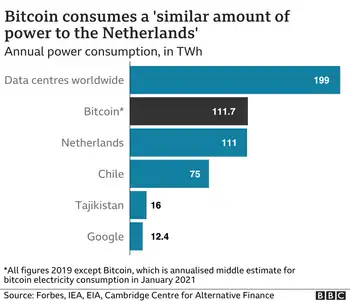
Today, Bitcoin and other cryptocurrencies are worth a fraction of what they were back in 2017 when Coinmint came to the North Country, and now, amid a debate over Bitcoin's electricity use shaping market sentiment, the future of the entire industry here remains uncertain.


Related News

View more

Advanced Reactors Will Stand On The Shoulders Of Giants

Advanced Nuclear Reactors redefine nuclear energy with SMRs, diverse fuels, passive safety, digital control rooms, and flexible heat and power, pairing veteran operator expertise with cost-efficient, carbon-free electricity for a resilient grid.


Key Points

SMR-based advanced reactors with passive cooling and digital controls deliver flexible power and process heat.

✅ Veteran operators transfer proven safety culture and risk management.

✅ SMRs, passive safety, and digital controls simplify operations.

✅ Flexible output: electricity, process heat, and grid support.


Advanced reactors will break the mold of what we think next-gen nuclear power can accomplish: some will be smaller, some will use different kinds of fuel and others will do more than just make electricity. This new technology may seem like uncharted waters, but when operators, technicians and other workers start up the first reactors of the new generation, they will bring with them years of nuclear experience to run machines that have been optimized with lessons from the current fleet.

While advanced reactors are often portrayed as the future of nuclear energy, and atomic energy is heating up across markets, its our current plants that have paved the way for these exciting innovations and which will be workhorses for years to come.


Reactor Veterans Bring Their Expertise to New Designs

Many of the workers who will operate the next generation of reactors come from a nuclear background. Even though the design of an advanced reactor may be different, the experience and instincts these operators have gained from working at the current fleet will help new plants get off to a more productive start.

They have a questioning attitude; they are always exploring what could go wrong and always understanding the notion of risk management in nuclear operations, whether its the oldest design or the newest design, said Chip Pardee, the president of Terrestrial Energy USA, who is the former chief operating officer at two nuclear utilities, Exelon Corp. and the Tennessee Valley Authority.

They have respect for the technology and a bias towards conservative decision-making.

Jhansi Kandasamy, vice president of engineering at GE Hitachi Nuclear Energy, agrees. She said that the presence of industry veterans will benefit the new modelslike the 300 megawatt boiling water reactor her company is developing.

From the beginning, a new reactor will have people who have touched it, worked on it, and experienced it, she said.

Theyre going to be able to tell you if something doesnt look right, because theyve lived through it.


Experience Informs New Reactor Design

Advanced reactors are designed by engineers who are fully familiar with existing plants and can use that experience to optimize the new ones, like a family building a house and wanting the kitchen just so. New reactors will be simpler to operate because of insights gained from years of operations of the current fleet, and some designs even integrate molten salt energy storage to enhance flexibility.

NuScale Power LLC, for example, has a very different design from the current fleet amid an advanced nuclear push that is reshaping development: up to 12 small reactorsinstead of one or two large reactorsmanaged from a single digital control roominstead of one full of analog switches and dials. When the company designed its control room, it brought in industry veterans who had collectively worked at more than two dozen nuclear plants.

The experts that NuScale brought in critiqued everything, even down to the shape of the symbols on the computer screens to make them easier to read for operators who sometimes need to quickly interpret lots of incoming data. The control panels for NuScales small modular reactor (SMR) present information according to its importance and automatically call up appropriate procedures for operators.

Many advanced reactors are also smaller than those currently operating, which makes their components simpler and less expensive. Kandasamy pointed out that the giant mechanical pumps in todays reactors generate a lot of heat and require a lot of supporting systems, including air conditioning in the rooms that house them.

GE Hitachis SMR design relies more on passive cooling so it needs fewer pumps, and those that remain use magnets, so they generate less heat. Fewer, smaller pumps means a smaller building and less cost.


Advanced Nuclear Will Further the Work of Current Reactors

Advanced reactors promise improved flexibility and the ability to do more kinds of work, including nuclear beyond electricity applications, to displace carbon and stabilize the climate. And they will continue nuclear energys legacy of providing reliable, carbon-free electricity, as a recent new U.S. reactor startup illustrates in practice. As new designs come on line over the next decade, we will continue to rely on operating plants which provide nearly 55 percent of the countrys carbon-free electricity.

The world will need all the carbon-free generation it can get for many years to come, as companies, states and countries aim for zero emissions by mid-century and pursue strategies like the green industrial revolution to accelerate deployment. That means it will need wind, solar, advanced reactors and current plants.


Related News

View more

Sign Up for Electricity Forum’s Newsletter

Stay informed with our FREE Newsletter — get the latest news, breakthrough technologies, and expert insights, delivered straight to your inbox.

Electricity Today T&D Magazine Subscribe for FREE

Stay informed with the latest T&D policies and technologies.
  • Timely insights from industry experts
  • Practical solutions T&D engineers
  • Free access to every issue

Download the 2025 Electrical Training Catalog

Explore 50+ live, expert-led electrical training courses –

  • Interactive
  • Flexible
  • CEU-cerified