Substation Protection Training - Protect Transformers, Buses and Lines
Our customized live online or in‑person group training can be delivered to your staff at your location.
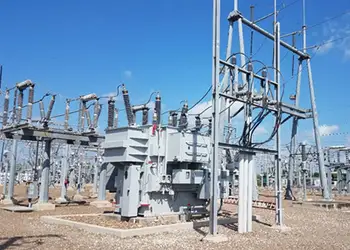
- Live Online
- 12 hours Instructor-led
- Group Training Available
Regular Price:
$799
Coupon Price:
$699
Canada is in need of a third-party nuclear industry regulator because the Canadian Nuclear Safety Commission (CNSC) does not adequately protect public health and safety, Canadian Coalition for Nuclear Responsibility president Gordon Edwards charged recently.
Mr. Edwards and Uranium Medical Research Centre deputy director Tedd Weyman spoke to more than 50 attendees of a recent uranium emissions panel event at the Lions Centre in Port Hope. The event, hosted by Families Against Radiation Exposure (FARE), Port Hope Community Health Concerns Committee and Port Hope Nuclear Environmental Watchdogs, focused on emissions coming from two Port Hope nuclear fuel factories.
Both panelists said there is much reason to be concerned about how the industry is regulated.
The CNSC consists of engineers and physicists and focuses more on the mechanical side of operations, Mr. Edwards said. There is little focus on the actual public health effects resulting from the presence of the nuclear industry.
"One of the mandates is to protect health and safety of the public and workers," he said.
"How can you protect (health) if you don't even study it?"
An agency needs to be established to study public health, Mr. Edwards said.
"What we need is an agency that's really looking after the public's interest and not the industry's interest," he said.
"The CNSC routinely takes the industry's interests into consideration. In fact, they treat it like royalty."
Mr. Weyman cautioned the audience about increasing uranium emissions coming from the Cameco facility. Too little energy is placed into tracking uranium emissions in the air.
Port Hope residents are likely inhaling uranium dust, he said, adding the lack of studies about uranium dust inhalation conducted world-wide is of concern.
There are instruments used to measure radiation levels around the facility, but no measures put into place to determine where airborne uranium dust lands, Mr. Weyman said.
"There's no monitoring of uranium being inhaled by anybody," he said.
Mr. Weyman questioned why the cumulative effects of uranium emissions by local nuclear industry is not added up. He also questioned why emissions from the Cameco uranium conversion facility and Zircatec nuclear fuel fabricating facility are considered to be separate from each other, despite being located in the same town.
"They're not added up to see what the dose is on the town," Mr. Weyman said.
Mayoralty candidate John Floyd asked the panel whether there is a health study template from another part of the world that can be applied to Port Hope.
Mr. Edwards said he is aware of five towns in the world that have similar facilities in them as Port Hope and none of them have been subject to health studies.
Ward 1 council candidate Tom Lawson asked whether the local company is handcuffed by shareholders to turn profit rather than to lower emissions.
Mr. Edwards said the issue is not so "open and shut."
"They want to spend as little money as they have to spend," he said. "Since the CNSC is not doing their job - if they were abolished, the public may be further ahead."
Changes would come if the ministries of environment and health were forced to step in, Mr. Edwards said.
When asked what people should take away from the evening, Mr. Weyman indicated a rise in uranium emissions between 2001 and 2006.
"There has been an increase in uranium in the air, rather than a decrease," he said.
Representatives from Cameco and the CNSC declined invitations to sit on the panel with Mr. Weyman and Mr. Edwards. A health-related panel is being hosted by Cameco at a later date.
Related News
Alberta Advances Electricity Plans with Rate of Last Resort
Alberta Rate of Last Resort provides a baseline electricity price, boosting energy reliability, affordability, and…
View more
Florida says no to $400M in federal solar energy incentives
Florida Solar for All Opt-Out highlights Gov. DeSantis rejecting EPA grant funds under the Inflation…
View more

Enel kicks off 90MW Spanish wind build
Enel Green Power España Aragon wind farms advance Spain's renewable energy transition, with 90MW under…
View more
Clean-energy generation powers economy, environment
Atlin Hydro and Transmission Project delivers First Nation-led clean energy via hydropower to the Yukon…
View more
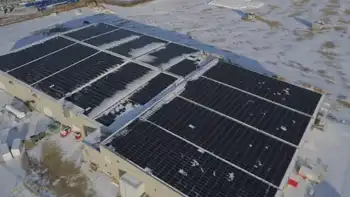
Solar-powered pot: Edmonton-area producer unveils largest rooftop solar array
Freedom Cannabis solar array powers an Acheson cannabis facility with 4,574 rooftop panels, a 1,830-kilowatt…
View more
PJM Opens Fast Track for Large Generation to Ease Transmission Bottlenecks
PJM Expedited Interconnection Track opens a FERC-approved fast-track for large capacity resources, with state siting…
View more
Sign Up for Electricity Forum’s Newsletter
Stay informed with our FREE Newsletter — get the latest news, breakthrough technologies, and expert insights, delivered straight to your inbox.
Electricity Today T&D Magazine Subscribe for FREE

Stay informed with the latest T&D policies and technologies.
- Timely insights from industry experts
- Practical solutions T&D engineers
- Free access to every issue

