Toshiba acquires cyberGRID for demand response deployment

By Toshiba Corporation


CSA Z462 Arc Flash Training - Electrical Safety Essentials

Our customized live online or in‑person group training can be delivered to your staff at your location.

  • Live Online
  • 6 hours Instructor-led
  • Group Training Available
Regular Price:
$249
Coupon Price:
$199
Reserve Your Seat Today
TOKYO – Toshiba Corporation recently announced that it has acquired a 76 percent interest in cyberGRID GmbH, an Austrian developer and provider of intelligent energy management solutions. The purchase makes cyberGRID a Toshiba subsidiary, positioned to enhance Toshiba Group's smart community business in Europe, where progress in introducing renewable energy is driving a need for optimal power management technology that delivers a stabile power supply.

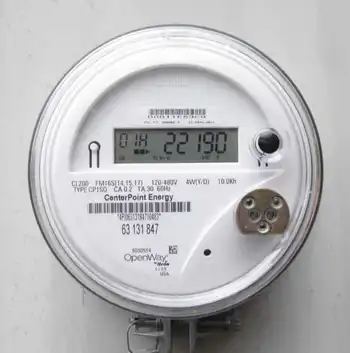
Toshiba sees the development of its smart community business as a key strategy for the coming years. In addition to developing its in-house capabilities in related areas, the company has made a series of strategic acquisitions, including Swiss-based Landis+Gyr, the global leader in smart meter technology, whose products and solutions are currently being used in advanced metering infrastructure initiatives on every continent.

In February this year, Toshiba acquired Consert Inc., a US-based energy management company, and the acquisition of cyberGRID brings a European developer of grid management solutions into Toshiba Group.

Utilities must constantly balance power supply and demand across the grid, from generation through to consumption. Among the methods for doing this are demand response, which uses pricing mechanisms, including incentives, to encourage consumers, particularly in industry, to change usual consumption patterns during times of high demand. Another approach is the virtual power plant, which brings distributed generation facilities, such as industrial generation clusters including photovoltaic generators, into the grid at times of high demand. This brings greater flexibility into the supply, but adds to complexity in management and control, and also requires more complex communications.

cyberGRID provides solutions in both areas with Virtual Power Plant VPP, which matches electricity consumption with a variety of distributed generation. It offers customers a significantly lower cost alternative than conventional peaking power plants, and is environmentally friendly and CO2 neutral. Once VPP is deployed, utilities can deploy new capacity within months without any major infrastructure investments. The company has already introduced its commercial based system in Slovenia and is currently promoting sales to utilities across the Euro zone.

"cyberGRID will create new values to our customers on both demand side and utility side, which provides an ideal fit with Toshiba's energy management business in Europe" said Ryuji Maruyama, General Manager of Toshiba's Smart Community Division. "cyberGRID's cutting edge VPP business and technology will be a key solution for Toshiba's smart community. It overarches energy efficiency facilities on the demand side and smart grid components on the supply side. When integrated with Landis+Gyr's smart metering solution, it gives utilities the ability to develop advanced services for consumers. Smart community is a high level concept for integrated solution package of social infrastructures, and Toshiba Group is accelerating its Smart Community business at the global level and this acquisition will contribute to that."

Reinhard Korsitzke, cyberGRID's Chief Executive Officer added "This step by Toshiba is a huge advance for our company. We have developed an integrated platform for smart meters and VPP with Landis+Gyr, and that collaboration will be boosted and a strong synergy generated with cyberGRID as a member of Toshiba Group."

Related News

Hydro One announces pandemic relief fund for Hydro One customers

Hydro One Pandemic Relief Fund offers COVID-19 financial assistance, payment flexibility, and Winter Relief to Ontario electricity customers facing hardship, with disconnection protection and customer support to help manage bills during the health crisis.


Key Points

COVID-19 aid offering bill credits, payment flexibility, and disconnection protection for electricity customers.

✅ Financial assistance and bill credits for hardship cases

✅ Flexible payment plans and extended Winter Relief

✅ No-disconnect policy and dedicated customer support hours


We are pleased to announce a Pandemic Relief Fund to assist customers affected by the novel coronavirus (COVID-19). As part of our commitment to customers, we will offer financial assistance as well as increased payment flexibility to customers experiencing hardship. The fund is designed to support customers impacted by these events and those that may experience further impacts.

In addition to this, we've also extended our Winter Relief program, aligning with our ban on disconnections policy so no customer experiencing any hardship has to worry about potential disconnection.

We recognize that this is a difficult time for everyone and we want our customers to know that we’re here to support them. We hope this fund and the added measures, such as extended off-peak rates that help provide our customers peace of mind so they can concentrate on what matters most — keeping their loved ones safe.

If you are concerned about paying your bill, are experiencing hardship or have been impacted by the pandemic, including electricity relief announced by the province, we want to help you. Call us to discuss the fund and see what options are available for you.


CUSTOMER CONTACT CENTRE HOURS
Call us at 1-888-664-9376

Monday to Friday from 7:30 a.m. to 8:00 p.m.

Saturdays from 9:00 a.m. to 3:00 p.m.


KEEPING ONTARIANS AND OUR ELECTRICITY SYSTEM SAFE
We recognize the critical role we play in powering communities across the province and our support for the Province of Ontario during COVID-19. This is a responsibility to employees, customers, businesses and the people of Ontario that we take very seriously.

Since the novel coronavirus (COVID-19) outbreak began, Hydro One’s Pandemic Team along with our leadership, have been actively monitoring the issues to ensure we can continue to deliver the service Ontarians depend on while keeping our employees, customers and the public safe, even as there has been no cut in peak hydro rates yet for self-isolating customers across Ontario. While the risk in Ontario remains low, we believe we can best protect our people and our operations by taking proactive measures.

As information continues to evolve, our leadership team along with the Pandemic Planning Team and our Emergency Operations Centre are committed to maintaining business continuity while minimizing risk to employees and communities.

Over the days and weeks to come, we will work with the sector and government, which is preparing to extend disconnect moratoriums across the province, to enhance safety protocols and champion the needs of electricity customers in Ontario.


Related News

View more

B.C. residents and businesses get break on electricity bills for three months

BC Hydro COVID-19 Bill Relief offers pandemic support with bill credits, rate cuts, and deferred payments for residential, small business, and industrial customers across B.C., easing utilities costs during COVID-19 economic hardship.


Key Points

COVID-19 bill credits, a rate cut, and deferred payments for eligible B.C. homes, small businesses, and industrial customers.

✅ Non-repayable credits equal to 3 months of average bills.

✅ Small businesses closed can skip bills for three months.

✅ Large industry may defer 50% of electricity costs.


B.C. residents who have lost their jobs or had their wages cut will get a three-month break on BC Hydro bills, while small businesses, amid commercial consumption plummets during COVID-19, are also eligible to apply for similar relief.

Premier John Horgan said Wednesday the credit for residential customers will be three times a household’s average monthly bill over the past year and does not have to be repaid as part of the government’s support package during the COVID-19 pandemic, as BC Hydro demand down 10% highlights the wider market pressures.

He said small businesses that are closed will not have to pay their power bills for three months, and in Ontario an Ontario COVID-19 hydro rebate complemented similar relief, and large industrial customers, including those operating mines and pulp mills, can opt to have 50 per cent of their electricity costs deferred, though a deferred costs report warned of long-term liabilities.

BC Hydro rates will be cut for all customers by one per cent as of April 1, a move similar to Ontario 2021 rate reductions that manufacturers supported lower rates at the time, after the B.C. Utilities Commission provided interim approval of an application the utility submitted last August.

Eligible residential customers can apply for bill relief starting next week and small business applications will be accepted as of April 14, while staying alert to BC Hydro scam attempts during this period, with the deadline for both categories set at June 30.


Related News

View more

Experiment Shows We Can Actually Generate Electricity From The Night Sky

Nighttime thermoradiative power converts outgoing infrared radiation into electricity using semiconductor photodiodes, leveraging negative illumination and sky cooling to harvest renewable energy from Earth-to-space heat flow when solar panels rest, regardless of weather.


Key Points

Nighttime thermoradiative power converts Earth's outgoing infrared heat into electricity using semiconductor diodes.

✅ Uses negative illumination to tap Earth-to-space heat flow

✅ Infrared semiconductor photodiodes generate small nighttime current

✅ Theoretical output ~4 W/m^2; lab demo reached 64 nW/m^2


There's a stark contrast between the freezing temperatures of space and the relatively balmy atmosphere of Earth, and that contrast could help generate electricity, scientists say – and alongside concepts such as space-based solar power, utilizing the same optoelectronic physics used in solar panels. The obvious difference this would have compared with solar energy is that it would work during the night time, a potential source of renewable power that could keep on going round the clock and regardless of weather conditions.

Solar panels are basically large-scale photodiodes - devices made out of a semiconducting material that converts the photons (light particles) coming from the Sun into electricity by exciting electrons in a material such as silicon, while concepts like space solar beaming could complement them during adverse weather.

In this experiment, the photodiodes work 'backwards': as photons in the form of infrared radiation - also known as heat radiation - leave the system, a small amount of energy is produced, similar to how raindrop electricity harvesting taps ambient fluxes in other experiments.

This way, the experimental system takes advantage of what researchers call the "negative illumination effect" – that is, the flow of outgoing radiation as heat escapes from Earth back into space. The setup explained in the new study uses an infrared semiconductor facing into the sky to convert this flow into electrical current.

"The vastness of the Universe is a thermodynamic resource," says one of the researchers, Shanhui Fan from Stanford University in California.

"In terms of optoelectronic physics, there is really this very beautiful symmetry between harvesting incoming radiation and harvesting outgoing radiation."

It's an interesting follow-up to a research project Fan participated in last year: a solar panel that can capture sunlight while also allowing excess heat in the form of infrared radiation to escape into space.

In the new study, this "energy harvesting from the sky" process can produce a measurable amount of electricity, the researchers have shown – though for the time being it's a long way from being efficient enough to contribute to our power grids, but advances in peer-to-peer energy sharing could still make niche deployments valuable.

In the team's experiments they were able to produce 64 nanowatts per square metre (10.8 square feet) of power – only a trickle, but an amazing proof of concept nevertheless. In theory, the right materials and conditions could produce a million times more than that, and analyses of cheap abundant electricity show how rapidly such advances compound, reaching about 4 watts per square metre.

"The amount of power that we can generate with this experiment, at the moment, is far below what the theoretical limit is," says one of the team, Masashi Ono from Stanford.

When you consider today's solar panels are able to generate up to 100-200 watts per square metre, and in China solar is cheaper than grid power across every city, this is obviously a long way behind. Even in its earliest form, though, it could be helpful for keeping low-power devices and machines running at night: not every renewable energy device needs to power up a city.

Now that the researchers have proved this can work, the challenge is to improve the performance of the experimental device. If it continues to show promise, the same idea could be applied to capture energy from waste heat given off by machinery, and results in humidity-powered generation suggest ambient sources are plentiful.

"Such a demonstration of direct power generation of a diode facing the sky has not been previously reported," explain the researchers in their published paper.

"Our results point to a pathway for energy harvesting during the night time directly using the coldness of outer space."

The research has been published in Applied Physics Letters.


Related News

View more

Wind and Solar Energy Surpass Coal in U.S. Electricity Generation

Wind and Solar Surpass Coal in U.S. power generation, as EIA data cites falling LCOE, clean energy incentives, grid upgrades, and battery storage driving renewables growth, lower emissions, jobs, and less fossil fuel reliance.


Key Points

An EIA-noted milestone where U.S. renewables outproduce coal, driven by lower LCOE, policy credits, and grid upgrades.

✅ EIA data shows wind and solar exceed coal generation

✅ Falling LCOE boosts project viability across the grid

✅ Policies and storage advances strengthen reliability


In a landmark shift for the energy sector, wind and solar power have recently surpassed coal in electricity generation in the United States. This milestone, reported by Warp News, marks a significant turning point in the country’s energy landscape and underscores the growing dominance of renewable energy sources.

A Landmark Achievement

The achievement of wind and solar energy generating more electricity than coal is a landmark moment in the U.S. energy sector. Historically, coal has been a cornerstone of electricity production, providing a substantial portion of the nation's power needs. However, recent data reveals a transformative shift, with renewables surpassing coal for the first time in 130 years, as renewable energy sources, particularly wind and solar, have begun to outpace coal in terms of electricity generation.

The U.S. Energy Information Administration (EIA) reported that in recent months, wind and solar combined produced more electricity than coal, including a record 28% share in April, reflecting a broader trend towards cleaner energy sources. This development is driven by several factors, including advancements in renewable technology, decreasing costs, and a growing commitment to reducing greenhouse gas emissions.

Technological Advancements and Cost Reductions

One of the key drivers behind this shift is the rapid advancement in wind and solar technologies, as wind power surges in the U.S. electricity mix across regions. Improvements in turbine and panel efficiency have significantly increased the amount of electricity that can be generated from these sources. Additionally, technological innovations have led to lower production costs, making wind and solar energy more competitive with traditional fossil fuels.

The cost of solar panels and wind turbines has decreased dramatically over the past decade, making renewable energy projects more economically viable. According to Warp News, the levelized cost of electricity (LCOE) from solar and wind has fallen to levels that are now comparable to or lower than coal-fired power. This trend has been pivotal in accelerating the transition to renewable energy sources.

Policy Support and Investment

Government policies and incentives have also played a crucial role in supporting the growth of wind and solar energy, with wind now the most-used renewable electricity source in the U.S. helping drive deployment. Federal and state-level initiatives, such as tax credits, subsidies, and renewable energy mandates, have encouraged investment in clean energy technologies. These policies have provided the financial and regulatory support necessary for the expansion of renewable energy infrastructure.

The Biden administration’s focus on addressing climate change and promoting clean energy has further bolstered the transition. The Infrastructure Investment and Jobs Act and the Inflation Reduction Act, among other legislative efforts, have allocated significant funding for renewable energy projects, grid modernization, and research into advanced technologies.

Environmental and Economic Implications

The surpassing of coal by wind and solar energy has significant environmental and economic implications, building on the milestone when renewables became the second-most prevalent U.S. electricity source in 2020 and set the stage for further gains. Environmentally, it represents a major step forward in reducing carbon emissions and mitigating climate change. Coal-fired power plants are among the largest sources of greenhouse gases, and transitioning to cleaner energy sources is essential for meeting climate targets and improving air quality.

Economically, the shift towards wind and solar energy is creating new opportunities and industries. The growth of the renewable energy sector is generating jobs in manufacturing, installation, and maintenance. Additionally, the decreased reliance on imported fossil fuels enhances energy security and stabilizes energy prices.

Challenges and Future Outlook

Despite the progress, there are still challenges to address. The intermittency of wind and solar power requires advancements in energy storage and grid management to ensure a reliable electricity supply. Investments in battery storage technologies and smart grid infrastructure are crucial for overcoming these challenges and integrating higher shares of renewable energy into the grid.

Looking ahead, the trend towards renewable energy is expected to continue, with renewables projected to soon provide about one-fourth of U.S. electricity as deployment accelerates, driven by ongoing technological advancements, supportive policies, and a growing commitment to sustainability. As wind and solar power become increasingly cost-competitive and efficient, their role in the U.S. energy mix will likely expand, further displacing coal and other fossil fuels.

Conclusion

The surpassing of coal by wind and solar energy in U.S. electricity generation is a significant milestone in the transition to a cleaner, more sustainable energy future. This achievement highlights the growing importance of renewable energy sources and the success of technological advancements and supportive policies in driving this transition. As the U.S. continues to invest in and develop renewable energy infrastructure, the move away from coal represents a crucial step towards achieving environmental goals and fostering economic growth in the clean energy sector.


Related News

View more

Canada Finalizes Clean Electricity Regulations for 2050

Canada Clean Electricity Regulations align climate policy with grid reliability, scaling renewables, energy storage, and low-carbon power to reach net-zero by 2050 while maintaining affordability through federal incentives, provincial flexibility, and investment.


Key Points

Nationwide rules to decarbonize power by 2050, capping emissions and protecting grid reliability and affordability.

✅ Net-zero electricity by 2050 with strict emissions limits

✅ Provincial flexibility and federal investments to cut costs

✅ Scales renewables, storage, and clean firm power for reliability


Canada's final Clean Electricity Regulations, unveiled in December 2024, alongside complementary provincial frameworks such as Ontario's clean electricity regulations that guide provincial implementation, represent a critical step toward ensuring a sustainable and reliable energy future. With electricity demand set to rise as the country’s population and economy grow, the Canadian government has put forward a robust plan that balances climate goals with the need for reliable, affordable power.

The regulations are designed to reduce greenhouse gas emissions from the electricity sector, which is already one of Canada's cleanest, with 85% of its electricity sourced from renewable energies like hydro, wind, and solar, and growing attention to clean grids and batteries nationwide. The target is to achieve net-zero emissions in electricity generation by 2050, a goal that will support the country’s broader climate ambitions.

One of the central goals of the Clean Electricity Regulations is to make sure that Canada’s power grid can accommodate future demand in light of a critical electrical supply crunch identified by analysts, while ensuring that emissions are cut effectively. The regulations set strict pollution limits but allow flexibility for provinces and territories to meet these goals in ways that suit their local circumstances. This approach recognizes the diverse energy resources across Canada, from the large-scale hydroelectric capacity in Quebec to the growing wind and solar projects in the West.

A key benefit of these regulations is the assurance that they will not result in higher electricity rates for most Canadians. In fact, according to government analyses, and resources like the online CER bill tool that explain how fees and usage affect charges, the regulations are expected to have a neutral or even slightly positive impact on electricity costs. This is due in part to significant federal investments in the electricity sector, totaling over $60 billion. These investments are intended to support the transition to clean electricity while minimizing costs for consumers.

The shift to clean electricity is also expected to generate significant savings for Canadian households. As energy prices continue to fluctuate, clean electricity, especially from renewable sources, is becoming more cost-competitive compared to fossil fuels. Over the next decade, this transition is expected to result in $15 billion in total savings for Canadians, with 84% of households projected to benefit from lower energy bills. The savings are a result of federal incentives aimed at encouraging the adoption of efficient electric appliances, vehicles, and heating systems.

Moreover, reducing emissions from the electricity sector will play a major role in cutting Canada’s overall greenhouse gas pollution. By 2050, it’s estimated that these regulations will reduce nearly 181 megatonnes of emissions, which is equivalent to removing over 55 million cars from the road. This is a crucial step in meeting Canada’s climate targets and mitigating the impacts of climate change, such as extreme weather events, which have already led to significant economic losses.

The economic benefits extend beyond savings on energy bills. The regulations and the broader clean electricity strategy will create substantial job opportunities. The clean energy sector, which includes jobs in wind, solar, and nuclear power, is poised for massive growth, and provinces like Alberta have outlined a path to clean electricity to support that momentum. It’s estimated that by 2030, the transition to clean electricity could create 400,000 new jobs, with further job growth projected for the years to come. These jobs are expected to include roles in both the construction and operation of new energy infrastructure, many of which will be unionized positions offering good wages and benefits.

To help meet the rising demand for clean energy, the government’s strategy emphasizes technological innovation and the integration of new energy sources, including market design updates such as proposed market changes that can enable investment. Renewable energy technologies such as wind and solar power have become increasingly cost-competitive, and their continued development is expected to reduce the overall cost of electricity generation. The regulations also encourage the adoption of energy storage solutions, which are essential for managing the intermittent nature of renewable energy sources.

In addition to the environmental and economic benefits, the Clean Electricity Regulations will help improve public health. Air pollution from fossil fuel power generation is a major contributor to respiratory illnesses and other health issues. By transitioning to clean energy sources, Canada can reduce harmful air pollutants, leading to better health outcomes and a lower burden on the healthcare system.

As Canada moves toward a net-zero electricity grid, including the federal 2035 target that some have criticized as changing goalposts in Saskatchewan, the Clean Electricity Regulations represent a comprehensive and flexible approach to managing the energy transition. With significant investments in clean energy technologies and the adoption of policies that ensure affordable electricity for all Canadians, the government is setting the stage for a cleaner, more sustainable future. These efforts will not only help Canada meet its climate goals but also create a thriving clean energy economy that benefits workers, businesses, and families across the country.


Related News

View more

The Great Debate About Bitcoin's Huge Appetite For Electricity Determining Its Future

Bitcoin Energy Debate examines electricity usage, mining costs, environmental impact, and blockchain efficiency, weighing renewable power, carbon footprint, scalability, and transaction throughput to clarify stakeholder claims from Tesla, Square, academics, and policymakers.


Key Points

Debate on Bitcoin mining's power use, environmental impact, efficiency, and scalability versus alternative blockchains.

✅ Compares energy intensity with transaction throughput and system outputs.

✅ Weighs renewables, stranded power, and carbon footprint in mining.

✅ Assesses PoS blockchains, stablecoins, and scalability tradeoffs.


There is a great debate underway about the electricity required to process Bitcoin transactions. The debate is significant, the stakes are high, the views are diverse, and there are smart people on both sides. Bitcoin generates a lot of emotion, thereby producing too much heat and not enough light. In this post, I explain the importance of identifying the key issues in the debate, and of understanding the nature and extent of disagreement about how much electrical energy Bitcoin consumes.

Consider the background against which the debate is taking place. Because of its unstable price, Bitcoin cannot serve as a global mainstream medium of exchange. The instability is apparent. On January 1, 2021, Bitcoin’s dollar price was just over $29,000. Its price rose above $63,000 in mid-April, and then fell below $35,000, where it has traded recently. Now the financial media is asking whether we are about to experience another “cyber winter” as the prices of cryptocurrencies continue their dramatic declines.

Central banks warns of bubble on bitcoins as it skyrockets
As bitcoins skyrocket to more than $12 000 for one BTC, many central banks as ECB or US Federal ... [+] NURPHOTO VIA GETTY IMAGES
Bitcoin is a high sentiment beta asset, and unless that changes, Bitcoin cannot serve as a global mainstream medium of exchange. Being a high sentiment beta asset means that Bitcoin’s market price is driven much more by investor psychology than by underlying fundamentals.

As a general matter, high sentiment beta assets are difficult to value and difficult to arbitrage. Bitcoin qualifies in this regard. As a general matter, there is great disagreement among investors about the fair values of high sentiment beta assets. Bitcoin qualifies in this regard.

One major disagreement about Bitcoin involves the very high demand for electrical power associated with Bitcoin transaction processing, an issue that came to light several years ago. In recent months, the issue has surfaced again, in a drama featuring disagreement between two prominent industry leaders, Elon Musk (from Tesla and SpaceX) and Jack Dorsey (from Square).

On one side of the argument, Musk contends that Bitcoin’s great need for electrical power is detrimental to the environment, especially amid disruptions in U.S. coal and nuclear power that increase supply strain.  On the other side, Dorsey argues that Bitcoin’s electricity profile is a benefit to the environment, in part because it provides a reliable customer base for clean electric power. This might make sense, in the absence of other motives for generating clean power; however, it seems to me that there has been a surge in investment in alternative technologies for producing electricity that has nothing to do with cryptocurrency. So I am not sure that the argument is especially strong, but will leave it there. In any event, this is a demand side argument.

A supply side argument favoring Bitcoin is that the processing of Bitcoin transactions, known as “Bitcoin mining,” already uses clean electrical power, power which has already been produced, as in hydroelectric plants at night, but not otherwise consumed in an era of flat electricity demand across mature markets.

Both Musk and Dorsey are serious Bitcoin investors. Earlier this year, Tesla purchased $1.5 billion of Bitcoin, agreed to accept Bitcoin as payment for automobile sales, and then reversed itself. This reversal appears to have pricked an expanding Bitcoin bubble. Square is a digital transaction processing firm, and Bitcoin is part of its long-term strategy.

Consider two big questions at the heart of the digital revolution in finance. First, to what degree will blockchain replace conventional transaction technologies? Second, to what degree will competing blockchain based digital assets, which are more efficient than Bitcoin, overcome Bitcoin’s first mover advantage as the first cryptocurrency?

To gain some insight about possible answers to these questions, and the nature of the issues related to the disagreement between Dorsey and Musk, I emailed a series of academics and/or authors who have expertise in blockchain technology.

David Yermack, a financial economist at New York University, has written and lectured extensively on blockchains. In 2019, Yermack wrote the following: “While Bitcoin and successor cryptocurrencies have grown remarkably, data indicates that many of their users have not tried to participate in the mainstream financial system. Instead they have deliberately avoided it in order to transact in black markets for drugs and other contraband … or evade capital controls in countries such as China.” In this regard, cyber-criminals demanding ransom for locking up their targets information systems often require payment in Bitcoin. Recent examples of cyber-criminal activity are not difficult to find, such as incidents involving Kaseya and Colonial Pipeline.

David Yermack continues: “However, the potential benefits of blockchain for improving data security and solving moral hazard problems throughout the financial system have become widely apparent as cryptocurrencies have grown.” In his recent correspondence with me, he argues that the electrical power issue associated with Bitcoin “mining,” is relatively minor because Bitcoin miners are incentivized to seek out cheap electric power, and patterns shifted as COVID-19 changed U.S. electricity consumption across sectors.

Thomas Philippon, also a financial economist at NYU, has done important work characterizing the impact of technology on the resource requirements of the financial sector. He has argued that historically, the financial sector has comprised about 6-to-7% of the economy on average, with variability over time. Unit costs, as a percentage of assets, have consistently been about 2%, even with technological advances. In respect to Bitcoin, he writes in his correspondence with me that Bitcoin is too energy inefficient to generate net positive social benefits, and that energy crisis pressures on U.S. electricity and fuels complicate the picture, but acknowledges that over time positive benefits might be possible.

Emin Gün Sirer is a computer scientist at Cornell University, whose venture AVA Labs has been developing alternative blockchain technology for the financial sector. In his correspondence with me, he writes that he rejects the argument that Bitcoin will spur investment in renewable energy relative to other stimuli. He also questions the social value of maintaining a fairly centralized ledger largely created by miners that had been in China and are now migrating to other locations such as El Salvador.

Bob Seeman is an engineer, lawyer, and businessman, who has written a book entitled Bitcoin: The Mother of All Scams. In his correspondence with me, he writes that his professional experience with Bitcoin led him to conclude that Bitcoin is nothing more than unlicensed gambling, a point he makes in his book.

David Gautschi is an academic at Fordham University with expertise in global energy. I asked him about studies that compare Bitcoin’s use of energy with that of the U.S. financial sector. In correspondence with me, he cautioned that the issues are complex, and noted that online technology generally consumes a lot of power, with electricity demand during COVID-19 highlighting shifting load profiles.

My question to David Gautschi was prompted by a study undertaken by the cryptocurrency firm Galaxy Digital. This study found that the financial sector together with the gold industry consumes twice as much electrical power as Bitcoin transaction processing. The claim by Galaxy is that Bitcoin’s electrical power needs are “at least two times lower than the total energy consumed by the banking system as well as the gold industry on an annual basis.”

Galaxy’s analysis is detailed and bottom up based. In order to assess the plausibility of its claims, I did a rough top down analysis whose results were roughly consistent with the claims in the Galaxy study. For sake of disclosure, I placed the heuristic calculations I ran in a footnote.1 If we accept the Galaxy numbers, there remains the question of understanding the outputs produced by the electrical consumption associated with both Bitcoin mining and U.S. banks’ production of financial services. I did not see that the Galaxy study addresses the output issue, and it is important.

Consider some quick statistics which relate to the issue of outputs. The total market for global financial services was about $20 trillion in 2020. The number of Bitcoin transactions processed per day was about 330,000 in December 2020, and about 400,000 in January 2021. The corresponding number for Bitcoin’s digital rival Ethereum during this time was about 1.1 million transactions per day. In contrast, the global number of credit card transactions per day in 2018 was about 1 billion.2

Bitcoin Value Falls
LONDON, ENGLAND - NOVEMBER 20: A visual representation of the cryptocurrencies Bitcoin and Ethereum ... [+] GETTY IMAGES
These numbers tell us that Bitcoin transactions comprise a small share, on the order of 0.04%, of global transactions, but use something like a third of the electricity needed for these transactions. That said, the associated costs of processing Bitcoin transactions relate to tying blocks of transactions together in a blockchain, not to the number of transactions. Nevertheless, even if the financial sector does indeed consume twice as much electrical power as Bitcoin, the disparity between Bitcoin and traditional financial technology is striking, and the experience of Texas grid reliability underscores system constraints when it comes to output relative to input.  This, I suggest, weakens the argument that Bitcoin’s electricity demand profile is inconsequential because Bitcoin mining uses slack electricity.

A big question is how much electrical power Bitcoin mining would require, if Bitcoin were to capture a major share of the transactions involved in world commerce. Certainly much more than it does today; but how much more?

Given that Bitcoin is a high sentiment beta asset, there will be a lot of disagreement about the answers to these two questions. Eventually we might get answers.

At the same time, a high sentiment beta asset is ill suited to being a medium of exchange and a store of value. This is why stablecoins have emerged, such as Diem, Tether, USD Coin, and Dai. Increased use of these stable alternatives might prevent Bitcoin from ever achieving a major share of the transactions involved in world commerce.

We shall see what the future brings. Certainly El Salvador’s recent decision to make Bitcoin its legal tender, and to become a leader in Bitcoin mining, is something to watch carefully. Just keep in mind that there is significant downside to experiencing foreign exchange rate volatility. This is why global financial institutions such as the World Bank and IMF do not support El Salvador’s decision; and as I keep saying, Bitcoin is a very high sentiment beta asset.

In the past I suggested that Bitcoin bubble would burst when Bitcoin investors conclude that its associated processing is too energy inefficient. Of course, many Bitcoin investors are passionate devotees, who are vulnerable to the psychological bias known as motivated reasoning. Motivated reasoning-based sentiment, featuring denial,3 can keep a bubble from bursting, or generate a series of bubbles, a pattern we can see from Bitcoin’s history.

I find the argument that Bitcoin is necessary to provide the right incentives for the development of clean alternatives for generating electricity to be interesting, but less than compelling. Are there no other incentives, such as evolving utility trends, or more efficient blockchain technologies? Bitcoin does have a first mover advantage relative to other cryptocurrencies. I just think we need to be concerned about getting locked into an technologically inferior solution because of switching costs.

There is an argument to made that decisions, such as how to use electric power, are made in markets with self-interested agents properly evaluating the tradeoffs. That said, think about why most of the world adopted the Windows operating system in the 1980s over the superior Mac operating system offered by Apple. Yes, we left it to markets to determine the outcome. People did make choices; and it took years for Windows to catch up with the Mac’s operating system.

My experience as a behavioral economist has taught me that the world is far from perfect, to expect to be surprised, and to expect people to make mistakes. We shall see what happens with Bitcoin going forward.

As things stand now, Bitcoin is well suited as an asset for fulfilling some people’s urge to engage in high stakes gambling. Indeed, many people have a strong need to engage in gambling. Last year, per capita expenditure on lottery tickets in Massachusetts was the highest in the U.S. at over $930.

High sentiment beta assets offer lottery-like payoffs. While Bitcoin certainly does a good job of that, it cannot simultaneously serve as an effective medium of exchange and reliable store of value, even setting aside the issue at the heart of the electricity debate.


Related News

View more

Sign Up for Electricity Forum’s Newsletter

Stay informed with our FREE Newsletter — get the latest news, breakthrough technologies, and expert insights, delivered straight to your inbox.

Electricity Today T&D Magazine Subscribe for FREE

Stay informed with the latest T&D policies and technologies.
  • Timely insights from industry experts
  • Practical solutions T&D engineers
  • Free access to every issue

Live Online & In-person Group Training

Advantages To Instructor-Led Training – Instructor-Led Course, Customized Training, Multiple Locations, Economical, CEU Credits, Course Discounts.

Request For Quotation

Whether you would prefer Live Online or In-Person instruction, our electrical training courses can be tailored to meet your company's specific requirements and delivered to your employees in one location or at various locations.