Substation Protection Training - Protect Transformers, Buses and Lines
Our customized live online or in‑person group training can be delivered to your staff at your location.
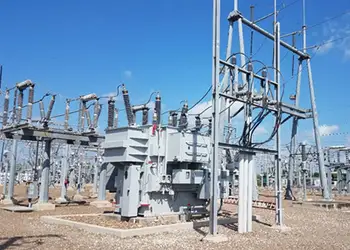
- Live Online
- 12 hours Instructor-led
- Group Training Available
Regular Price:
$799
Coupon Price:
$699
Additions to Duke Energy's Rutherford County power plant would be exempted from a state air-pollution rule, under a measure the N.C. House tentatively approved recently.
The rule, adopted last year, could tighten pollution limits on the two new power units Duke plans to build at its coal-fired Cliffside plant. Duke said the rule unfairly treats how the plant's emissions are regulated.
A former member of the state Environmental Management Commission, which adopted the rule, said Duke is poking a loophole that lets the utility avoid the most stringent pollution controls.
"In my opinion, it's outrageous," said Dan Besse of Winston-Salem, one of three members who helped craft the rule. Besse left the EMC last year and now serves on Winston-Salem's city council.
The House passed a bill excluding the plant from the state rule by a 105-8 vote.
A complex maze of state and federal laws police utility emissions.
Under North Carolina's 2002 Clean Smokestacks Act, Duke and Raleigh-based Progress Energy will reduce their sulfur dioxide emissions 73 percent by 2013. Sulfur dioxide causes hazy skies, acid rain and fine airborne particles.
A federal law, in addition, is designed to protect the air in wilderness areas such as Burke County's Linville Gorge from new pollution sources. Duke's Cliffside additions are being scrutinized for their impact on those areas.
Duke plans to retire four old units at the plant, add a sulfur dioxide-catching scrubber to the remaining unit, and build two new units that will share the scrubber. The plant will generate three times as much power while reducing sulfur dioxide by two-thirds.
But the state rule Duke is fighting doesn't give the company credit for its Clean Smokestacks pollution reductions - the scrubber - in assessing the impact of its new units. The rule, Duke says, wipes out the operating flexibility Clean Smokestacks promised in return for reduced emissions.
"Why should we be penalized for the good work we've done?" asked George Everett, Duke's environmental affairs vice president. "We're simply saying treat us fairly."
If the legislature doesn't pass the bill before it, Duke says it might have to limit the amount of power its new Cliffside units produce.
Besse said Duke is trying to take advantage of its Clean Smokestacks reductions to avoid full scrutiny of the new units.
Duke said the Cliffside improvements will reduce sulfur dioxide emissions to about 10,000 tons a year. A consultant for the state Sierra Club, which opposes the bill, estimates that federal officials could require about 3,000 tons less a year.
Related News
Solar-powered pot: Edmonton-area producer unveils largest rooftop solar array
Freedom Cannabis solar array powers an Acheson cannabis facility with 4,574 rooftop panels, a 1,830-kilowatt…
View more
Amazon Announces Three New Renewable Energy Projects to Support AWS Global Infrastructure
AWS Renewable Energy Projects deliver new wind power for AWS data centers in Ireland, Sweden,…
View more
New bill would close loophole that left hundreds of Kentucky miners with cold checks
Kentucky Coal Wage Protection Bill strengthens performance bond enforcement, links Energy and Environment Cabinet and…
View more

Electricity blackouts spark protests in Iranian cities
Iran Power Outage Protests surge as electricity blackouts, drought, and a looming heat wave spark…
View more
Energy Security Support to Ukraine
U.S. Energy Aid to Ukraine delivers emergency electricity grid equipment, generators, transformers, and circuit breakers,…
View more

Want Clean And Universal Electricity? Create The Incentives To Double The Investment, World Leaders Say
IRENA Climate Investment Platform accelerates renewable energy financing through de-risking, bankable projects, and public-private partnerships,…
View more
Sign Up for Electricity Forum’s Newsletter
Stay informed with our FREE Newsletter — get the latest news, breakthrough technologies, and expert insights, delivered straight to your inbox.
Electricity Today T&D Magazine Subscribe for FREE

Stay informed with the latest T&D policies and technologies.
- Timely insights from industry experts
- Practical solutions T&D engineers
- Free access to every issue

