By Reuters


Protective Relay Training - Basic

Our customized live online or in‑person group training can be delivered to your staff at your location.

  • Live Online
  • 12 hours Instructor-led
  • Group Training Available
Regular Price:
$699
Coupon Price:
$599
Reserve Your Seat Today
Power sector says EU needs 600 new power plants

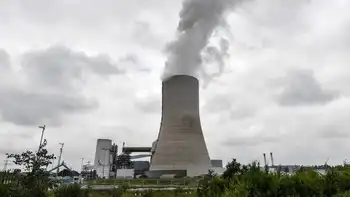
BRUSSELS - The European Union must build 600 new power stations by 2030 to replace ageing plants and keep up with demand, but the private sector needs more incentives to make the investments, sector body Eurelectric said recently.

Energy liberalisation has pushed wholesale prices below levels that would give firms building new generation capacity a return on their investment, a problem which needs to be addressed by regulatory authorities, the lobby group said.

"We have to show a profit and if we don't get the right incentives we will not invest," said Hans Haider, Eurelectric president and chairman of Austrian utility Verbund.

Haider cited recent estimates from the International Energy Agency that about 290 gigawatts of ageing generating capacity would need to be replaced over the next 30 years and a similar amount of new capacity constructed to meet demand. This would mean 600 new power plants would need to be built, "a tremendous challenge for industry".

The cost, he said, would be between 500 billion and 700 billion euros ($584.1-$817.7 billion) for the power plants, plus 150 billion for transmission and 500 billion for distribution.

Haider said policy makers needed to create an "investment friendly climate" to persuade what are now mostly private, profit-driven utilities to get the work done. The main obstacle he highlighted was the fact that EU competition authorities would not let generating firms sign long-term contracts -- of more than 10 years -- with distribution companies or traders.

SHORTFALL With wholesale prices around 30 euros per megawatt hour (MWh), investors face a shortfall of almost 20 percent as they require a return of around 35 euros per MWh, Haider said.

"I do not think the right way would be subsidies. The right way for an investment friendly climate would be to allow long-term contracts," he added.

Eurelectric, which represents Europe's main electricity generators, does not believe that demand is likely to fall due to improved energy efficiency and cited 1.5 percent as the likely annual increase in EU demand. Green groups, which have successfully campaigned for nuclear phase-outs in many EU countries, including Germany and Italy, say energy policy should be based on demand side management such as ensuring less energy is wasted, and promoting renewables.

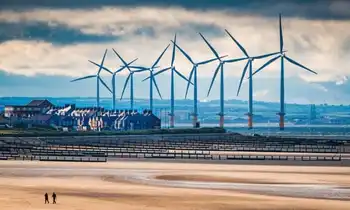
Haider said the development of renewables like wind and biomass was insufficient to offset the need for new conventional and nuclear plants. Haider applauded the Italian government's decision, taken in the wake of a nationwide power cut in September, to launch a new programme of generating capacity, a policy which has been attacked by environmentalists.

Related News
US judge orders PG&E to use dividends to pay for efforts to reduce wildfire risks

PG&E dividend halt for wildfire mitigation directs cash from shareholders to tree clearing, wildfire risk reduction, and probation compliance under Judge William Alsup, amid bankruptcy, Camp Fire liabilities, and power line vegetation management mandates.


Key Points

A court-ordered dividend halt funding vegetation clearance and wildfire mitigation as PG&E meets probation terms.

✅ Judge Alsup bars dividends until mitigation targets met

✅ 375,000 trees cleared near power lines in high-risk zones

✅ Measures tied to probation amid bankruptcy and liabilities


A U.S. judge said on Tuesday that PG&E may not resume paying dividends and must use the money to fund its plan for cutting down trees to reduce the risk of wildfires in California, stopping short of more costly measures he proposed earlier this year.

The new criminal probation terms for PG&E are modest compared with ones the judge had in mind in January and that PG&E said could have cost upwards of $150 billion.

The terms will, however, keep PG&E under the supervision of Judge William Alsup of the U.S. District Court for the Northern District of California and hold the company, which also is in Chapter 11 bankruptcy and whose bankruptcy plan has drawn support from wildfire victims, to its target for clearing areas around its power lines of some 375,000 trees this year.

PG&E's probation stems from its felony conviction after a deadly 2010 natural gas pipeline blast in San Bruno, California, near San Francisco, that killed eight people and injured 58 others.

PG&E filed for bankruptcy protection on Jan. 29 in anticipation of liabilities from wildfires, including a catastrophic 2018 blaze, the Camp Fire, for which PG&E later pleaded guilty to 85 counts in state court. It killed 86 people in the deadliest and most destructive wildfire in California history.

At a January hearing, Alsup, who is overseeing PG&E's probation, said he felt compelled to propose additional probation terms in the aftermath of Camp Fire. San Francisco-based PG&E expects its equipment will be found to have caused the blaze.

The probation process is separate from San Francisco-based PG&E's bankruptcy filing and from operational measures such as its pandemic response and shutoff moratorium implemented to protect customers.

As the company faces $30 billion in wildfire liabilities and bankruptcy proceedings and has opened a wildfire assistance program for affected residents, the energy company is expected to name as its new chief executive Bill Johnson, a source said on Tuesday. Johnson has been the CEO of the Tennessee Valley Authority since 2013 and is retiring on Friday.

Additional probation terms imposed by Alsup on Tuesday will require PG&E to meet goals in a wildfire mitigation plan it unveiled in February.

The goals include removing 375,000 dead, dying or hazardous trees from areas at high risk of wildfires in 2019, compared with 160,000 last year.

The judge said PG&E will not be able to pay shareholders until it complies with his new probation terms.

Shares fell 2% on Tuesday to close at $17.66 on the New York Stock Exchange and are down 63% since November 2018 due to concerns about the company's bankruptcy and wildfire liabilities, though the utility has said rates are set to stabilize in 2025 as part of its long-term plan. The shares traded as low as $5.07 in January.

PG&E in December 2017 suspended its quarterly cash dividend, while continuing to pay significant property taxes to California counties, citing uncertainty about liabilities from wildfires in October of that year that struck Northern California.

PG&E paid $798 million in dividends in 2017 and $925 million in 2016, a period in which the company did a poor job of clearing areas around its power lines of hazardous trees, according to Alsup.

Money meant for shareholders should have been spent on efforts to reduce wildfire risks in recent years, Alsup said at Tuesday's hearing.

"PG&E has started way more than its share of these fires," Alsup said.

"I want to see the people of California safe," the judge added.

Lawyers for PG&E did not contest the new terms, which the company considers more feasible than terms Alsup proposed in January.

To comply with the terms Alsup proposed in January, PG&E said it would have to remove 100 million trees. The company added that shutting power lines during high winds as Alsup proposed would not be feasible because the lines traverse rural areas to service cities and suburbs.

Idling lines could also affect the power grid in other states, PG&E said.

Alsup on Tuesday said he was still considering his proposal to require PG&E to shut down power lines during windy weather to prevent tree branches from making contact and sparking wildfires linked to power lines in the region.


Related News

View more

E.ON to Commission 2500 Digital Transformer Stations

E.ON Digital Transformer Stations modernize distribution grids with smart grid monitoring, voltage control, and remote switching, enabling bidirectional power flow, renewables integration, and rapid fault isolation from centralized grid control centres.


Key Points

Remotely monitored grid nodes enhancing smart grid stability and speedier fault response.

✅ Real-time voltage and current data along feeders and laterals

✅ Remote switching cuts outage duration and truck rolls

✅ Supports renewables and bidirectional power flows


E.ON plans to commission 2500 digital transformer stations in the service areas of its four German distribution grid operators - Avacon, Bayernwerk, E.DIS and Hansewerk - by the end of 2019. Starting this year, E.ON will solely install digital transformer stations in Germany, aligning with 2019 grid edge trends seen across the sector. This way, the digital grid is quite naturally being integrated into E.ON's distribution grids.

With these transformer stations as the centrepiece of the smart grid, it is possible to monitor and control using synchrophasors in the power grid from the grid control centre. This helps to maintain a more balanced utilisation of the grid and, with increasing complexity, ensures continued security of supply.

Until now, the current and voltage parameters required for safe grid operation could usually only be determined at the beginning of a power line, where there is usually a grid substation in place. Controlling current flow and voltage in the downstream system was physically impossible.

In the future, grids will have to function in both directions: they will bring electricity to the customer while at the same time collecting and transmitting more and more green electricity via HVDC technology where appropriate. This requires physical data to be made available along the entire route. To ensure security of supply, voltage fluctuations must be kept within narrowly defined limits and the current flow must not exceed the specified value, while reducing line losses with superconducting cables remains an important consideration. To manage this challenge, it is necessary to install digital technology.

The possibility of remotely controlling grids also reduces downtimes in the event of faults and supports a smarter electricity infrastructure approach. With the new technology, our grid operators can quickly and easily access the stations of the affected line. The grid control centres can thus limit and eliminate faults on individual line sections within a very short space of time.


Related News

View more

Michigan Public Service Commission grants Consumers Energy request for more wind generation

Consumers Energy Wind Expansion gains MPSC approval in Michigan, adding up to 525 MW of wind power, including Gratiot Farms, while solar capacity requests face delays over cost projections under the renewable portfolio standard targets.


Key Points

A regulatory-approved plan enabling Consumers Energy to add 525 MW of wind while solar additions await cost review.

✅ MPSC approves up to 525 MW in new wind projects

✅ Gratiot Farms purchase allowed before May 1

✅ Solar request delayed over high cost projections


Consumers Energy Co.’s efforts to expand its renewable offerings gained some traction this week when the Michigan Public Service Commission (MPSC) approved a request for additional wind generation capacity.

Consumers had argued that both more wind and solar facilities are needed to meet the state’s renewable portfolio standard, which was expanded in 2016 to encompass 12.5 percent of the retail power of each Michigan electric provider. Those figures will continue to rise under the law through 2021 when the figure reaches 15 percent, alongside ongoing electricity market reforms discussions. However, Consumers’ request for additional solar facilities was delayed at this time due to what the Commission labeled unrealistically high-cost projections.

Consumers will be able to add as much as 525 megawatts of new wind projects amid a shifting wind market, including two proposed 175-megawatt wind projects slated to begin operation this year and next. Consumers has also been allowed to purchase the Gratiot Farms Wind Project before May 1.

The MPSC said a final determination would be made on Consumers’ solar requests during a decision in April. Consumers had sought an additional 100 megawatts of solar facilities, hoping to get them online sometime in 2024 and 2025.


Related News

View more

More red ink at Manitoba Hydro as need for new power generation looms

Manitoba NDP Energy Financing Strategy outlines public ownership of renewables, halts private wind farms, stabilizes hydroelectric rates, and addresses Manitoba Hydro deficits amid drought, export revenue declines, and rising demand for grid reliability.


Key Points

A plan to fund public renewables, pause private wind, and stabilize Manitoba Hydro rates, improving utility finances.

✅ Public ownership favored over private wind contracts

✅ Focus on rate freeze and Manitoba Hydro debt management

✅ Addresses drought impacts, export revenue declines, rising demand


Manitoba's NDP administration has declared its intention to formulate a strategy for financing new energy ventures, following a decision to halt the development of additional private-sector wind farms and to extend a pause on new cryptocurrency connections amid grid pressures. This plan will accompany efforts to stabilize hydroelectric rates and manage the financial obligations of the province's state-operated energy company.

Finance Minister Adrien Sala, overseeing Manitoba Hydro, shared these insights during a legislative committee meeting on Thursday, emphasizing the government's desire for future energy expansions to remain under public ownership, even as Ontario moves to reintroduce renewable energy projects after prior cancellations, and expressing trust in Manitoba Hydro's governance to realize these goals.

This announcement was concurrent with Manitoba Hydro unveiling increased financial losses in its latest quarterly report. The utility anticipates a $190-million deficit for the fiscal year ending in March, marking a $29 million increase from its previous forecast and a significant deviation from an initial $450 million profit expectation announced last spring. Contributing factors to this financial downturn include reduced hydroelectric power generation due to drought conditions, diminished export revenues, and a mild fall season impacting heating demand.

The recent financial update aligns with a period of significant changes at Manitoba Hydro, initiated by the NDP government's board overhaul following its victory over the former Progressive Conservative administration in the October 3 election, and comes as wind projects are scrapped in Alberta across the broader Canadian energy landscape.

Subsequently, the NDP-aligned board discharged CEO Jay Grewal, who had advocated for integrating wind energy from third-party sources, citing competitive wind power trends, to promptly address the province's escalating energy requirements. Grewal's approach, though not unprecedented, sought to offer a quicker, more cost-efficient alternative to constructing new Manitoba Hydro dams, highlighting an imminent energy production shortfall projected for as early as 2029.

The opposition Progressive Conservatives have criticized the NDP for dismissing the wind power initiative without presenting an alternate solution, warning about costly cancellation fees seen in Ontario when projects are halted, and emphasizing the urgency of addressing the predicted energy gap.

In response, Sala reassured that the government is in the early stages of policy formulation, reflecting broader electricity policy debates in Ontario about how to fix the power system, and criticized the previous administration for its inaction on enhancing generation capacity during its tenure.

Manitoba Hydro has named Hal Turner as the acting CEO while it searches for Grewal's successor, following controversies such as Solar Energy Program mismanagement raised by a private developer. Turner informed the committee that the utility is still deliberating on its approach to new energy production and is exploring ways to curb rising demand.

Expressing optimism about collaborating with the new board, Turner is confident in finding a viable strategy to fulfill Manitoba's energy needs in a safe and affordable manner.

Additionally, the NDP's campaign pledge to freeze consumer rates for a year remains a priority, with Sala committing to implement this freeze before the next provincial election slated for 2027.


Related News

View more

Iran turning thermal power plants to combined cycle to save energy

Iran Combined-Cycle Power Plants drive energy efficiency, cut greenhouse gases, and expand megawatt capacity by converting thermal units; MAPNA-led upgrades boost grid reliability, reduce fuel use, and accelerate electricity generation growth nationwide.


Key Points

Upgraded thermal plants that reuse waste heat to boost efficiency, cut emissions, and add capacity to Iran's grid.

✅ 27 thermal plants converted; 160 more viable units identified

✅ Adds 12,600 MW capacity via heat recovery steam generators

✅ Combined-cycle share: 31.2% of 80.509 GW capacity


Iran has turned six percent of its thermal power plans into combined cycle plants in order to reduce greenhouse gases and save energy, with potential to lift thermal plants' PLF under rising demand, IRNA reported, quoting an energy official.

According to the MAPNA Group’s Managing Director Abbas Aliabadi, so far 27 thermal power plants have been converted to combined-cycle ones, aligning with Iran’s push to transmit power to Europe as a regional hub.

“The conversion of a thermal power plant to a combined cycle one takes about one to two years, however, it is possible for us to convert all the country’s thermal power plants into combined cycle plants over a five-year period.

Currently, a total of 478 thermal power plants are operating throughout Iran, of which 160 units could be turned into combined cycle plants. In doing so, 12,600 megawatts will be added to the country’s power capacity, supporting ongoing exports such as supplying a large share of Iraq's electricity under existing arrangements.

Related cross-border work includes deals to rehabilitate Iraq's power grid that support future exchanges.

As reported by IRNA on Wednesday, Iran’s Nominal electricity generation capacity has reached 80,509 megawatts (80.509 gigawatts), and it is deepening energy cooperation with Iraq to bolster regional reliability. The country increased its electricity generation capacity by 500 megawatts (MW) compared to the last year (ended on March 20).

Currently, with a total generation capacity of 25,083 MW (31.2 percent) combined cycle power plants account for the biggest share in the country’s total power generation capacity followed by gas power plants generating 29.9 percent, amid global trends where renewables are set to eclipse coal and regional moves such as Israel's coal reduction signal accelerating shifts. EF/MA


Related News

View more

How Should California Wind Down Its Fossil Fuel Industry?

California Managed Decline of Fossil Fuels aligns oil phaseout with carbon neutrality, leveraging ZEV adoption, solar and wind growth, severance taxes, drilling setbacks, fracking oversight, CARB rules, and CalGEM regulation to deliver a just transition.


Key Points

California's strategy to phase out oil and gas while meeting carbon-neutral goals through policy, regulation, and equity.

✅ Severance taxes fund clean energy and workforce transition.

✅ Setbacks restrict drilling near schools, homes, and hospitals.

✅ CARB and CalGEM tighten fracking oversight and ZEV targets.


California’s energy past is on a collision course with its future. Think of major oil-producing U.S. states, and Texas, Alaska or North Dakota probably come to mind. Although its position relative to other states has been falling for 20 years, California remains the seventh-largest oil-producing state, with 162 million barrels of crude coming up in 2018, translating to tax revenue and jobs.

At the same time, California leads the nation in solar rooftops and electric vehicles on the road by a wide margin and ranking fifth in installed wind capacity. Clean energy is the state’s future, and the state is increasingly exporting its energy policies across the West, influencing regional markets. By law, California must have 100 percent carbon-free electricity by 2045, and an executive order signed by former Governor Jerry Brown calls for economywide carbon-neutrality by the same year.

So how can the state reconcile its divergent energy path? How should clean-energy-minded lawmakers wind down California’s oil and gas sector in a way that aligns with the state’s long-term climate targets while providing a just transition for the industry’s workforce?

Any efforts to reduce fossil fuel supply must run parallel to aggressive demand-reduction measures such as California’s push to have 5 million zero-emission vehicles on the road by 2030, said Ethan Elkind, director of Berkeley Law's climate program, especially amid debates over keeping the lights on without fossil fuels in the near term. After all, if oil demand in California remains strong, crude from outside the state will simply fill the void.

“If we don’t stop using it, then that supply is going to get here, even if it’s not produced in-state,” Elkind said in an interview.

Lawmakers have a number of options for policies that would draw down and eventually phase out fossil fuel production in California, according to a new report from the Center for Law, Energy and the Environment at the UC Berkeley School of Law, co-authored by Elkind and Ted Lamm.

They could impose a higher price on California's oil production through a "severance" tax or carbon-based fee, with the revenue directed to measures that wean the state from fossil fuels. (California, alone among major oil-producing states, does not have an oil severance tax.)

Lawmakers could establish a minimum drilling setback from schools, playgrounds, homes and other sensitive sites. They could push the state's oil and gas regulator, the California Geologic Energy Management Division, to prioritize environmental and climate concerns.

A major factor holding lawmakers back is, of course, politics, including debates over blackouts and climate policy that shape public perception. Given the state’s clean-energy ambitions, it might surprise non-Californians that the oil and gas industry is one of the Golden State’s most powerful special interest groups.

Overcoming a "third-rail issue" in California politics
The Western States Petroleum Association, the sector’s trade group in California's capital of Sacramento, spent $8.8 million lobbying state policymakers in 2019, more than any other interest group. Over the last five years, the group, which cultivates both Democratic and Republican lawmakers, has spent $43.3 million on lobbying, nearly double the total of the second-largest lobbying spender.

Despite former Governor Brown’s reputation as a climate champion, critics say he was unwilling to forcefully take on the oil and gas industry. However, things may take a different turn under Brown's successor, Governor Gavin Newsom.

In May 2019, when Newsom released California's midyear budget revision (PDF), the governor's office noted the need for "careful study and planning to decrease demand and supply of fossil fuels, while managing the decline in a way that is economically responsible and sustainable.”

Related reliability concerns surfaced as blackouts revealed lapses in power supply across the state.

Writing for the advocacy organization Oil Change International, David Turnbull observed, “This may mark the first time that a sitting governor in California has recognized the need to embark upon a managed decline of fossil fuel supply in the state.”

“It is significant because typically this is one of those third-rail issues, kind of a hot potato that governors don’t even want to touch at all — including Jerry Brown, to a large extent, who really focused much more on the demand side of fuel consumption in the state,” said Berkeley Law’s Elkind.

California's revised budget included $1.5 million for a Transition to a Carbon-Neutral Economy report, which is being prepared by University of California researchers for the California Environmental Protection Agency. In an email, a CalEPA spokesperson said the report is due by the end of this year.

Winding down oil and gas production
Since the release of the revised budget last May, Newsom has taken initial steps to increase oversight of the oil and gas industry. In July 2019, he fired the state’s top oil and gas regulator for issuing too many permits to hydraulically fracture, or frack, wells.

Later in the year, he appointed new leadership to oversee oil and gas regulation in the state, and he signed a package of bills that placed constraints on fossil fuel production. The next month, Newsom halted the approval of new fracking operations until pending permits could be reviewed by a panel of scientists at Lawrence Livermore National Laboratory. The California Geologic Energy Management Division (CalGEM) did not resume issuing fracking permit approvals until April of this year.

Not all steps have been in the same direction. This month Newsom dropped a proposal to add dozens of analysts, engineers and geologists at CalGEM, citing COVID-related economic pressure. The move would have increased regulatory oversight on fossil fuel producers and was opposed by the state's oil industry.

Ultimately, more durable measures to wind down fossil fuel supply and demand will require new legislation, even as regulators weigh whether the state needs more power plants to maintain reliability.

A 2019 bill by Assemblymember Al Muratsuchi (D-Torrance), AB 345, would have codified the minimum 2,500-foot setback for new oil and gas wells. However, before the final vote in the Assembly, the bill’s buffer requirement was dropped and replaced with a requirement for CalGEM “to consider a setback distance of 2,500 feet.” The bill passed the Assembly in January over "no" votes from several moderate Democrats; it now awaits action in the Senate.

A bill previously introduced by Assemblymember Phil Ting (D-San Francisco), AB 1745, didn’t even make it that far. Ting’s bill would have required that all new passenger cars registered in the state after January 1, 2040, be zero-emission vehicles (ZEV). The bill died in committee without a vote in April 2018.

But the backing of the California Air Resources Board (CARB), one of the world's most powerful air-quality regulators, could change the political conversation. In March, CARB chair Mary Nichols said she now supports consideration of California establishing a 100 percent zero-emission vehicle sales target by 2030, as policymakers also consider a revamp of electricity rates to clean the grid.

“In the past, I’ve been skeptical about whether that would do more harm than good in terms of the backlash by dealers and others against something that sounded so un-California like,” Nichols said during an online event. “But as time has gone on, I’ve become more convinced that we need to send the longer-term signal about where we’re headed.”

Another complicating factor for California’s political leaders is the lack of a willing federal partner — at least in the short term — in winding down oil and gas production, amid warnings about a looming electricity shortage that could pressure the grid.

Under the Trump administration, the Bureau of Land Management, which oversees 15 million acres of federal land in California, has pushed to open more than 1 million acres of public and private land across eight counties in Central California to fracking. In January 2020, California filed a federal lawsuit to block the move.


Related News

View more

Sign Up for Electricity Forum’s Newsletter

Stay informed with our FREE Newsletter — get the latest news, breakthrough technologies, and expert insights, delivered straight to your inbox.

Electricity Today T&D Magazine Subscribe for FREE

Stay informed with the latest T&D policies and technologies.
  • Timely insights from industry experts
  • Practical solutions T&D engineers
  • Free access to every issue

Live Online & In-person Group Training

Advantages To Instructor-Led Training – Instructor-Led Course, Customized Training, Multiple Locations, Economical, CEU Credits, Course Discounts.

Request For Quotation

Whether you would prefer Live Online or In-Person instruction, our electrical training courses can be tailored to meet your company's specific requirements and delivered to your employees in one location or at various locations.