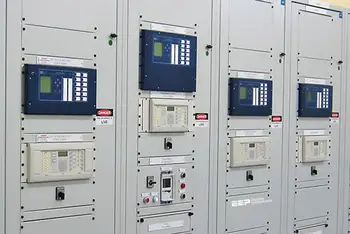
Protective Relay Training - Basic
Our customized live online or in‑person group training can be delivered to your staff at your location.
- Live Online
- 12 hours Instructor-led
- Group Training Available
Regular Price:
$699
Coupon Price:
$599
Europe's wind power industry is set to speed up again this year after a slight slowdown in the growth of new generating capacity in 2003, industry association EWEA said recently.
Last year saw vigorous growth to a 23 percent of generating capacity, or a total of 28,401 megawatt (MW), but lagged the growth to 33 percent in 2002, said the EWEA.
"The slowdown in the growth rate is mostly due to a decrease in Germany, but this was an anomaly and we expect things to stabilise again," Corin Millais, Chief Executive of the Brussels-based organisation said.
"We uphold a long-term forecast (made last October) for European capacity to reach 75,000 MW by 2010," he added.
World wind power champion Germany built 2,645 MW of new capacity in 2003, bringing its total to 14,609 MW while Europe's number two, Spain, added 1,377 MW to a new total of 6,202, EWEA charts showed.
United States figures released recently showed the U.S. overtook Spain last year with a growth rate of 36 percent, arriving at a new total 6,370 MW.
EWEA figures covered only Europe, which account for around 70-80 percent of world wind energy.
Millais said the 15-nation bloc will boost its capacity through the accession of 10 new members this year.
Among the European top six wind power nations, Denmark was in third position, having added 243 MW to arrive at 3,110 MW. The Netherlands last year built 196 MW to reach a total 873 MW, followed by Italy adding 116 MW to arrive at 904 MW and Britain, which put in 103 MW, making the total 649 MW. Europe's wind power capacity in an average wind year can produce 60 terawatt hours (TWh) of electricity, equal to about 2.4 percent of total EU power consumption, EWEA said.
Germany had added new capacity of 3,247 MW in 2002, with the total at year-end at 12,001 MW, figures from national association BWE showed last year. The country's equipment producers have recently started focusing on exports, because they are due to run out of more onshore sites and most offshore projects are years away.
Related News

BC Hydro Expects To See Electricity Usage Rise This Holiday Season
BC Hydro Holiday Electricity Usage is set to rise as energy demand increases during peak…
View more

ETP 2017 maps major transformations in energy technologies
Global Energy Electrification drives IEA targets as smart grids, storage, EVs, and demand-side management scale.…
View more
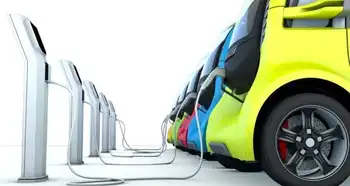
GM president: Electric cars won't go mainstream until we fix these problems
Electric Vehicle Adoption Barriers include range anxiety, charging infrastructure, and cost parity; consumer demand, tax…
View more
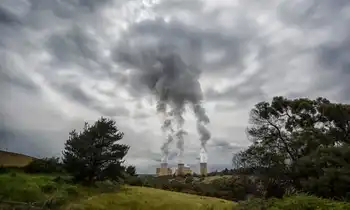
Emissions rise 2% in Australia amid increased pollution from electricity and transport
Australia's greenhouse gas emissions rose in Q2 as electricity and transport pollution increased, despite renewable…
View more
Alberta ratepayers on the hook for unpaid gas and electricity bills from utility deferral program
Alberta Utility Rate Rider will add a modest fee to electricity bills and natural gas…
View more
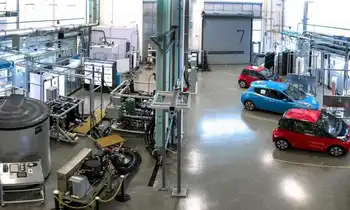
Grid coordination opens road for electric vehicle flexibility
Smart EV Charging orchestrates vehicle-to-grid (V2G), demand response, and fast charging to balance the power…
View more
Sign Up for Electricity Forum’s Newsletter
Stay informed with our FREE Newsletter — get the latest news, breakthrough technologies, and expert insights, delivered straight to your inbox.
Electricity Today T&D Magazine Subscribe for FREE
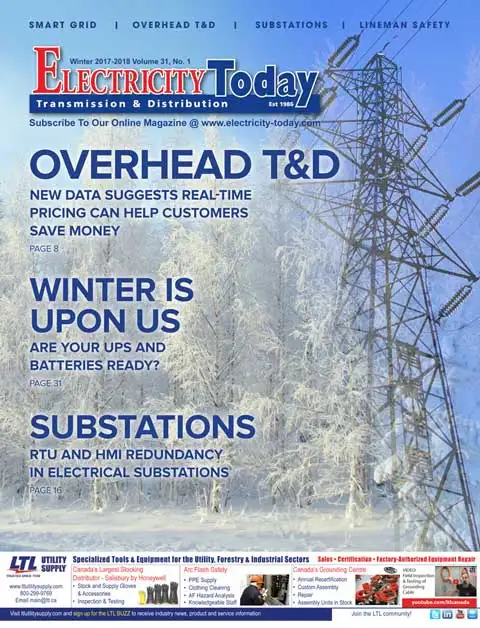
Stay informed with the latest T&D policies and technologies.
- Timely insights from industry experts
- Practical solutions T&D engineers
- Free access to every issue