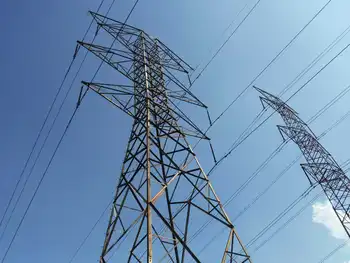
FirstEnergy invested $115 Million in 2014 to enhance electric system

By FirstEnergy


Protective Relay Training - Basic

Our customized live online or in‑person group training can be delivered to your staff at your location.

  • Live Online
  • 12 hours Instructor-led
  • Group Training Available
Regular Price:
$699
Coupon Price:
$599
Reserve Your Seat Today
FirstEnergy Corp. invested more than $115 million in 2014 in its Pennsylvania Power Penn Power service area on reliability infrastructure projects and other work designed to help reduce the number and duration of power outages.

More than $76 million of the total has been spent on transmission-related projects owned by American Transmission Systems Incorporated, a FirstEnergy transmission company.

"Whether it's building new transmission lines and substations, or replacing thousands of utility poles as part of our ongoing inspection programs, our goal is to reduce the number and duration of outages our customers experience," said Randall Frame, regional president of Ohio Edison and Penn Power. "These projects help us enhance day-to-day service reliability for our customers along with maintaining our system's capability to handle future load growth."

Some of the key FirstEnergy projects in Penn Power's western Pennsylvania service area in 2014 include:

- Transmission substation enhancements, including replacing equipment and adding capacity for expected future growth, at a cost of more than $28 million.

- Transmission line construction and maintenance projects, including replacing breakers, poles and other hardware at a cost of more than $20 million.

- Major ongoing construction at a substation in New Castle to enhance service reliability at a cost of almost $14 million in 2014, with completion expected in June of this year.

- Distribution system enhancements, including rewiring circuits, annual pole inspection and replacements and distribution substation equipment replacements at a cost of almost $12 million.

- Tree trimming and vegetation management efforts, including dealing with the Emerald Ash Borer infestation, at a total cost of more than $7 million.

Planning also is continuing for additional projects that are expected to be completed in 2015, including new substations, transmission lines and circuit upgrades.

Related News

Global: Nuclear power: what the ‘green industrial revolution’ means for the next three waves of reactors

UK Nuclear Energy Ten Point Plan outlines support for large reactors, SMRs, and AMRs, funding Sizewell C, hydrogen production, and industrial heat to reach net zero, decarbonize transport and heating, and expand clean electricity capacity.


Key Points

A UK plan backing large, small, and advanced reactors to drive net zero via clean power, hydrogen, and industrial heat.

✅ Funds large plants (e.g., Sizewell C) under value-for-money models

✅ Invests in SMRs for factory-built, modular, lower-cost deployment

✅ Backs AMRs for high-temperature heat, hydrogen, and industry


The UK government has just announced its “Ten Point Plan for a Green Industrial Revolution”, in which it lays out a vision for the future of energy, transport and nature in the UK. As researchers into nuclear energy, my colleagues and I were pleased to see the plan is rather favourable to new nuclear power.

It follows the advice from the UK’s Nuclear Innovation and Research Advisory Board, pledging to pursue large power plants based on current technology, and following that up with financial support for two further waves of reactor technology (“small” and “advanced” modular reactors).

This support is an important part of the plan to reach net-zero emissions by 2050, as in the years to come nuclear power will be crucial to decarbonising not just the electricity supply but the whole of society.

This chart helps illustrate the extent of the challenge faced:

Electricity generation is only responsible for a small percentage of UK emissions. William Bodel. Data: UK Climate Change Committee

Efforts to reduce emissions have so far only partially decarbonised the electricity generation sector. Reaching net zero will require immense effort to also decarbonise heating, transport, as well as shipping and aviation. The plan proposes investment in hydrogen production and electric vehicles to address these three areas – which will require, as advocates of nuclear beyond electricity argue, a lot more energy generation.

Nuclear is well-placed to provide a proportion of this energy. Reaching net zero will be a huge challenge, and industry leaders warn it may be unachievable without nuclear energy. So here’s what the announcement means for the three “waves” of nuclear power.

Who will pay for it?
But first a word on financing. To understand the strategy, it is important to realise that the reason there has been so little new activity in the UK’s nuclear sector since the 1990s is due to difficulty in financing. Nuclear plants are cheap to fuel and operate and last for a long time. In theory, this offsets the enormous upfront capital cost, and results in competitively priced electricity overall.

But ever since the electricity sector was privatised, governments have been averse to spending public money on power plants. This, combined with resulting higher borrowing costs and cheaper alternatives (gas power), has meant that in practice nuclear has been sidelined for two decades. While climate change offers an opportunity for a revival, these financial concerns remain.

Large nuclear
Hinkley Point C is a large nuclear station currently under construction in Somerset, England. The project is well-advanced, with its first reactor installed and due to come online in the middle of this decade. While the plant will provide around 7% of current UK electricity demand, its agreed electricity price is relatively expensive.

Under construction: Hinkley Point C. Ben Birchall/PA

The government’s new plan states: “We are pursuing large-scale new nuclear projects, subject to value-for-money.” This is likely a reference to the proposed Sizewell C in Suffolk, on which a final decision is expected soon. Sizewell C would be a copy of the Hinkley plant – building follow-up identical reactors achieves capital cost reductions, and setbacks at Hinkley Point C have sharpened delivery focus as an alternative funding model will likely be implemented to reduce financing costs.

Other potential nuclear sites such as Wylfa and Moorside (shelved in 2018 and 2019 respectively for financial reasons) are also not mentioned, their futures presumably also covered by the “subject to value-for-money” clause.

Small nuclear
The next generation of nuclear technology, with various designs under development worldwide are smaller, cheaper, safer Small Modular Reactors (SMRs), such as the Rolls Royce “UK SMR”.

Reactors small enough to be manufactured in factories and delivered as modules can be assembled on site in much shorter times than larger designs, which in contrast are constructed mostly on site. In so doing, the capital costs per unit (and therefore borrowing costs) could be significantly lower than current new-builds.

The plan states “up to £215 million” will be made available for SMRs, Phase 2 of which will begin next year, with anticipated delivery of units around a decade from now.

Advanced nuclear
The third proposed wave of nuclear will be the Advanced Modular Reactors (AMRs). These are truly innovative technologies, with a wide range of benefits over present designs and, like the small reactors, they are modular to keep prices down.

Crucially, advanced reactors operate at much higher temperatures – some promise in excess of 750°C compared to around 300°C in current reactors. This is important as that heat can be used in industrial processes which require high temperatures, such as ceramics, which they currently get through electrical heating or by directly burning fossil fuels. If those ceramics factories could instead use heat from AMRs placed nearby, it would reduce CO₂ emissions from industry (see chart above).

High temperatures can also be used to generate hydrogen, which the government’s plan recognises has the potential to replace natural gas in heating and eventually also in pioneering zero-emission vehicles, ships and aircraft. Most hydrogen is produced from natural gas, with the downside of generating CO₂ in the process. A carbon-free alternative involves splitting water using electricity (electrolysis), though this is rather inefficient. More efficient methods which require high temperatures are yet to achieve commercialisation, however if realised, this would make high temperature nuclear particularly useful.

The government is committing “up to £170 million” for AMR research, and specifies a target for a demonstrator plant by the early 2030s. The most promising candidate is likely a High Temperature Gas-cooled Reactor which is possible, if ambitious, over this timescale. The Chinese currently lead the way with this technology, and their version of this reactor concept is expected soon.

In summary, the plan is welcome news for the nuclear sector, even as Europe loses nuclear capacity across the continent. While it lacks some specifics, these may be detailed in the government’s upcoming Energy White Paper. The advice to government has been acknowledged, and the sums of money mentioned throughout are significant enough to really get started on the necessary research and development.

Achieving net zero is a vast undertaking, and recognising that nuclear can make a substantial contribution if properly supported is an important step towards hitting that target.


Related News

View more

California Welcomes 70 Volvo VNR Electric Trucks

Switch-On Project Electric Trucks accelerate California freight decarbonization, deploying Volvo VNR Electric rigs with high-capacity charging infrastructure, zero-emissions operations, and connected safety features to cut greenhouse gases and improve urban air quality.


Key Points

A California program deploying Volvo VNR Electric trucks and charging to decarbonize freight and improve air quality.

✅ 70 Volvo VNR Electric trucks for regional logistics

✅ Strategic high-capacity charging for heavy-duty fleets

✅ Lower TCO via fuel savings and reduced maintenance


In a significant step toward sustainable transportation, the Switch-On project is bringing 70 Volvo VNR Electric trucks to California. This initiative aims to bolster the state's efforts to reduce emissions and transition to greener logistics solutions. The arrival of these electric vehicles marks an important milestone in California's commitment to combating climate change and improving air quality.

The Switch-On Project: Overview and Goals

The Switch-On project is a collaborative effort designed to enhance electric truck adoption in California. It focuses on developing the necessary infrastructure and technology to support electric vehicles (EVs) in the freight and logistics sectors, building on recent nonprofit investments at California ports. The project not only seeks to increase the availability of electric trucks but also aims to demonstrate their effectiveness in real-world applications.

California has set ambitious goals for reducing greenhouse gas emissions, particularly from the transportation sector, which is one of the largest contributors to air pollution. By introducing electric trucks into freight operations, the state aims to significantly cut emissions, improve public health, and pave the way for a more sustainable future.

The Volvo VNR Electric Trucks

The Volvo VNR Electric trucks are specifically designed for regional distribution and urban transport, aligning with Volvo's broader electric lineup as the company expands offerings, making them ideal for the needs of California’s freight industry. With a range of approximately 250 miles on a single charge, these trucks can efficiently handle most regional routes. Equipped with advanced technology, including regenerative braking and connectivity features, the VNR Electric models enhance operational efficiency and safety.

These trucks not only provide a cleaner alternative to traditional diesel vehicles but also promise lower operational costs over time. With reduced fuel expenses and lower maintenance needs, and emerging vehicle-to-grid pilots that can create new value streams, businesses can benefit from significant savings while contributing to environmental sustainability.

Infrastructure Development

A crucial aspect of the Switch-On project is the development of charging infrastructure to support the new fleet of electric trucks. The project partners are working on installing high-capacity charging stations strategically located throughout California while addressing utility planning challenges that large fleets will pose to the power system. This infrastructure is essential to ensure that electric trucks can be charged efficiently, minimizing downtime and maximizing productivity.

The charging stations are designed to accommodate the specific needs of heavy-duty vehicles, and corridor models like BC's Electric Highway provide useful precedents for network design, allowing for rapid charging that aligns with operational schedules. This development not only supports the new fleet but also encourages other logistics companies to consider electric trucks as a viable option for their operations.

Benefits to California

The introduction of 70 Volvo VNR Electric trucks will have several positive impacts on California. Firstly, it will significantly reduce greenhouse gas emissions from the freight sector, contributing to the state’s ambitious climate goals even as grid expansion will be needed to support widespread electrification across sectors. The transition to electric trucks is expected to improve air quality, particularly in urban areas that struggle with high pollution levels.

Moreover, the project serves as a model for other regions considering similar initiatives. By showcasing the practicality and benefits of electric trucks, California hopes to inspire widespread adoption across the nation. As the market for electric vehicles continues to grow, this project can play a pivotal role in accelerating the transition to sustainable transportation solutions.

Industry and Community Reactions

The arrival of the Volvo VNR Electric trucks has been met with enthusiasm from both industry stakeholders and community members. Logistics companies are excited about the opportunity to reduce their carbon footprints and operational costs. Meanwhile, environmental advocates applaud the project as a crucial step toward cleaner air and healthier communities.

California’s commitment to sustainable transportation has positioned it as a leader in the shift to electric vehicles amid an ongoing biofuels vs. EVs debate over the best path forward, setting an example for other states and countries.

Conclusion

The Switch-On project represents a major advancement in California's efforts to transition to electric transportation. With the deployment of 70 Volvo VNR Electric trucks, the state is not only taking a significant step toward reducing emissions but also demonstrating the feasibility of electric logistics solutions.

As infrastructure develops and more electric trucks hit the roads, California is paving the way for a greener, more sustainable future in transportation. The success of this project could have far-reaching implications, influencing policies and practices in the broader freight industry and beyond.


Related News

View more

Electric shock: China power demand drops as coronavirus shutters plants

China Industrial Power Demand 2020 highlights COVID-19 disruption to electricity consumption as factory output stalls; IHS Markit estimates losses equal to Chile's usage, impacting thermal coal, LNG, and Hubei's industrial load.


Key Points

An analysis of COVID-19's hit to China's electricity use, cutting industry demand and fuel needs for coal and LNG.

✅ 73 billion kWh loss equals Chile's annual power use

✅ Cuts translate to 30m tonnes coal or 9m tonnes LNG

✅ Hubei peak load 21 percent below plan amid shutdowns


China’s industrial power demand in 2020 may decline by as much as 73 billion kilowatt hours (kWh), according to IHS Markit, as the outbreak of the coronavirus has curtailed factory output and prevented some workers from returning to their jobs.

FILE PHOTO: Smoke is seen from a cooling tower of a China Energy ultra-low emission coal-fired power plant during a media tour, in Sanhe, Hebei province, China July 18, 2019. REUTERS/Shivani Singh
The cut represents about 1.5% of industrial power consumption in China. But, as the country is the world’s biggest electricity consumer and analyses of China's electricity appetite routinely underscore its scale, the loss is equal to the power used in the whole of Chile and it illustrates the scope of the disruption caused by the outbreak.

The reduction is the energy equivalent of about 30 million tonnes of thermal coal, at a time when China aims to reduce coal power production, or about 9 million tonnes of liquefied natural gas (LNG), IHS said. The coal figure is more than China’s average monthly imports last year while the LNG figure is a little more than one month of imports, based on customs data.

China has tried to curtail the spread of the coronavirus that has killed more than 1,400 and infected over 60,000 by extending the Lunar New Year holiday for an extra week and encouraging people to work from home, measures that contributed to a global dip in electricity demand as well.

Last year, industrial users consumed 4.85 trillion kWh electricity, accounting for 67% of the country’s total, even as India's electricity demand showed sharp declines in the region.

Xizhou Zhou, the global head of power and Renewables at IHS Markit, said that in a severe case where the epidemic goes on past March, China’s economic growth will be only 4.2% during 2020, down from an initial forecast of 5.8%, while power consumption will climb by only 3.1%, down from 4.1% initially, even as power cuts and blackouts raise concerns.

“The main uncertainty is still how fast the virus will be brought under control,” said Zhou, adding that the impact on the power sector will be relatively modest from a full-year picture in 2020, even though China's electric power woes are already clouding solar markets.

In Hubei province, the epicenter of the virus outbreak, the peak power load at the end of January was 21% less than planned, mirroring how Japan's power demand was hit during the outbreak, data from Wood Mackenzie showed.

Industrial operating rates point to a firm reduction in power consumption in China.

Utilization rates at plastic processors are between 30% and 60% and the low levels are expected to last for another two week, according to ICIS China.

Weaving machines at textile plants are operating at below 10% of capacity, the lowest in five years, ICIS data showed. China is the world’s biggest textile and garment exporter.


Related News

View more

Ontario to Rely on Battery Storage to Meet Rising Energy Demand

Ontario Battery Energy Storage anchors IESO strategy, easing peak demand and boosting grid reliability. Projects like Oneida BESS (250MW) and nearly 3GW procurements integrate renewables, wind and solar, enabling flexible, decarbonized power.


Key Points

Provincewide grid batteries help IESO manage peaks, integrate renewables, and strengthen reliability across Ontario.

✅ IESO forecasts 1,000MW peak growth by 2026

✅ Oneida BESS adds 250MW with 20-year contract

✅ Nearly 3GW storage procured via LT1 and other RFPs


Ontario’s electricity grid is facing increasing demand amid a looming supply crunch, prompting the province to invest heavily in battery energy storage systems (BESS) as a key solution. The Ontario Independent Electricity System Operator (IESO) has highlighted that these storage technologies will be crucial for managing peak demand in the coming years.

Ontario's energy demands have been on the rise, driven by factors such as population growth, electric vehicle manufacturing, data center expansions, and heavy industrial activity. The IESO's latest assessment, and its work on enabling storage, covering the period from April 2025 to September 2026, indicates that peak demand will increase by approximately 1,000MW between the summer of 2025 and 2026. This forecasted rise in energy use is attributed to the acceleration of various sectors within the province, underscoring the need for reliable, scalable energy solutions.

A significant portion of this solution will be met by large-scale energy storage projects. Among the most prominent is the Oneida BESS, a flagship project that will contribute 250MW of storage capacity. This project, developed by a consortium including Northland Power and NRStor, will be located on land owned by the Six Nations of the Grand River. Expected to be operational soon, it will play a pivotal role in ensuring grid stability during high-demand periods. The project benefits from a 20-year contract with the IESO, guaranteeing payments that will support its financial viability, alongside additional revenue from participating in the wholesale energy market.

In addition to Oneida, Ontario has committed to acquiring nearly 3GW of energy storage capacity through various procurement programs. The 2023 Expedited Long-Term 1 (LT1) request for proposals (RfP) alone secured 881MW of storage, with additional projects in the pipeline. A notable example is the Hagersville Battery Energy Storage Park, which, upon completion, will be the largest such project in Canada. The success of these procurement efforts highlights the growing importance of BESS in Ontario's energy strategy.

The IESO’s proactive approach to energy storage is not only a response to rising demand but also a step toward decarbonizing the province’s energy system. As Ontario transitions away from traditional fossil fuels, BESS will provide the necessary flexibility to accommodate increasing renewable energy generation, a clean energy solution widely recognized in jurisdictions like New York, particularly from intermittent sources like wind and solar. By storing excess energy during periods of low demand and dispatching it when needed, these systems will help maintain grid stability, and as many utilities see benefits even without mandates, reduce reliance on fossil fuel-based power plants.

Looking ahead, Ontario's energy storage capacity is expected to grow significantly, complemented by initiatives such as the Hydrogen Innovation Fund, with projects from the 2023 LT1 RfP expected to come online by 2027. As more storage resources are integrated into the grid, the province is positioning itself to meet its rising energy needs while also advancing its environmental goals.

Ontario’s increasing reliance on battery energy storage is a clear indication of the province’s commitment to a sustainable and resilient energy future, aligning with perspectives from Sudbury sustainability advocates on the grid's future. With substantial investments in storage technology, Ontario is not only addressing current energy challenges but also paving the way for a cleaner, more reliable energy system in the years to come.


Related News

View more

Zapping elderly brains with electricity improves short-term memory — for almost an hour

Transcranial electrical stimulation synchronizes brain waves to bolster working memory, aligning neural oscillations across the prefrontal and temporal cortex. This noninvasive brain stimulation may counter cognitive aging by restoring network coupling and improving short-term recall.


Key Points

Transcranial electrical stimulation applies scalp currents to synchronize brain waves, briefly enhancing working memory.

✅ Synchronizes prefrontal-temporal networks to restore coupling

✅ Noninvasive tES/tACS protocols show rapid, reversible gains

✅ Effects lasted under an hour; durability remains to be tested


To read this sentence, you hold the words in your mind for a few seconds until you reach the period. As you do, neurons in your brain fire in coordinated bursts, generating electrical waves that let you hold information for as long as it is needed, much as novel devices can generate electricity from falling snow under specific conditions. But as we age, these brain waves start to get out of sync, causing short-term memory to falter. A new study finds that jolting specific brain areas with a periodic burst of electricity might reverse the deficit—temporarily, at least.

The work makes “a strong case” for the idea that out-of-sync brain waves in specific regions can drive cognitive aging, says Vincent Clark, a neuroscientist at the University of New Mexico in Albuquerque, who was not involved in the research. He adds that the brain stimulation approach in the study may result in a new electrical therapy for age-related deficits in working memory.

Working memory is “the sketchpad of the mind,” allowing us to hold information in our minds over a period of seconds. This short-term memory is critical to accomplishing everyday tasks such as planning and counting, says Robert Reinhart, a neuroscientist at Boston University who led the study. Scientists think that when we use this type of memory, millions of neurons in different brain areas communicate through coupled bursts of activity, a form of electrical conduction that coordinates timing across networks. “Cells that fire together, wire together,” Reinhart says.

But despite its critical role, working memory is a fragile cognitive resource that declines with age, Reinhart says. Previous studies had suggested that reduced working-memory performance in the elderly is linked to uncoupled activity in different brain areas. So Reinhart and his team set out to test whether recoupling brain waves in older adults could boost the brain’s ability to temporarily store information, a systems-level coordination challenge akin to efforts to use AI for energy savings on modern power grids.

To do so, the researchers used jolts of weak electrical current to synchronize waves in the prefrontal and temporal cortex—two brain areas critical for cognition, a targeted approach not unlike how grids use batteries to stabilize power during strain—and applied the current to the scalps of 42 healthy people in their 60s and 70s who showed no signs of decline in mental ability. Before their brains were zapped, participants looked at a series of images: an everyday object, followed briefly by a blank screen, and then either an identical or a modified version of the same object. The goal was to spot whether the two images were different.

Then the participants took the test again, while their brains were stimulated with a current. After about 25 minutes of applying electricity, participants were on average more accurate at identifying changes in the images than they were before the stimulation. Following stimulation, their performance in the test was indistinguishable from that of a group of 42 people in their 20s. And the waves in the prefrontal and temporal cortex, which had previously been out of sync in most of the participants, started to fire in sync, the researchers report today in Nature Neuroscience, a synchronization imperative reminiscent of safeguards that prevent power blackouts on threatened grids. No such effects occurred in a second group of older people who received jolts of current that didn’t synchronize waves in the prefrontal and temporal cortex.

By using bursts of current to knock brain waves out of sync, the researchers also modulated the brain chatter in healthy people in their 20s, making them slower and less accurate at spotting differences in the image test.

“This is a very nice and clear demonstration of how functional connections underlie memory in younger adults and how alterations … can lead to memory reductions in older adults,” says Cheryl Grady, a cognitive neuroscientist at the Rotman Research Institute at Baycrest in Toronto, Canada. It’s also the first time that transcranial stimulation has been shown to restore working memory in older people, says Michael O’Sullivan, a neuroscientist at the University of Queensland in Brisbane, Australia, though electricity in medicine extends far beyond neurostimulation.

But whether brain zapping could turbocharge the cognitive abilities of seniors or help improve the memories of people with diseases like Alzheimer’s is still unclear: In the study, the positive effects on working memory lasted for just under an hour—though Reinhart says that’s as far as they recorded in the experiment. The team didn’t see the improvements decline toward the end, so he suspects that the cognitive boost may last for longer. Still, researchers say much more work has to be done to better understand how the stimulation works.

Clark is optimistic. “No pill yet developed can produce these sorts of effects safely and reliably,” he says. “Helping people is the ultimate goal of all of our research, and it’s encouraging to see that progress is being made.”


Related News

View more

US power coalition demands action to deal with Coronavirus

Renewable Energy Tax Incentive Extensions urged by US trade groups to offset COVID-19 supply chain delays, tax equity shortages, and financing risks, enabling direct pay, PTC and ITC qualification, and standalone energy storage credits.


Key Points

Policy measures that extend and monetize clean energy credits to counter COVID-19 disruptions and financing shortfalls.

✅ Extend start construction and safe harbor deadlines

✅ Enable direct pay to offset reduced tax equity

✅ Add a standalone energy storage credit


Renewable energy and other trade bodies in the US are calling on Capitol Hill to extend provision of tax incentives to help the sector “surmount the impacts” of the COVID-19 crisis facing clean energy.

In a signed joint letter, the American Council on Renewable Energy (ACORE), American Wind Energy Association (AWEA), Energy Storage Association (ESA), National Hydropower Association (NHA), Renewable Energy Buyers Alliance (REBA), and the Solar Energy Industries Association (SEIA) stated: “With over $50bn in annual investment over each of the past five years, the clean energy sector is one of the nation’s most important economic drivers. But that growth is placed at risk by a range of COVID-19 related impacts”.

These include “supply chain disruptions that have the potential to delay utility solar construction timetables and undermine the ability of wind, solar and hydropower developers to qualify for time-sensitive tax credits, and a sudden reduction in the availability of tax equity, which is crucial to monetising tax credits and financing clean energy projects of all types.”
The letter goes onto state: “Like all sectors of our economy the renewable and clean grid industry – including developers, manufacturers, construction workers, electric utilities, investors and major corporate consumers of renewable power – needs stability.

“The current uncertainty about the ability to qualify for and monetise tax incentives will have real and substantial negative impacts to the entire economy.

On behalf of the thousands of companies that participate in America’s renewable and clean energy economy, the coalition of organisations is requesting the US Government, echoing Senate calls to support clean energy, take three “critical” steps to address pandemic-related disruptions.

The first is an extension of start construction and safe harbour deadlines to ensure that renewable projects can qualify for renewable tax credits amid the Solar ITC extension debate and despite delays associated with supply chain disruptions.

The second is the implementation of provisions that will allow renewable tax credits to be available for direct pay to facilitate their monetisation, supporting U.S. solar and wind growth in the face of reduced availability of tax equity.

Thirdly, the signatories have requested the enactment of a direct pay tax credit for standalone energy storage to foster renewable growth as the industry sets sights on market majority and help secure a more resilient grid.


Related News

View more

Sign Up for Electricity Forum’s Newsletter

Stay informed with our FREE Newsletter — get the latest news, breakthrough technologies, and expert insights, delivered straight to your inbox.

Electricity Today T&D Magazine Subscribe for FREE

Stay informed with the latest T&D policies and technologies.
  • Timely insights from industry experts
  • Practical solutions T&D engineers
  • Free access to every issue

Download the 2025 Electrical Training Catalog

Explore 50+ live, expert-led electrical training courses –

  • Interactive
  • Flexible
  • CEU-cerified