By The Toronto Star


Protective Relay Training - Basic

Our customized live online or in‑person group training can be delivered to your staff at your location.

  • Live Online
  • 12 hours Instructor-led
  • Group Training Available
Regular Price:
$699
Coupon Price:
$599
Reserve Your Seat Today
Ontario's reliance on fossil fuels increases

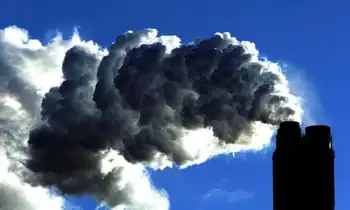
Close to one-third of the electricity produced in Ontario came from coal-fired generators this week — generators the new Liberal government in Ontario wants to shut down by 2007.

With half of the nuclear units in the province out of action, fossil fuels — predominantly coal — are being used to generate the province's power.

The strong dependence on coal makes it questionable whether the Liberals will be able to fulfil their pledge to close the coal stations by 2007, says energy consultant Julie Girvan.

"From an environmental perspective it sounds great," said Girvan, who frequently works for the Consumers Association of Canada.

"But until we know where the displaced power's going to come from, I don't know how they can do it."

Jack Gibbons, chair of the Ontario Clean Air Alliance, which has been pushing the province to close coal plants, still thinks the 2007 deadline for coal plants is a good one.

"It's an aggressive target, but it can be achieved."

The key is for the province to ask the Independent Electricity Market Operator to sign long-term contracts — say 20 years — with companies to build clean, gas-fired generators, Gibbons argued.

That will give investors the confidence to sink tens or even hundreds of millions of dollars into generators that burn clean natural gas.

During the peak demand period Wednesday, fossil fuel generating stations were churning out 7,895 megawatts of power, out of total production of 17,339 megawatts. Large water-powered stations contributed 5,070 megawatts, and nuclear plants 4,373 megawatts. (The figures don't include production from small-scale generators.)

Natural gas and oil fuelled some of the fossil production, but coal plants dominate the category.

Nuclear production is normally much higher, but the big Darlington nuclear station is out of service for several weeks for a scheduled safety inspection. In addition, the Bruce B and Pickering B nuclear plants each have a unit out of service.

One the plus side, the first unit to return to service at the Pickering A nuclear station — mothballed in 1997 — is approaching full power. And one unit of the Bruce A nuclear station, mothballed about the same time, produced limited power.

In their latest policy document, the Liberals have hedged their promise to shut down the coal plants by 2007.

"The plants will be removed from service only after we have a replacement up and running," it says.

Jan Carr of consulting firm Barker, Dunn and Rossi says it will be "extremely difficult" for the Liberals to meet their 2007 target, because it takes so long to plan and build generators.

"To replace that much generation in that short a time, people should be digging holes right now," he said. "That isn't happening. There isn't even a plan for it."

Nor will it be easy to replace coal plants with natural gas-burning generators, he said, since gas is in short supply.

Carr said the new government should not become so fixated on closing coal plants that it loses sight of the real objective.

"The objective is to have reasonable air quality," Carr said. Rushing to close coal plants might not be the most effective way to do that in the long haul.

Girvan notes that one way of decreasing reliance on coal is to cut demand — but the Liberals say they will maintain the price freeze on power prices for consumers and small businesses until 2006.

That does nothing to curb consumption, she said.

Related News
Trump's Proposal to Control Ukraine's Nuclear Plants Sparks Controversy

US Control of Ukraine Nuclear Plants sparks debate over ZNPP, Zaporizhzhia, sovereignty, safety, ownership, and international cooperation, as Washington touts utility expertise, investment, and modernization to protect critical energy infrastructure amid conflict.


Key Points

US management proposal for Ukraine's nuclear assets, notably ZNPP, balancing sovereignty, safety, and investment.

✅ Ukraine retains ownership; any transfer requires parliament approval.

✅ ZNPP safety risks persist amid occupation near active conflict.

✅ International reactions split: sovereignty vs. cooperation and investment.


In a recent phone call with Ukrainian President Volodymyr Zelenskyy, U.S. President Donald Trump proposed that the United States take control of Ukraine's nuclear power plants, including the Zaporizhzhia Nuclear Power Plant (ZNPP), which has been under Russian occupation since early in the war and where Russia is reportedly building power lines to reactivate the plant amid ongoing tensions. Trump suggested that American ownership of these plants could be the best protection for their infrastructure, a proposal that has sparked controversy in policy circles, and that the U.S. could assist in running them with its electricity and utility expertise.

Ukrainian Response

President Zelenskyy promptly addressed Trump's proposal, stating that while the conversation focused on the ZNPP, the issue of ownership was not discussed. He emphasized that all of Ukraine's nuclear power plants belong to the Ukrainian people and that any transfer of ownership would require parliamentary approval . Zelenskyy clarified that while the U.S. could invest in and help modernize the ZNPP, ownership would remain with Ukraine.

Security Concerns

The ZNPP, Europe's largest nuclear facility, has been non-operational since its occupation by Russian forces in 2022. The plant's location near active conflict zones raises significant safety risks that the IAEA has warned of in connection with attacks on Ukraine's power grids, and its future remains uncertain. Ukrainian officials have expressed concerns about potential Russian provocations, such as explosions, especially after UN inspectors reported mines at the Zaporizhzhia plant near key facilities, if and when Ukraine attempts to regain control of the plant.

International Reactions

The proposal has elicited mixed reactions both within Ukraine and internationally. Some Ukrainian officials view it as an opportunistic move by the U.S. to gain control over critical infrastructure, while others see it as a potential avenue for modernization and investment, alongside expanding wind power that is harder to destroy in wartime. The international community remains divided on the issue, with some supporting Ukraine's sovereignty over its nuclear assets and others advocating for a possible agreement on power plant attacks to ensure the plant's safety and future operation.

President Trump's proposal to have the U.S. take control of Ukraine's nuclear power plants has sparked significant controversy. While the U.S. offers expertise and investment, Ukraine maintains that ownership of its nuclear assets is a matter of national sovereignty, even as it has resumed electricity exports to bolster its economy. The situation underscores the complex interplay between security, sovereignty, and international cooperation in conflict zones.


Related News

View more

Toronto Power Outages Persist for Hundreds After Spring Storm

Toronto Hydro Storm Outages continue after strong winds and heavy rain, with crews restoring power, clearing debris and downed lines. Safety alerts and real-time updates guide affected neighborhoods via website and social media.


Key Points

Toronto Hydro Storm Outages are weather-related power cuts; crews restore service safely and share public updates.

✅ Crews prioritize areas with severe damage and limited access

✅ Report downed power lines; keep a safe distance

✅ Check website and social media for restoration updates


In the aftermath of a powerful spring storm that swept through Toronto on Tuesday, approximately 400 customers remain without power as of Sunday. The storm, which brought strong winds and heavy rain that caused severe flooding in some areas, led to significant damage across the city, including downed trees and power lines. Toronto Hydro crews have been working tirelessly to restore service, similar to efforts by Sudbury Hydro crews in Northern Ontario, focusing on areas with the most severe damage. While many customers have had their power restored, the remaining outages are concentrated in neighborhoods where access is challenging due to debris and fallen infrastructure.

Toronto Hydro has assured residents that restoration efforts are ongoing and that they are prioritizing safety and efficiency, in step with recovery from damaging storms in Ontario across the province. The utility company has urged residents to report any downed power lines and to avoid approaching them, as they may still be live and dangerous, and notes that utilities sometimes rely on mutual aid deployments to speed restoration in large-scale events. Additionally, Toronto Hydro has been providing updates through their website and social media channels, keeping the public informed about the status of power restoration in affected areas.

The storm's impact has also led to disruptions in other services, and power outages in London disrupted morning routines for thousands earlier in the week. Some public transportation routes experienced delays due to debris on tracks, and several schools in the affected areas were temporarily closed. City officials are coordinating with various agencies to address these issues and ensure that services return to normal as quickly as possible, even as Quebec contends with widespread power outages after severe windstorms.

Residents are advised to stay updated on the situation through official channels and to exercise caution when traveling in storm-affected areas. Toronto Hydro continues to work diligently to restore power to all customers and appreciates the public's patience during this challenging time, a challenge echoed when Texas utilities struggled to restore power during Hurricane Harvey.


Related News

View more

Is nuclear power really in decline?

Nuclear Energy Growth accelerates as nations pursue decarbonization, complement renewables, displace coal, and ensure grid reliability with firm, low-carbon baseload, benefiting from standardized builds, lower cost of capital, and learning-curve cost reductions.


Key Points

Expansion of nuclear capacity to cut CO2, complement renewables, replace coal, and stabilize grids at low-carbon cost.

✅ Complements renewables; displaces coal for faster decarbonization

✅ Cuts system costs via standardization and lower cost of capital

✅ Provides firm, low-carbon baseload and grid reliability


By Kirill Komarov, Chairman, World Nuclear Association.

As Europe and the wider world begins to wake up to the need to cut emissions, Dr Kirill Komarov argues that tackling climate change will see the use of nuclear energy grow in the coming years, not as a competitor to renewables but as a competitor to coal.

The nuclear industry keeps making headlines and spurring debates on energy policy, including the green industrial revolution agenda in several countries. With each new build project, the detractors of nuclear power crowd the bandwagon to portray renewables as an easy and cheap alternative to ‘increasingly costly’ nuclear: if solar and wind are virtually free why bother splitting atoms?

Yet, paradoxically as it may seem, if we are serious about policy response to climate change, nuclear energy is seeing an atomic energy resurgence in the coming decade or two.

Growth has already started to pick up with about 3.1 GW new capacity added in the first half of 2018 in Russia and China while, at the very least, 4GW more to be completed by the end of the year – more than doubling the capacity additions in 2017.

In 2019 new connections to the grid would exceed 10GW by a significant margin.

If nuclear is in decline, why then do China, India, Russia and other countries keep building nuclear power plants?

To begin with, the issue of cost, argued by those opposed to nuclear, is in fact largely a bogus one, which does not make a fully rounded like for like comparison.

It is true that the latest generation reactors, especially those under construction in the US and Western Europe, have encountered significant construction delays and cost overruns.

But the main, and often the only, reason for that is the ‘first-of-a-kind’ nature of those projects.

If you build something for the first time, be it nuclear, wind or solar, it is expensive. Experience shows that with series build, standardised construction economies of scale and the learning curve from multiple projects, costs come down by around one-third; and this is exactly what is already happening in some parts of the world.

Furthermore, those first-of-a-kind projects were forced to be financed 100% privately and investors had to bear all political risks. It sent the cost of capital soaring, increasing at one stroke the final electricity price by about one third.

While, according to the International Energy Agency, at 3% cost of capital rate, nuclear is the cheapest source of energy: on average 1% increase adds about US$6-7 per MWh to the final price.

When it comes to solar and wind, the truth, inconvenient for those cherishing the fantasy of a world relying 100% on renewables, is that the ‘plummeting prices’ (which, by the way, haven’t changed much over the last three years, reaching a plateau) do not factor in so-called system and balancing costs associated with the need to smooth the intermittency of renewables.

Put simply, the fact the sun doesn’t shine at night and wind doesn’t blow all the time means wind and solar generation needs to be backed up.

According to a study by the Potsdam Institute for Climate Impact Research, integration of intermittent renewables into the grid is estimated in some cases to be as expensive as power generation itself.

Delivering the highest possible renewable content means customers’ bills will have to cover: renewable generation costs, energy storage solutions, major grid updates and interconnections investment, as well as gas or coal peaking power plants or ‘peakers’, which work only from time to time when needed to back up wind and solar.

The expected cost for kWh for peakers, according to investment bank Lazard is about twice that of conventional power plants due to much lower capacity factors.

Despite exceptionally low fossil fuel prices, peaking natural gas generation had an eye-watering cost of $156-210 per MWh in 2017 while electricity storage, replacing ‘peakers’, would imply an extra cost of $186-413 per MWh.

Burning fossil fuels is cheaper but comes with a great deal of environmental concern and extensive use of coal would make net-zero emissions targets all but unattainable.

So, contrary to some claims, nuclear does not compete with renewables. Moreover, a recent study by the MIT Energy Initiative showed, most convincingly, that renewables and load following advanced nuclear are complementary.

Nuclear competes with coal. Phasing out coal is crucial to fighting climate change. Putting off decisions to build new nuclear capacities while increasing the share of intermittent renewables makes coal indispensable and extends its life.

Scientists at the Brattle group, a consultancy, argue that “since CO2 emissions persist for many years in the atmosphere, near-term emission reductions are more helpful for climate protection than later ones”.

The longer we hesitate with new nuclear build the more difficult it becomes to save the Earth.

Nuclear power accounta for about one-tenth of global electricity production, but as much as one-third of generation from low-carbon sources. 1GWe of installed nuclear capacity prevents emissions of 4-7 million metric tons of CO2 emissions per year, depending on the region.

The International Energy Agency (IEA) estimates that in order to limit the average global temperature increase to 2°C and still meet global power demand, we need to connect to the grid at least 20GW of new nuclear energy each year.

The World Nuclear Association (WNA) sets the target even higher with the total of 1,000 GWe by 2050, or about 10 GWe per year before 2020; 25 GWe per year from 2021 to 2025; and on average 33 GWe from 2026 to 2050.

Regulatory and political challenges in the West have made life for nuclear businesses in the US and in Europe's nuclear sector very difficult, driving many of them to the edge of insolvency; but in the rest of the world nuclear energy is thriving.

Nuclear vendors and utilities post healthy profits and invest heavily in next-gen nuclear innovation and expansion. The BRICS countries are leading the way, taking over the initiative in the global climate agenda. From their perspective, it’s the opposite of decline.

Dr Kirill Komarov is first deputy CEO of Russian state nuclear energy operator Rosatom and chairman of the World Nuclear Association.


Related News

View more

Ontario to seek new wind, solar power to help ease coming electricity supply crunch

Ontario Clean Grid Plan outlines emissions-free electricity growth, renewable energy procurement, nuclear expansion at Bruce and Darlington, reduced natural gas, grid reliability, and net-zero alignment to meet IESO demand forecasts and EV manufacturing loads.


Key Points

A plan to expand emissions-free power via renewables and nuclear, cut natural gas use, and meet growing demand.

✅ Targets renewables, hydro, and nuclear capacity growth

✅ Aims to reduce reliance on gas for grid reliability

✅ Aligns with IESO demand forecasts and EV manufacturing loads


Ontario is working toward filling all of the province’s quickly growing electricity needs with emissions-free sources, including a plan to secure new renewable generation and clean power options, but isn’t quite ready to commit to a moratorium on natural gas.

Energy Minister Todd Smith announced Monday a plan to address growing energy needs for 2030 to 2050 — the Independent Electricity System Operator projects Ontario’s electricity demand could double by mid-century — and next steps involve looking for new wind, solar and hydroelectric power.

“While we may not need to start building today, government and those in the energy sector need to start planning immediately, so we have new clean, zero-emissions projects ready to go when we need them,” Smith said in Windsor, Ont.

The strategy also includes two nuclear projects announced last week — a new large-scale nuclear plant at Bruce Power on the shore of Lake Huron and three new small modular reactors at the site of the Darlington nuclear plant east of Toronto.

Those projects, enough to power six million homes, will help Ontario end its reliance on natural gas to generate electricity, said Smith, but committing to a natural gas moratorium in 2027 and eliminating natural gas by 2050 is contingent on the federal government helping to speed up the new nuclear facilities.

“Today’s report, the Powering Ontario’s Growth plan, commits us to working towards a 100 per cent clean grid,” Smith said in an interview.

“Hopefully the federal government can get on board with our intentions to build this clean generation as quickly as possible … That will put us in a much better position to use our natural gas facilities less in the future, if we can get those new projects online.”

The IESO has said that natural gas is required to ensure supply and stability in the short to medium term, as Ontario works on balancing demand and emissions across the grid, but that it will also increase greenhouse gas emissions from the electricity sector.

The province is expected to face increased demand for electricity from expanded electric vehicle use and manufacturing in the coming years, even as a $400-billion cost estimate for greening the grid is debated.

Keith Brooks, programs director for Environmental Defence, said the provincial plan could have been much more robust, containing firm timelines and commitments.

“This plan does not commit to getting emissions out of the system,” he said.

“It doesn’t commit to net zero, doesn’t set a timeline for a net zero goal or have any projection around emissions from Ontario’s electricity sector going forward. In fact, it’s not really a plan. It doesn’t set out any real goals and it doesn’t it doesn’t project what Ontario’s supply mix might look like.”

The Canadian Climate Institute applauded the plan’s focus on reducing reliance on gas-fired generation and emphasizing non-emitting generation, but also said there are still some question marks.

“The plan is silent on whether the province intends to construct new gas-fired generation facilities,” even as new gas plant expansions are proposed, senior research director Jason Dion wrote in a statement.

“The province should avoid building new gas plants since cost-effective alternatives are available, and such facilities are likely to end up as stranded assets. The province’s timeline for reaching net zero generation is also unclear. Canada and other G7 countries have set a target for 2035, something Ontario will need to address if it wants to remain competitive.”


Related News

View more

Solar PV and wind power in the US continue to grow amid favourable government plans

US Renewable Power Outlook 2030 projects surging capacity, solar PV and wind growth, grid modernization, and favorable tax credits, detailing market trends, CAGR, transmission expansion, and policy drivers shaping clean energy generation and consumption.


Key Points

A forecast of US power capacity, generation, and consumption, highlighting solar, wind, tax credits, and grid modernization.

✅ Targets 48.4% renewable capacity share by 2030

✅ Strong growth in solar PV and onshore wind installations

✅ Investment and tax credits drive grid and transmission upgrades


GlobalData’s latest report, ‘United States Power Market Outlook to 2030, Update 2021 – Market Trends, Regulations, and Competitive Landscape’ discusses the power market structure of the United States and provides historical and forecast numbers for capacity, generation and consumption up to 2030. Detailed analysis of the country’s power market regulatory structure, competitive landscape and a list of major power plants are provided. The report also gives a snapshot of the power sector in the country on broad parameters of macroeconomics, supply security, generation infrastructure, transmission and distribution infrastructure, about a quarter of U.S. electricity from renewables in recent years, electricity import and export scenario, degree of competition, regulatory scenario, and future potential. An analysis of the deals in the country’s power sector is also included in the report.

Renewable power held a 19% share of the US’s total power capacity in 2020, and in that year renewables became the second-most prevalent source in the U.S. electricity mix by generation; this share is expected to increase significantly to 48.4% by 2030. Favourable policies introduced by the US Government will continue to drive the country’s renewable sector, particularly solar photovoltaics (PV) and wind power, with wind now the most-used renewable source in the U.S. generation mix. Installed renewable capacity* increased from 16.5GW in 2000 to 239.2GW in 2020, growing at a compound annual growth rate (CAGR) of 14.3%. By 2030, the cumulative renewable capacity is expected to rise to 884.6GW, growing at a CAGR of 14% from 2020 to 2030. Despite increase in prices of renewable equipment, such as solar modules, in 2021, the US renewable sector will show strong growth during the 2021 to 2030 period as this increase in equipment prices are short term due to supply chain disruptions caused by the Covid-19 pandemic.

The expansion of renewable power capacity during the 2000 to 2020 period has been possible due to the introduction of federal schemes, such as Production Tax Credits, Investment Tax Credits and Manufacturing Tax Credits. These have massively aided renewable installations by bringing down the cost of renewable power generation and making it at par with power generated from conventional sources. Over the last few years, the cost of solar PV and wind power installations has declined sharply, and by 2023 wind, solar, and batteries made up most of the utility-scale pipeline across the US, highlighting investor confidence. Since 2010, the cost of utility-scale solar PV projects decreased by around 82% while onshore wind installations decreased by around 39%. This has supported the rapid expansion of the renewable market. However, the price of solar equipment has risen due to an increase in raw material prices and supply shortages. This may slightly delay the financing of some solar projects that are already in the pipeline.

The US will continue to add significant renewable capacity additions during the forecast period as industry outlooks point to record solar and storage installations over the coming years, to meet its target of reaching 80% clean energy by 2030. In November 2021, President Biden signed a $1tr Infrastructure Bill, within which $73bn is designated to renewables. This includes not just renewable capacity building, but also strengthening the country’s power grid and laying new high voltage transmission lines, both of which will be key to driving solar and wind power capacity additions as wind power surges in the U.S. electricity mix nationwide.

The US was one of the worst hit countries in the world due to the Covid-19 pandemic in 2020. With respect to the power sector, the electricity consumption in the country declined by 2.5% in 2020 as compared to 2019, even as renewable electricity surpassed coal in 2022 in the generation mix, highlighting continued structural change. Power plants that were under construction faced delays due to unavailability of components due to supply chain disruptions and unavailability of labour due to travel restrictions.

According to the US Energy Information Administration, 61 power projects, having a total capacity of 2.4GWm which were under construction during March and April 2020 were delayed because of the Covid-19 pandemic. Among renewable power technologies, solar PV and wind power projects were the most badly affected due to the pandemic.

In March and April 2020, 53 solar PV projects, having a total capacity of 1.3GW, and wind power projects, having a total capacity of 1.2GW, were delayed due to the Covid-19 pandemic. Moreover, several states suspended renewable energy auctions due to the pandemic.

For instance, New York State Energy Research and Development Authority (NYSERDA) had issued a new offshore wind solicitation for 1GW and up to 2.5GW in April 2020, but this was suspended due to the Covid-19 pandemic. In July 2020, the authority relaunched the tender for 2.5GW of offshore wind capacity, with a submission deadline in October 2020.

To ease the financial burden on consumers during the pandemic, more than 1,000 utilities in the country announced disconnection moratoria and implemented flexible payment plans. Duke Energy, American Electric Power, Dominion Power and Southern California Edison were among the major utilities that voluntarily suspended disconnections.


Related News

View more

Electricity Prices Surge to Record as Europe Struggles to Keep Lights on

France Electricity Crisis drives record power prices as nuclear outages squeeze supply, forcing energy imports, fuel oil and coal generation, amid gas market shocks, weak wind output, and freezing weather straining the grid.


Key Points

A French power shortfall from nuclear outages, record prices, heavy imports, and oil-fired backup amid cold weather.

✅ EDF halted reactors; 10% capacity offline, 30% by January

✅ Imports surge; fuel oil and coal units dispatched

✅ Prices spike as gas reverses flow and wind output drops


Electricity prices surged to a fresh record as France scrambled to keep its lights on, sucking up supplies from the rest of Europe.

France, usually an exporter of power, is boosting electricity imports and even burning fuel oil, and has at times limited nuclear output due to high river temperatures during heatwaves. The crunch comes after Electricite de France SA said it would halt four reactors accounting for 10% of the nation’s nuclear capacity, straining power grids already facing cold weather. Six oil-fired units were turned on in France on Tuesday morning, according to a filing with Entsoe.

“It’s illustrating how severe it is when they’re actually starting to burn fuel oil and importing from all these countries,” said Fabian Ronningen, an analyst at Rystad Energy. The unexpected plant maintenance “is reflected in the market prices,” he said

Europe is facing an energy crisis, with utilities relying on coal and oil. Almost 30% of France’s nuclear capacity will be offline at the beginning of January, leaving the energy market at the mercy of the weather. To make matters worse, Germany is closing almost half of its nuclear capacity before the end of the year, as Europe loses nuclear power just when it really needs energy.

German power for delivery next year surged 10% to 278.50 euros a megawatt-hour, while the French contract for January added 9.5% to a record 700.60 euros. Prices also gained, under Europe’s marginal pricing system, as gas jumped after shipments from Russia via a key pipeline reversed direction, flowing eastward toward Poland instead.

Neighboring countries are boosting their exports to France this week to cover for lost nuclear output, with imports from Germany rising to highest level in at least four years. In the U.K., four coal power units were operating on Tuesday with as much as 1.5 gigawatts of hourly output being sent across the channel. 

The power crisis is so severe that the French government has asked EDF to restart some nuclear reactors earlier than planned amid outage risks for nuclear-powered France. Ecology Minister Barbara Pompili said last weekend that, in addition to the early reactor restarts and past river-temperature limits, the country had contracts with some companies in which they agreed to cut production during peak demand hours in exchange for payments from the government.

Higher energy prices threaten to derail Europe’s economic recovery just as the coronavirus omicron variety is spreading. Trafigura Group’s Nyrstar will pause production at its zinc smelter in France in the first week of January because of rising electricity prices. Norwegian fertilizer producer Yara International, which curbed output earlier this year, said it would continue to monitor the situation closely and curtail production where necessary.

Freezing weather this week is also sending short-term power prices surging as renewables can’t keep up, even though wind and solar overtook gas in the EU last year. German wind output plunged to a five-week low on Tuesday.


Related News

View more

Sign Up for Electricity Forum’s Newsletter

Stay informed with our FREE Newsletter — get the latest news, breakthrough technologies, and expert insights, delivered straight to your inbox.

Electricity Today T&D Magazine Subscribe for FREE

Stay informed with the latest T&D policies and technologies.
  • Timely insights from industry experts
  • Practical solutions T&D engineers
  • Free access to every issue

Live Online & In-person Group Training

Advantages To Instructor-Led Training – Instructor-Led Course, Customized Training, Multiple Locations, Economical, CEU Credits, Course Discounts.

Request For Quotation

Whether you would prefer Live Online or In-Person instruction, our electrical training courses can be tailored to meet your company's specific requirements and delivered to your employees in one location or at various locations.