NFPA 70b Training - Electrical Maintenance

Our customized live online or in‑person group training can be delivered to your staff at your location.

  • Live Online
  • 12 hours Instructor-led
  • Group Training Available
Regular Price:
$699
Coupon Price:
$599
Reserve Your Seat Today
-- After months of being deluged with complaints about natural gas and electricity marketers, the Ontario Energy Board and nine police forces have agreed on a protocol for investigating criminal allegations.

Related News

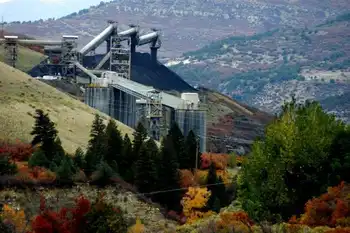
USA: 3 Ways Fossil Energy Ensures U.S. Energy Security

DOE Office of Fossil Energy safeguards energy security via the Strategic Petroleum Reserve, domestic critical minerals from coal byproducts, and carbon capture to curb CO2, strengthening resiliency amid shocks and supporting U.S. manufacturing and defense.


Key Points

A DOE program advancing energy security through SPR stewardship, critical minerals R&D, and carbon capture.

✅ Manages the Strategic Petroleum Reserve for emergency crude supply

✅ Develops domestic critical minerals from coal and mining byproducts

✅ Deploys carbon capture, utilization, and storage to cut CO2


The global economy has just experienced a period of unique transformation because of COVID-19. The fact that remains constant in this new economic landscape is that our society relies on energy; it’s an integral part of our day-to-day lives, even as U.S. energy use has evolved over time. According to the U.S. Energy Information Administration, approximately 80 percent of energy consumption in the United States comes from fossil fuels, so having access to a secure and reliable supply of those energy resources is more important than ever for national energy security considerations today. Below are three examples that highlight how our work at the U.S. Department of Energy’s Office of Fossil Energy (FE) helps ensure the Nation’s energy security and resiliency.

(1) Open crude oil reserves to respond to crises

FE has overall program responsibility for carrying out the mission of the Strategic Petroleum Reserve (SPR), the world’s largest supply of emergency crude oil. These federally-owned stocks are stored in massive underground salt caverns along the coastline of the Gulf of Mexico. The SPR is a powerful tool U.S. leaders use to respond to a wide range of crises, including energy crisis impacts on electricity and fuels, involving crude oil disruption or demand loss.  When the COVID-19 pandemic hit, the oil markets crashed and crude oil demand dropped drastically across the world. U.S. oil producers turned to the SPR to store their oil while broader energy dominance constraints were becoming evident in practice. This helped alleviate the pressure on producers to shut in oil production and proved to be a critical asset for American energy and national security.

(2) Use the Nation’s abundant coal reserves to produce valuable materials

Critical materials, including rare earth elements, are a group of chemical elements and materials with unique properties that support manufacturing of most modern technologies. They are essential components for critical defense and homeland security applications, green energy technologies, hybrid and electric vehicles, and high-value electronics. While these materials are not rare, they are hard to separate and expensive to extract. The United States relies heavily on imports from China. To reduce U.S. dependence on foreign sources, FE has a research and development program aimed at producing a domestic supply of critical materials from the Nation’s abundant coal resources and associated byproducts from legacy and current mining operations. Many of the technologies being developed can also be used to separate critical minerals from other mining materials and byproducts. Tapping into these resources has the potential to create new industries and revitalize coal communities and the workforce in coal-producing regions.

(3) Decrease carbon emissions for a cleaner energy future

FE is committed to balancing the Nation’s energy use with the need to protect the environment, and has a comprehensive portfolio of technological solutions that help keep carbon dioxide (CO2) emissions out of the atmosphere. For example, amid high natural gas prices that reinforce the case for clean electricity, the Department has been investing in carbon capture, utilization, and storage technologies for over a decade. These technologies capture CO2 emissions from various sources, including coal-fired power plants and manufacturing plants, before they enter the atmosphere. Several of these cutting-edge technologies have been deployed at major demonstration sites, supported by clean energy funding that aims to benefit millions. Three of these projects—Petra Nova, Archer Daniels Midland, and Air Products & Chemicals—have captured and injected over 10.8 million metric tons of CO2. The success of these projects is paving the way toward a cleaner and more sustainable American energy future.


Related News

View more

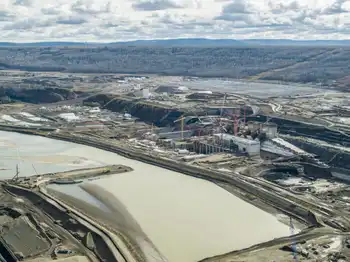
When did BC Hydro really know about Site C dam stability issues? Utilities watchdog wants to know

BC Utilities Commission Site C Dam Questions press BC Hydro on geotechnical risks, stability issues, cost overruns, oversight gaps, seeking transparency for ratepayers and clarity on contracts, mitigation, and the powerhouse and spillway foundations.


Key Points

Inquiry seeking explanations from BC Hydro on geotechnical risks, costs, timelines and oversight for Site C.

✅ Timeline of studies, monitoring, and mitigation actions

✅ Rationale for contracts, costs, and right bank construction

✅ Implications for ratepayers, oversight, and project stability


The watchdog B.C. Utilities Commission has sent BC Hydro 70 questions about the troubled Site C dam, asking when geotechnical risks were first identified and when the project’s assurance board was first made aware of potential issues related to the dam’s stability. 

“I think they’ve come to the conclusion — but they don’t say it — that there’s been a cover-up by BC Hydro and by the government of British Columbia,” former BC Hydro CEO Marc Eliesen told The Narwhal. 

On Oct. 21, The Narwhal reported that two top B.C. civil servants, including the senior bureaucrat who prepares Site C dam documents for cabinet, knew in May 2019 that the project faced serious geotechnical problems due to its “weak foundation” and the stability of the dam was “a significant risk.” 

Get The Narwhal in your inbox!
People always tell us they love our newsletter. Find out yourself with a weekly dose of our ad‑free, independent journalism

“They [the civil servants] would have reported to their ministers and to the government in general,” said Eliesen, who is among 18 prominent Canadians calling for a halt to Site C work until an independent team of experts can determine if the geotechnical problems can be resolved and at what cost.  

“It’s disingenuous for Premier [John] Horgan to try to suggest, ‘Well, I just found out about it recently.’ If that’s the case, he should fire the public servants who are representing the province.” 

The public only found out about significant issues with the Site C dam at the end of July, when BC Hydro released overdue reports saying the project faces unknown cost overruns, schedule delays and, even as it achieved a transmission line milestone earlier, such profound geotechnical troubles that its overall health is classified as ‘red,’ meaning it is in serious trouble. 

“The geotechnical challenges have been there all these years.”

The Site C dam is the largest publicly funded infrastructure project in B.C.’s history. If completed, it will flood 128 kilometres of the Peace River and its tributaries, forcing families from their homes and destroying Indigenous gravesites, hundreds of protected archeological sites, some of Canada’s best farmland and habitat for more than 100 species vulnerable to extinction.

Eliesen said geotechnical risks were a key reason BC Hydro’s board of directors rejected the project in the early 1990s, when he was at the helm of BC Hydro.

“The geotechnical challenges have been there all these years,” said Eliesen, who is also the former Chair and CEO of Ontario Hydro, where Ontario First Nations have urged intervention on a critical electricity line, the former Chair of Manitoba Hydro and the former Chair and CEO of the Manitoba Energy Authority.

Elsewhere, a Manitoba Hydro line to Minnesota has faced potential delays, highlighting broader grid planning challenges.

The B.C. Utilities Commission is an independent watchdog that makes sure ratepayers — including BC Hydro customers — receive safe and reliable energy services, as utilities adapt to climate change risks, “at fair rates.”

The commission’s questions to BC Hydro include 14 about the “foundational enhancements” BC Hydro now says are necessary to shore up the Site C dam, powerhouse and spillways. 

The commission is asking BC Hydro to provide a timeline and overview of all geotechnical engineering studies and monitoring activities for the powerhouse, spillway and dam core areas, and to explain what specific risk management and mitigation practices were put into effect once risks were identified.

The commission also wants to know why construction activities continued on the right bank of the Peace River, where the powerhouse would be located, “after geotechnical risks materialized.” 

It’s asking if geotechnical risks played a role in BC Hydro’s decision in March “to suspend or not resume work” on any components of the generating station and spillways.

The commission also wants BC Hydro to provide an itemized breakdown of a $690 million increase in the main civil works contract — held by Spain’s Acciona S.A. and the South Korean multinational conglomerate Samsung C&T Corp. — and to explain the rationale for awarding a no-bid contract to an unnamed First Nation and if other parties were made aware of that contract. 

Peace River Jewels of the Peace Site C The Narwhal
Islands in the Peace River, known as the ‘jewels of the Peace’ will be destroyed for fill for the Site C dam or will be submerged underwater by the dam’s reservoir, a loss that opponents are sharing with northerners in community discussions. Photo: Byron Dueck

B.C. Utilities Commission chair and CEO David Morton said it’s not the first time the commission has requested additional information after receiving BC Hydro’s quarterly progress reports on the Site C dam. 

“Our staff reads them to make sure they understand them and if there’s anything in then that’s not clear we go then we do go through this, we call it the IR — information request — process,” Morton said in an interview.

“There are things reported in here that we felt required a little more clarity, and we needed a little more understanding of them, so that’s why we asked the questions.”

The questions were sent to BC Hydro on Oct. 23, the day before the provincial election, but Morton said the commission is extraordinarily busy this year and that’s just a coincidence. 

“Our resources are fairly strained. It would have been nice if it could have been done faster, it would be nice if everything could be done faster.” 

“These questions are not politically motivated,” Morton said. “They’re not political questions. There’s no reason not to issue them when they’re ready.”

The commission has asked BC Hydro to respond by Nov. 19.

Read more: Top B.C. government officials knew Site C dam was in serious trouble over a year ago: FOI docs

Morton said the independent commission’s jurisdiction is limited because the B.C. government removed it from oversight of the project. 

The commission, which would normally determine if a large dam like the Site C project is in the public’s financial interest, first examined BC Hydro’s proposal to build the dam in the early 1980s.

After almost two years of hearings, including testimony under oath, the commission concluded B.C. did not need the electricity. It found the Site C dam would have negative social and environmental impacts and said geothermal power should be investigated to meet future energy needs. 

The project was revived in 2010 by the BC Liberal government, which touted energy from the Site C dam as a potential source of electricity for California and a way to supply B.C.’s future LNG industry with cheap power.

Not willing to countenance another rejection from the utilities commission, the government changed the law, stripping the commission of oversight for the project. The NDP government, which came to power in 2017, chose not to restore that oversight.

“The approval of the project was exempt from our oversight,” Morton said. “We can’t come along and say ‘there’s something we don’t like about what you’re doing, we’re going to stop construction.’ We’re not in that position and that’s not the focus of these questions.” 

But the commission still retains oversight for the cost of construction once the project is complete, Morton said. 

“The cost of construction has to be recovered in [hydro] rates. That means BC Hydro will need our approval to recover their construction cost in rates, and those are not insignificant amounts, more than $10.7 billion, in all likelihood.” 

In order to recover the cost from ratepayers, the commission needs to be satisfied BC Hydro didn’t spend more money than necessary on the project, Morton said. 

“As you can imagine, that’s not a straight forward review to do after the fact, after a 10-year construction project or whatever it ends up being … so we’re using these quarterly reports as an opportunity to try to stay on top of it and to flag any areas where we think there may be areas we need to look into in the future.”

The price tag for the Site C dam was $10.7 billion before BC Hydro’s announcement at the end of July — a leap from $6.6 billion when the project was first announced in 2010 and $8.8 billion when construction began in 2015. 

Eliesen said the utilities commission should have been asking tough questions about the Site C dam far earlier. 

“They’ve been remiss in their due diligence activities … They should have been quicker in raising questions with BC Hydro, rather than allowing BC Hydro to be exceptionally late in submitting their reports.” 

BC Hydro is late in filing another Site C quarterly report, covering the period from April 1 to June 30. 

The quarterly reports provide the B.C. public with rare glimpses of a project that international hydro expert Harvey Elwin described as being more secretive than any hydro project he has encountered in five decades working on large dams around the world, including in China.

Read more: Site C dam secrecy ‘extraordinary’, international hydro construction expert tells court proceeding

Morton said the commission could have ordered regular reporting for the Site C project if it had its previous oversight capability.

“Then we would have had the ability to follow up and ultimately order any delinquent reports to be filed. In this circumstance, they are being filed voluntarily. They can file it as late as they choose. We don’t have any jurisdiction.” 

In addition to the six dozen questions, the commission has also filed confidential questions with BC Hydro. Morton said confidential information could include things such as competitive bid information. “BC Hydro itself may be under a confidentiality agreement not to disclose it.” 

With oversight, the commission would also have been able to drill down into specific project elements,  Morton said. 

“We would have wanted to ensure that the construction followed what was approved. BC Hydro wouldn’t have the ability to make significant changes to the design and nature of the project as they went along.”

BC Hydro has been criticized for changing the design of the Site C dam to an L-shape, which Eliesen said “has never been done anywhere in the world for an earthen dam.” 

Morton said an empowered commission could have opted to hold a public hearing about the design change and engage its own technical consultants, as it did in 2017 when the new NDP government asked it to conduct a fast-tracked review of the project’s economics. 


Construction Site C Dam
A recent report by a U.S. energy economist found cancelling the Site C dam project would save BC Hydro customers an initial $116 million a year, with increasing savings growing over time. Photo: Garth Lenz / The Narwhal

The commission’s final report found the dam could cost more than $12 billion, that BC Hydro had a historical pattern of overestimating energy demand and that the same amount of energy could be produced by a suite of renewables, including wind and proposed pumped storage such as the Meaford project, for $8.8 billion or less. 

The NDP government, under pressure from construction trade unions, opted to continue the project, refusing to disclose key financial information related to its decision. 

When the geotechnical problems were revealed in July, the government announced the appointment of former deputy finance minister Peter Milburn as a special Site C project advisor who will work with BC Hydro and the Site C project assurance board to examine the project and provide the government with independent advice.

Eliesen said BC Hydro and the B.C. government should never have allowed the recent diversion of the Peace River to take place given the tremendous geotechnical challenges the project faces and its unknown cost and schedule for completion. 

“It’s a disgrace and scandalous,” he said. “You can halt the river diversion, but you’ve got another four or five years left in construction of the dam. What are you going to do about all the cement you’ve poured if you’ve got stability problems?”

He said it’s counter-productive to continue with advice “from the same people who have been wrong, wrong, wrong,” without calling in independent global experts to examine the geotechnical problems. 

“If you stop construction, whether it takes three or six months, that’s the time that’s required in order to give yourself a comfort level. But continuing to do what you’ve been doing is not the right course. You should have to sit back.”

Eliesen said it reminded him of the Pete Seeger song Waist Deep in the Big Muddy, which tells the story of a captain ordering his troops to keep slogging through a river because they will soon be on dry ground. After the captain drowns, the troops turn around.

“It’s a reflection of the fact that if you don’t look at what’s new, you just keep on doing what you’ve been doing in the past and that, unfortunately, is what’s happening here in this province with this project.”


Related News

View more

The crisis in numbers: How COVID-19 has reshaped Saskatchewan

Saskatchewan COVID-19 economic impact: real-time data shows drops in electricity demand, oil well licensing, traffic and tickets, plus spikes in internet usage, government site visits, remote work, and alcohol wholesale volumes.


Key Points

COVID-19 reduced energy use, drilling and traffic, while pushing activity online; jobs, rents and sales show strain.

✅ Electricity demand down 6.7%; residential usage up

✅ Oil well license applications fell 15-fold in April

✅ Internet traffic up 16%-46%; wireless LTE up 34%


We’re only just beginning to grasp how COVID-19 has upended Saskatchewan’s economy, its government and all of our lives.

The numbers that usually make headlines — job losses, economic contraction, bankruptcies — are still well behind the pace of the virus and its toll.

But other numbers change more quickly. Saskatchewan people are using less power, and the power industry is adopting on-site staffing plans to ensure reliability as conditions evolve. We’re racking up fewer speeding tickets. And as new restrictions come, we’re clicking onto Saskatchewan.ca as much as 10,000 times per minute.

Here’s some data that provides a first glimpse into how much our province has changed in just six weeks.

Electricity use tends to rise and fall in tandem with the health of the economy, and the most recent data from SaskPower suggests businesses are powering down, while regional utilities such as Manitoba Hydro seek unpaid days off to trim costs.

Peak load requirements between March 15 and April 26 were 220 MW lower than during the same period in 2019, and elsewhere BC Hydro is posting COVID-19 updates at Site C as it manages project impacts. That’s a decrease of 6.7 per cent, with total load on April 29 at 2,551 MW. A megawatt is enough electricity to power about 1,000 homes.

Separate from pandemic impacts, an external investigation at Manitoba Hydro has drawn attention to workplace conduct issues.

But it’s not homes that are turning off the lights. SaskPower spokesman Joel Cherry said commercial and industrial usage is down, while residential demand is up, with household electricity bills rising as more people stay home.

The timing of power demand has also shifted, a pattern seen as residential electricity use rises during work-from-home routines. Peak load would usually come around 8 or 9 p.m. in April. Now it’s coming earlier, typically between 5 and 6 p.m.

Oil well applications fall 15-fold
Oil prices have cratered since late February, and producers in Saskatchewan have reacted by pulling back on drilling plans, while neighbouring Alberta provides transition support for coal workers amid broader energy shifts.

Applications for well licences fell from 242 in January to 203 in February (including nine potash and one helium operations), before dropping to 84 in March. April, the month benchmark oil prices went negative for one day, producers submitted just 15 applications.

That’s 15 times fewer than the 231 applications the Ministry of Energy and Resources received in April 2019.

Well licences are needed for drilling, operating, injecting, producing or exploring an oil and gas or potash well in the province.

There has been no clear trend in well abandonment, however. There were 176 applications for abandonment in March and 155 in April, roughly in line with figures from the year before.

SGI spokesman Tyler McMurchy believes the lower numbers might stem from a combination of lower traffic volumes during part of the month, possibly combined with a shift in police priorities. The March 2020 numbers are also well below January and February figures.

Indeed, the Ministry of Highways and infrastructure reported a 16 per cent decrease in average daily traffic last month compared to March 2019, through its traffic counts at 11 different spots on highways across the province.

In Regina, traffic counts at 16 locations dropped from a high of 2.1 million in the first week of March to a low of 1.3 million during the week of March 22. That’s a 44 per cent decrease.

Counts have gradually recovered to 1.6 million in the weeks since. The data was fairly consistent at all 16 spots, which are largely major intersections, though the city cautioned they may not be representative of Regina as a whole.

Tickets for cellphone use while driving also fell, dropping from 562 in February to 314 in March. McMurchy noted that distracted driving numbers in general have been falling since November as stiffer penalties were announced. Impaired driving tickets were up, by contrast, but still within a typical range.

Internet traffic shoots up 16 per cent, far more for rural high speed
You may be spending a lot more time on Netflix and Facebook in the age of social distancing, and SaskTel has noticed.

From late February to late April, SaskTel has seen “very significant increases in provincial data traffic.” DSL and fibre optic networks have handled a 16 per cent increase in traffic, while demand on the wireless LTE network is up 34 per cent.

Usage on the Fusion network up 46 per cent. That network serves rural areas that don’t have access to other high-speed options.

The specific reference dates for comparison were February 24 and April 27.

“We attribute these changes in data usage to the pandemic and not expected seasonal or yearly shifts in usage patterns,” said spokesman Greg Jacobs.

Saskatchewan.ca was attracting just 70 page views per minute on average in February. But page views jumped over 10,000 per minute at 2:38 p.m. on March 18, as Moe was still announcing the new measures.

That’s a 14,000 per cent increase.

For all of March, visitor sessions on the site clocked in at 3,905,061, almost four times the 944,904 recorded for February.

Bureaucracy has increasingly migrated to cyberspace, with 62 per cent of civil servants now working from home. Government Skype calls, both audio and video, have tripled from 12,000 sessions per day to 35,000.Telephone conference calls increased by a factor of 14 from the first week of February to the second full week of April, with 25 times more weekly call participants. 

The Ministry of Central Services reported a 17 per cent jump in emails received by government over the past two months, excluding the Ministry of Health.

But as civil servants spend more time on their computers, the government’s fleet is spending a lot less time on the road. The ministry has purchased 40 per cent fewer litres of fuel for its vehicles over the past four weeks, compared to the same time last year.

Alcohol wholesale volumes up 22 per cent, then fall back to normal
Retailers bought more alcohol from the Saskatchewan Liquor and Gaming Authority (SLGA) last month, just as the government began tightening pandemic restrictions.

Wholesale sales volumes were up 22 per cent over March 15 to 28, compared to the same period in 2019. SLGA spokesman David Morris said the additional demand “was likely the result of retailers stocking-up as restrictions related to COVID-19 took effect.”

But the jump didn’t last. Wholesale volumes were back to normal for the first two weeks of April. SLGA did notice a very slight uptick last week, however, with volumes out of its distribution centre up three per cent. The numbers do not include Brewer’s Distributors Ltd.

It’s unclear how much more alcohol consumers actually purchased, since province-wide retail numbers were not available.

There was no discernible trend in March for anti-anxiety medication, however. The number of prescriptions filled for benzodiazepines like Valium, Xanax and Ativan see-sawed over March, according to data provided by the College of Physicians and Surgeons, but its associate registrar does not believe the trends are statistically relevant.

One-fifth of tenants miss April rent
About 20 per cent of residential rent went totally unpaid in the first six days of April, according to the Saskatchewan Landlord Association (SLA).

The precise number is 19.7 per cent, but there’s some uncertainty due to the survey method, which is based on responses from 300 residential landlords with 14,000 units. An additional 12 per cent of tenants paid a portion of their rent, but not the full amount. The figures do not include social housing.

Cameron Choquette, the association’s executive officer, partly blames the province’s decision to suspend most landlord tenant board hearings for evictions, saying it “allows more people to take advantage of landlords by not paying their rent and not facing any consequences.”

The government has defended the suspension by saying it’s needed to ensure everyone has a safe place to self-isolate if needed during the pandemic.

March’s jobs numbers were bad, with almost 21,000 fewer Saskatchewan people employed compared to February.

April’s labour force survey is expected on Friday. But new April numbers released Wednesday show that two-thirds of the province’s businesses managed to avoid laying off staff almost entirely.

According to Statistics Canada, 66.2 per cent of businesses reported laying off between zero and one per cent of their employees due to COVID-19. That was better than any other province. Just 7.6 per cent laid off all of their employees, again the best number outside the territories. The survey period was April 3 to 24.

Some businesses are even hiring. Walmart, for instance, has hired 300 people in Saskatchewan since mid-March.

Trade and Export Development Minister Jeremy Harrison chalked the data up to a relatively more optimistic business outlook in Saskatchewan, combined with “very targeted” restrictions and a support program for small and medium businesses.

That support program, which provides $5,000 grants to qualifying businesses affected by government restrictions, has only been around for three weeks. But it’s already been bombarded with 6,317 applications.

The total value of those applications would be $24,178,000, according to Harrison. Of them, 3,586 have been approved with a value of $11,755,000.

Businesses are coming to Harrison’s ministry with thousands of questions. Since it opened in March, the Business Response Team has received 4,125 calls and 1,758 emails.

The kinds of questions have changed over the course of the pandemic. Many are now asking when they can open their doors, according to Harrison, as they wonder about “grey areas” in the Re-Open Saskatchewan plan.


Related News

View more

Washington AG Leads Legal Challenge Against Trump’s Energy Emergency

Washington-Led Lawsuit Against Energy Emergency challenges President Trump's executive order, citing state rights, environmental reviews, permitting, and federal overreach; coalition argues record energy output undermines emergency claims in Seattle federal court.


Key Points

Multistate suit to void Trump's energy emergency, alleging federal overreach and weakened environmental safeguards.

? Challenges executive order's legal basis and scope

? Claims expedited permitting skirts environmental reviews

? Seeks to halt emergency permits for non-emergencies


In a significant legal move, Washington State Attorney General Nick Brown has spearheaded a coalition of 15 states in filing a lawsuit against President Donald Trump's executive order declaring a national energy emergency. The lawsuit, filed in federal court in Seattle on May 9, 2025, challenges the legality of the emergency declaration, which aims to expedite permitting processes for fossil fuel projects in pursuit of an energy dominance vision by bypassing key environmental reviews.

Background of the Energy Emergency Declaration

President Trump's executive order, issued on January 20, 2025, asserts that the United States faces an inadequate and unreliable energy grid, particularly affecting the Northeast and West Coast regions. The order directs federal agencies, including the Army Corps of Engineers and the Department of the Interior, to utilize "any lawful emergency authorities" to facilitate the development of domestic energy resources, with a focus on oil, gas, and coal projects. This includes expediting reviews under the Clean Water Act, Endangered Species Act, the National Environmental Policy Act, and the National Historic Preservation Act, potentially reducing public input and environmental oversight.

Legal Grounds for the Lawsuit

The coalition of states, led by Washington and California, argues that the emergency declaration is an overreach of presidential authority, echoing disputes over the Affordable Clean Energy rule in federal courts. They contend that U.S. energy production is already at record levels, and the declaration undermines state rights and environmental protections. The lawsuit seeks to have the executive order declared unlawful and to halt the issuance of emergency permits for non-emergency projects. 

Implications for Environmental Protections

Critics of the energy emergency declaration express concern that it could lead to significant environmental degradation. By expediting permitting processes, including geothermal permitting, and reducing public participation, the order may allow projects to proceed without adequate consideration of their impact on water quality, wildlife habitats, and cultural resources. Environmental advocates argue that such actions could set a dangerous precedent, enabling future administrations to bypass essential environmental safeguards under the guise of national emergencies, even as the EPA advances new pollution limits for coal and gas plants to address the climate crisis.

Political and Legal Reactions

The Trump administration defends the executive order, asserting that the president has the authority to declare national emergencies and that the energy emergency is necessary to address perceived deficiencies in the nation's energy infrastructure and potential electricity pricing changes debated by industry groups. However, legal experts suggest that the broad application of emergency powers in this context may face challenges in court. The outcome of the lawsuit could have significant implications for the balance of power between state and federal authorities, as well as the future of environmental regulations in the United States.

The legal challenge led by Washington State Attorney General Nick Brown represents a critical juncture in the ongoing debate over energy policy and environmental protection. As the lawsuit progresses through the courts, it will likely serve as a bellwether for future conflicts between state and federal governments regarding the scope of executive authority and the preservation of environmental standards, amid ongoing efforts to expand uranium and nuclear energy programs nationwide. The outcome may set a precedent for how national emergencies are declared and managed, particularly concerning their impact on state governance and environmental laws.


Related News

View more

New England's solar growth is creating tension over who pays for grid upgrades

New England Solar Interconnection Costs highlight distributed generation strains, transmission charges, distribution upgrades, and DAF fees as National Grid maps hosting capacity, driving queue delays and FERC disputes in Rhode Island and Massachusetts.


Key Points

Rising upfront grid upgrade and DAF charges for distributed solar in RI and MA, including some transmission costs.

✅ Upfront grid upgrades shifted to project developers

✅ DAF and transmission charges increase per MW costs

✅ Queue delays tied to hosting capacity and cluster studies


Solar developers in Rhode Island and Massachusetts say soaring charges to interconnect with the electric grid are threatening the viability of projects. 

As more large-scale solar projects line up for connections, developers are being charged upfront for the full cost of the infrastructure upgrades required, a long-common practice that they say is now becoming untenable amid debates over a new solar customer charge in Nova Scotia. 

“It is a huge issue that reflects an under-invested grid that is not ready for the volume of distributed generation that we’re seeing and that we need, particularly solar,” said Jeremy McDiarmid, vice president for policy and government affairs at the Northeast Clean Energy Council, a nonprofit business organization. 

Connecting solar and wind systems to the grid often requires upgrades to the distribution system to prevent problems, such as voltage fluctuations and reliability risks highlighted by Australian distributors in their networks. Costs can vary considerably from place to place, depending on the amount of distributed generation coming online and the level of capacity planning by regulators, said David Feldman, a senior financial analyst at the National Renewable Energy Laboratory.

“Certainly the Northeast often has more distribution challenges than much of the rest of the country just because it’s more populous and often the infrastructure is older,” he said. “But it’s not unique to the Northeast — in the Midwest, for example, there’s a significant amount of wind projects in the queues and significant delays.”

In Rhode Island and Massachusetts, where strong incentive programs are driving solar development, the level of solar coming online is “exposing the under-investment in the distribution system that is causing these massive costs that National Grid is assigning to particular projects or particular groups of projects,” McDiarmid said. “It is going to be a limiting factor for how much clean energy we can develop and bring online.”

Frank Epps, chief executive officer at Energy Development Partners, has been developing solar projects in Rhode Island since 2010. In that time, he said, interconnection charges on his projects have grown from about $80,000-$120,000 per megawatt to more than $400,000 per megawatt. He attributed the increase to a lack of investment in the distribution network by National Grid over the last decade.

He and other developers say the utility is now adding further to their costs by passing along not just the cost of improving the distribution system — the equivalent of the city street of the grid that brings power directly to customers — but also costs for modifying the transmission system — the interstate highway that moves bulk power over long distances to substations. 

Solar developers who are only requesting to hook into the distribution system, and not applying for transmission service, say they should not be charged for those additional upgrades under state interconnection rules unless they are properly authorized under the federal law that governs the transmission system. 

A Rhode Island solar and wind developer filed a complaint with the Federal Energy Regulatory Commission in February over transmission system improvement charges for its four proposed solar projects. Green Development said National Grid subsidiaries Narragansett Electric and New England Power Company want to charge the company more than $500,000 a year in operating and maintenance expenses assessed as so-called direct assignment facility charges. 

“This amount nearly doubles the interconnection costs associated with the projects,” which total 38.4 megawatts in North Smithfield, the company says in its complaint. “Crucially, these charges are linked to recovering costs associated with providing transmission service — even though no such transmission service is being provided to Green Development.”

But Ted Kresse, a spokesperson for National Grid, said the direct assignment facility, or DAF, construct has been in place for decades and has been applied to any customer affecting the need for transmission upgrades.

“It is the result of the high penetration and continued high volume of distributed generation interconnections that has recently prompted the need for transmission upgrades, and subsequently the pass-through of the associated DAF charges,” he said. 

Several complaints before the Rhode Island Public Utilities Commission object to these DAF and other transmission charges.

One petition for dispute resolution concerns four solar projects totaling 40 MW being developed by Energy Development Partners in a former gravel pit in North Kingstown. Brown University has agreed to purchase the power. 

The developer signed interconnection service agreements with Narragansett Electric in 2019 requiring payment of $21.6 million for costs associated with connecting the projects at a new Wickford Junction substation. Last summer, Narragansett sought to replace those agreements with new ones that reclassified a portion of the costs as transmission-level costs, through New England Power, National Grid’s transmission subsidiary.

That shift would result in additional operational and maintenance charges of $835,000 per year for the estimated 35-year life of the projects, the complaint says.

“This came as a complete shock to us,” Epps said. “We’re not just paying for the maintenance of a new substation. We are paying a share of the total cost that the system owner has to own and operate the transmission system. So all of the sudden, it makes it even tougher for distributed energy resources to be viable.”

In its response to the petition, National Grid argues that the charges are justified because the solar projects will require transmission-level upgrades at the new substation. The company argues that the developer should be responsible for the costs rather than ratepayers, “who are already supporting renewable energy development through their electric rates.”

Seth Handy, one of the lawyers representing Green Development in the FERC complaint, argues that putting transmission system costs on distribution assets is unfair because the distributed resources are “actually reducing the need to move electricity long distances. We’ve been fighting these fights a long time over the underestimating of the value of distributed energy in reducing system costs.”

Handy is also representing the Episcopal Diocese of Rhode Island before the state Supreme Court in its appeal of an April 2020 public utilities commission order upholding similar charges for a proposed 2.2-megawatt solar project at the diocese’s conference center and camp in Glocester. 

Todd Bianco, principal policy associate at the utilities commission, said neither he nor the chairperson can comment on the pending dockets contesting these charges. But he noted that some of these issues are under discussion in another docket examining National Grid’s standards for connecting distributed generation. Among the proposals being considered is the appointment of an independent ombudsperson to resolve interconnection disputes. 

Separately, legislation pending before the Rhode Island General Assembly would remove responsibility for administering the interconnection of renewable energy from utilities, and put it under the authority of the Rhode Island Infrastructure Bank, a financing agency.

Handy, who recently testified in support of the bill, said he believes National Grid has too many conflicting interests to administer interconnecting charges in a timely, transparent and fair fashion, and pointed to utility moves such as changes to solar compensation in other states as examples. In particular, he noted the company’s interests in expanding natural gas infrastructure. 

“There are all kinds of economic interests that they have that conflict with our state policy to provide lower-cost renewable energy and more secure energy solutions,” Handy said.

In testimony submitted to the House Committee on Corporations opposing the legislation, National Grid said such powers are well beyond the purpose and scope of the infrastructure bank. And it cited figures showing Rhode Island is third in the country for the most installed solar per square mile (behind New Jersey and Massachusetts).

Nadav Enbar, program manager at the Electric Power Research Institute, a nonprofit research organization for the utility industry, said interconnection delays and higher costs are becoming more common due to “the incredible uptake” in distributed renewable energy, particularly solar.

That’s impacting hosting capacity, the room available to connect all resources to a circuit without causing adverse harm to reliability and safety. 

“As hosting capacity is being reduced, it’s causing an increasing number of situations where utilities need to study their systems to guarantee interconnection without compromising their systems,” he said. “And that is the reason why you’re starting to see some delays, and it has translated into some greater costs because of the need for upgrades to infrastructure.”

The cost depends on the age or absence of infrastructure, projected load growth, the number of renewable energy projects in the queue, and other factors, he said. As utilities come under increasing pressure to meet state renewable goals, and as some states pilot incentives like a distributed energy rebate in Illinois to drive utility innovation, some (including National Grid) are beginning to provide hosting capacity maps that provide detailed information to developers and policymakers about the amount of distributed energy that can be accommodated at various locations on the grid, he said. 

In addition, the coming availability of high-tech “smart inverters” should help ease some of these problems because they provide the grid with more flexibility when it comes to connecting and communicating with distributed energy resources, Enbar said. 

In Massachusetts, the Department of Public Utilities has opened a docket to explore ways to better plan for and share the cost of upgrading distribution infrastructure to accommodate solar and other renewable energy sources as part of a grid overhaul for renewables nationwide. National Grid has been conducting “cluster studies” there that attempt to analyze the transmission impacts of a group of solar projects and the corresponding interconnection cost to each developer.

Kresse, of National Grid, said the company favors cost-sharing methodologies under consideration that would “provide a pathway to spread cost over the total enabled capacity from the upgrade, as opposed to spreading the cost over only those customers in the queue today.” 

Solar developers want regulators to take an even broader approach that factors in how the deployment of renewables and the resulting infrastructure upgrades benefit not just the interconnecting generator, but all customers. 

“Right now, if your project is the one that causes a multimillion-dollar upgrade, you are assigned that cost even though that upgrade is going to benefit a lot of other projects, as well as make the grid stronger,” said McDiarmid, of the clean energy council. “What we’re asking for is a way of allocating those costs among a variety of developers, as well as to the grid itself, meaning ratepayers. There’s a societal benefit to increasing the modernization of the grid, and improving the resilience of the grid.”

In the meantime, BlueHub Capital, a Boston-based solar developer focused on serving affordable housing developments, recently learned from National Grid that, as a part of one of the area studies, it will be required to pay $5.8 million in transmission and distribution upgrades to interconnect a 2-megawatt solar-plus-storage project that leverages cheaper batteries to enhance resilience, approved for a brownfield site in Gardner, Massachusetts. 

According to testimony submitted to the department, the sum is supposed to be paid within the next year, even though the project will have to wait to be interconnected until April 2027, when a new transmission line is completed. In addition, BlueHub will be responsible for DAF charges totaling $3.4 million over the 20-year life of the project. 

“We’re being asked to pay a fortune to provide solar that the state wants,” said DeWitt Jones, BlueHub’s president. “It’s so expensive that the upgrades are driving everyone out of the interconnection queue. The costs stay the same, but they fall on fewer projects. We need a process of grid design and modernization to guide this.”


Related News

View more

Niagara Falls Powerhouse Gets a Billion-Dollar Upgrade for the 21st Century

Sir Adam Beck I refurbishment boosts hydropower capacity in Niagara, upgrading turbines, generators, and controls for Ontario Power Generation. The billion-dollar project enhances grid reliability, clean energy output, and preserves heritage architecture.


Key Points

An OPG upgrade of the historic Niagara plant to replace equipment, add 150 MW, and extend clean power life.

✅ Adds at least 150 MW to Ontario's clean energy supply

✅ Replaces turbines, generators, transformers, and controls

✅ Creates hundreds of skilled construction and engineering jobs


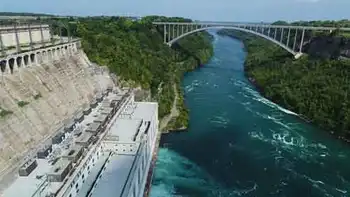
Ontario's iconic Sir Adam Beck hydroelectric generating station in Niagara is set to undergo a massive, billion-dollar refurbishment. The project will significantly boost the power station's capacity and extend its lifespan, with efforts similar to revitalizing older dams seen across North America, ensuring a reliable supply of clean energy for decades to come.


A Century of Power Generation

The Sir Adam Beck generating stations have played a pivotal role in Ontario's power grid for over a century. The first generating station, Sir Adam Beck I, went online in 1922, followed by Sir Adam Beck II in 1954. A third station, the Sir Adam Beck Pump Generating Station, was added in 1957, highlighting the role of pumped storage in Ontario for grid flexibility, Collectively, they form one of the largest hydroelectric complexes in the world, harnessing the power of the Niagara River.


Preparing for Increased Demand

The planned refurbishment of Sir Adam Beck I is part of Ontario Power Generation's broader strategy, which includes the life extension at Pickering NGS among other initiatives, to meet the growing energy demands of the province. With the population expanding and a shift towards electrification, Ontario will need to increase its power generation capacity while also focusing on sustainable and clean sources of energy.


Billions to Secure Sustainable Energy

The project to upgrade Sir Adam Beck I carries a hefty price tag of over a billion dollars but is considered a vital investment in Ontario's energy infrastructure, and recent OPG financial results underscore the utility's capacity to manage long-term capital plans. The refurbishment will see the replacement of aging turbines, generators, and transformers, and a significant upgrade to the station's control systems. Following the refurbishment, the output of Sir Adam Beck I is expected to increase by at least 150 megawatts – enough to power thousands of homes and businesses.


Creating Green Jobs

In addition to securing the province's energy future, the upgrade presents significant economic benefits to the Niagara region. The project will create hundreds of well-paying construction and engineering jobs, similar to employment from the continued operation of Pickering Station across Ontario, during the several years it will take to implement the upgrades.


Commitment to Hydropower

Ontario Power Generation (OPG) has long touted the benefits of hydropower as a reliable, renewable, and affordable source of energy, even as an analysis of rising grid emissions underscores the importance of clean generation to meet demand. The Sir Adam Beck complex is a shining example and represents a significant asset in the fight against climate change while providing reliable power to Ontario's businesses and residents.


Balancing Energy Needs with Heritage Preservation

The refurbishment will also carefully integrate modern design with the station's heritage elements, paralleling decisions such as the refurbishment of Pickering B that weigh system needs and public trust. Sir Adam Beck I is a designated historic site, and the project aims to preserve the station's architectural significance while enhancing its energy generation capabilities.


Related News

View more

Sign Up for Electricity Forum’s Newsletter

Stay informed with our FREE Newsletter — get the latest news, breakthrough technologies, and expert insights, delivered straight to your inbox.

Electricity Today T&D Magazine Subscribe for FREE

Stay informed with the latest T&D policies and technologies.
  • Timely insights from industry experts
  • Practical solutions T&D engineers
  • Free access to every issue

Download the 2025 Electrical Training Catalog

Explore 50+ live, expert-led electrical training courses –

  • Interactive
  • Flexible
  • CEU-cerified