Governors seek wind energy boost

By Associated Press


NFPA 70e Training

Our customized live online or in‑person group training can be delivered to your staff at your location.

  • Live Online
  • 6 hours Instructor-led
  • Group Training Available
Regular Price:
$199
Coupon Price:
$149
Reserve Your Seat Today
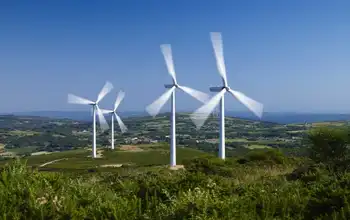
A coalition representing governors of 29 states is urging the federal government to take steps to boost wind energy, such as a renewable electricity standard requiring utilities to produce at least 10 percent of their energy from renewable sources by 2012.

The bipartisan Governors' Wind Energy Coalition plans to make the recommendations in a report to Congress and the White House. The Associated Press obtained a copy of the report ahead of its official release.

The report comes as Senate sponsors of a climate bill prepare to unveil their legislation.

"We offer our assistance in working with Congress and the administration to achieve one of the nation's principal energy goals, energy independence, and increasing the role that wind energy plays in meeting that challenge," wrote the coalition's chairman, Iowa Democratic Gov. Chet Culver, and its vice chairman, GOP Gov. Donald Carcieri of Rhode Island, in a letter to congressional leaders. A nearly identical letter was sent to President Barack Obama.

The governors said that although the House began to address increasing wind power's role in climate legislation it passed last year, they are anxious to see the Senate follow through.

White House spokesman Ben LaBolt said in an e-mail that Obama "is fully committed to supporting policies that promote the production of wind energy" and supports steps like a renewable electricity standard.

But he added: "The president believes that the most effective way to grow this sector is to establish incentives to drive private investment in clean energy by setting a price on carbon pollution, and he will continue to work with members of Congress and governors to pass comprehensive energy and climate legislation that achieves those goals."

Drew Hammill, a spokesman for House Speaker Nancy Pelosi, D-Calif., said that the House bill "includes many key provisions, including a renewable energy standard, that would boost renewable energy sources and create thousands of new jobs in this sector. The speaker looks forward to the Senate moving forward on comprehensive energy and climate legislation, so that a bill can be sent to the president this year."

The office of Senate Majority Leader Harry Reid, D-Nev., declined to comment.

The report, titled "Great Expectations," noted that some states have renewable electricity standards but others don't.

"These standards vary considerably from state to state, complicating compliance by the electric-power and renewable-energy industries," the report said.

Other recommendations by the group include:

• Developing new infrastructure for electricity transmission to provide access to renewable energy resources.

• Funding technology to develop wind energy in "wind-rich" coastal areas.

• Streamlining the permitting process for wind energy projects.

• Extending an economic stimulus grant program for wind projects, and providing a long-term extension of a wind energy production tax credit.

Related News

On the road to 100 per cent renewables

US Climate Alliance 100% Renewables 2035 accelerates clean energy, electrification, and decarbonization, replacing coal and gas with wind, solar, and storage to cut air pollution, lower energy bills, create jobs, and advance environmental justice.


Key Points

A state-level target for alliance members to meet all electricity demand with renewable energy by 2035.

✅ 100% RES can meet rising demand from electrification

✅ Major health gains from reduced SO2, NOx, and particulates

✅ Jobs grow, energy burdens fall, climate resilience improves


The Union of Concerned Scientists joined with COPAL (Minnesota), GreenRoots (Massachusetts), and the Michigan Environmental Justice Coalition, to better understand the feasibility and implications of leadership states meeting 100 percent of their electricity needs with renewable energy by 2035, a target reflected in federal clean electricity goals under discussion today.

We focused on 24 member states of the United States Climate Alliance, a bipartisan coalition of governors committed to the goals of the 2015 Paris Climate Agreement. We analyzed two main scenarios: business as usual versus 100 percent renewable electricity standards, in line with many state clean energy targets now in place.

Our analysis shows that:

Climate Alliance states can meet 100 percent of their electricity consumption with renewable energy by 2035, as independent assessments of zero-emissions feasibility suggest. This holds true even with strong increases in demand due to the electrification of transportation and heating.

A transition to renewables yields strong benefits in terms of health, climate, economies, and energy affordability.

To ensure an equitable transition, states should broaden access to clean energy technologies and decision making to include environmental justice and fossil fuel-dependent communitieswhile directly phasing out coal and gas plants.

Demands for climate action surround us. Every day brings news of devastating "this is not normal" extreme weather: record-breaking heat waves, precipitation, flooding, wildfires. To build resilience and mitigate the worst impacts of the climate crisis requires immediate action to reduce heat-trapping emissions and transition to renewable energy, including practical decarbonization strategies adopted by states.

On the Road to 100 Percent Renewables explores actions at one critical level: how leadership states can address climate change by reducing heat-trapping emissions in key sectors of the economy as well as by considering the impacts of our energy choices. A collaboration of the Union of Concerned Scientists and local environmental justice groups COPAL (Minnesota), GreenRoots (Massachusetts), and the Michigan Environmental Justice Coalition, with contributions from the national Initiative for Energy Justice, assessed the potential to accelerate the use of renewable energy dramatically through state-level renewable electricity standards (RESs), major drivers of clean energy in recent decades. In addition, the partners worked with Greenlink Analytics, an energy research organization, to assess how RESs most directly affect people's lives, such as changes in public health, jobs, and energy bills for households.

Focusing on 24 members of the United States Climate Alliance (USCA), the study assesses the implications of meeting 100 percent of electricity consumption in these states, including examples like Rhode Island's 100% by 2030 plan that inform policy design, with renewable energy in the near term. The alliance is a bipartisan coalition of governors committed to reducing heat-trapping emissions consistent with the goals of the 2015 Paris climate agreement.[1]

On the Road to 100 Percent Renewables looks at three types of results from a transition to 100 percent RES policies: improvements in public health from decreasing the use of coal and gas2 power plants; net job creation from switching to more labor-oriented clean energy; and reduced household energy bills from using cleaner sources of energy. The study assumes a strong push to electrify transportation and heating to address harmful emissions from the current use of fossil fuels in these sectors. Our core policy scenario does not focus on electricity generation itself, nor does it mandate retiring coal, gas, and nuclear power plants or assess new policies to drive renewable energy in non-USCA states.

Our analysis shows that:

USCA states can meet 100 percent of their electricity consumption with renewable energy by 2035 even with strong increases in demand due to electrifying transportation and heating.

A transition to renewables yields strong benefits in terms of health, climate, economies, and energy affordability.

Renewable electricity standards must be paired with policies that address not only electricity consumption but also electricity generation, including modern grid infrastructure upgrades that enable higher renewable shares, both to transition away from fossil fuels more quickly and to ensure an equitable transition in which all communities experience the benefits of a clean energy economy.

Currently, the states in this analysis meet their electricity needs with differing mixes of electricity sourcesfossil fuels, nuclear, and renewables. Yet across the states, the study shows significant declines in fossil fuel use from transitioning to clean electricity; the use of solar and wind powerthe dominant renewablesgrows substantially:

In the study's "No New Policy" scenario"business as usual"coal and gas generation stay largely at current levels over the next two decades. Electricity generation from wind and solar grows due to both current policies and lowest costs.

In a "100% RES" scenario, each USCA state puts in place a 100 percent renewable electricity standard. Gas generation falls, although some continues for export to non-USCA states. Coal generation essentially disappears by 2040. Wind and solar generation combined grow to seven times current levels, and three times as much as in the No New Policy scenario.

A focus on meeting in-state electricity consumption in the 100% RES scenario yields important outcomes. Reductions in electricity from coal and gas plants in the USCA states reduce power plant pollution, including emissions of sulfur dioxide and nitrogen oxides. By 2040, this leads to 6,000 to 13,000 fewer premature deaths than in the No New Policy scenario, as well as 140,000 fewer cases of asthma exacerbation and 700,000 fewer lost workdays. The value of the additional public health benefits in the USCA states totals almost $280 billion over the two decades. In a more detailed analysis of three USCA statesMassachusetts, Michigan, and Minnesotathe 100% RES scenario leads to almost 200,000 more added jobs in building and installing new electric generation capacity than the No New Policy scenario.

The 100% RES scenario also reduces average energy burdens, the portion of household income spent on energy. Even considering household costs solely for electricity and gas, energy burdens in the 100% RES scenario are at or below those in the No New Policy scenario in each USCA state in most or all years. The average energy burden across those states declines from 3.7 percent of income in 2020 to 3.0 percent in 2040 in the 100% RES scenario, compared with 3.3 percent in 2040 in the No New Policy scenario.

Decreasing the use of fossil fuels through increasing the use of renewables and accelerating electrification reduces emissions of carbon dioxide (CO2), with implications for climate, public health, and economies. Annual CO2 emissions from power plants in USCA states decrease 58 percent from 2020 to 2040 in the 100% RES scenario compared with 12 percent in the No New Policy scenario.

The study also reveals gaps to be filled beyond eliminating fossil fuel pollution from communities, such as the persistence of gas generation to sell power to neighboring states, reflecting barriers to a fully renewable grid that policy must address. Further, it stresses the importance of policies targeting just and equitable outcomes in the move to renewable energy.

Moving away from fossil fuels in communities most affected by harmful air pollution should be a top priority in comprehensive energy policies. Many communities continue to bear far too large a share of the negative impacts from decades of siting the infrastructure for the nation's fossil fuel power sector in or near marginalized neighborhoods. This pattern will likely persist if the issue is not acknowledged and addressed. State policies should mandate a priority on reducing emissions in communities overburdened by pollution and avoiding investments inconsistent with the need to remove heat-trapping emissions and air pollution at an accelerated rate. And communities must be centrally involved in decisionmaking around any policies and rules that affect them directly, including proposals to change electricity generation, both to retire fossil fuel plants and to build the renewable energy infrastructure.

Key recommendations in On the Road to 100 Percent Renewables address moving away from fossil fuels, increasing investment in renewable energy, and reducing CO2 emissions. They aim to ensure that communities most affected by a history of environmental racism and pollution share in the benefits of the transition: cleaner air, equitable access to good-paying jobs and entrepreneurship alternatives, affordable energy, and the resilience that renewable energy, electrification, energy efficiency, and energy storage can provide. While many communities can benefit from the transition, strong justice and equity policies will avoid perpetuating inequities in the electricity system. State support to historically underserved communities for investing in solar, energy efficiency, energy storage, and electrification will encourage local investment, community wealth-building, and the resilience benefits the transition to renewable energy can provide.

A national clean electricity standard and strong pollution standards should complement state action to drive swift decarbonization and pollution reduction across the United States. Even so, states are well positioned to simultaneously address climate change and decades of inequities in the power system. While it does not substitute for much-needed national and international leadership, strong state action is crucial to achieving an equitable clean energy future.


Related News

View more

Wind and solar make more electricity than nuclear for first time in UK

UK Renewables Surpass Nuclear Milestone as wind farms and solar panels outpace atomic output, cutting greenhouse gas emissions. BEIS data show low-carbon power generation rising while onshore wind subsidies and auction timelines face policy debate.


Key Points

It is the quarter when UK wind and solar generated more electricity than nuclear, signaling cleaner, low-carbon growth.

✅ BEIS reports wind and solar at 18.33 TWh vs nuclear 16.69 TWh

✅ Energy sector emissions fell 8% as coal use dropped

✅ Calls grow to reopen onshore wind support via CFD auctions


Wind farms and solar panels, with wind leading the power mix during key periods, produced more electricity than the UK’s eight nuclear power stations for the first time at the end of last year, official figures show.

Britain’s greenhouse gas emissions also continued to fall, dropping 3% in 2017, as coal use fell and the use of renewables climbed, though low-carbon generation stalled in 2019 according to later data.

Energy experienced the biggest drop in emissions of any UK sector, of 8%, while pollution from transport and businesses stayed flat.

Energy industry chiefs said the figures showed that the government should rethink its ban on onshore wind subsidies, a move that ministers have hinted could happen soon.

Lawrence Slade, chief executive of the big six lobby group Energy UK, said: “We need to keep up the pace ... by ensuring that the lowest cost renewables are no longer excluded from the market.”

Across the whole year, low-carbon sources of power – wind, solar, biomass and nuclear – provided a record 50.4% of electricity, up from 45.7% in 2016, when wind beat coal for the first time.

But in the fourth quarter of 2017, high wind speeds, new renewables installations and lower nuclear output saw wind and solar becoming the second biggest source of power for the first time.

Wind and solar generated 18.33 terawatt hours (TWh), with nuclear on 16.69TWh, and the UK later set a new record for wind power during 2019, the figures published by the Department for Business, Energy and Industrial Strategy show.

But renewables still have a long way to go to catch up with gas, the UK’s top source of electricity at 36.12TWh, which saw its share of generation fall slightly, though at times wind became the main source as capacity expanded.

Greenpeace said the figures showed the government should capitalise on its lead in renewables and “stop wasting time and money propping up nuclear power”.

Horizon Nuclear Power, a subsidiary of the Japanese conglomerate Hitachi, is in talks with Whitehall officials for a financial support package from the government, which it says it needs by midsummer.

By contrast, large-scale solar and onshore wind projects are not eligible for support, after the Conservative government cut subsidies in 2015.

However the energy minister, Claire Perry, recently told House Magazine that “we will have another auction that brings forward wind and solar, we just haven’t yet said when”.


Related News

View more

Nuclear Innovation Needed for American Energy, Environmental Future

Advanced Nuclear Technology drives decarbonization through innovation, SMRs, and a stable grid, bolstering U.S. leadership, energy security, and clean power exports under supportive regulation and policy to meet climate goals cost-effectively.


Key Points

Advanced nuclear technology uses SMRs to deliver low-carbon, reliable power and strengthen energy security.

✅ Accelerates decarbonization with firm, low-carbon baseload power

✅ Enhances grid reliability via SMRs and advanced fuel cycles

✅ Supports U.S. leadership through exports, R&D, and modern regulation


The most cost-effective way--indeed the only reasonable way-- to reduce greenhouse gas emissions and foster our national economic and security interests is through innovation, especially next-gen nuclear power innovation. That's from Rep. Greg Walden, R-Oregon, ranking Republican member of the House Energy and Commerce Committee, speaking to a Subcommittee on Energy hearing titled, "Building a 100 Percent Clean Economy: Advanced Nuclear Technology's Role in a Decarbonized Future."

Here are the balance of his remarks.

Encouraging the deployment of atomic energy technology, strengthening our nuclear industrial base, implementing policies that helps reassert U.S. nuclear leadership globally... all provide a promising path to meet both our environmental and energy security priorities. In fact, it's the only way to meet these priorities.

So today can help us focus on what is possible and what is necessary to build on recent policies we've enacted to ensure we have the right regulatory landscape, the right policies to strengthen our domestic civil industry, and the advanced nuclear reactors on the horizon.

U.S. global leadership here is sorely needed. Exporting clean power and clean power technologies will do more to drive down global Co2 emissions on the path to net-zero emissions worldwide than arbitrary caps that countries fail to meet.

In May last year, the International Energy Agency released an informative report on the role of nuclear power in clean energy systems; it did not find current trends encouraging.

The report noted that nuclear and hydropower "form the backbone of low-carbon electricity generation," responsible for three-quarters of global low-carbon generation and the reduction of over 60 gigatons of carbon dioxide emissions over the past 50 years.

Yet IEA found in advanced economies, nuclear power is in decline, with closing plants and little new investment, "just when the world requires more low-carbon electricity."

There are various reasons for this, some relating to cost overruns and delays, others to policies that fail to value the "low-carbon and energy security attributes" of nuclear. In any case, the report found this failure to encourage nuclear will undermine global efforts to develop cleaner electricity systems.

Germany demonstrates the problem. As it chose to shut down its nuclear industry, it has doubled down on expanding renewables like solar and wind. Ironically, to make this work, it also doubled down on coal. This nuclear phase out has cost Germany $12 billion a year, 70% of which is from increased mortality risk from stronger air pollutants (this according to the National Bureau of Economic Research). If other less technologically advanced nations even could match the rate of renewables growth reached by Germany, they would only hit about a fifth of what is necessary to reach climate goals--and with more expensive energy. So, would they then be forced to bring online even more coal-fired sources than Germany?

On the other hand, as outlined by the authors of the pro-nuclear book "A Bright Future," France and Sweden have both demonstrated in the 1970s and 1980s, how to do it. They showed that the build out of nuclear can be done at five times the rate of Germany's experience with renewables, with increased electricity production and relatively lower prices.

I think the answer is obvious about the importance of nuclear. The question will be "can the United States take the lead going forward?"

We can help to do this in Congress if we fully acknowledge what U.S. leadership on nuclear will mean--both for cleaner power and industrial systems beyond electricity, here and abroad--and for the ever-important national security attributes of a strong U.S. industry.

Witnesses have noted in recent hearings that recognizing how U.S. energy and climate policy effects energy and energy technology relationships world-wide is critical to addressing emissions where they are growing the fastest and for strengthening our national security relationships.

Resurrecting technological leadership in nuclear technology around the world will meet our broader national and energy security reasons--much as unleashing U.S. LNG from our shale revolution restored our ability to counter Russia in energy markets, while also driving cleaner technology. Our nuclear energy exports boost our national security priorities.

We on Energy and Commerce have been working, in a bipartisan manner over the past few Congresses to enhance U.S. nuclear policies. There is most certainly more to do. And I think today's hearing will help us explore what can be done, both administratively and legislatively, to pave the way for advanced nuclear energy.

Let me welcome the panel today. Which, I'm pleased to see, represents several important perspectives, including industry, regulatory, safety, and international expertise, to two innovative companies--Terrapower and my home state of Oregon's NuScale. All of these witnesses can speak to what we need to do to build, operate and lead with these new technologies.

We should work to get our nation's nuclear policy in order, learning from global frameworks like the green industrial revolution abroad. Today represents a good step in that effort.


Related News

View more

UK homes can become virtual power plants to avoid outages

Demand Flexibility Service rewards households and businesses for shifting peak-time electricity use, enhancing grid balancing, energy security, and net zero goals with ESO and Ofgem support, virtual power plants, and 2GW capacity this winter.


Key Points

A grid program paying homes and businesses to shift peak demand, boosting energy security and lowering winter costs.

✅ Pays £3,000/MWh for reduced peak-time usage

✅ Targets at least 2GW via virtual power plants

✅ Rolled out by suppliers with Ofgem and ESO


This month we published our analysis of the British electricity system this winter. Our message is clear: in the base case our analysis indicates that supply margins are expected to be adequate, however this winter will undoubtedly be challenging, with high winter energy costs adding pressure. Therefore, all of us in the electricity system operator (ESO) are working round the clock to manage the system, ensure the flow of energy and do our bit to keep costs down for consumers.

One of the tools we have developed is the demand flexibility service, designed to complement efforts to end the link between gas and electricity prices and reduce bills. From November, this new capability will reward homes and businesses for shifting their electricity consumption at peak times. And we are working with the government, businesses and energy providers to encourage as high a level of take-up as possible. We are confident this innovative approach can provide at least 2 gigawatts of power – about a million homes’ worth.

What began as an initiative to help achieve net zero and keep costs down is also proving to be an important tool in ensuring Britain’s energy security, alongside the Energy Security Bill progressing into law.

We are particularly keen to get businesses involved right across Britain. When the Guardian first reported on this service we had calls from businesses ranging from multinationals to an owner of a fish and chip shop asking how they could do their bit and get signed up.

We can now confirm our proposals for how much people and businesses can be paid for shifting their electricity use outside peak times. We anticipate paying a rate of £3,000 per megawatt hour, reflecting the dynamics of UK natural gas and electricity markets today. Businesses and homes can become virtual power plants and, crucially, get paid like one too. For a consumer that could mean a typical household could save approximately £100, and industrial and commercial businesses with larger energy usage could save multiples of this.

We are working with Ofgem to get this scheme launched in November and for it to be rolled out through energy suppliers. If you are interested in participating, or understanding what you could get paid, please contact your energy supplier.

Innovations such as these have never mattered more. Vladimir Putin’s unlawful aggression means we are facing unprecedented energy market volatility, across the continent where Europe’s worst energy nightmare is becoming reality, and pressures on energy supplies this winter.

As a result of Russia’s war in Ukraine, European gas is scarce and prices are high, prompting Europe to weigh emergency measures to limit electricity prices amid the crisis. Alongside this, France’s nuclear fleet has experienced a higher number of outages than expected. Energy shortages in Europe could have knock-on implications for energy supply in Britain.

We have put in place additional contingency arrangements for this winter. For example, the ability to call on generators to fire-up emergency coal units, even as the crisis is a wake-up call to ditch fossil fuels for many, giving Britain 2GW of additional capacity.

We need to be clear, it is possible that without these measures supply could be interrupted for some customers for limited periods of time. This could eventually force us to initiate a temporary rota of planned electricity outages, meaning that some customers could be without power for up to three hours at a time through a process called the electricity supply emergency code (ESEC).

Under the ESEC process we would advise the public the day before any disconnections. We are working with government and industry on planning for this so that the message can be spread across all communities as quickly and accurately as possible. This would include press conferences, social media campaigns, and working with influencers in different communities.


Related News

View more

Three Mile Island at center of energy debate: Let struggling nuclear plants close or save them

Three Mile Island Nuclear Debate spotlights subsidies, carbon pricing, wholesale power markets, grid reliability, and zero-emissions goals as Pennsylvania weighs keeping Exelon's reactor open amid natural gas competition and flat electricity demand.


Key Points

Debate over subsidies, carbon pricing, and grid reliability shaping Three Mile Island's zero-emissions future.

✅ Zero emissions credits vs market integrity

✅ Carbon pricing to value clean baseload power

✅ Closure risks jobs, tax revenue, and reliability


Three Mile Island is at the center of a new conversation about the future of nuclear energy in the United States nearly 40 years after a partial meltdown at the Central Pennsylvania plant sparked a national debate about the safety of nuclear power.

The site is slated to close in just two years, a closure plan Exelon has signaled, unless Pennsylvania or a regional power transmission operator delivers some form of financial relief, says Exelon, the Chicago-based power company that operates the plant.

That has drawn the Keystone State into a growing debate: whether to let struggling nuclear plants shut down if they cannot compete in the regional wholesale markets where energy is bought and sold, or adopt measures to keep them in the business of generating power without greenhouse gas emissions.

""The old compromise — that in order to have a reliable, affordable electric system you had to deal with a significant amount of air pollution — is a compromise our new customers today don't want to hear about.""
-Joseph Dominguez, Exelon executive vice president
Nuclear power plants produce about two-thirds of the country's zero-emissions electricity, a role many view as essential to net-zero emissions goals for the grid.

The debate is playing out as some regions consider putting a price on planet-warming carbon emissions produced by some power generators, which would raise their costs and make nuclear plants like Three Mile Island more viable, and developments such as Europe's nuclear losses highlight broader energy security concerns.

States that allow nuclear facilities to close need to think carefully because once a reactor is powered down, there's no turning back, said Jake Smeltz, chief of staff for Pennsylvania State Sen. Ryan Aument, who chairs the state's Nuclear Energy Caucus.

"If we wave goodbye to a nuclear station, it's a permanent goodbye because we don't mothball them. We decommission them," he told CNBC.

Three Mile Island's closure would eliminate more than 800 megawatts of electricity output. That's roughly 10 percent of Pennsylvania's zero-emissions energy generation, by Exelon's calculation. Replacing that with fossil fuel-fired power would be like putting roughly 10 million cars on the road, it estimates.

A closure would also shed about 650 well-paying jobs, putting the just transition challenge in focus for local workers and communities, tied to about $60 million in wages per year. Dauphin County and Londonderry Township, a rural area on the Susquehanna River where the plant is based, stand to lose $1 million in annual tax revenue that funds schools and municipalities. The 1,000 to 1,500 workers who pack local hotels, stores and restaurants every two years for plant maintenance would stop visiting.

Pennsylvanians and lawmakers must now decide whether these considerations warrant throwing Exelon a lifeline. It's a tough sell in the nation's second-largest natural gas-producing state, which already generates more energy than it uses. And time is running out to reach a short-term solution.

"What's meaningful to us is something where we could see the results before we turn in the keys, and we turn in the keys the third quarter of '19," said Joseph Dominguez, Exelon's executive vice president for governmental and regulatory affairs and public policy.

The end of the nuclear age?

The problem for Three Mile Island is the same one facing many of the nation's 60 nuclear plants: They are too expensive to operate.

Financial pressure on these facilities is mounting as power demand remains stagnant due to improved energy efficiency, prices remain low for natural gas-fired generation and costs continue to fall for wind and solar power.

Three Mile Island is something of a special case: The 1979 incident left only one of its two reactors operational, but it still employs about as many people as a plant with two reactors, making it less efficient. In the last three regional auctions, when power generators lock in buyers for their future energy generation, no one bought power from Three Mile Island.

But even dual-reactor plants are facing existential threats. FirstEnergy Corp's Beaver Valley will sell or close its nuclear plant near the Pennsylvania-Ohio border next year as it exits the competitive power-generation business, and facilities like Ohio's Davis-Besse illustrate what's at stake for the region.

Five nuclear power plants have shuttered across the country since 2013. Another six have plans to shut down, and four of those would close well ahead of schedule. An analysis by energy research firm Bloomberg New Energy Finance found that more than half the nation's nuclear plants are facing some form of financial stress.

Today's regional energy markets, engineered to produce energy at the lowest cost to consumers, do not take into account that nuclear power generates so much zero-emission electricity. But Dominguez, the Exelon vice president, said that's out of step with a world increasingly concerned about climate change.

"What we see is increasingly our customers are interested in getting electricity from zero air pollution sources," Dominguez said. "The old compromise — that in order to have a reliable, affordable electric system you had to deal with a significant amount of air pollution — is a compromise our new customers today don't want to hear about."

Strange bedfellows

Faced with the prospect of nuclear plant closures, Chicago and New York have both allowed nuclear reactors to qualify for subsidies called zero emissions credits. Exelon lobbied for the credits, which will benefit some of its nuclear plants in those states.

Even though the plants produce nuclear waste, some environmental groups like the Natural Resources Defense Council supported these plans. That's because they were part of broader packages that promote wind and solar power, and the credits for nuclear are not open-ended. They essentially provide a bridge that keeps zero-emissions power from nuclear reactors on the grid as renewable energy becomes more viable.

Lawmakers in Pennsylvania, Ohio and Connecticut are currently exploring similar options. Jake Smeltz, chief of staff to state Sen. Aument, said legislation could surface in Pennsylvania as soon as this fall. The challenge is to get people to consider the attributes of the sources of their electricity beyond just cost, according to Smeltz.

"Are the plants worth essentially saving? That's a social choice. Do they provide us with something that has benefits beyond the electrons they make? That's the debate that's been happening in other states, and those states say yes," he said.

Subsidies face opposition from anti-nuclear energy groups like Three Mile Island Alert, as well as natural gas trade groups and power producers who compete against Exelon by operating coal and natural gas plants.

"Where we disagree is to have an out-of-market subsidy for one specific company, for a technology that is now proven and mature in our view, at the expense of consumers and the integrity of competitive markets," NRG Energy Mauricio Gutierrez told analysts during a conference call this month.

Smeltz notes that power producers like NRG would fill in the void left by nuclear plants as they continue to shut down.

"The question that I think folks need to answer is are these programs a bailout or is the opposition to the program a payout? Because at the end of the day someone is going to make money. The question is who and how much?" Smeltz said.

Changing the market

Another critic is PJM Interconnection, the regional transmission organization that operates the grid for 13 states, including Pennsylvania, and Washington, D.C.

The subsidies distort price formation and inject uncertainty into the markets, says Stu Bresler, senior vice president in charge of operations and markets at PJM.

The danger PJM sees is that each new subsidy creates a precedent for government intervention. The uncertainty makes it harder for investors to determine what sort of power generation is a sound investment in the region, Bresler explained. Those investors could simply decide to put their capital to work in other energy markets where the regulatory outlook is more stable, ultimately leading to underinvestment in places where government intervenes, he added.

Three Mile Island nuclear power plant, Londonderry Township, Pennsylvania
PJM believes longer-term, regional approaches are more appropriate. It has produced research that outlines how coal plants and nuclear energy, which provide the type of stable energy that is still necessary for reliable power supply, could play a larger role in setting prices. It is also preparing to release a report on how to put a price on carbon emissions in all or parts of the regional grid.

"If carbon emissions are the concern and that is the public policy issue with which policymakers are concerned, the simple be-all answer from a market perspective is putting a price on carbon," Bresler said.

Three Mile Island could be viable if natural gas prices rose from below $3 per million British thermal units to about $5 per mmBtu and if a "reasonable" price were applied to carbon, according to Exelon's Dominguez. He is encouraged by the fact that conversations around new pricing models and carbon pricing are gaining traction.

"The great part about this is everybody understands we have a major problem. We're losing some of the lowest-cost, cleanest and most reliable resources in America," Dominguez said.


Related News

View more

Heatwave Sparks Unprecedented Electricity Demand Across Eastern U.S

Eastern U.S. Heatwave Electricity Demand surges to record peak load, straining the power grid, lifting wholesale prices, and prompting demand response, conservation measures, and load shedding to protect grid reliability during extreme temperatures.


Key Points

It is the record peak load from extreme heat, straining grids, lifting wholesale prices, and prompting demand response.

✅ Peak electricity use stresses regional power grid.

✅ Prices surge; conservation and demand response urged.

✅ Utilities monitor load, avoid outages via load shedding.


As temperatures soar to unprecedented highs across the Eastern United States, a blistering heatwave has triggered record-breaking electricity demand. This article delves into the causes behind the surge in energy consumption, its impact on the power grid, and measures taken to manage the strain during this extraordinary weather event.

Intensifying Heatwave Conditions

The Eastern U.S. is currently experiencing one of its hottest summers on record, with temperatures climbing well above seasonal norms. This prolonged heatwave has prompted millions of residents to rely heavily on air conditioning and cooling systems to escape the sweltering heat, with electricity struggles worsening in several communities, driving up electricity usage to peak levels.

Strain on Power Grid Infrastructure

The surge in electricity demand during the heatwave has placed significant strain on the region's power grid infrastructure, with supply-chain constraints complicating maintenance and equipment availability during peak periods.

Record-breaking Energy Consumption

The combination of high temperatures and increased cooling demands has led to record-breaking energy consumption levels across the Eastern U.S. States like New York, Pennsylvania, and Maryland have reported peak electricity demand exceeding previous summer highs, with blackout risks drawing heightened attention from operators, highlighting the extraordinary nature of this heatwave event.

Impact on Energy Costs and Supply

The spike in electricity demand during the heatwave has also affected energy costs and supply dynamics. Wholesale electricity prices have surged in response to heightened demand, contributing to sky-high energy bills for many households, reflecting the market's response to supply constraints and increased operational costs for power generators and distributors.

Management Strategies and Response

Utility companies and grid operators have implemented various strategies to manage electricity demand and maintain grid reliability during the heatwave. These include voluntary conservation requests, load-shedding measures, and real-time monitoring of grid conditions to prevent power outages while avoiding potential blackouts or disruptions.

Community Outreach and Public Awareness

Amidst the heatwave, community outreach efforts play a crucial role in raising public awareness about energy conservation and safety measures. Residents are encouraged to conserve energy during peak hours, adjust thermostat settings, and utilize energy-efficient appliances to alleviate strain on the power grid and reduce overall energy costs.

Climate Change and Resilience

The intensity and frequency of heatwaves are exacerbated by climate change, underscoring the importance of building resilience in energy infrastructure and adopting sustainable practices. Investing in renewable energy sources, improving energy efficiency and demand response programs that can reduce peak demand, and implementing climate adaptation strategies are essential steps towards mitigating the impacts of extreme weather events like heatwaves.

Looking Ahead

As the Eastern U.S. navigates through this heatwave, stakeholders are focused on implementing lessons learned from California's grid response to enhance preparedness and resilience for future climate-related challenges. Collaborative efforts between government agencies, utility providers, and communities will be crucial in developing comprehensive strategies to manage energy demand, promote sustainability, and safeguard public health and well-being during extreme weather events.

Conclusion

The current heatwave in the Eastern United States has underscored the critical importance of reliable and resilient energy infrastructure in meeting the challenges posed by extreme weather conditions. By prioritizing energy efficiency, adopting sustainable energy practices, and fostering community resilience, stakeholders can work together to mitigate the impacts of heatwaves and ensure a sustainable energy future for generations to come.


Related News

View more

Sign Up for Electricity Forum’s Newsletter

Stay informed with our FREE Newsletter — get the latest news, breakthrough technologies, and expert insights, delivered straight to your inbox.

Electricity Today T&D Magazine Subscribe for FREE

Stay informed with the latest T&D policies and technologies.
  • Timely insights from industry experts
  • Practical solutions T&D engineers
  • Free access to every issue

Live Online & In-person Group Training

Advantages To Instructor-Led Training – Instructor-Led Course, Customized Training, Multiple Locations, Economical, CEU Credits, Course Discounts.

Request For Quotation

Whether you would prefer Live Online or In-Person instruction, our electrical training courses can be tailored to meet your company's specific requirements and delivered to your employees in one location or at various locations.