NFPA 70E Training - 2027 Edition - Arc Flash Safety Compliance
Our customized live online or in‑person group training can be delivered to your staff at your location.

- Live Online
- 6 hours Instructor-led
- Group Training Available
Regular Price:
$199
Coupon Price:
$149
ATLANTA
—
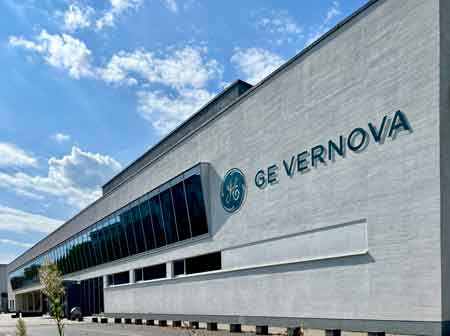
GridOS for Transmission headlines GE Vernova's Orchestrate 2026, unifying near real-time transmission operations as the company releases AI whitepapers on grid planning and autonomous grid-edge operations to boost resilience, forecasting, and control.
Inside the Issue
-
Unified platform coordinates near real-time transmission operations
-
Two AI whitepapers address planning and autonomous grid-edge
-
Integrates AEMS, DDLR, WAMS to cut decision latency
GE Vernova introduced GridOS for Transmission at its Orchestrate 2026 conference, positioning it as a unified grid software platform to coordinate near-real-time transmission operations and decision-making. The launch pairs with two new AI whitepapers that explore how utilities can scale intelligence across long-range planning and autonomous grid-edge operations.
Designed as a single operating environment for the transmission network, GridOS for Transmission integrates capacity awareness, forecasting, and system stability analysis into live operations. The objective is to shorten control room cycles, improve utilization of existing transmission capacity, and speed response to fast-changing conditions while maintaining stability margins.
The solution integrates intelligence from core transmission applications including AEMS (Advanced Energy Management System), DDLR (Digital Dynamic Line Rating), and WAMS (Wide-Area Monitoring System), alongside forecasting tools, DER management, Visual Intelligence, and asset behavior data. By concentrating these signals in one context-rich workspace, the platform aims to reduce decision latency, operate closer to actual system limits, identify emerging stability risks earlier, and strengthen performance during disturbances and peak-stress events. The approach reflects the sector's shift toward a digital grid architecture for utilities, complementing field devices, analytics, and protection schemes.
One whitepaper, Reimagining the Grid Edge: Autonomous Distribution Technologies as the Key to Managing Decentralization and Enhancing Resilience, details how Autonomous Distribution can detect, isolate, and restore faults in seconds. It describes AI-enabled capabilities such as adaptive zone management, predictive controls, and software-defined architectures that integrate with EMS and ADMS. The emphasis on visibility and autonomy aligns with wider interest in lighthouse smart grid sensors dso visibility across distribution networks, making grid-edge data more actionable for operations teams.
The second whitepaper, AI in Grid Planning: Unlock Resilience, Faster Decisions, and Lower Costs, outlines how a living digital grid twin can anchor long-range planning, interconnection analysis, forecasting, and risk management. Illustrative use cases span interconnection backlog reduction, non-wires alternatives analysis, vegetation and wildfire risk management, storm preparedness, and advanced load and generation forecasting. Broader industry conversations about system strength and recovery, including grid forming inverters Europe resilience stability, complement AI-enabled planning models used by many utilities today.
Orchestrate 2026 convenes utility leaders, grid operators, and technology experts to examine how software is reshaping grid modernization as electricity demand rises and system complexity accelerates. The company frames software as a core enabler across the grid lifecycle, from investment planning to control room operations and the grid edge. Sector investment themes, such as Hydro One smart grid investments post q1 2026, continue to inform modernization roadmaps alongside orchestration advances described at the event.
Taken together, the platform and whitepapers position utilities to operate closer to true system limits, use existing capacity more effectively, and enhance resilience from planning through real-time operations. Related discussions on resilience, such as Iberia blackout demand side solutions resilience, illustrate how software and operations practices intersect to improve outage response as grid-edge autonomy matures.
Related News
Related News
Americans Keep Using Less and Less Electricity
U.S. Electricity Demand Decoupling signals GDP growth without higher load, driven by energy efficiency, LED…
View more
_1557567480.webp)
'Electricity out of essentially nothing': Invention creates power from falling snow
Snow-powered nanogenerator harvests static electricity from falling snow using a silicone triboelectric design, enabling energy…
View more
UK Electricity prices hit 10-year high as cheap wind power wanes
UK Electricity Price Surge driven by wholesale gas costs, low wind output, and higher gas-fired…
View more
RMI says grid batteries cut costs and bolster reliability in U.S. states
Grid Battery Benefits are emerging in RMI's analysis as energy storage systems reduce peak energy…
View more
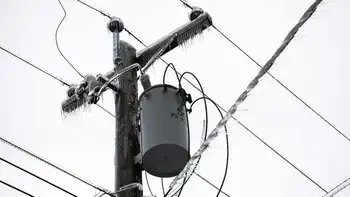
Despite delays, BC Hydro says crews responded well to 'atypical' storm
BC Hydro Ice Storm Response to Fraser Valley power outages highlights freezing rain impacts, round…
View more
Windstorm Causes Significant Power Outages
Vancouver October 2024 Windstorm brought extreme weather to British Columbia, causing power outages, storm damage,…
View more
Sign Up for Electricity Forum’s Newsletter
Stay informed with our FREE Newsletter — get the latest news, breakthrough technologies, and expert insights, delivered straight to your inbox.
Electricity Today T&D Magazine Subscribe for FREE

Stay informed with the latest T&D policies and technologies.
- Timely insights from industry experts
- Practical solutions T&D engineers
- Free access to every issue

