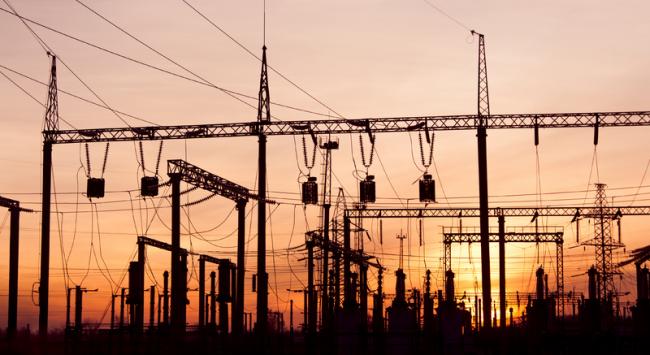
NFPA 70E Training - 2027 Edition - Arc Flash Safety Compliance
Our customized live online or in‑person group training can be delivered to your staff at your location.

- Live Online
- 6 hours Instructor-led
- Group Training Available
Regular Price:
$199
Coupon Price:
$149
TORONTO
—
Hydro One Smart Grid Investments leads the utility's post-1st quarter 2026 investor overview, highlighting grid modernization, energy storage, digital systems, and transmission expansion to improve reliability, harden assets, and support Ontario load growth.
Story Summary
-
Post Q1 2026 deck spotlights smart grid and storage
-
JRAP 2023-2027 capital plan totals about $11.8B
-
Portfolio includes 16 major transmission line projects
-
Framework targets 6-8% EPS and 6% dividend growth
-
99% of revenues are regulated under a 5-year period
Hydro One Smart Grid Investments are at the center of the company's Post First Quarter 2026 investor overview, which underscores a pure-play transmission-and-distribution focus, a largely regulated earnings base, and a multiyear plan to renew and modernize the network. The presentation highlights Ontario's scale with roughly 1.5 million customers, about 126,000 circuit kilometers of distribution lines, and close to 30,000 circuit kilometers of transmission infrastructure, supporting a system-wide push to enhance reliability and long-term service quality.
The five-year JRAP capital plan for 2023 through 2027 totals approximately $11.8 billion and is designed to expand the rate base, replace end-of-life assets, and upgrade aging equipment. The company expects the rate base to grow at roughly 6 percent compounded annually, from about $23.6 billion in 2022 to approximately $32.5 billion in 2027, with a combined 2026 rate base of about $30 billion. Management indicates the program is self-funded, with no equity issuance anticipated for the plan period.
Transmission expansion remains a central pillar. The portfolio comprises 16 major line projects across the province to meet rising demand and strengthen grid stability. Nearer-dated entries include the St. Clair Transmission Line and the Waasigan Transmission Line, both targeted for in-service in 2027, while the Welland Thorold Power Line is scheduled for 2029, and the Wawa Timmins Power Line is expected by the end of 2030. The Chatham-to-Lakeshore line was energized in December 2024, reflecting project momentum. These projects collectively align with broader digital grid priorities, as discussed in digital grid perspectives that emphasize visibility and automation for reliability.
The investor materials also connect eligible investments to a sustainable financing framework that includes smart grid technology, energy storage, monitoring equipment, and climate adaptation measures to harden assets against extreme weather. Those priorities complement nationwide efforts to bolster system dependability, echoing themes captured in canada grid reliability investment discussions that focus on modernizing critical infrastructure for resilient operations.
Regulatory fundamentals remain supportive. Hydro One reports that 99 percent of revenues are regulated under a five-year Custom Incentive Rate Making framework approved in late 2022, with an allowed return on equity of 9.36 percent and a deemed 60 percent debt and 40 percent equity structure. Within that construct, the company reiterates targeted compounded annual growth of 6 to 8 percent in EPS and about 6 percent in rate base through 2027, alongside a target of roughly 6 percent average annual dividend growth, all underpinned by predictable cash flows.
Rising electricity demand in Ontario is being driven by population growth, industrial activity, building electrification, and transportation electrification, reinforcing the case for continued grid investment and modernization. Lessons from advanced sensor deployments that improve distribution-system observability, such as those profiled in lighthouse smart grid sensors dso visibility, inform how utilities can optimize operations. Policy roadmaps like Energize America illustrate capital formation approaches, while global reliability events, such as the Iberia blackout, demand side solutions, and resilience underscore why resilience and demand-side flexibility matter as utilities scale their smart grid and storage strategies.
Related News
Related News
Manitoba Hydro hikes face opposition as hearings begin
Manitoba Hydro rate hikes face public hearings over electricity rates, utility bills, and debt, with…
View more
EU ministers warn over China dominance in battery storage, push grid fixes
EU battery storage dependence drives fresh concern as ministers warn over China-linked supply chains, lithium-ion…
View more
ELEKTROS Launches Agentic AI Smart Grid Initiative to Reduce Heatwave Strain
Agentic AI Smart Grid initiative applies edge computing, SCADA analytics, demand response, and battery storage…
View more
China, Cambodia agree to nuclear energy cooperation
Cambodia-CNNC Nuclear Energy MoU advances peaceful nuclear cooperation, human resources development, and Belt and Road…
View more
After rising for 100 years, electricity demand is flat. Utilities are freaking out.
US Electricity Demand Stagnation reflects decoupling from GDP as TVA's IRP revises outlook, with energy…
View more

Iberia blackout highlights demand-side and smart grid solutions for resilience
Iberia blackout demand-side solutions underscore how demand response, virtual power plants and better grid observability…
View more
Sign Up for Electricity Forum’s Newsletter
Stay informed with our FREE Newsletter — get the latest news, breakthrough technologies, and expert insights, delivered straight to your inbox.
Electricity Today T&D Magazine Subscribe for FREE

Stay informed with the latest T&D policies and technologies.
- Timely insights from industry experts
- Practical solutions T&D engineers
- Free access to every issue
