Protective Relay Training - Basic
Our customized live online or in‑person group training can be delivered to your staff at your location.
- Live Online
- 12 hours Instructor-led
- Group Training Available
Regular Price:
$699
Coupon Price:
$599
Stephen Harper concluded a Commonwealth summit by bluntly describing the Kyoto accord as a mistake the world must never repeat.
The Prime Minister characterized the landmark climate change deal as a flawed document and served notice that Canada will not support any new international treaty that carries its fatal flaw.
Harper said the key error of Kyoto was slapping binding targets on three-dozen countries but not the rest, including some of the world's biggest polluters like the United States, China and India.
So Canada will enter key negotiations on a post-Kyoto deal next month with a relatively simple position: all major polluters must be included, or there's no deal.
Harper came under fire from some quarters for promoting that view at the Commonwealth summit but was adamant that the everyone-in approach is the only solution.
Harper's stance places the bar for success extremely high at upcoming United Nations talks in Bali, Indonesia, but he said it's better than the incrementalist approach of the past.
"This was the Kyoto mistake," Harper told a news conference at the summit's conclusion.
"We already did the 'One-third of the countries will take binding targets and let's hope the rest fall into line."'
"We're already there. That hasn't worked."
Harper's remarks on Kyoto offer the latest in a series of public stances he has taken on the treaty, which demands six per cent emissions cuts below 1990 levels by 2012.
Five years ago he described it as a money-sucking socialist scheme and ridiculed the science of global warming when the previous Liberal government ratified the treaty.
More recently, he's simply described its targets as unattainable because of the Liberals' well-documented failure to cut emissions, a view that was reflected in his government's policy-setting throne speech.
On Sunday, he suggested Kyoto was flawed all along.
"We already saw Kyoto," he said.
"If we get a third of the world to sign on first and wait for the other two-thirds, it's never going to happen."
Harper says he has helped to achieve something that's never been done before: Getting the United States, China and, now, India, to agree to tackle climate change at successive international summits.
At the G8, at APEC, and now with India at the Commonwealth, he got the world's biggest economies to agree to the general principle of cutting emissions.
Just a few days ago at an Asian summit, India refused to endorse a resolution that called for it to strive toward undefined, so-called "aspirational" goals on greenhouse emissions.
But eventually, the Indians and the entire 53-member Commonwealth did sign on to such an agreement.
Harper was a key player in making that happen, and some other countries were furious at Canada as a result.
To procure India's approval, the Commonwealth had to strip out any reference to binding targets in a resolution that had the support of almost any country.
Some foreign diplomats were so disgusted that they sought out Canadian journalists to tell them what their country was doing behind closed doors.
One called the Harper approach a perfect recipe for making sure nothing happens.
Canada was among the only countries to oppose a resolution that had called on developed countries to meet binding targets, without making any reference to developing ones like India.
The other major holdout, Australia's government led by John Howard, was turfed from office in an election during the summit.
Howard's successor, Kevin Rudd, has promised to sign the Kyoto accord immediately upon taking office.
Malaysia's leader expressed disappointment that binding targets were excluded from the final resolution.
"I was hoping that there was something specific we could decide upon – but it was not possible," Prime Minister Abdullah Ahmad Badawi told a news conference. "In some way I do feel a bit disappointed."
He said he hopes developed countries take a lead role, while adding that poorer countries also have a responsibility to act.
Harper says there's no other choice.
China, India, and the United States, none of whom are bound by Kyoto, account for more than half of global emissions alone.
Harper says they must all be brought on side in a global system that includes binding targets for everyone. But then why, he was asked, hadn't he push for binding targets for all Commonwealth members?
His reply spoke straight to the challenge that lies ahead at the UN talks in Bali, and to the point raised by some foreign diplomats who opposed his all-or-nothing approach.
"We would not get consensus here," Harper said.
That has some wondering if Harper feels it's impossible to get 53 Commonwealth members to support a purely symbolic resolution that refers to targets, what hope is there that 200 countries could leave Bali with a deal that binds them to detailed targets?
But the prime minister disputed reports that Canada was isolated at the summit and pointed out that his government helped write the climate change deal that was ultimately adopted.
"For the first time in a very long time Canada's voice is being heard. And the consequence of our voice being heard is we're getting the changes we want to see," he said.
The host of the summit did mention a Canadian prime minister in his closing remarks, but it wasn't Harper.
Ugandan President Yoweri Museveni concluded his address by quoting former Liberal prime minister Pierre Trudeau's 1973 description of the Commonwealth as a family.
And while Harper spoke, a camera caught Museveni more than once drifting in and out of sleep.
Related News
B.C. Commercial electricity consumption plummets during COVID-19 pandemic
BC Hydro COVID-19 Relief Fund enables small businesses to waive electricity bills for commercial properties…
View more
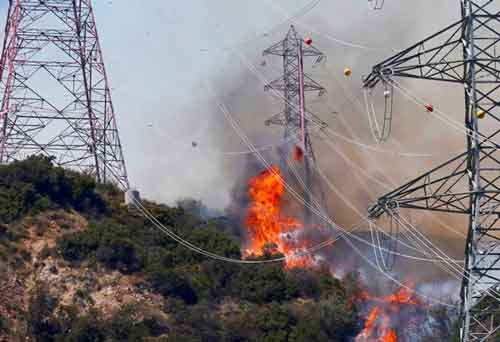
Southern California Edison Faces Lawsuits Over Role in California Wildfires
SCE Wildfire Lawsuits allege utility equipment and power lines sparked deadly Los Angeles blazes; investigations,…
View more
National Grid to lose Great Britain electricity role to independent operator
UK Future System Operator to replace National Grid as ESO, enabling smart grid reform, impartial…
View more
Europeans push back from Russian oil and gas
EU Renewable Energy Transition is accelerating under REPowerEU, as wind and solar generation hit records,…
View more

BC Hydro launches program to help coronavirus-affected customers with their bills
BC Hydro COVID-19 Bill Relief provides payment deferrals, no-penalty payment plans, Crisis Fund grants up…
View more
Texans to vote on funding to modernize electricity generation
Texas Proposition 7 Energy Fund will finance ERCOT grid reliability via loans and grants for…
View more
Sign Up for Electricity Forum’s Newsletter
Stay informed with our FREE Newsletter — get the latest news, breakthrough technologies, and expert insights, delivered straight to your inbox.
Electricity Today T&D Magazine Subscribe for FREE

Stay informed with the latest T&D policies and technologies.
- Timely insights from industry experts
- Practical solutions T&D engineers
- Free access to every issue

