Protective Relay Training - Basic
Our customized live online or in‑person group training can be delivered to your staff at your location.
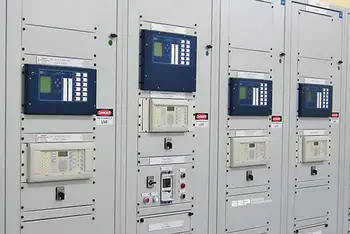
- Live Online
- 12 hours Instructor-led
- Group Training Available
Regular Price:
$699
Coupon Price:
$599
With the clock ticking on a promise to scrap Ontario's coal-fired power generators, the Liberal government said recently it is looking to hire someone to oversee the process of contracting for new electricity supplies.
Energy Minister Dwight Duncan said the announcement is a sign the government will keep its promise to phase out the coal plants by 2007, but he refused to put a cost on the replacement power.
"It's fair to say that we're talking about a substantial sum of money," Duncan said.
"It's also fair to say that if we don't do this, we're going to have an even more substantial problem in terms of not having adequate supply."
Duncan said the government is looking for up to 2,500 megawatts of new generation capacity or conservation measures to be in place as early as next year, but no later than 2007.
That represents about one-third of what will be needed to do away with the five pollution-spewing coal plants -- a promise Premier Dalton McGuinty made before and after the October election.
Skeptics argue the province won't be able to meet the target given that coal accounts for about one-third of the province's power on peak days.
While details have yet to be worked out, Duncan said private companies will enter into long-term contracts with the government to build generators and supply power at a certain price to the province.
He could not say what that price would be or how long the contracts would run.
Energy analyst Tom Adams said experience in Ontario and California has shown that taxpayers bear a substantial risk with such power-purchase agreements.
In the worst cases, the contracts ended up costing billions more than the power they bought, he said.
"The public usually gets screwed," Adams said. "These contracts do represent a very substantial commercial risk to taxpayers."
New Democrat Leader Howard Hampton estimated the contracts would cost as much as $2.5 billion over 15 or 20 years and warned electricity prices will soar.
"This is going to be very expensive power," Hampton said.
"This is going to be private power. This will be produced by private, profit-driven companies."
Currently, Ontario residents pay a fixed 4.3 cents a kilowatt-hour. Starting in April, that will climb to 4.7 cents for the first 750 megawatts used in a month, and 5.5 cents for amounts above that. The pricing regime will stay in place until May 2005.
Duncan said the government will likely choose a technical adviser next week from among three Canadian and three American companies with the required expertise to oversee the competitive bidding process.
He said he hopes requests for power-supply proposals can go out sometime next month.
The province has skated perilously close to blackouts due to electricity shortages in the past and has been forced to rely on expensive imported power to keep the lights on.
Last week, a task force warned of a looming supply crisis in Ontario and expressed doubts about shutting the coal plants by 2007.
Related News
OpenAI Expands Washington Effort to Shape AI Policy
OpenAI Washington Policy Expansion spotlights AI policy, energy infrastructure, data centers, and national security, advocating…
View more
Coronavirus and the U.S. grid: What to know
COVID-19 Impact on US Electric Grid: utilities, ERCOT, PJM, and MISO brace for load shifts…
View more

Operating record for Bruce Power as Covid-19 support Council announced
Bruce Power Life-Extension Programme advances Ontario nuclear capacity through CANDU Major Component Replacement, reliable operation…
View more
TotalEnergies to Acquire German Renewables Developer VSB for US$1.65 Billion
TotalEnergies VSB Acquisition accelerates renewable energy growth, expanding wind and solar portfolios across Germany and…
View more
We Energies refiles rate hike request driven by rising nuclear power costs
We Energies rate increase driven by nuclear energy costs at Point Beach, Wisconsin PSC filings,…
View more
States have big hopes for renewable energy. Get ready to pay for it.
New York Climate Transition Costs highlight rising utility bills for ratepayers as the state pursues…
View more
Sign Up for Electricity Forum’s Newsletter
Stay informed with our FREE Newsletter — get the latest news, breakthrough technologies, and expert insights, delivered straight to your inbox.
Electricity Today T&D Magazine Subscribe for FREE

Stay informed with the latest T&D policies and technologies.
- Timely insights from industry experts
- Practical solutions T&D engineers
- Free access to every issue
