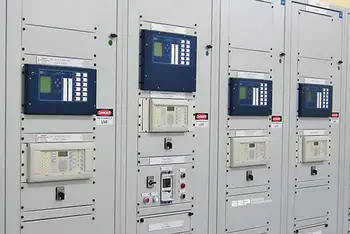
Protective Relay Training - Basic
Our customized live online or in‑person group training can be delivered to your staff at your location.
- Live Online
- 12 hours Instructor-led
- Group Training Available
Regular Price:
$699
Coupon Price:
$599
HOUSTON -- The energy plant of the future is being developed through a series of research projects funded jointly between the DOE (Department of Energy) fossil energy division and private sector partners. The Vision 21 Program seeks to develop an ultra-clean, virtually emission-free power plant ready for commercial generation by 2015. The program sponsors emerging state-of-the-art technologies, which will be combined in a modular plant configuration to utilize multiple fuels (coal, natural gas, biomass, petroleum coke, and municipal waste) and produce electricity along with other liquid fuels and/or chemicals. The program sets performance targets of greater than 60% fuel to energy efficiency for coal systems and greater than 75% fuel to energy efficiency for gas.
Speaking at the recent annual meeting of the Western Coal Transportation Association, Fred Palmer, vice president of legal and external affairs for Peabody Energy (NYSE:BTU) (St. Louis), said that Peabody Energy is fully supporting and is an active partner in the Department of Energy's Vision 21 Program. The goal of this innovative program is to build the power plant of the future with essentially zero emissions. Mr. Palmer went on to mention an ambitious coal industry program to achieve a zero emission coal-fired power plant in operation by 2025.
This summer the DOE announced the winners of the third and final round of project funding. So far the DOE has promised $22 million to be spent over three years on the twelve projects selected. These projects focus on developing specific modular components of the plant and involve fuel cell technologies, coal gasification, high strength materials, hydrogen separation, and computer systems to name a few.
Related News
Is nuclear power really in decline?
Nuclear Energy Growth accelerates as nations pursue decarbonization, complement renewables, displace coal, and ensure grid…
View more

Blackout-Prone California Is Exporting Its Energy Policies To Western States, Electricity Will Become More Costly And Unreliable
California Blackouts expose grid reliability risks as PG&E deenergizes lines during high winds. Mandated solar…
View more
US NRC streamlines licensing for advanced reactors
NRC Advanced Reactor Licensing streamlines a risk-informed, performance-based, technology-inclusive pathway for advanced non-light water reactors,…
View more
Can the Electricity Industry Seize Its Resilience Moment?
Hurricane Grid Resilience examines how utilities manage outages with renewables, microgrids, and robust transmission and…
View more
Coal, Business Interests Support EPA in Legal Challenge to Affordable Clean Energy Rule
Affordable Clean Energy Rule Lawsuit pits EPA and coal industry allies against health groups over…
View more
How ‘Virtual Power Plants’ Will Change The Future Of Electricity
Virtual Power Plants orchestrate distributed energy resources like rooftop solar, home batteries, and EVs to…
View more
Sign Up for Electricity Forum’s Newsletter
Stay informed with our FREE Newsletter — get the latest news, breakthrough technologies, and expert insights, delivered straight to your inbox.
Electricity Today T&D Magazine Subscribe for FREE

Stay informed with the latest T&D policies and technologies.
- Timely insights from industry experts
- Practical solutions T&D engineers
- Free access to every issue
