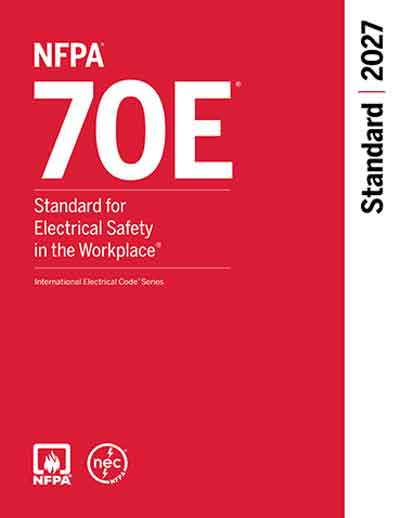
NFPA 70E Training - 2027 Edition - Arc Flash and Electrical Safety Course
Our customized live online or in‑person group training can be delivered to your staff at your location.
- Live Online
- 6 hours Instructor-led
- Group Training Available
Regular Price:
$199
Coupon Price:
$149
-- After months of confusion and indecision, the Ontario
government has decided it will try to find a private-sector partner to
take over up to 49 per cent of the province's publicly owned electricity
grid.
The first step will be made Tuesday, when the government begins the process of hiring an expert to give advice by the end of August on exactly what form the sale to one or more private partners should take. "It is important that we seek new investments to upgrade our system while keeping control of Hydro One in public hands," Conservative Finance Minister Janet Ecker said. "A strategic partnership will help Ontario to raise needed funds to continue to provide reliable power."
The government hoped to put out partnership bids in the fall, with a planned sale date of early next year, Ecker said in an interview.
Finding a strategic partner was one of several options under consideration by the government after a court ruling in April stymied its original plans for an outright sale of the grid.
The government later said it would retain control of the corporation even as it sought private-sector involvement.
Critics call that a sham.
"Up to seven in 10 people believe that this is the first step to privatizing all of Hydro One," said Paul Kahnert of the Ontario Electricity Coalition.
"It just doesn't make any sense. It's all their ideology."
The opposition also denounced the announcement as detrimental to taxpayers and ratepayers and just the thin edge of the privatization wedge.
"This is step one and after the election the rest could be sold off," said New Democrat Marilyn Churley, who argued the government is looking for quick cash infusion before the next election, likely a year from now.
Ecker, who said it was too early to speculate on how much money the sale would generate, insisted that's not in the cards.
"Proceeding in this fashion very much respects what Ontarians told us," said Ecker. "We are proceeding with an option that allows the government to retain control."
Liberal Michael Bryant said that's not what the public wants.
"The government has no mandate to sell even one per cent of Hydro One," said Bryant.
The privatization plan, announced by former premier Mike Harris in December, originally called for what would have been the largest public share offering in Canadian history, worth $5.5 billion.
However, the stunning court ruling threw the government's plans into disarray and became a flashpoint for widespread criticism of the privatization decision.
In response, the province announced a series of limited public consultations, and passed legislation to get around the ruling, which it also appealed.
On Thursday, the Ontario Court of Appeal threw out the appeal, saying it would be a waste of time hearing it given the new legislation passed late last month.
Critics of the sale argue there's no benefit to consumers, given that Hydro One is a natural monopoly that owns the lines that run between generators and local utilities.
"No matter how you slice it, private-sector involvement costs more," said Churley.
However, the government said private capital is vital to maintaining and enhancing the power grid and that it's committed to consumer protection.
Hydro One is one of the successor companies to the old public monopoly, Ontario Hydro, which left a mammoth debt of as much as $38 billion.
The government promised proceeds from selling a stake in Hydro One will go toward paying down that debt.
Related News
ABO to build 10MW Tunisian solar park
ABO Wind Tunisia 10MW Solar Project will build a photovoltaic park in Gabes with a…
View more
London's Newest Electricity Tunnel Goes Live
London Electricity Tunnel strengthens grid modernization with high-voltage cabling from major substations, increasing redundancy, efficiency,…
View more
Ontario confronts reality of being short of electricity in the coming years
Ontario electricity shortage is looming, RBC and IESO warn, as EV electrification surges, Pickering nuclear…
View more
DOE Announces $34 Million to Improve America?s Power Grid
DOE GOPHURRS Grid Undergrounding accelerates ARPA-E innovations to modernize the power grid, boosting reliability, resilience,…
View more
PG&E keeps nearly 60,000 Northern California customers in the dark to reduce wildfire risk
PG&E Public Safety Power Shutoff reduces wildfire risk during extreme winds, triggering de-energization across the…
View more
British Columbia Halts Further Expansion of Self-Driving Vehicles
BC Autonomous Vehicle Ban freezes new driverless testing and deployment as BC develops a regulatory…
View more
Sign Up for Electricity Forum’s Newsletter
Stay informed with our FREE Newsletter — get the latest news, breakthrough technologies, and expert insights, delivered straight to your inbox.
Electricity Today T&D Magazine Subscribe for FREE

Stay informed with the latest T&D policies and technologies.
- Timely insights from industry experts
- Practical solutions T&D engineers
- Free access to every issue

