By CP


High Voltage Maintenance Training Online

Our customized live online or in‑person group training can be delivered to your staff at your location.

  • Live Online
  • 12 hours Instructor-led
  • Group Training Available
Regular Price:
$599
Coupon Price:
$499
Reserve Your Seat Today
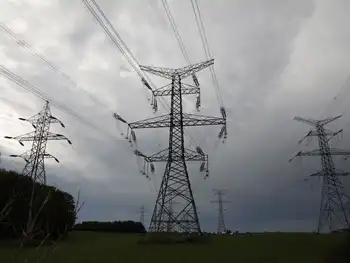
-- Hydro One reported Thursday a profit drop in the second quarter as higher costs offset a big jump in revenues. The provincial Crown utility said it made profits of $99 million for the three months ending June 30, compared with about $114 million for the same period last year.

Revenues rose to $888 million from $722 million. Hydro, which owns the transmission towers and lines that carry the province's electricity, reported that operating costs rose to $295 million in the second quarter from $241 million last year.

The company carried out work in the quarter it traditionally spreads out over the entire year.

"This change compared to the historical work patterns will level related expenditures throughout the year, but results in an increase in second quarter expenditures compared to 2001," Hydro One said in a statement.

Despite the lower profits, chief financial officer Ken Hartwick said the results are in line with expectations.

"Hydro One's . . . fundamentals continue to be sound, which positions us well to deliver stable returns," he said. "We will remain focused on strengthening our core transmission and distribution business."

The Ontario government dismissed Hydro's board of directors this spring in a dispute over the severance and pay packages that some of the utility's senior executives received.

Chief executive Eleanor Clitheroe was subsequently fired this summer by the new board over what the company said were "inappropriate" expenses.

Clitheroe said the Hydro One board approved all her expenses and she plans to sue the company for wrongful dismissal.

An interim board is currently running the utility and Hydro said a permanent board will be named by next week.

Related News

Canadian Scientists say power utilities need to adapt to climate change

Canada Power Grid Climate Resilience integrates extreme weather planning, microgrids, battery storage, renewable energy, vegetation management, and undergrounding to reduce outages, harden infrastructure, modernize utilities, and safeguard reliability during storms, ice events, and wildfires.


Key Points

Canada's grid resilience hardens utilities against extreme weather using microgrids, storage, renewables, and upgrades.

✅ Grid hardening: microgrids, storage, renewable integration

✅ Vegetation management reduces storm-related line contact

✅ Selective undergrounding where risk and cost justify


The increasing intensity of storms that lead to massive power outages highlights the need for Canada’s electrical utilities to be more robust and innovative, climate change scientists say.

“We need to plan to be more resilient in the face of the increasing chances of these events occurring,” University of New Brunswick climate change scientist Louise Comeau said in a recent interview.

The East Coast was walloped this week by the third storm in as many days, with high winds toppling trees and even part of a Halifax church steeple, underscoring the value of storm-season electrical safety tips for residents.

Significant weather events have consistently increased over the last five years, according to the Canadian Electricity Association (CEA), which has tracked such events since 2003.

#google#

Nearly a quarter of total outage hours nationally in 2016 – 22 per cent – were caused by two ice storms, a lightning storm, and the Fort McMurray fires, which the CEA said may or may not be classified as a climate event.

“It (climate change) is putting quite a lot of pressure on electricity companies coast to coast to coast to improve their processes and look for ways to strengthen their systems in the face of this evolving threat,” said Devin McCarthy, vice president of public affairs and U.S. policy for the CEA, which represents 40 utilities serving 14 million customers.

The 2016 figures – the most recent available – indicate the average Canadian customer experienced 3.1 outages and 5.66 hours of outage time.

McCarthy said electricity companies can’t just build their systems to withstand the worst storm they’d dealt with over the previous 30 years. They must prepare for worse, and address risks highlighted by Site C dam stability concerns as part of long-term planning.

“There needs to be a more forward looking approach, climate science led, that looks at what do we expect our system to be up against in the next 20, 30 or 50 years,” he said.

Toronto Hydro is either looking at or installing equipment with extreme weather in mind, Elias Lyberogiannis, the utility’s general manager of engineering, said in an email.

That includes stainless steel transformers that are more resistant to corrosion, and breakaway links for overhead service connections, which allow service wires to safely disconnect from poles and prevents damage to service masts.

Comeau said smaller grids, tied to electrical systems operated by larger utilities, often utilize renewable energy sources such as solar and wind as well as battery storage technology to power collections of buildings, homes, schools and hospitals.

“Capacity to do that means we are less vulnerable when the central systems break down,” Comeau said.

Nova Scotia Power recently announced an “intelligent feeder” pilot project, which involves the installation of Tesla Powerwall storage batteries in 10 homes in Elmsdale, N.S., and a large grid-sized battery at the local substation. The batteries are connected to an electrical line powered in part by nearby wind turbines.

The idea is to test the capability of providing customers with back-up power, while collecting data that will be useful for planning future energy needs.

Tony O’Hara, NB Power’s vice-president of engineering, said the utility, which recently sounded an alarm on copper theft, was in the late planning stages of a micro-grid for the western part of the province, and is also studying the use of large battery storage banks.

“Those things are coming, that will be an evolution over time for sure,” said O’Hara.

Some solutions may be simpler. Smaller utilities, like Nova Scotia Power, are focusing on strengthening overhead systems, mainly through vegetation management, while in Ontario, Hydro One and Alectra are making major investments to strengthen infrastructure in the Hamilton area.

“The number one cause of outages during storms, particularly those with high winds and heavy snow, is trees making contact with power lines,” said N.S. Power’s Tiffany Chase.

The company has an annual budget of $20 million for tree trimming and removal.

“But the reality is with overhead infrastructure, trees are going to cause damage no matter how robust the infrastructure is,” said Matt Drover, the utility’s director for regional operations.

“We are looking at things like battery storage and a variety of other reliability programs to help with that.”

NB Power also has an increased emphasis on tree trimming and removal, and now spends $14 million a year on it, up from $6 million prior to 2014.

O’Hara said the vegetation program has helped drive the average duration of power outages down since 2014 from about three hours to two hours and 45 minutes.

Some power cables are buried in both Nova Scotia and New Brunswick, mostly in urban areas. But both utilities maintain it’s too expensive to bury entire systems – estimated at $1 million per kilometre by Nova Scotia Power.

The issue of burying more lines was top of mind in Toronto following a 2013 ice storm, but that’s city’s utility also rejected the idea of a large-scale underground system as too expensive – estimating the cost at around $15 billion, while Ontario customers have seen Hydro One delivery rates rise in recent adjustments.

“Having said that, it is prudent to do so for some installations depending on site specific conditions and the risks that exist,” Lyberogiannis said.

Comeau said lowering risks will both save money and disruption to people’s lives.

“We can’t just do what we used to do,” said Xuebin Zhang, a senior climate change scientist at Environment and Climate Change Canada.

“We have to build in management risk … this has to be a new norm.”


Related News

View more

Transmission constraints impede incremental Quebec-to-US power deliveries

Hydro-Québec Northeast Clean Energy Transmission delivers surplus hydropower via HVDC interconnections to New York and New England, leveraging long-term contracts and projects like CHPE and NECEC to support carbon-free goals, GHG cuts, and grid reliability.


Key Points

An initiative to expand HVDC links for Quebec hydropower exports, aiding New York and New England decarbonization.

✅ 37,000 MW hydro capacity enables firm, low-carbon exports

✅ Targets NY and NE via CHPE, NECEC, and upgraded interfaces

✅ Backed by long-term PPAs to reduce merchant transmission risk


With roughly 37,000 MW of installed hydro power capacity, Quebec has ample spare capacity that it would like to deliver into Northeastern US markets where ambitious clean energy goals have been announced, but expanding transmission infrastructure is challenging.

Register Now New York recently announced a goal of receiving 100% carbon-free energy by 2040 and the New England states all have ambitious greenhouse gas reduction goals, including a Massachusetts law requiring GHG emissions be 80% below 1990 levels by 2050.

The province-owned company, Hydro Quebec, supplies power to the provinces of Quebec, Ontario and New Brunswick in particular, as well as sending electricity directly into New York and New England. The power transmission interconnections between New York and New England have reached capacity and in order to increase export volumes into the US, "we need to build more transmission infrastructure," Gary Sutherland, relationship manager in business development, recently said during a presentation to reporters in Montreal.


TRANSMISSION OPTIONS

Hydro Quebec is working with US transmission developers, electric distribution companies, independent system operators and state government agencies to expand that transmission capacity in order to delivery more power from its hydro system to the US, as the province has closed the door on nuclear power and continues to prioritize hydropower, Sutherland said.

The company is looking to sign long-term power supply contracts that could help alleviate some of the investment risk associated with these large infrastructure projects.

"It`s interesting to recall that in the 1980s, two decade-long contracts paved the way for construction of Phase II of the multi-terminal direct-current system (MTDCS), a cross-border line that delivers up to 2,000 MW from northern Quebec to New England," Hydro Quebec spokeswoman Lynn St-Laurent said in an email.

Long-term prices have been persistently low since 2012, following the shale gas boom and the economic decline in 2008-2009, St-Laurent said. "As such, investment risks are too high for merchant transmission projects," she said.

Northeast power market fundamentals "remain strong for long-term contracts," on transmission projects or equipment upgrades that can deliver clean power from Quebec and "help our neighbors reach their ambitious clean energy goals," St-Laurent said.


NEW ENGLAND

In March 2017 an HQ proposal was selected by Massachusetts regulators to supply 9.45 TWh of firm energy to be delivered for 20 years. HQ`s proposal consisted of hydro power supply and possible transmission scenarios developed in conjunction with US partners.

The two leading options include a route through New Hampshire called Northern Pass and New England Clean Energy Connect through Maine.

The New Hampshire Site Evaluation Committee in March 2018 voted unanimously to deny approval of the $1.6 billion Northern Pass Transmission project, which is a joint venture between HQ and Eversource Energy`s transmission business. Eversource has been fighting the decision, with the New Hampshire Supreme Court accepting the company`s appeal of the NHSEC decision in October.

Briefs are being filed and oral arguments are likely to begin late spring or early summer, spokesman William Hinkle said in an email Tuesday.

After the Northern Pass permitting delay, Massachusetts chose the New England Clean Energy Connect project, which is a projected 1,200 MW transmission line, with 1,090 MW contracted to Massachusetts, leaving 110 MW for use on a merchant basis, according to St-Laurent.

NECEC is a joint venture between HQ and Central Maine Power, which is a subsidiary of Avangrid, a company affiliated with Spain`s Iberdrola. The NECEC project has received opposition from some environmental groups and still needs several state and federal permits.


NEW YORK

"The 5% of New York`s load that we furnish year in and year out ... is mostly going into the north of the state, it`s not coming down here," Sutherland said during a discussion at Pace University in New York City in 2017.

One potential project moving through the permitting phase, is the $2.2 billion, 1,000-MW Champlain Hudson Power Express transmission line being pursued by Transmission Developers -- a Blackstone portfolio company -- that would transport power from Quebec to Queens, New York.

Under New York`s proposed Climate Leadership Act which calls for the 100% carbon-free energy goal, renewable generation eligibility would be determined by the Public Service Commission. The PSC did not respond to a question about whether hydro power from Quebec is being considered as a potential option for meeting the state`s clean energy goal.


Related News

View more

A tidal project in Scottish waters just generated enough electricity to power nearly 4,000 homes

MeyGen Tidal Stream Project delivers record 13.8 GWh to Scotland's grid, showcasing renewable ocean energy. Simec Atlantis Energy's 6 MW array of tidal turbines advances EU power goals and plans an ocean-powered data center.


Key Points

A Scottish tidal energy array exporting record power, using four 1.5 MW turbines and driving renewable innovation.

✅ Delivered 13.8 GWh to the grid in 2019, a project record.

✅ Four 1.5 MW turbines in Phase 1A, 6 MW installed.

✅ Plans include an ocean-powered data center near site.


A tidal power project in waters off the north coast of Scotland, where Scotland’s wind farms also deliver significant output, sent more than 13.8 gigawatt hours (GWh) of electricity to the grid last year, according to an operational update issued Monday. This figure – a record – almost doubled the previous high of 7.4 GWh in 2018.

In total, the MeyGen tidal stream array has now exported more than 25.5 GWh of electricity to the grid since the start of 2017, according to owners Simec Atlantis Energy. Phase 1A of the project is made up of four 1.5 megawatt (MW) turbines.

The 13.8 GWh of electricity exported in 2019 equates to the average yearly electricity consumption of roughly 3,800 “typical” homes in the U.K., where wind power records have been set recently, according to the company, with revenue generation amounting to £3.9 million ($5.09 million).

Onshore maintenance is now set to be carried out on the AR1500 turbine used by the scheme, with Atlantis aiming to redeploy the technology in spring.

In addition to the production of electricity, Atlantis is also planning to develop an “ocean-powered data centre” near the MeyGen project.

The European Commission has described “ocean energy” as being both abundant and renewable, and milestones like the biggest offshore windfarm starting U.K. supply underscore wider momentum, too. It’s estimated that ocean energy could potentially contribute roughly 10% of the European Union’s power demand by the year 2050, according to the Commission.

While tidal power has been around for decades — EDF’s 240 MW La Rance Tidal Power Plant in France was built as far back as 1966, and the country’s first offshore wind turbine has begun producing electricity — recent years have seen a number of new projects take shape.

In December last year, Scottish tidal energy business Nova Innovation was issued with a permit to develop a project in Nova Scotia, Canada, aiming to harness the Bay of Fundy tides in the region further.

In an announcement at the time, the firm said a total of 15 tidal stream turbines would be installed by the year 2023. The project, according to the firm, will produce enough electricity to power 600 homes, as companies like Sustainable Marine begin delivering tidal energy to the Nova Scotia grid.

Elsewhere, a business called Orbital Marine Power is developing what it describes as the world’s most powerful tidal turbine, with grid-supplied output already demonstrated.

The company says the turbine will have a swept area of more than 600 square meters and be able to generate “over 2 MW from tidal stream resources.” It will use a 72-meter-long “floating superstructure” to support two 1 MW turbines.


Related News

View more

Why Atomic Energy Is Heating Up Again

Nuclear Power Revival drives decarbonization, climate change mitigation, and energy security with SMRs, Generation IV designs, baseload reliability, and policy support, complementing renewables to meet net-zero targets and growing global electricity demand.


Key Points

A global shift back to nuclear energy, leveraging SMRs and advanced reactors to cut emissions and enhance energy security.

✅ SMRs offer safer, modular, and cost-effective deployment.

✅ Provides baseload power to complement intermittent renewables.

✅ Policy support and investments accelerate advanced designs.


In recent years, nuclear power has experienced a remarkable revival in public interest, policy discussions, and energy investment. Once overshadowed by controversies surrounding safety, waste management, and high costs, nuclear energy is now being reexamined as a vital component of the global energy transition, despite recurring questions such as whether it is in decline from some commentators. Here's why nuclear power is "so hot" right now:

1. Climate Change Urgency

One of the most compelling reasons for the renewed interest in nuclear energy is the urgent need to address climate change. Unlike fossil fuels, nuclear power generates electricity with zero greenhouse gas emissions during operation. As countries rush to meet net-zero carbon targets, evidence that net-zero may require nuclear is gaining traction, and nuclear offers a reliable, large-scale alternative to complement renewable energy sources like wind and solar.

2. Energy Security and Independence

Geopolitical tensions and supply chain disruptions have exposed vulnerabilities in relying on imported fossil fuels, and Europe's shrinking nuclear capacity has sharpened concerns over resilience. Nuclear power provides a domestic, stable energy source that can operate independently of volatile global markets. For many nations, this has become a strategic priority, reducing dependence on politically sensitive energy imports.

3. Advances in Technology

Modern innovations in nuclear technology are transforming the industry. Small Modular Reactors (SMRs) are leading the way as part of next-gen nuclear innovation, offering safer, more affordable, and flexible options for nuclear deployment. Unlike traditional large-scale reactors, SMRs can be built faster, scaled to specific energy needs, and deployed in remote or smaller markets.

Additionally, advances in reactor designs, such as Generation IV reactors and fusion research, promise to address longstanding concerns like waste management and safety. For example, some new designs can recycle spent fuel or run on alternative fuels, significantly reducing radioactive waste.

4. Public Perception Is Shifting

Public opinion on nuclear power is also changing. While the industry faced backlash after high-profile incidents like Chernobyl and Fukushima, increasing awareness of climate change and energy security is prompting many to reconsider, including renewed debates such as Germany's potential nuclear return in policy circles. A younger, climate-conscious generation views nuclear energy not as a relic of the past, but as an essential tool for a sustainable future.

5. Renewables Alone Are Not Enough

While renewable energy sources like solar and wind have grown exponentially, their intermittent nature remains a challenge. Energy storage technologies, such as batteries, have not yet matured enough to fully bridge the gap. Nuclear power, with its ability to provide constant, "baseload" energy, as France's fleet demonstrates in practice, serves as an ideal complement to variable renewables in a decarbonized energy mix.

6. Government Support and Investment

Policymakers are taking action to bolster the nuclear sector. Many countries are including nuclear energy in their clean energy plans, offering subsidies, grants, and streamlined regulations to accelerate its deployment. For instance, the United States has allocated billions of dollars to support advanced nuclear projects, the UK's green industrial revolution outlines support for upcoming reactor waves, while Europe has classified nuclear power as "sustainable" under its green taxonomy.

7. Global Energy Demand Is Growing

As populations and economies grow, so does the demand for electricity. Developing nations, in particular, are seeking energy solutions that can support industrialization while limiting environmental impact. Nuclear energy is being embraced as a way to meet these dual objectives, especially in regions with limited access to consistent renewable energy resources.

Challenges Ahead

Despite its potential, nuclear energy is not without its challenges. High upfront costs, lengthy construction timelines, and public concerns over safety and waste remain significant hurdles. The industry will need to address these issues while continuing to innovate and build public trust.

Nuclear power's resurgence is driven by its unique ability to tackle some of the most pressing challenges of our time: climate change, energy security, and the growing demand for electricity. With advances in technology, changing perceptions, and robust policy support, nuclear energy is poised to play a critical role in the global transition to a sustainable and secure energy future.

In a world increasingly shaped by the need for clean and reliable power, nuclear energy has once again become a hot topic—and for good reason.


Related News

View more

New clean energy investment in developing nations slipped sharply last year: report

Developing Countries Clean Energy investment fell as renewable energy financing slowed in China; solar and wind growth lagged while coal power hit new highs, raising emissions risks for emerging markets and complicating climate change goals.


Key Points

Renewables investment and power trends in emerging nations: solar, wind, coal shifts, and steps toward decarbonization.

✅ Investment fell to $133b; China dropped to $86b

✅ Coal power rose to 6,900 TWh; 47% generation share

✅ New coal builds declined to 39 GW, decade low


New clean energy investment slid by more than a fifth in developing countries last year due to a slowdown in China, while the amount of coal-fired power generation jumped to a new high, reflecting global power demand trends, a recent annual survey showed.

Bloomberg New Energy Finance (BNEF) surveyed 104 emerging markets and found that developing nations were moving towards cleaner, low-emissions sources in many regions, but not fast enough to limit carbon dioxide emissions or the effects of climate change.

New investment in wind, solar and other clean energy projects dropped to $133 billion last year from $169 billion a year earlier, mainly due to a slump in Chinese investment, even as electricity investment globally surpasses oil and gas for the first time, the research showed.

China’s clean energy investment fell to $86 billion from $122 billion a year earlier, with dynamics in China's electricity sector also in focus. Investment by India and Brazil also declined, mainly due to lower costs for solar and wind.

However, the volume of coal-fired power generation produced and consumed in developing countries increased to a new high of 6,900 terrawatt hours (TWh) last year, even as renewables are poised to eclipse coal globally, from 6,400 TWh in 2017.

The increase of 500 TWh is equivalent to the power consumed in the U.S. state of Texas in one year, underscoring how surging electricity demand is putting power systems under strain. Coal accounted for 47% of all power generation across the 104 countries.

“The transition from coal toward cleaner sources in developing nations is underway,” said Ethan Zindler, head of Americas at BNEF. “But like trying to turn a massive oil tanker, it takes time.”

Despite the spike in coal-fired generation, the amount of new coal capacity which was added to the grid in developing countries declined, with Europe's renewables crowding out gas offering a contrasting pathway. New construction of coal plants fell to its lowest level in a decade last year of 39 gigawatts (GW).

The report comes a week ahead of United Nations climate talks in Madrid, Spain, where more than 190 countries will flesh out the details of an accord to limit global warming.


Related News

View more

Energy Vault Lands $110M From SoftBank’s Vision Fund for Gravity Storage

Energy Vault Gravity Storage uses crane-stacked concrete blocks to deliver long-duration, grid-scale renewable energy; a SoftBank Vision Fund-backed, pumped-hydro analog enabling baseload power and a lithium-ion alternative with proprietary control algorithms.


Key Points

Gravity-based cranes stack blocks to store and dispatch power for hours, enabling grid-scale, low-cost storage.

✅ 4 MW/35 MWh modules; ~9-hour duration

✅ Estimated $200-$250/kWh; lower LCOE than lithium-ion

✅ Backed by SoftBank Vision Fund; Cemex and Tata support


Energy Vault, the Swiss-U.S. startup that says it can store and discharge electrical energy through a super-sized concrete-and-steel version of a child’s erector set, has landed a $110 million investment from Japan’s SoftBank Vision Fund to take its technology to commercial scale.

Energy Vault, a spinout of Pasadena-based incubator Idealab and co-founded by Idealab CEO and billionaire investor Bill Gross, unstealthed in November with its novel approach to using gravity to store energy.

Simply put, Energy Vault plans to build storage plants — dubbed “Evies” — consisting of a 35-story crane with six arms, surrounded by a tower consisting of thousands of concrete bricks, each weighing about 35 tons.

This plant will “store” energy by using electricity to run the cranes that lift bricks from the ground and stack them atop of the tower, and “discharge” energy by reversing that process. It’s a mechanical twist on the world’s most common energy storage technology, pumped hydro, which “stores” energy by pumping water uphill, and lets it fall to spin turbines when electricity is needed, even as California funds 100-hour long-duration storage pilots to expand flexibility worldwide.

But behind this simplicity lies some heavy-duty software to orchestrate the cranes and blocks, with a "unique stack of proprietary algorithms" to balance energy supply and demand, volatility, grid stability, weather elements and other variables.

CEO and co-founder Robert Piconi said in a November interview with GTM that the standard array would deliver 4 megawatts/35 megawatt-hours of storage, which translates to nearly 9 hours of duration — the equivalent of building the tower to its height, and then reducing it to ground level. It can be built on-site in partnership with crane manufacturers and recycled concrete material, and can run fully automated for decades with little deterioration, he said.

And the cost, which Piconi pegged in the $200 to $250 per kilowatt-hour range, with room to decline further, is roughly 50 percent below the upfront price of the conventional storage market today, and 80 percent below it on levelized cost, he said, a trend utilities see benefits in as they plan resources.

The result, according to Wednesday’s statement, is a technology that could allow “renewables to deliver baseload power for less than the cost of fossil fuels 24 hours a day,” in applications such as community microgrids serving low-income housing.

Wednesday’s announcement builds on a recent investment from Mexico's Cemex Ventures, the corporate venture capital unit of building materials giant Cemex, along with a promise of deployment support from Cemex's strategic network, and also follows project financing for a California green hydrogen microgrid led by the company. Piconi said in November that the company had sufficient investment from two funding rounds to carry it through initial customer deployments, though he declined to disclose figures.

This is the first energy storage investment for Vision Fund, the $100 billion venture fund set up by SoftBank founder Masayoshi Son. While large by startup standards, it’s in keeping with the capital costs that Energy Vault will face in scaling up its technology to meet its commitments, amid mounting demand in regions like Ontario energy storage that face supply crunches. Those include a 35 megawatt-hour order with Tata Power Company, the energy-producing arm of the Indian industrial conglomerate, first unveiled in November, as well as plans to demonstrate its first storage tower in northern Italy in 2019.

For Vision Fund, it’s also an unusual choice for a storage investment, given that the vast majority of venture capital in the industry today is being directed toward lithium-ion batteries, and even Mercedes-Benz energy storage ventures targeting the U.S. market. Lithium-ion batteries are limited in terms of how many hours they can provide cost-effectively, with about 4 hours being seen as the limit today.

The search for long-duration energy storage has driven investment into flow battery technologies such as grid-scale vanadium systems deployed on utility networks, compressed-air energy storage and variations on gravity-based storage, including a previous startup backed by Gross and Idealab, Energy Cache, whose idea of using a ski lift carrying buckets of gravel up a hill to store energy petered out with a 50-kilowatt pilot project.


Related News

View more

Sign Up for Electricity Forum’s Newsletter

Stay informed with our FREE Newsletter — get the latest news, breakthrough technologies, and expert insights, delivered straight to your inbox.

Electricity Today T&D Magazine Subscribe for FREE

Stay informed with the latest T&D policies and technologies.
  • Timely insights from industry experts
  • Practical solutions T&D engineers
  • Free access to every issue

Live Online & In-person Group Training

Advantages To Instructor-Led Training – Instructor-Led Course, Customized Training, Multiple Locations, Economical, CEU Credits, Course Discounts.

Request For Quotation

Whether you would prefer Live Online or In-Person instruction, our electrical training courses can be tailored to meet your company's specific requirements and delivered to your employees in one location or at various locations.