Quebec Mulls Hydro Stake Sale

By Reuters


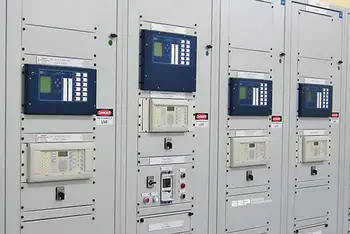
Substation Relay Protection Training

Our customized live online or in‑person group training can be delivered to your staff at your location.
  • Live Online
  • 12 hours Instructor-led
  • Group Training Available
Regular Price:
$699
Coupon Price:
$599
Reserve Your Seat Today
Power utility Hydro-Quebec, one of the largest in North America, is considering selling a 10 per cent stake to its 20,000 employees to bail out its public finances, Quebec Premier Bernard Landry was quoted as saying.

"It is a hypothesis," Landry said in an interview published in the Quebec City daily newspaper Le Soleil. He said the provincial government wanted to set up "a profit-sharing scheme for the Hydro-Quebec staff."

Landry said the Canadian province would not sell more than the 10 per cent of the utility for fiscal and legal reasons. Hydro-Quebec is a provincially-owned agency.

Hydro-Quebec and the premier's office were not immediately available to comment.

Hydro-Quebec, nationalized by the Quebec government in the early 1960s, had profits of CAN$1 billion (US$658 million) in 2001 and surpassed this amount for the first nine months of 2002.

It produces electricity in Quebec, and distributes it domestically and in the northeastern US states.

Related News

Hydro One, Avista to ask U.S. regulator to reconsider order against acquisition

Hydro One Avista Takeover faces Washington UTC scrutiny as regulators deny approval; companies plan a reconsideration petition, citing acquisition terms, governance concerns, merger risks, EPS dilution, and balance sheet impacts across regulated utility operations.


Key Points

A $6.7B bid by Hydro One to buy Avista, denied by Washington UTC on governance risk, under reconsideration petition.

✅ UTC denied over potential provincial interference.

✅ Petition for reconsideration due by Dec. 17.

✅ Deal seen diluting EPS, weakening balance sheet.


Hydro One Ltd. and Avista Corp. say they plan to formally request that the Washington Utilities and Transportation Commission reconsider its order last week denying approval of the $6.7-billion takeover, which previously received U.S. antitrust clearance from federal regulators, of the U.S.-based energy utility.

The two companies say they will file a petition no later than Dec. 17 but haven't indicated on what grounds they are making the request, even as investor concerns about Hydro One persist.

Under Washington State law, the UTC has 20 days to consider the petition, otherwise it is deemed to be denied.

If it reconsiders its decision, the UTC can modify the prior order or take any actions it deems appropriate, similar to provincial rulings such as the OEB decision on Hydro One's first combined T&D rates, including extending deliberations.

Washington State regulators said they would not allow Ontario's largest utility to buy Avista for fear the provincial government, which owns 47 per cent of Hydro One's shares and recently prompted a CEO and board exit at the utility, might meddle in Avista's operations.

Hydro One's shares have risen since the order because the deal, announced in July 2017, would have eroded earnings per share and weakened Hydro One's balance sheet, according to analysts, even as the company reported a one-time-boosted Q2 profit earlier this year.


Related News

View more

New England Emergency fuel stock to cost millions

Inventoried Energy Program pays ISO-NE generators for fuel security to boost winter reliability, with FERC approval, covering fossil, nuclear, hydropower, and batteries, complementing capacity markets to enhance grid resilience during severe cold snaps.


Key Points

ISO-NE program paying generators to hold fuel or energy reserves for emergencies, boosting winter reliability.

✅ FERC-approved stopgap for 2023 and 2024 winter seasons

✅ Pays for on-site fuel or stored energy during cold-trigger events

✅ Open to fossil, nuclear, hydro, batteries; limited gas participation


Electricity ratepayers in New England will pay tens of millions of dollars to fossil fuel and nuclear power plants later this decade under a program that proponents say is needed to keep the lights on during severe winters but which critics call a subsidy with little benefit to consumers or the grid, even as Connecticut is pushing a market overhaul across the region.

Last week the Federal Energy Regulatory Commission said ISO-New England, which runs the six-state power grid, can create what it calls the Inventoried Energy Program or IEP. This basically will pay certain power plants to stockpile of fuel for use in emergencies during two upcoming winters as longer-term solutions are developed.

The federal commission called it a reasonable short-term solution to avoid brownouts which doesn’t favor any given technology.

Not all agree, however, including FERC Commissioner Richard Glick, who wrote a fiery dissent to the other three commissioners.

“The program will hand out tens of millions of dollars to nuclear, coal and hydropower generators without any indication that those payments will cause the slightest change in those generators’ behavior,” Glick wrote. “Handing out money for nothing is a windfall, not a just and reasonable rate.”

The program is the latest reaction by ISO-NE to the winter of 2013-14 when New England almost saw brownouts because of a shortage of natural gas to create electricity during a pair of week-long deep freezes.

ISO-New England says the situation is more critical now because of the possible retirement of the gas-fired Mystic Generating Station in Massachusetts. As with closed nuclear plants such as Vermont Yankee and Pilgrim in Massachusetts, power plant owners say lower electricity prices, partly due to cheap renewables and partly to stagnant demand, means they can’t be profitable just by selling power.

Programs like the IEP are meant to subsidize such plants – “incentivize” is the industry term – even though some argue there is no need to subsidize nuclear in deregulated markets so they’ll stay open if they are needed.

The IEP approved last week will be applied to the winters of 2023 and 2024, after a different subsidy program expires. It sets prices, despite warnings about rushing pricing changes from industry groups, for stocking certain amounts of fuel and payments during any “trigger” event, defined as a day when the average of high and low temperatures at Bradley International Airport in Connecticut is no more than 17 degrees Fahrenheit.

These payments will be made on top of a complex system of grid auctions used to decide how much various plants get paid for generating electricity at which times.

ISO-NE estimates the new program will cost between $102 million and $148 million each winter, depending on weather and market conditions.

It says the payments are open to plants that burn oil, coal, nuclear fuel, wood chips or trash; utility-scale battery storage facilities; and hydropower dams “that store water in a pond or reservoir.” Natural gas plants can participate if they guarantee to have fuel available, but that seems less likely because of winter heating contracts.

A major complaint and groups that filed petitions opposing the project is that ISO-NE presented little supporting evidence of how prices, amount and overall cost were determined. ISO-NE argued that there wasn’t time for such analysis before the Mystic shutdown, and FERC agreed.

“The proposal is a step in the right direction … while ISO-NE finishes developing a long-term market solution,” the commission said in its ruling.

The program is the latest example of complexities facing the nation’s electricity system evolves in the face of solar and wind power, which produce electricity so cheaply that they can render traditional power uneconomic but which can’t always produce power on demand, prompting discussions of Texas grid improvements among policymakers. Another major factor is climate change, which has increased the pressure to support renewable alternatives to plants that burn fossil fuels, as well as stagnant electricity demand caused by increased efficiency.

Opponents, including many environmental groups, say electricity utilities and regulators are too quick to prop up existing systems, as the 145-mile Maine transmission line debate shows, built when electricity was sent one way from a few big plants to many customers. They argue that to combat climate change as well as limit cost, the emphasis must be on developing “non-wire alternatives” such as smart systems for controlling demand, in order to take advantage of the current system in which electricity goes two ways, such as from rooftop solar back into the grid.


Related News

View more

Russian Strikes Threaten Ukraine's Power Grid

Ukraine Power Grid Attacks intensify as missile and drone strikes hit substations and power plants, causing blackouts, humanitarian crises, strained hospitals, and emergency repairs, with winter energy shortages and civilian infrastructure damage worsening nationwide.


Key Points

Strikes on energy infrastructure causing blackouts, service disruption, and heightened humanitarian risk in winter.

✅ Missile and drone strikes cripple plants, substations, and lines

✅ Blackouts disrupt water, heating, hospitals, and critical services

✅ Emergency repairs, generators, and aid mitigate winter shortages


Ukraine's energy infrastructure remains a primary target in Russia's ongoing invasion, with a recent wave of missile strikes causing power outages in western regions and disrupting critical services across the country. These attacks have devastating humanitarian consequences, leaving millions of Ukrainians without heat, water, and electricity as winter approaches.


Systematic Targeting of Energy Infrastructure

Russia's strategy of deliberately targeting Ukraine's power grid marks a significant escalation, directly affecting the lives of civilians. Power plants, substations, and transmission lines have been hit with missiles and drones, with the latest strikes in late April causing blackouts in cities across Ukraine, including the capital, Kyiv, as the country fights to keep the lights on amid relentless bombardment.


Humanitarian Catastrophe Looms

The damage to Ukraine's electrical system hinders essential services like water supply, sewage treatment, and heating. Hospitals and other critical facilities struggle to operate without reliable power. With winter around the corner, the ongoing attacks threaten a humanitarian catastrophe even as authorities outline plans to keep the lights on this winter for vulnerable communities.


Ukrainian Resolve Remains Unbroken

Despite the devastation, Ukrainian engineers and workers race against time to repair damaged infrastructure and restore power as quickly as possible, while communities adopt new energy solutions to overcome blackouts to maintain essential services. The nation's energy workers have been hailed as heroes for their tireless efforts to keep the lights on amidst relentless attacks. Officials have urged civilians to reduce energy consumption whenever possible to alleviate strain on the fragile grid.


International Condemnation and Support

The systematic attacks on Ukraine's power grid have been widely condemned by the international community.  Western nations have accused Russia of war crimes, highlighting the deliberate targeting of civilian infrastructure. Aid organizations and countries are coordinating efforts to provide emergency power supplies, including generators and transformers, to help Ukraine mitigate the immediate crisis, even as the U.S. ended support for grid restoration in a recent policy shift.


Implications Beyond Ukraine

The humanitarian crisis unfolding in Ukraine due to power grid attacks carries implications far beyond its borders. The disruption of energy supplies could lead to further instability in neighbouring countries dependent on Ukraine's power exports, although officials say electricity reserves are sufficient to prevent scheduled outages if attacks subside. Additionally, a surge in Ukrainian refugees fleeing the deteriorating conditions could put a strain on resources within the European Union.


War Crimes Allegations

International human rights organizations are documenting evidence of Russia's deliberate attacks on Ukraine's civilian infrastructure. Human Rights Watch (HRW) has stated that Russia's targeting of power stations could violate the laws of war and amount to war crimes. This documentation will be crucial for holding Russia accountable for its actions in the future.


Uncertain Future for Ukraine's Power Supply

The long-term consequences of Russia's sustained attacks on Ukraine's power grid remain uncertain. While Ukrainian workers demonstrate incredible resilience, the sheer scale of repeated damage may eventually overwhelm their ability to keep pace with repairs, and, as winter looms over the battlefront, electricity is civilization for frontline communities. Rebuilding destroyed infrastructure could take years and cost billions, a daunting task for a nation already ravaged by war.


Related News

View more

Why Atomic Energy Is Heating Up Again

Nuclear Power Revival drives decarbonization, climate change mitigation, and energy security with SMRs, Generation IV designs, baseload reliability, and policy support, complementing renewables to meet net-zero targets and growing global electricity demand.


Key Points

A global shift back to nuclear energy, leveraging SMRs and advanced reactors to cut emissions and enhance energy security.

✅ SMRs offer safer, modular, and cost-effective deployment.

✅ Provides baseload power to complement intermittent renewables.

✅ Policy support and investments accelerate advanced designs.


In recent years, nuclear power has experienced a remarkable revival in public interest, policy discussions, and energy investment. Once overshadowed by controversies surrounding safety, waste management, and high costs, nuclear energy is now being reexamined as a vital component of the global energy transition, despite recurring questions such as whether it is in decline from some commentators. Here's why nuclear power is "so hot" right now:

1. Climate Change Urgency

One of the most compelling reasons for the renewed interest in nuclear energy is the urgent need to address climate change. Unlike fossil fuels, nuclear power generates electricity with zero greenhouse gas emissions during operation. As countries rush to meet net-zero carbon targets, evidence that net-zero may require nuclear is gaining traction, and nuclear offers a reliable, large-scale alternative to complement renewable energy sources like wind and solar.

2. Energy Security and Independence

Geopolitical tensions and supply chain disruptions have exposed vulnerabilities in relying on imported fossil fuels, and Europe's shrinking nuclear capacity has sharpened concerns over resilience. Nuclear power provides a domestic, stable energy source that can operate independently of volatile global markets. For many nations, this has become a strategic priority, reducing dependence on politically sensitive energy imports.

3. Advances in Technology

Modern innovations in nuclear technology are transforming the industry. Small Modular Reactors (SMRs) are leading the way as part of next-gen nuclear innovation, offering safer, more affordable, and flexible options for nuclear deployment. Unlike traditional large-scale reactors, SMRs can be built faster, scaled to specific energy needs, and deployed in remote or smaller markets.

Additionally, advances in reactor designs, such as Generation IV reactors and fusion research, promise to address longstanding concerns like waste management and safety. For example, some new designs can recycle spent fuel or run on alternative fuels, significantly reducing radioactive waste.

4. Public Perception Is Shifting

Public opinion on nuclear power is also changing. While the industry faced backlash after high-profile incidents like Chernobyl and Fukushima, increasing awareness of climate change and energy security is prompting many to reconsider, including renewed debates such as Germany's potential nuclear return in policy circles. A younger, climate-conscious generation views nuclear energy not as a relic of the past, but as an essential tool for a sustainable future.

5. Renewables Alone Are Not Enough

While renewable energy sources like solar and wind have grown exponentially, their intermittent nature remains a challenge. Energy storage technologies, such as batteries, have not yet matured enough to fully bridge the gap. Nuclear power, with its ability to provide constant, "baseload" energy, as France's fleet demonstrates in practice, serves as an ideal complement to variable renewables in a decarbonized energy mix.

6. Government Support and Investment

Policymakers are taking action to bolster the nuclear sector. Many countries are including nuclear energy in their clean energy plans, offering subsidies, grants, and streamlined regulations to accelerate its deployment. For instance, the United States has allocated billions of dollars to support advanced nuclear projects, the UK's green industrial revolution outlines support for upcoming reactor waves, while Europe has classified nuclear power as "sustainable" under its green taxonomy.

7. Global Energy Demand Is Growing

As populations and economies grow, so does the demand for electricity. Developing nations, in particular, are seeking energy solutions that can support industrialization while limiting environmental impact. Nuclear energy is being embraced as a way to meet these dual objectives, especially in regions with limited access to consistent renewable energy resources.

Challenges Ahead

Despite its potential, nuclear energy is not without its challenges. High upfront costs, lengthy construction timelines, and public concerns over safety and waste remain significant hurdles. The industry will need to address these issues while continuing to innovate and build public trust.

Nuclear power's resurgence is driven by its unique ability to tackle some of the most pressing challenges of our time: climate change, energy security, and the growing demand for electricity. With advances in technology, changing perceptions, and robust policy support, nuclear energy is poised to play a critical role in the global transition to a sustainable and secure energy future.

In a world increasingly shaped by the need for clean and reliable power, nuclear energy has once again become a hot topic—and for good reason.


Related News

View more

U.S. power demand seen sliding 1% in 2023 on milder weather

EIA U.S. Power Outlook 2023-2024 forecasts lower electricity demand, softer wholesale prices, and faster renewable growth from solar and wind, with steady natural gas, reduced coal generation, slight nuclear gains, and ERCOT market moderation.


Key Points

An EIA forecast of a 2023 demand dip, 2024 rebound, lower prices, and a higher renewable share in the U.S. power mix.

✅ Demand dips to 4,000 billion kWh in 2023; rebounds in 2024.

✅ ERCOT on-peak prices average about $35/MWh versus $80/MWh in 2022.

✅ Renewables grow to 24% share; coal falls to 17%; nuclear edges up.


U.S. power consumption is expected to slip about 1% in 2023 from the previous year as milder weather slows usage from the record high hit in 2022, consistent with recent U.S. consumption trends observed over the past several years, the U.S. Energy Information Administration (EIA) said in its Short-Term Energy Outlook (STEO).

EIA projected that electricity demand is on track to slide to 4,000 billion kilowatt-hours (kWh) in 2023 from a historic high of 4,048 billion kilowatt-hours (kWh) in 2022, reflecting patterns seen during COVID-19 demand shifts in prior years, before rising to 4,062 billion kWh in 2024 as economic growth ramps up.

Less demand coupled with more electricity generation from cheap renewable power sources and lower natural gas prices is forecast to slash wholesale power prices this year, the EIA said.

The on-peak wholesale price at the North hub in Texas’ ERCOT power market is expected to average about $35 per megawatt-hour (MWh) in 2023 compared with an average of nearly $80/MWh in 2022 after the 2022 price surge in power markets.

As capacity for renewables like solar and wind ramp up and as natural gas prices ease amid the broader energy crisis pressures, the EIA said it expects coal-fired power generation to be 17% less in the spring of 2023 than in the spring of 2022.

Coal will provide an average of 17% of total U.S. generation this year, down from 20% last year, as utilities shift investments toward electricity delivery and away from new power production, the EIA said.

The share of total generation supplied by natural gas is seen remaining at about the same this year at 39%. The nuclear share of generation is seen rising slightly to 20% this year from 19% in 2022. Generation from renewable energy sources grows the most in the forecast, increasing to 24% this year from a share of 22% last year, even as residential electricity bills rose in 2022 across the U.S.


Related News

View more

Judge: Texas Power Plants Exempt from Providing Electricity in Emergencies

Texas Blackout Liability Ruling clarifies appellate court findings in Houston, citing deregulated energy markets, ERCOT immunity, wholesale generators, retail providers, and 2021 winter storm lawsuits over grid failures and wrongful deaths.


Key Points

Houston judges held wholesale generators owe no duty to retail customers, limiting liability for 2021 blackout lawsuits.

✅ Court cites deregulated market and lack of privity to consumers

✅ Ruling shields generators from 2021 winter storm civil suits

✅ Plaintiffs plan appeals; legislature may address liability


Nearly three years after the devastating Texas blackout of 2021, a panel of judges from the First Court of Appeals in Houston has determined that major power companies cannot be held accountable for their failure to deliver electricity during the power grid crisis that unfolded, citing Texas' deregulated energy market as the reason.

This ruling appears likely to shield these companies from lawsuits that were filed against them in the aftermath of the blackout, leaving the families of those affected uncertain about where to seek justice.

In February 2021, a severe cold front swept over Texas, bringing extended periods of ice and snow. The extreme weather conditions increased energy demand while simultaneously reducing supply by causing power generators and the state's natural gas supply chain to freeze. This led to a blackout that left millions of Texans without power and water for nearly a week.

The state officially reported that almost 250 people lost their lives during the winter storm and subsequent blackout, although some analysts argue that this is a significant undercount and warn of blackout risks across the U.S. during severe heat as well.

In the wake of the storm, Texans affected by the energy system's failure began filing lawsuits, and lawmakers proposed a market bailout as political debate intensified. Some of these legal actions were directed against power generators whose plants either ceased to function during the storm or ran out of fuel for electricity generation.

After several years of legal proceedings, a three-judge panel was convened to evaluate the merits of these lawsuits.

This week, Chief Justice Terry Adams issued a unanimous opinion on behalf of the panel, stating, "Texas does not currently recognize a legal duty owed by wholesale power generators to retail customers to provide continuous electricity to the electric grid, and ultimately to the retail customers."

The opinion further clarified that major power generators "are now statutorily precluded by the legislature from having any direct relationship with retail customers of electricity."

This separation of power generation from transmission and retail electric sales in many parts of Texas resulted from energy market deregulation in the early 2000s, with the goal of reducing energy costs, and prompted electricity market reforms aimed at avoiding future blackouts.

Under the previous system, power companies were "vertically integrated," controlling generators, transmission lines, and selling the energy they produced directly to regional customers. However, in deregulated areas of Texas, competition was introduced, creating competing energy-generating companies and retail electric providers that purchase power wholesale and then sell it to residential consumers; meanwhile, electric cooperatives in other parts of the state remained member-owned providers.

Tré Fischer, a partner at the Jackson Walker law firm representing the power companies, explained, "One consequence of that was, because of the unbundling and the separation, you also don't have the same duties and obligations [to consumers]. The structure just doesn't allow for that direct relationship and correspondingly a direct obligation to continually supply the electricity even if there's a natural disaster or catastrophic event."

In the opinion, Justice Adams noted that when designing the Texas energy market, amid renewed interest in ways to improve electricity reliability across the grid, state lawmakers "could have codified the retail customers' asserted duty of continuous electricity on the part of wholesale power generators into law."

The recent ruling applies to five representative cases chosen by the panel out of hundreds filed after the blackout. Due to this decision, it is improbable that any of the lawsuits against power companies will succeed, according to the court's interpretation.

However, plaintiffs' attorneys have indicated their intention to appeal. They may request a review of the panel's opinion by the entire First Court of Appeals or appeal directly to the state supreme court.

The state Supreme Court had previously ruled that the Electric Reliability Council of Texas (ERCOT), the state's power grid operator, enjoys sovereign immunity and cannot be sued over the blackout.

This latest opinion raises the question of who, if anyone, can be held responsible for deaths and losses resulting from the blackout, a question left unaddressed by the court. Fischer commented, "If anything [the judges] were saying that is a question for the Texas legislature."


Related News

View more

Sign Up for Electricity Forum’s Newsletter

Stay informed with our FREE Newsletter — get the latest news, breakthrough technologies, and expert insights, delivered straight to your inbox.

Electricity Today T&D Magazine Subscribe for FREE

Stay informed with the latest T&D policies and technologies.
  • Timely insights from industry experts
  • Practical solutions T&D engineers
  • Free access to every issue

Download the 2025 Electrical Training Catalog

Explore 50+ live, expert-led electrical training courses –

  • Interactive
  • Flexible
  • CEU-cerified