By -- Source, The State Journal-Register


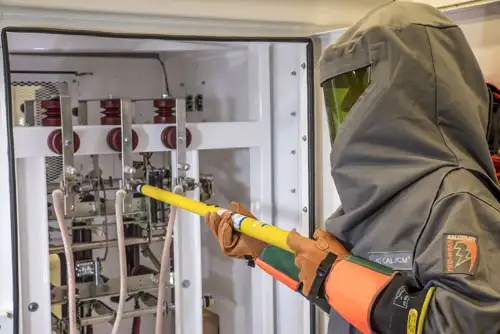
CSA Z463 Electrical Maintenance -

Our customized live online or in‑person group training can be delivered to your staff at your location.
  • Live Online
  • 6 hours Instructor-led
  • Group Training Available
Regular Price:
$249
Coupon Price:
$199
Reserve Your Seat Today
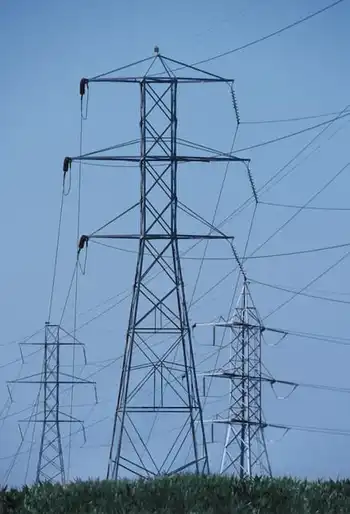
A new offer has gone out in monthly bills to millions of Illinois electric customers - an offer to check out other utility companies.

Actually, the idea is more to educate than to switch at this point. But effective May 1, residential customers of the major investor-owned utilities - including AMERENCIPS, CENTRAL ILLINOIS LIGHT CO. and ILLINOIS POWER in central Illinois - join business customers in the ability to choose suppliers based on price.

Utilities and companies that would like to serve as alternative suppliers are required to include informational inserts in monthly bills as part of the transition.

Residential customers are the last group included by a 1997 state reform law that was intended to encourage free-market competition and lower energy costs. Business customers have been free to choose a power supplier based on price since December 2000.

Municipally owned utilities, such as City Water, Light and Power in Springfield, were not included in the law.

But few in the industry expect wholesale changes, at least not right away. As one central Illinois utility executive put it: "You're probably not going to see a real rush to switch."

There has been switching among businesses, especially in the northern Illinois territory of the former Commonwealth Edison. But overall the first year of the free-market experiment has fallen short of expectations.

Some blame the utilities. Others fault the power shortages that resulted from California deregulation. And, now, the Enron mess is said to have made companies jittery about switching power suppliers.

Basically, it's akin to the days following the break-up of the old AT&T phone monopoly. Customers get use to the same phone company, the same utility. The idea of switching takes some getting used to.

The Illinois Commerce Commission, which regulates the state's utilities, has launched a "Plug in Illinois" educational campaign, including a Web site, www.icc.state.il.us/pluginIllinois.

Related News
India is now the world’s third-largest electricity producer

India Electricity Production 2017 surged to 1,160 BU, ranking third globally; rising TWh output with 334 GW capacity, strong renewables and thermal mix, 7% CAGR in generation, and growing demand, investments, and FDI inflows.


Key Points

India's 2017 power output reached 1,160 BU, third globally, supported by 334 GW capacity, rising renewables, and 7% CAGR.

✅ 1,160 BU generated; third after China and the US

✅ Installed capacity 334 GW; 65% thermal, rising renewables

✅ Generation CAGR ~7%; demand, FDI, investments rising


India now generates around 1,160.1 billion units of electricity in financial year 2017, up 4.72% from the previous year, and amid surging global electricity demand that is straining power systems. The country is behind only China which produced 6,015 terrawatt hours (TWh. 1 TW = 1,000,000 megawatts) and the US (4,327 TWh), and is ahead of Russia, Japan, Germany, and Canada.


India’s electricity production grew 34% over seven years to 2017, and the country now produces more energy than Japan and Russia, which had 27% and 8.77% more electricity generation capacity installed, respectively, than India seven years ago.

India produced 1,160.10 billion units (BU) of electricity–one BU is enough to power 10 million households (one household using average of about 3 units per day) for a month–in financial year (FY) 2017. Electricity production stood at 1,003.525 BU between April 2017-January 2018, according to a February 2018 report by India Brand Equity Foundation (IBEF), a trust established by the commerce ministry.

#google#

With a production of 1,423 BU in FY 2016, India was the third largest producer and the third largest consumer of electricity in the world, behind China (6,015 BU) and the United States (4,327 BU).

With an annual growth rate of 22.6% capacity addition over a decade to FY 2017, renewables beat other power sources–thermal, hydro and nuclear. Renewables, however, made up only 18.79% of India’s energy, up 68.65% since 2007, and globally, low-emissions sources are expected to cover most demand growth in the coming years. About 65% of installed capacity continues to be thermal.

As of January 2018, India has installed power capacity of 334.4 gigawatt (GW), making it the fifth largest installed capacity in the world after European Union, China, United States and Japan, and with much of the fleet coal-based, imported coal volumes have risen at times amid domestic supply constraints.

The government is targeting capacity addition of around 100 GW–the current power production of United Kingdom–by 2022, as per the IBEF report.


Electricity generation grew at 7% annually

India achieved a 34.48% growth in electricity production by producing 1,160.10 BU in 2017 compared to 771.60 BU in 2010–meaning that in these seven years, electricity production in India grew at a compound annual growth rate (CAGR) of 7.03%, while thermal power plants' PLF has risen recently amid higher demand and lower hydro.


Generation capacity grew at 10% annually

Of 334.5 GW installed capacity as of January 2018–up 60% from 132.30 GW in 2007–thermal installed capacity was 219.81 GW. Hydro and renewable energy installed capacity totaled 44.96 GW and 62.85 GW, respectively, said the report.

The CAGR in installed capacity over a decade to 2017 was 10.57% for thermal power, 22.06% for renewable energy–the fastest among all sources of power–2.51% for hydro power and 5.68% for nuclear power.


Growing demand, higher investments will drive future growth

Growing population and increasing penetration of electricity connections, along with increasing per-capita usage would provide further impetus to the power sector, said the report.

Power consumption is estimated to increase from 1,160.1 BU in 2016 to 1,894.7 BU in 2022, as per the report, though electricity demand fell sharply in one recent period.

Increasing investment remained one of the driving factors of power sector growth in the country.

Power sector has a 100% foreign direct investment (FDI) permit, which boosted FDI inflows in the sector.

Total FDI inflows in the power sector reached $12.97 billion (Rs 83,713 crore) during April 2000 to December 2017, accounting for 3.52% of FDI inflows in India, the report said.


Related News

View more

Alliant aims for carbon-neutral electricity, says plans will save billions for ratepayers

Alliant Energy Net-Zero Carbon Plan outlines carbon-neutral electricity by 2050, coal retirements by 2040, major solar and wind additions, gas transition, battery storage, hydrogen, and carbon credits to reduce emissions and lower customer costs.


Key Points

Alliant Energy's strategy to reach carbon-neutral power by 2050 via coal phaseout, renewables, storage, and offsets.

✅ Targets net-zero electricity by 2050

✅ Retires all coal by 2040; expands solar and wind

✅ Uses storage, hydrogen, and offsets to bridge gaps


Alliant Energy has joined a small but growing group of utilities aiming for carbon-neutral electricity by 2050.

In a report released Wednesday, the Madison-based company announced a goal of “net-zero carbon dioxide emissions” from its electricity generation along with plans to eliminate all coal-powered generation by 2040, a decade earlier than the company’s previous target.

Alliant, which is pursuing plans that would make it the largest solar energy generator in Wisconsin, said it is on track to cut its 2005 carbon emissions in half by 2030.

Both goals are in line with targets an international group of scientists warn is necessary to avoid the most catastrophic impacts of climate change. But reducing greenhouse gasses was not the primary motivation, said executive vice president and general counsel Jim Gallegos.

“The primary driver is focused on our customers and communities and setting them up … to be competitive,” Gallegos said. “We do think renewables are going to do it better than fossil fuels.”

Alliant has told regulators it can save customers up to $6.5 billion over the next 35 years by adding more than 1,600 megawatts of renewable generation, closing one of its two remaining Wisconsin coal plants and taking other undisclosed actions.

In a statement, Alliant chairman and CEO John Larsen said the goal is part of broader corporate and social responsibility efforts “guided by our strategy and designed to deliver on our purpose — to serve customers and build stronger communities.”

Coal out; gas remains
The goal applies only to Alliant’s electricity generation — the company has no plans to stop distributing natural gas for heating — and is “net-zero,” meaning the company could use some form of carbon capture or purchase carbon credits to offset continuing emissions.

The plan relies heavily on renewable generation — seen in regions embracing clean power across North America — including the addition of up to 1,000 megawatts of new Wisconsin solar plants by the end of 2023 and 1,000 megawatts of Iowa wind generation added over the past four years — as well as natural gas generators to replace its aging coal fleet.

But Jeff Hanson, Alliant’s director of sustainability, said eliminating or offsetting all carbon emissions will require new tools, such as battery storage or possibly carbon-free fuels such as hydrogen, and awareness of the Three Mile Island debate over the role of nuclear power in the mix.

“Getting to the 2040 goals, that’s all based on the technologies of today,” Hanson said. “Can we get to net zero today? The challenge would be a pretty high bar to clear.”

Gallegos said the plan does not call for the construction of more large-scale natural gas generators like the recently completed $700 million West Riverside Energy Center in Beloit, though natural gas will remain a key piece of Alliant’s generation portfolio.

Alliant announced plans in May to close its 400-megawatt Edgewater plant in Sheboygan by the end of 2022, echoing how Alberta is retiring coal by 2023 as markets shift, but has not provided a date for the shutdown of the jointly owned 1,100-megawatt Columbia Energy Center near Portage, which received about $1 billion worth of pollution-control upgrades in the past decade.

Alliant’s Iowa subsidiary plans to convert its 52-year-old, 200-megawatt Burlington plant to natural gas by the end of next year and a pair of small coal-fired generators in Linn County by 2025. That leaves the 250-megawatt plant in Lansing, which is now 43 years old, and the 734-megawatt Ottumwa plant as the remaining coal-fired generators, even as others keep a U.S. coal plant running indefinitely elsewhere.

Earlier this year, the utility asked regulators to approve a roughly $900 million investment in six solar farms across the state with a total capacity of 675 megawatts, similar to plans in Ontario to seek new wind and solar to address supply needs. The company plans to apply next year for permission to add up to 325 additional megawatts.

Alliant said the carbon-neutral plan, which entails closing Edgewater along with other undisclosed actions, would save customers between $2 billion and $6.5 billion through 2055 compared to the status quo.

Tom Content, executive director of the Citizens Utility Board, said the consumer advocacy group wants to ensure that ratepayers aren’t forced to continue paying for coal plants that are no longer needed while also paying for new energy sources and would like to see a bigger role for energy efficiency and more transparency about the utilities’ pathways to decarbonization.

‘They could do better’
Environmental groups said the announcement is a step in the right direction, though they say utilities need to do even more to protect the environment and consumers.

Amid competition from cheaper natural gas and renewable energy and pressure from environmentally conscious investors, U.S. utilities have been closing coal plants at a record pace in recent years, as industry CEOs say a coal comeback is unlikely in the U.S., a trend that is expected to continue through the next decade.

“This is not industry leadership when we’re talking about emission reductions,” said Elizabeth Katt Reinders, regional campaign director for the Sierra Club, which has called on Alliant to retire the Columbia plant by 2026.

Closing Edgewater and Columbia would get Alliant nearly halfway to its emissions goals while saving customers more than $250 million over the next decade, according to a Sierra Club study released earlier this year.

“Retiring Edgewater was a really good decision. Investing in 1,000 megawatts of new solar is game-changing for Wisconsin,” Katt Reinders said. “In the same breath we can say this emissions reduction goal is unambitious. Our analysis has shown they can do far more far sooner.”

Scott Blankman, a former Alliant executive who now works as director of energy and air programs for Clean Wisconsin, said Alliant should not run the Columbia plant for another 20 years.

“If they’re saying they’re looking to get out of coal by 2040 in Wisconsin I’d be very disappointed,” Blankman said. “I do think they could do better.”

Alliant is the 15th U.S. investor-owned utility to set a net-zero target, according to the Natural Resources Defense Council, joining Madison Gas and Electric, which announced a similar goal last year. Minnesota-based Xcel Energy, which serves customers in western Wisconsin, was the first large investor-owned utility to set such a target, as state utilities report declining returns in coal operations.


Related News

View more

India’s Kakrapur 3 achieves criticality

Kakrapar Unit 3 700MWe PHWR achieved first criticality, showcasing indigenously designed nuclear power, NPCIL operations, Make in India manufacturing, advanced safety systems, grid integration, and closed-fuel-cycle strategy for India's expansion of pressurised heavy water reactors.


Key Points

India's first indigenous 700MWe PHWR at Kakrapar reached criticality, advancing NPCIL's Make in India nuclear power.

✅ First indigenous 700MWe PHWR achieves criticality

✅ NPCIL-built, Make in India components and contractors

✅ Advanced safety: passive decay heat removal, containment spray


Unit 3 of India’s Kakrapar nuclear plant in Gujarat achieved criticality on 22 July, as milestones at nuclear projects worldwide continue to be reached. It is India’s first indigenously designed 700MWe pressurised heavy water reactor (PHWR) to achieve this milestone.

Prime Minister Narendra Modi congratulated nuclear scientists, saying the reactor is a shining example of the 'Make in India' campaign and of the government's steps to get nuclear back on track in recent years, and a trailblazer for many such future achievements. 

India developed its own nuclear power generation technology as it faced sanctions from the international community following its first nuclear weapons test in in 1974. It has not signed the Nuclear Non-Proliferation Treaty, while China's nuclear energy development is on a steady track according to experts. India has developed a three-stage nuclear programme based on a closed-fuel cycle, where the used fuel of one stage is reprocessed to produce fuel for the next stage.

Kakrapar 3 was developed and is operated by state-owned Nuclear Power Corporation of India Ltd (NPCIL), while in Europe KHNP considered for a Bulgarian project as countries weigh options. The first two units are 220MWe PHWRs commissioned in 1993 and 1995. NPCIL said in a statement that the components and equipment for Kakrapur 3 were “manufactured by lndian industries and the construction and erection was undertaken by various lndian contractors”.

The 700MWe PHWRs have advanced safety features such as steel lined inner containment, a passive decay heat removal system, a containment spray system, hydrogen management systems etc, the statement added.

Fuel loading was completed by mid-March, a crucial step in Abu Dhabi during its commissioning as well. “Thereafter, many tests and procedures were carried out during the lockdown period following all COVlD-19 guidelines.”

“As a next step, various experiments / tests will be conducted and power will be increased progressively, a path also followed by Barakah Unit 1 reaching 100% power before commercial operations.” Kakrapur 3 will be connected to the western grid and will be India’s 23rd nuclear power reactor.

Kakrapur 3 “is the front runner in a series of 16 indigenous 700MWe PHWRs which have been accorded administrative approval and financial sanction by the government and are at various stages of implementation”. Five similar units are under construction at Kakarapur 4, Rajasthan 7&8 and Gorakhpur1&2.

DAE said in January 2019 that India planned to put 21 new nuclear units with a combined generating capacity of 15,700MWe into operation by 2031, including ten indigenously designed PHWRs, while Bangladesh develops nuclear power with IAEA assistance. 


Related News

View more

Community-generated green electricity to be offered to all in UK

Community Power Tariff UK delivers clean electricity from community energy projects, sourcing renewable energy from local wind and solar farms, with carbon offset gas, transparent provenance, fair pricing, and reinvestment in local generators across Britain.


Key Points

UK energy plan delivering 100% community renewable power with carbon-offset gas, sourced from local wind and solar.

✅ 100% community-generated electricity from UK wind and solar

✅ Fair prices with profits reinvested in local projects

✅ Carbon-offset gas and verified, transparent provenance


UK homes will soon be able to plug into community wind and solar farms from anywhere in the country through the first energy tariff to offer clean electricity exclusively from community projects.

The deal from Co-op Energy comes as green energy suppliers race to prove their sustainability credentials amid rising competition for eco-conscious customers and “greenwashing” in the market.

The energy supplier will charge an extra £5 a month over Co-op’s regular tariff to provide electricity from community energy projects and gas which includes a carbon offset in the price.

Co-op, which is operated by Octopus Energy after it bought the business from the Midcounties Co-operative last year, will source the clean electricity for its new tariff directly from 90 local renewable energy generation projects across the UK, including the Westmill wind and solar farms in Oxfordshire. It plans to use all profits to reinvest in maintaining the community projects and building new ones.

Phil Ponsonby, the chief executive of Midcounties Co-operative, said the tariff is the UK’s only one to be powered by 100% community-generated electricity and would ensure a fair price is paid to community generators too, amid a renewable energy auction boost that supports wider deployment.

Customers on the Community Power tariff will be able to “see exactly where it is being generated at small scale sites across the UK, and, with new rights to sell solar power back to energy firms, they know it is benefiting local communities”, he said.

Co-op, which has about 300,000 customers, has set itself apart from a rising number of energy supply deals which are marked as 100% renewable, but are not as green as they seem, even as many renewable projects are on hold due to grid constraints.

Consumer group Which? has found that many suppliers offer renewable energy tariffs but do not generate renewable electricity themselves or have contracts to buy any renewable electricity directly from generators.

Instead, the “pale green” suppliers exploit a loophole in the energy market by snapping up cheap renewable energy certificates, without necessarily buying energy from renewables projects.

The certificates are issued by the regulator to renewable energy developers for each megawatt generated, but these can be sold separately from the electricity for a fraction of the price.

A survey conducted last year found that one in 10 people believe that a renewables tariff means that the supplier generates at least some of its electricity from its own renewable energy projects.

Ponsonby said the wind and solar schemes that generate electricity for the Community Power tariff “plough the profits they make back into their neighbourhoods or into helping other similar projects get off the ground”.

Greg Jackson, the chief executive of Octopus Energy, said being able to buy locally-sourced clean, green energy is “a massive jump in the right direction” which will help grow the UK’s green electricity capacity nationwide.

“Investing in more local energy infrastructure and getting Britain’s homes run by the sun when it’s shining and wind energy when it’s blowing can end our reliance on dirty fossil fuels sooner than we hoped,” he said.


Related News

View more

Energize America: Invest in a smarter electricity infrastructure

Smart Grid Modernization unites distributed energy resources, energy storage, EV charging, advanced metering, and bidirectional power flows to upgrade transmission and distribution infrastructure for reliability, resilience, cybersecurity, and affordable, clean power.


Key Points

Upgrading grid hardware and software to integrate DERs, storage, and EVs for a reliable and affordable power system.

✅ Enables DER, storage, and EV integration with bidirectional flows

✅ Improves reliability, resilience, and grid cybersecurity

✅ Requires early investment in sensors, inverters, and analytics


Much has been written, predicted, and debated in recent years about the future of the electricity system. The discussion isn’t simply about fossil fuels versus renewables, as often dominates mainstream energy discourse. Rather, the discussion is focused on something much larger and more fundamental: the very design of how and where electricity should be generated, delivered, and consumed.

Central to this discussion are arguments in support of, or in opposition to, the traditional model versus that of the decentralized or “emerging” model. But this is a false choice. The only choice that needs making is how to best transition to a smarter grid, and do so in a reliable and affordable manner that reflects grid modernization affordability concerns for utilities today. And the most effective and immediate means to accomplish that is to encourage and facilitate early investment in grid-related infrastructure and technology.

The traditional, or centralized, model has evolved since the days of Thomas Edison, but the basic structure is relatively unchanged: generate electrons at a central power plant, transmit them over a unidirectional system of high-voltage transmission lines, and deliver them to consumers through local distribution networks. The decentralized, or emerging, model envisions a system that moves away from the central power station as the primary provider of electricity to a system in which distributed energy resources, energy storage, electric vehicles, peer-to-peer transactions, connected appliances and devices, and sophisticated energy usage, pricing, and load management software play a more prominent role.

Whether it’s a fully decentralized and distributed power system, or the more likely centralized-decentralized hybrid, it is apparent that the way in which electricity is produced, delivered, and consumed will differ from today’s traditional model. And yet, in many ways, the fundamental design and engineering that makes up today’s electric grid will serve as the foundation for achieving a more distributed future. Indeed, as the transition to a smarter grid ramps up, the grid’s basic structure will remain the underlying commonality, allowing the grid to serve as a facilitator to integrate emerging technologies, including EV charging stations, rooftop solar, demand-side management software, and other distributed energy resources, while maximizing their potential benefits and informing discussions about California’s grid reliability under ambitious transition goals.

A loose analogy here is the internet. In its infancy, the internet was used primarily for sending and receiving email, doing homework, and looking up directions. At the time, it was never fully understood that the internet would create a range of services and products that would impact nearly every aspect of everyday life from online shopping, booking travel, and watching television to enabling the sharing economy and the emerging “Internet of Things.”

Uber, Netflix, Amazon, and Nest would not be possible without the internet. But the rapid evolution of the internet did not occur without significant investment in internet-related infrastructure. From dial-up to broadband to Wi-Fi, companies have invested billions of dollars to update and upgrade the system, allowing the internet to maximize its offerings and give way to technological breakthroughs, innovative businesses, and ways to share and communicate like never before.  

The electric grid is similar; it is both the backbone and the facilitator upon which the future of electricity can be built. If the vision for a smarter grid is to deploy advanced energy technologies, create new business models, and transform the way electricity is produced, distributed, and consumed, then updating and modernizing existing infrastructure and building out new intelligent infrastructure need to be top priorities. But this requires money. To be sure, increased investment in grid-related infrastructure is the key component to transitioning to a smarter grid; a grid capable of supporting and integrating advanced energy technologies within a more digital grid architecture that will result in a cleaner, more modern and efficient, and reliable and secure electricity system.

The inherent challenges of deploying new technologies and resources — reliability, bidirectional flow, intermittency, visibility, and communication, to name a few, as well as emerging climate resilience concerns shaping planning today, are not insurmountable and demonstrate exactly why federal and state authorities and electricity sector stakeholders should be planning for and making appropriate investment decisions now. My organization, Alliance for Innovation and Infrastructure, will release a report Wednesday addressing these challenges facing our infrastructure, and the opportunities a distributed smart grid would provide. From upgrading traditional wires and poles and integrating smart power inverters and real-time sensors to deploying advanced communications platforms and energy analytics software, there are numerous technologies currently available and capable of being deployed that warrant investment consideration.

Making these and similar investments will help to identify and resolve reliability issues earlier, and address vulnerabilities identified in the latest power grid report card findings, which in turn will create a stronger, more flexible grid that can then support additional emerging technologies, resulting in a system better able to address integration challenges. Doing so will ease the electricity evolution in the long-term and best realize the full reliability, economic, and environmental benefits that a smarter grid can offer.  


Related News

View more

Investor: Hydro One has too many unknowns to be a good investment

Hydro One investment risk reflects Ontario government influence, board shakeup, Avista acquisition uncertainty, regulatory hearings, dividend growth prospects, and utility M&A moves in Peterborough, with stock volatility since the 2015 IPO.


Key Points

Hydro One investment risk stems from political control, governance turnover, regulatory outcomes, and uncertain M&A.

✅ Ontario retains near-50% stake, affecting autonomy and policy risk

✅ Board overhaul and CEO exit create governance uncertainty

✅ Avista deal, OEB hearings, local utility M&A drive outcomes


Hydro One may be only half-owned by the province on Ontario but that’s enough to cause uncertainty about the company’s future, thus making for an investment risk, says Douglas Kee of Leon Frazer & Associates.

Since its IPO in November of 2015, Hydro One has seen its share of ups and downs, including a Q2 profit decline earlier this year, mostly downs at this point. Currently trading at $19.87, the stock has lost 11 per cent of its value in 2018 and 12 per cent over the last 12 months, despite a one-time gain boosting Q2 profit that followed a court ruling.

This year has been a turbulent one, to say the least, as newly elected Ontario premier Doug Ford made good this summer on his campaign promise re Hydro One by forcing the resignation of the company’s 14-person board of directors along with the retirement of its chief executive, an event that saw Hydro One shares fall amid the turmoil. An interim CEO has been found and a new 10-person board and chairman put in place, but Kee says it’s unclear what impact the shakeup will ultimately have, other than delaying a promising-looking deal to purchase US utility Avista Corp, with the companies moving to ask the U.S. regulator to reconsider the order.


Douglas Kee’s take on Hydro One stock

“We looked at Hydro One a couple of times two years ago and just decided that with the Ontario government’s still owning a big chunk of the company … there are other public companies where you get the same kind of yield, the same kind of dividend growth, so we just avoided it,” says Kee, managing director and chief investment officer with Leon Frazer & Associates, to BNN Bloomberg.

“The old board versus the new board, I’m not sure that there’s much of an improvement. It was politics more than anything,” he says. “The unfortunate part is that the acquisition they were making in the United States is kind of on hold for now. The regulatory procedures have gone ahead but they are worried, and I guess the new board has to make a decision whether to go ahead with it or not.”

“Their transmissions side is coming up for regulatory hearings next year, which could be difficult in Ontario,” says Kee. “The offset to that is that there are a lot of municipal distributions systems in Ontario that may be sold — they bought one in Peterborough recently, which was a good deal for them. There may be more of that coming too.”

Last month, Hydro One reached an agreement with the City of Peterborough to buy its Peterborough Distribution utility which serves about 37,000 customers for $105 million. Another deal to purchase Orillia Power Distribution Corp for $41 million has been cancelled after an appeal to the Ontario Energy Board was denied in late August. Hydro One’s sought-after Avista Corp acquisition is reported to be worth $7 billion.


Related News

View more

Sign Up for Electricity Forum’s Newsletter

Stay informed with our FREE Newsletter — get the latest news, breakthrough technologies, and expert insights, delivered straight to your inbox.

Electricity Today T&D Magazine Subscribe for FREE

Stay informed with the latest T&D policies and technologies.
  • Timely insights from industry experts
  • Practical solutions T&D engineers
  • Free access to every issue

Download the 2025 Electrical Training Catalog

Explore 50+ live, expert-led electrical training courses –

  • Interactive
  • Flexible
  • CEU-cerified