Irving Oil revives Eastern Canada LNG plan

By Reuters


CSA Z463 Electrical Maintenance -

Our customized live online or in‑person group training can be delivered to your staff at your location.
  • Live Online
  • 6 hours Instructor-led
  • Group Training Available
Regular Price:
$249
Coupon Price:
$199
Reserve Your Seat Today
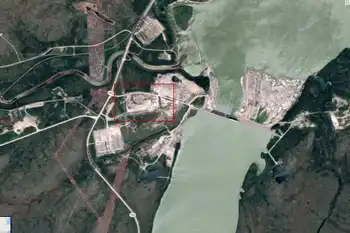
Privately held Irving Oil Ltd., owner of Canada's largest oil refinery, said recently it is reviving plans to build a liquefied natural gas terminal in Eastern Canada at its oil terminal.

"We are moving ahead after going on hiatus with the project ... and moving forward with environmental assessment reports," said Jennifer Parker, an Irving spokeswoman.

Parker said the company was dusting off plans, shelved during the 2002 downturn in the U.S. power sector, to build a C$500 million ($374 million) LNG terminal in Saint John, New Brunswick.

Plans to revive the project follow recent calls by top U.S. government officials for more LNG imports to keep pace with growing gas demand, especially from new power plants, and to close the production gap as old gas fields are depleted.

Parker said Irving continued to talk with ChevronTexaco and other energy companies about jointly developing the LNG terminal, which would be built in the ice-free, deep-water Canaport.

The terminal would be able to send about 500 million cubic feet of gas a day to the market, much of it headed for new power plants in the Northeast U.S.

Construction on the terminal is tentatively scheduled to begin in 2004 with commercial operation slated for 2006.

Irving's Canaport has an oil terminal that brings in crude oil from South America, the North Sea and West Africa for use at its nearby Saint John refinery, which at 250,000 barrels a day is Canada's biggest.

The refinery is a big exporter of petroleum products like gasoline to the United States.

Irving Oil, based in Saint John, New Brunswick, is owned by New Brunswick's wealthy Irving family. Irving also holds stakes in other industries like forestry and media.

The slump in the U.S. power sector came amid the collapse of energy trading giant Enron Corp. in late 2001, allegations of market manipulation, and huge debts that triggered credit downgrades at many U.S. energy companies.

Related News
Planning for our electricity future should be led by an independent body

Nova Scotia Integrated Resource Plan evaluates NSPI supply options, UARB oversight, Muskrat Falls imports, coal retirements, wind and biomass expansion, transmission upgrades, storage, and least-cost pathways to decarbonize the grid for ratepayers.


Key Points

A 25-year roadmap assessing supply, imports, costs, and emissions to guide least-cost decarbonization for Nova Scotia.

✅ Compares wind, biomass, gas, imports, and storage costs

✅ Addresses coal retirements, emissions caps, and reliability

✅ Recommends transmission upgrades and Muskrat Falls utilization


Maintaining a viable electricity network requires good long-term planning and, as a recent grid operations report notes, ongoing operational improvements. The existing stock of generating assets can become obsolete through aging, changes in fuel prices or environmental considerations. Future changes in demand must be anticipated.

Periodically, an integrated resource plan is created to predict how all this will add up during the ensuing 25 years. That process is currently underway and is led by Nova Scotia Power Inc. (NSPI) and will be submitted for approval to the Utilities and Review Board (UARB).

Coal-fired plants are still the largest single source of electricity in Nova Scotia. They need to be replaced with more environmentally friendly sources when they reach the end of their useful lives. Other sources include wind, hydroelectricity from rivers, biomass, as seen in increased biomass use by NS Power, natural gas and imports from other jurisdictions.

Imports are used sparingly today but will be an important source when the electricity from Muskrat Falls comes on stream. That project has big capacity. It can produce all the power needed in Newfoundland and Labrador (NL), where Quebec's power ambitions influence regional flows, plus the amount already committed to Nova Scotia, and still have a lot left over.

Some sources of electricity are more valuable than others. The daily amount of power from wind and solar cannot be controlled. Fuel-based sources and hydro can.

Utilities make their profits by providing the capital necessary to build infrastructure. Most of the money is borrowed but a portion, typically 30 per cent, usually comes from NSPI or a sister company. On that they receive a rate of return of nine per cent. Nova Scotia can borrow money today at less than two per cent.

The largest single investment of that type is the $1.577-billion Maritime Link connecting power from Newfoundland to Nova Scotia. It continues through to the New Brunswick border to facilitate exports to the United States. NSPI’s sister company, NSP Maritime Link Inc. (NSPML), is making nine per cent on $473 million of the cost.

There is little unexploited hydro capacity in Nova Scotia and there will not be any new coal-fired plants. Large-scale solar is not competitive in Nova Scotia’s climate. Nova Scotia’s needs would not accommodate the amount of nuclear capacity needed to be cost-effective, even as New Brunswick explores small reactors in its strategy.

So the candidates for future generating resources are wind, natural gas, biomass (though biomass criticism remains) and imports from other jurisdictions. Tidal is a promising opportunity but is still searching for a commercially viable technology. 

NSPI is commendably transparent about its process (irp.nspower.ca). At this stage there is little indication of the conclusions they are reaching but that will presumably appear in due course.

The mountains of detail might obscure the fact that NSPI is not an unbiased arbiter of choices for the future.

It is reported that they want to prematurely close the Trenton 5 coal plant in 2023-25. It is valued at $88.5 million. If it is closed early, ratepayers will still have to pay off the remaining value even though the plant will be idle. NSPI wants to plan a decommissioning of five of its other seven plants. There is a federal emissions constraint but retiring coal plants earlier than needed will cost ratepayers a lot.

Whenever those plants are closed, there will be a need for new sources of power. NSPI is proposing to plan for new investments in new transmission infrastructure to facilitate imports. Other possibilities would be additional wind farms, consistent with the shift to more wind and solar projects, thermal plants that burn natural gas or biomass, or storage for excess wind power that arrives before it can be used. The investment in storage could be anywhere from $20 million to $200 million.

These will add to the asset burden funded by ratepayers, even as industrial customers seek discounts while still paying for shuttered coal infrastructure.

External sources of new power will not provide NSPI the same opportunity: wind power by independent producers might be less expensive because they are willing to settle for less than nine per cent or because they are more efficient. Buying more power from Muskrat Falls will use transmission infrastructure we are already paying for. If a successful tidal technology is found, it will not be owned by NSPI or a sister company, which are no longer trying to perfect the technology.

This is not to suggest that NSPI would misrepresent the alternatives. But they can tilt the discussion in their favour. How tough will they be negotiating for additional Muskrat Falls power when it hurts their profits? Arguing for premature coal retirement on environmental grounds is fair game but whether the cost should be accepted is a political choice. 

NSPI is in a conflict of interest. We need a different process. An independent body should author the integrated resource plan. They should be fully informed about NSPI’s views.

They should communicate directly with Newfoundland and Labrador for Muskrat power, with independent wind producers, and with tidal power companies. The UARB cannot do any of these things.

The resulting plan should undergo the same UARB review that NSPI’s version would. This enhances the likelihood that Nova Scotians will get the least-cost alternative.


Related News

View more

London Underground Power Outage Disrupts Rush Hour

London Underground Power Outage 2025 disrupted Tube lines citywide, with a National Grid voltage dip causing service suspensions, delays, and station closures; TfL recovery efforts spotlight infrastructure resilience, contingency planning, and commuter safety communications.


Key Points

A citywide Tube disruption on May 12, 2025, triggered by a National Grid voltage dip, exposing resilience gaps.

✅ Bakerloo, Waterloo & City, Northern suspended; Jubilee disrupted.

✅ Cause: brief National Grid fault leading to a voltage dip.

✅ TfL focuses on recovery, communication, and resilience upgrades.


On May 12, 2025, a significant power outage disrupted the London Underground during the afternoon rush hour, affecting thousands of commuters across the city. The incident highlighted vulnerabilities in the city's transport infrastructure, echoing a morning outage in London reported earlier, and raised concerns about the resilience of urban utilities.

The Outage and Its Immediate Impact

The power failure occurred around 2:30 PM, leading to widespread service suspensions and delays on several key Tube lines. The Bakerloo and Waterloo & City lines were completely halted, while the Jubilee line experienced disruptions between London Bridge and Finchley Road. The Northern line was also suspended between Euston and Kennington, as well as south of Stockwell. Additionally, Elizabeth Line services between Abbey Wood and Paddington were suspended. Some stations were closed for safety reasons due to the lack of power.

Commuters faced severe delays, with many stranded in tunnels or on platforms. The lack of information and communication added to the confusion, as passengers were left uncertain about the cause and duration of the disruptions.

Cause of the Power Failure

Transport for London (TfL) attributed the outage to a brief fault in the National Grid's transmission network. Although the fault was resolved within seconds, it caused a voltage dip that affected local distribution networks, leading to the power loss in the Underground system.

The incident underscored the fragility of the city's transport infrastructure, particularly the aging electrical and signaling systems that are vulnerable to such faults, as well as weather-driven events like a major windstorm outage that can trigger cascading failures. While backup systems exist, their capacity to handle sudden disruptions remains a concern.

Broader Implications for Urban Infrastructure

This power outage is part of a broader pattern of infrastructure challenges facing London. In March 2025, a fire at an electrical substation in Hayes led to the closure of Heathrow Airport, affecting over 200,000 passengers, while similar disruptions at BWI Airport have underscored aviation vulnerabilities. These incidents have prompted discussions about the resilience of the UK's energy and transport networks.

Experts argue that aging infrastructure, coupled with increasing demand and climate-related stresses, poses significant risks to urban operations, as seen in a North Seattle outage and in Toronto storm-related outages that tested local grids. There is a growing call for investment in modernization and diversification of energy sources to ensure reliability and sustainability.

TfL's Response and Recovery Efforts

Following the outage, TfL worked swiftly to restore services. By 11 PM, all but one line had resumed operations, with only the Elizabeth Line continuing to experience severe delays. TfL officials acknowledged the inconvenience caused to passengers and pledged to investigate the incident thoroughly, similar to the Atlanta airport blackout inquiry conducted after a major outage, to prevent future occurrences.

In the aftermath, TfL emphasized the importance of clear communication with passengers during disruptions and committed to enhancing its contingency planning and infrastructure resilience.

Public Reaction and Ongoing Concerns

The power outage sparked frustration among commuters, many of whom took to social media to express their dissatisfaction, echoing sentiments during Houston's extended outage about communication gaps and delays. Some passengers reported being trapped in tunnels for extended periods without clear guidance from staff.

The incident has reignited debates about the adequacy of London's transport infrastructure and the need for comprehensive upgrades. While TfL has initiated reviews and improvement plans, the public remains concerned about the potential for future disruptions and the city's preparedness to handle them.

The May 12 power outage serves as a stark reminder of the vulnerabilities inherent in urban infrastructure. As London continues to grow and modernize, ensuring the resilience of its transport and energy networks will be crucial. This includes investing in modern technologies, enhancing communication systems, and developing robust contingency plans to mitigate the impact of future disruptions. For now, Londoners are left reflecting on the lessons learned from this incident and hoping for a more reliable and resilient transport system in the future.


Related News

View more

Mercury in $3 billion takeover bid for Tilt Renewables

Mercury Energy Tilt Renewables acquisition signals a trans-Tasman energy push as PowAR and Mercury split assets via a scheme of arrangement, offering $7.80 per share and a $2.96b valuation across Australia and New Zealand.


Key Points

A PowAR-Mercury deal to buy Tilt Renewables, splitting Australian and New Zealand assets via a court-approved scheme.

✅ $7.80 per share, valuing Tilt at $2.96b

✅ PowAR takes AU assets; Mercury gets NZ business

✅ Infratil and Mercury to vote for the scheme


Mercury Energy and an Australian partner appear to have won the race to buy Tilt Renewables, an Australasian wind farm developer which was spun out of TrustPower, bidding almost $3 billion, amid wider utility consolidation such as the Peterborough Distribution sale to Hydro One.

Yesterday Tilt Renewables announced that it had entered a scheme implementation agreement under which it was proposed that PowAR would acquire its Australian business and Mercury would acquire the New Zealand business, mirroring cross-border approvals where U.S. antitrust clearance shaped Hydro One's bid for Avista.

Conducted through a scheme of arrangement, Tilt shareholders will be offered $7.80 a share, valuing Tilt at $2.96b.

Yesterday morning shares in Tilt opened about 18 per cent up at $7.65, though regulatory outcomes can swing valuations as seen when Hydro One-Avista reconsideration of a U.S. order came into play.

In early December Infratil, which owns around two thirds of Tilt's shares, announced it was undertaking a review of its investment after receiving approaches, with investor sentiment sensitive to governance shifts as when Hydro One shares fell after leadership changes in Ontario.

According to a report in the Australian Financial Review, the transtasman bid beat out other parties including ASX-listed APA Group, Canadian pension fund CDPQ and Australian fund manager Infrastructure Capital Group, as Canadian investors like Ontario Teachers' Plan pursue similar infrastructure deals.

“This compelling acquisition proposal is a result of Tilt Renewables’ constant focus on delivering long-term value for shareholders and the board is pleased that, with these new owners, the transition to renewables in Australia and New Zealand will continue to accelerate,” Tilt’s chairman Bruce Harker said.

Comparable community-led clean energy partnerships, such as initiatives with British Columbia First Nations highlighted in clean-energy generation, underscore the broader momentum.

Just prior to the announcement, Tilt shares had been trading for less than $4. Such repricing reflects how utilities can face perceived uncertainties, as one investor argued too many unknowns at the time.

Mercury is already Tilt’s second largest shareholder, at just under 20 per cent. Both Infratil and Mercury have agreed to vote in favour of the scheme. The deal values Tilt’s New Zealand business at $770m, however the value of Mercury’s existing shareholding is around $585m, meaning the company will increase debt by around $185m.


Related News

View more

5,000 homes would be switched to geothermal energy free of charge

Manitoba NDP Geothermal Conversion Program offers full-cost heat pump installation for 5,000 homes, lowering electricity bills, funding contractor training and rebates, and cutting greenhouse gas emissions via geothermal energy administered by Efficiency Manitoba.


Key Points

A plan funding 5,000 home heat pump conversions to cut electricity bills, reduce emissions, and expand installer capacity.

✅ Covers equipment and installation for 5,000 homes

✅ Cuts electricity bills up to 50% vs electric heat

✅ Administered by Efficiency Manitoba; trains contractors


An NDP government would cover the entire cost for 5,000 families to switch their homes to geothermal energy, New Democrats have promised.

If elected on Oct. 3, the NDP will pay for the equipment and installation of new geothermal systems at 5,000 homes, St. James candidate Adrien Sala announced outside a St. Boniface home that previously made the switch. 

The homes that switch to geothermal energy could save as much as 50 per cent on their electricity bills, Sala said.

"It will save you money, it will grow our economy and it will reduce greenhouse gas emissions. And I think we can safely call that a win, win, win," Sala said.

Geothermal energy is derived from heat that is generated within the Earth.

The NDP said each conversion to geothermal heating and cooling would cost an estimated $26,000, and comes as new turbine investments advance in Manitoba, and it would take four years to complete all 5,000 conversions.

The program would be administered through Efficiency Manitoba, the Crown corporation responsible for conserving energy, as Manitoba Hydro's new president navigates changes at the utility. The NDP estimates it will cost $32.5 million annually over the four years, at a time of red ink at Manitoba Hydro as new power generation needs loom. Some of that money would support the training of more contractors who could install geothermal systems.


Subsidies get low pickup: NDP
Sala wouldn't say Wednesday which homeowners or types of homes would be eligible.

He said the NDP's plan would be a first in Canada, even as Ontario's energy plan seeks to address growing demand elsewhere.

"What we've seen elsewhere is where other jurisdictions have used a strict subsidy model, where they try to reduce the cost of geothermal, and while Ontario reviews a halt to natural gas generation to cut emissions, approaches differ across provinces. We really haven't seen a lot of uptake in those other jurisdictions," Sala said.

"This is an attempt at dealing with one of those key barriers for homeowners."

Efficiency Manitoba runs a subsidy program for geothermal energy through ground source heat pumps, supporting using more electricity for heat across the province, valued at up to $2.50 per square foot. It is estimated a 1,600 sq. ft. home switching from an electric furnace to geothermal will receive a rebate of around $4,000 and save around $900 annually on their electricity bills, the Crown corporation said.anitoba homeProgressive Conservative spokesperson Shannon Martin questioned how NDP Leader Wab Kinew can afford his party's numerous election promises.

"He will have no choice but to raise taxes, and history shows the NDP will raise them all," said Martin, the McPhillips MLA who isn't seeking re-election.

Wednesday's announcement was the first for the NDP in which Kinew wasn't present. The party has criticized the Progressive Conservatives for leader Heather Stefanson showing up for only a few announcements a week.

Sala said Kinew was busy preparing for the debate later in the day.

"This stuff is near and dear to Wab's heart, and frankly, I think he's probably hurting that he's not here with us right now."


Related News

View more

Operating record for Bruce Power as Covid-19 support Council announced

Bruce Power Life-Extension Programme advances Ontario nuclear capacity through CANDU Major Component Replacement, reliable operation milestones, supply chain retooling for COVID-19 recovery, PPE production, ventilator projects, and medical isotope supply security.


Key Points

A program to refurbish CANDU reactors, extend asset life, and mobilize Ontario nuclear supply chain and isotopes.

✅ Extends CANDU units via Major Component Replacement

✅ Supports COVID-19 recovery with PPE and ventilator projects

✅ Boosts Ontario energy reliability and medical isotopes


Canada’s Bruce Power said on 1 May that unit 1 at the Bruce nuclear power plant had set a record of 624 consecutive days of reliable operation – the longest since it was returned to service in 2012.

It exceeded Bruce 8’s run of 623 consecutive days between May 2016 and February 2018. Bruce 1, a Candu reactor, was put into service in 1977. It was shut down and mothballed by the former Ontario Hydro in 1997, and was refurbished and returned to service in 2012 by Bruce Power.

Bruce units 3 and 4 were restarted in 2003 and 2004. They are part of Bruce Power’s Life-Extension Programme, and future planning such as Bruce C project exploration continues across the fleet, with units 3 and 4 to undergo Major Component Replacement (MCR) Projects from 2023-28, adding about 30 years of life to the reactors.

The refurbishment of Bruce 6 has begun and will be followed by MCR Unit 3 which is scheduled to begin in 2023. Nuclear power accounts for more than 60% of Ontario’s supply, with Bruce Power providing more than 30%   of the province’s electricity.

Set up of Covid recovery council
On 30 April, Bruce Power announced the establishment of the Bruce Power Retooling and Economic Recovery Council to leverage the province’s nuclear supply chain to support Ontario’s fight against Covid-19 and to help aid economic recovery.

Bruce Power’s life extension programme is Canada’s second largest infrastructure project and largest private sector infrastructure programme. It is creating 22,000 direct and indirect jobs, delivering economic benefits that are expected to contribute $4 billion to Ontario’s GDP and $8-$11 billion to Canada’s gross domestic product (GDP), Bruce Power said.

“With 90% of the investment in manufactured goods and services coming from 480 companies in Ontario and other provinces, including recent manufacturing contracts with key suppliers, we can harness these capabilities in the fight against Covid-19, and help drive our economic recovery,” the company said.

“An innovative and dynamic nuclear supply chain is more important than ever in meeting this new challenge while successfully implementing our mission of providing clean, reliable, flexible, low-cost nuclear energy and a global supply of medical isotopes,” said Bruce Power president and CEO Mike Rencheck. “We are mobilising a great team with our extended supply chain, which spans the province, to assist in the fight against Covid-19 and to help drive our economic recovery in the future.”

Greg Rickford, the Minister of Energy, Mines, Northern Development, and Minister of Indigenous Affairs, said the launch of the council is consistent with Ontario’s focus to fight Covid-19 as a top priority and a look ahead to economic recovery, and initiatives like Pickering life extensions supporting long-term system reliability.

The creation of the Council was announced during a live event on Bruce Power's Facebook page, in which Rencheck was joined by Associate Minister of Energy Bill Walker and Rocco Rossi, the president and CEO of the Ontario Chamber of Commerce.

Walker reiterated the Government of Ontario’s commitment to nuclear power over the long term and to the life extension programme, including the Pickering B refurbishment as part of this strategy.

The Council, which will be formed for the duration of the pandemic and will include of all of Bruce Power’s Ontario-based suppliers, will focus on the continued retooling of the supply chain to meet front-line Covid-19 needs to contribute to the province’s economy recovery in the short, medium and long term.

New uses for nuclear medical applications will be explored, including isotopes for the sterilisation of medical equipment and long-term supply security.

The supply chain will be leveraged to support the health care sector through the rapid production of medical Personal Protection Equipment for front line-workers and large-scale PPE donations to communities as well as participation in pilot projects to make ventilators within the Bruce Power supply chain or help identify technology to better utilise existing ventilators;

“Buy Local” tools and approaches will be emphasised to ensure small businesses are utilised fully in communities where nuclear suppliers are located.

The production of hand sanitiser and other cleaning products will be facilitated for distribution to communities.


Related News

View more

Washington AG Leads Legal Challenge Against Trump’s Energy Emergency

Washington-Led Lawsuit Against Energy Emergency challenges President Trump's executive order, citing state rights, environmental reviews, permitting, and federal overreach; coalition argues record energy output undermines emergency claims in Seattle federal court.


Key Points

Multistate suit to void Trump's energy emergency, alleging federal overreach and weakened environmental safeguards.

? Challenges executive order's legal basis and scope

? Claims expedited permitting skirts environmental reviews

? Seeks to halt emergency permits for non-emergencies


In a significant legal move, Washington State Attorney General Nick Brown has spearheaded a coalition of 15 states in filing a lawsuit against President Donald Trump's executive order declaring a national energy emergency. The lawsuit, filed in federal court in Seattle on May 9, 2025, challenges the legality of the emergency declaration, which aims to expedite permitting processes for fossil fuel projects in pursuit of an energy dominance vision by bypassing key environmental reviews.

Background of the Energy Emergency Declaration

President Trump's executive order, issued on January 20, 2025, asserts that the United States faces an inadequate and unreliable energy grid, particularly affecting the Northeast and West Coast regions. The order directs federal agencies, including the Army Corps of Engineers and the Department of the Interior, to utilize "any lawful emergency authorities" to facilitate the development of domestic energy resources, with a focus on oil, gas, and coal projects. This includes expediting reviews under the Clean Water Act, Endangered Species Act, the National Environmental Policy Act, and the National Historic Preservation Act, potentially reducing public input and environmental oversight.

Legal Grounds for the Lawsuit

The coalition of states, led by Washington and California, argues that the emergency declaration is an overreach of presidential authority, echoing disputes over the Affordable Clean Energy rule in federal courts. They contend that U.S. energy production is already at record levels, and the declaration undermines state rights and environmental protections. The lawsuit seeks to have the executive order declared unlawful and to halt the issuance of emergency permits for non-emergency projects. 

Implications for Environmental Protections

Critics of the energy emergency declaration express concern that it could lead to significant environmental degradation. By expediting permitting processes, including geothermal permitting, and reducing public participation, the order may allow projects to proceed without adequate consideration of their impact on water quality, wildlife habitats, and cultural resources. Environmental advocates argue that such actions could set a dangerous precedent, enabling future administrations to bypass essential environmental safeguards under the guise of national emergencies, even as the EPA advances new pollution limits for coal and gas plants to address the climate crisis.

Political and Legal Reactions

The Trump administration defends the executive order, asserting that the president has the authority to declare national emergencies and that the energy emergency is necessary to address perceived deficiencies in the nation's energy infrastructure and potential electricity pricing changes debated by industry groups. However, legal experts suggest that the broad application of emergency powers in this context may face challenges in court. The outcome of the lawsuit could have significant implications for the balance of power between state and federal authorities, as well as the future of environmental regulations in the United States.

The legal challenge led by Washington State Attorney General Nick Brown represents a critical juncture in the ongoing debate over energy policy and environmental protection. As the lawsuit progresses through the courts, it will likely serve as a bellwether for future conflicts between state and federal governments regarding the scope of executive authority and the preservation of environmental standards, amid ongoing efforts to expand uranium and nuclear energy programs nationwide. The outcome may set a precedent for how national emergencies are declared and managed, particularly concerning their impact on state governance and environmental laws.


Related News

View more

Sign Up for Electricity Forum’s Newsletter

Stay informed with our FREE Newsletter — get the latest news, breakthrough technologies, and expert insights, delivered straight to your inbox.

Electricity Today T&D Magazine Subscribe for FREE

Stay informed with the latest T&D policies and technologies.
  • Timely insights from industry experts
  • Practical solutions T&D engineers
  • Free access to every issue

Download the 2025 Electrical Training Catalog

Explore 50+ live, expert-led electrical training courses –

  • Interactive
  • Flexible
  • CEU-cerified