Hydro Pulls Plug On Troubled Dam

By Vancouver Sun


Arc Flash Training CSA Z462 - Electrical Safety Essentials

Our customized live online or in‑person group training can be delivered to your staff at your location.

  • Live Online
  • 6 hours Instructor-led
  • Group Training Available
Regular Price:
$249
Coupon Price:
$199
Reserve Your Seat Today
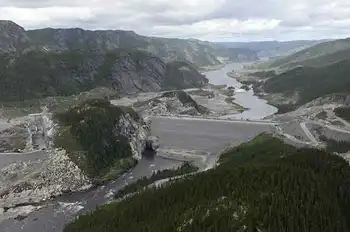
A leaky, unstable hydroelectric dam that represents a serious threat to public safety could be retired as early as this summer, according to a B.C. Hydro spokesman.

Coursier Dam near Revelstoke has been giving engineers and safety inspectors nightmares for almost 40 years, resisting dozens of efforts to turn it into a stable, leak-free contributor to British Columbia's electrical grid.

A 1995 investigation found that a breach of the dam would result in loss of up to 10 lives and cause up to $50 million in property and environmental damage, Hydro reports in recent documents.

Hydro submitted a proposal to the B.C. Environmental Assessment Authority in December to decommission the dam, and will formally announce in early January that it's seeking public comment on its plan.

"A serious threat to public safety will be eliminated" and the "threat of loss of fish and wildlife habitat from dam failure eliminated," Hydro says in a brochure in support of its proposal.

Conservation groups are already applauding because removing the dam will restore Coursier Lake to its natural level, benefiting wildlife as well as stabilizing fish populations in Cranberry Creek downstream from the lake.

It's the first time in Hydro's history that the Crown corporation has walked away from one of its assets, Hydro dam safety inspector Ray Stewart said.

The 19-metre-high, 685-metre-wide structure holds 29 million cubic metres of water and supplies an eight-megawatt generating station -- enough electricity to supply about 6,000 homes.

There are dozens of private companies looking to develop small-hydro projects in B.C. that would provide a similar amount of electricity.

Stewart says the Crown corporation decided it's cheaper to decommission Coursier and restore the surrounding natural environment than to undertake a major rebuild.

"The dam has an ongoing problem like a cancer, if you like," Stewart said. "We just cannot fix it up in an efficient and economic way, so the best option for us at this time is to decommission the project and remove the threat to public safety."

Coursier is rated by the provincial government as a high hazard dam, with motorists travelling Highway 23S below the dam judged to be "at great risk" if it fails.

A high hazard rating by itself is not an indication that a dam is actually dangerous -- but it's an indication that a breach would threaten human life.

Across B.C., about 35 dams are rated as high hazard structures while a further 400 -- out of a total of 2,700 B.C. dams -- are rated a grade lower at "hazardous."

Hydro owns 42 dams, but its list includes all of the largest dams in British Columbia.

Many Lower Mainland dams -- including Seymour, Capilano and Coquitlam -- are in the high hazard category by virtue of their proximity to human settlement and are subject to weekly inspections as a result.

Located less than a kilometre above Upper Arrow Lakes Reservoir, Coursier Dam has suffered chronic erosion and leakage problems since it was built by the city of Revelstoke in 1963.

When Hydro took it over in 1971, it had already undergone a series of repairs for seepage and leaks. Hydro attempted a major repair in the mid-1990s, but the problems reappeared by 1998.

A recent prospectus includes photos of sinkholes, some big enough to swallow a construction worker, that extend into the core of the dam.

It says such sinkholes could cause the top of the dam to sag enough to release the reservoir behind it.

The plan is to excavate a notch through the dam and let the reservoir spill into an erosion-resistant channel down the original creek bed.

In the meantime, Hydro has been maintaining the water level in the reservoir at a level nine metres lower than capacity.

"It's the first time we've gotten to this stage, looking at decommissioning one of our own dams," says Stewart, noting that Hydro's estimate for the cost of the restoration project is $3 million.

"When we go through the dam safety process, we always look at the full range of options when we have a dam safety issue. That would include decommissioning, fixup of a dam or rebuilding with a new dam -- as we once did with the Alouette dam, for instance.

"We would always consider [decommissioning] as an option, but this is the first time we've got one to this stage."

About 30 small dams have been removed in B.C., but the Coursier will be the biggest one to go through the process.

A dam on the Theodosia River near Powell River, owned by Pacifica Papers, is also being decommissioned, but that process will take five years.

Stewart says Coursier could be gone by the end of summer 2003 -- provided that no unexpected issues arise during the environmental assessment process.

"The bulk of the work would be done in one construction season, over a period of three to four months," he said.

"The challenge that we have with this site is that it's at 4,000 feet or so. At that elevation, the construction season is very short. In some years it can be very wet. In some years the winter can be early.

"We create a big cut in the centre of the dam. We design it so that the largest natural flood will come through there quite safely.

"Once it's all revegetated and flat, I expect if you went out there in 10 years you wouldn't recognize it as a dam. It will look like a normal hill, I think."

The province's largest conservation organization, the Outdoor Recreation Council of B.C., is delighted by the initiative -- particularly the benefits to South Cranberry Creek below Coursier Lake reservoir.

"It has rainbows in it, it has kokanee, there have been evidence of bull trout, you have white fish," said council rivers committee chair Mark Angelo, a recent recipient of the Order of Canada for his conservation efforts.

"By re-establishing a natural flow regime, there would be some significant fisheries benefits."

Angelo and his colleagues at the recreation council called last year for the elimination of dams that provide only marginal benefits or have outlived their usefulness.

They made the call after an council investigation found that from 135 to 270 British Columbia dams provide only marginal benefits or have outlived their usefulness.

The group is also concerned that the province has only one or two dam safety officers per region, saying "it is unrealistic to expect that all dams in the province can be systematically and effectively reviewed and evaluated every year."

There's no doubting the integrity of Angelo's information -- hundreds of government and private-sector workers in the environmental management realm are graduates of the B.C. Institute of Technology fish and wildlife program, for which he is section head.

The council also found that 100 B.C. dams have been abandoned during the last century -- and that in addition to licensed dams, more than 2,500 unlicensed dams remain standing and likely unmanaged.

Angelo noted that roughly half the dams in B.C. are 50 years of age or older and that the US Association of Dam Safety Officials calculates the life expectancy of an unmanaged dam at 50 years.

Even with licensed dams, Angelo says that where it can be demonstrated that a dam's benefits are marginal, it should be a candidate for removal.

"In those cases, we believe the decommissioning option should be explored, particularly when you're dealing with a dam that may have outlived its usefulness but continues to have adverse environmental impacts.

"The Coursier dam could set a wonderful precedent. The Theodosia is another. But the ORC project also identified several other dams that had potential for decommissioning."

Angelo noted that the Theodosia is the first documented example in Canada of a dam being removed where restoring a river's health is the main objective.

Stewart said decommissioning is always one of the options Hydro considers when a dam needs upgrading.

But he notes that environmental impacts can be addressed, as they were a few years ago on the South Alouette River, by increasing the volume of water that's allowed to flow out of the reservoir.

The B.C. government, meanwhile, says it has no safety concerns about any of the dams close to population centres in the province.

"B.C. Hydro is very conscientious, and that helps me to sleep at night," says Jim Mattison, director of Land and Water B.C. Inc.

The province eschews describing dams in terms of hazard, in favor of a rating on their "consequence of failure" -- but it amounts to the same thing.

Mattison says all the 35-or-so "very high" consequence dams are fully in compliance with upgraded safety regulations introduced by the province in 2000.

He said the province is still working to bring all 400 "high" consequence dams into compliance -- but notes that outstanding concerns for them don't focus on public safety.

"There are some dams up the coast on old pulp mills' power sites where the walkways are corroded because of the salt air and stuff. It's more safety of workers and safety of our own staff if we go and look at it. "But I'm not concerned about the structural failure."

Related News

Consumers Coalition wants Manitoba Hydro?s proposed rate increase rejected

Manitoba Hydro Interim Rate Increase faces PUB scrutiny as consumers coalition challenges a 5% electricity rate hike, citing drought planning, retained earnings, affordability, transparency, and impacts on fixed incomes and northern communities.


Key Points

A proposed 5% electricity rate hike under PUB review, opposed by consumers citing drought planning and affordability.

✅ Coalition backs 2% hike; 5% seen as undue burden

✅ PUB review sought; interim process lacks transparency

✅ Retained earnings, efficiencies cited to offset drought


The Consumers Coalition is urging the Public Utilities Board (PUB) to reject Manitoba Hydro’s current interim rate increase application, amid ongoing debates about Hydro governance and policy.

Hydro is requesting a five per cent jump in electricity rates starting on January 1, claiming drought conditions warrant the increase but the coalition disagrees, saying a two per cent increase would be sufficient.

The coalition, which includes Harvest Manitoba, the Consumers’ Association of Canada-Manitoba, and the Aboriginal Council of Winnipeg, said a 5 per cent rate increase would put an unnecessary strain on consumer budgets, especially for those on fixed incomes or living up north.

"We feel that, in many ways, Manitobans have already paid for this drought," said Gloria Desorcy, executive director of the Consumers’ Association of Canada - Manitoba.

The coalition argues that hydroelectric companies already plan for droughts and that hydro should be using past earnings to mitigate any losses.

The group claims drought conditions would have added about 0.8 per cent to Hydro’s bottom line. They said remaining revenues from a two per cent increase could then be used to offset the increased costs of major projects like the Keeyask generating station and service its growing debt obligations.

The group also said Hydro is financially secure and is projecting a positive net income of $112 million next year without rate increases, even as utility profits can swing with market conditions, assuming the drought doesn’t continue.

They argue Hydro can use retained earnings as a tool to mitigate losses, rather than relying on deferral accounting that shifts costs, and find further efficiencies within the corporation.

"So we said two per cent, which is much more palatable for consumers especially at the time when so many consumers are struggling with so many higher bills,” said Desorcy.

According to the coalition’s calculations, that works out to a $2-4 increase per month, and debates such as ending off-peak pricing in Ontario show how design affects bills, depending on whether electricity is used for heating, but it could be higher.

The coalition said their proposed two per cent rate increase should be applied to all Manitoba Hydro customers and have a set expiration date of January 1, 2023.

Another issue, according to the coalition, is the process of an interim rate application does not provide any meaningful transparency and accountability, whereas recent OEB decisions in Ontario have outlined more robust public processes.

Desorcy said the next step is up to the PUB, though board upheaval at Hydro One in Ontario shows how governance shifts can influence outcomes.

The board is expected to decide on the proposed increase in the next couple of weeks.


Related News

View more

Baltic States Disconnect from Russian Power Grid, Join EU System

Baltic States EU Grid Synchronization strengthens energy independence and electricity security, ending IPS/UPS reliance. Backed by interconnectors like LitPol Link, NordBalt, and Estlink, it aligns with NATO interests and safeguards against subsea infrastructure threats.


Key Points

A shift by Estonia, Latvia, and Lithuania to join the EU grid, boosting energy security and reducing Russian leverage.

✅ Synchronized with EU grid on Feb 9, 2025 after islanding tests.

✅ New interconnectors: LitPol Link, NordBalt, Estlink upgrades.

✅ Reduces IPS/UPS risks; bolsters NATO and critical infrastructure.


In a landmark move towards greater energy independence and European integration, the Baltic nations of Estonia, Latvia, and Lithuania have officially disconnected from Russia's electricity grid, a path also seen in Ukraine's rapid grid link to the European system. This decisive action, completed in February 2025, not only ends decades of reliance on Russian energy but also enhances the region's energy security and aligns with broader geopolitical shifts.

Historical Context and Strategic Shift

Historically, the Baltic states were integrated into the Russian-controlled IPS/UPS power grid, a legacy of their Soviet past. However, in recent years, these nations have sought to extricate themselves from Russian influence, aiming to synchronize their power systems with the European Union (EU) grid. This transition gained urgency following Russia's annexation of Crimea in 2014 and further intensified after the invasion of Ukraine in 2022, as demonstrated by Russian strikes on Ukraine's grid that underscored energy vulnerability.

The Disconnection Process

The process culminated on February 8, 2025, when Estonia, Latvia, and Lithuania severed their electrical ties with Russia. For approximately 24 hours, the Baltic states operated in isolation, conducting rigorous tests to ensure system stability and resilience, echoing winter grid protection efforts seen elsewhere. On February 9, they successfully synchronized with the EU's continental power grid, marking a historic shift towards European energy integration.

Geopolitical and Security Implications

This transition holds significant geopolitical weight. By disconnecting from Russia's power grid, the Baltic states reduce potential leverage that Russia could exert through energy supplies. The move also aligns with NATO's strategic interests, enhancing the security of critical infrastructure in the region, amid concerns about Russian hacking of US utilities that highlight cyber risks.

Economic and Technical Challenges

The shift was not without challenges. The Baltic states had to invest heavily in infrastructure to ensure compatibility with the EU grid and navigate regional market pressures such as a Nordic grid blockade affecting transmission capacity. This included constructing new interconnectors and upgrading existing facilities. For instance, the LitPol Link between Lithuania and Poland, the NordBalt cable connecting Lithuania and Sweden, and the Estlink between Estonia and Finland were crucial in facilitating this transition.

Impact on Kaliningrad

The disconnection has left Russia's Kaliningrad exclave isolated from the Russian power grid, relying solely on imports from Lithuania. While Russia claims to have measures in place to maintain power stability in the region, the long-term implications remain uncertain.

Ongoing Security Concerns

The Baltic Sea region has experienced heightened security concerns, particularly regarding subsea cables and pipelines. Increased incidents of damage to these infrastructures have raised alarms about potential sabotage, including a Finland cable damage investigation into a suspected Russian-linked vessel. Authorities continue to investigate these incidents, emphasizing the need for robust protection of critical energy infrastructure.

The successful disconnection and synchronization represent a significant step in the Baltic states' journey towards full integration with European energy markets. This move is expected to enhance energy security, promote economic growth, and solidify geopolitical ties with the EU and NATO. As the region continues to modernize its energy infrastructure, ongoing vigilance against security threats will be paramount, as recent missile and drone attacks on Kyiv's grid demonstrate.

The Baltic states' decision to disconnect from Russia's power grid and synchronize with the European energy system is a pivotal moment in their post-Soviet transformation. This transition not only signifies a break from historical dependencies but also reinforces their commitment to European integration and collective security. As these nations continue to navigate complex geopolitical landscapes, their strides towards energy independence serve as a testament to their resilience and strategic vision.


Related News

View more

Hurricane Michael by the numbers: 32 dead, 1.6 million homes, businesses without power

Hurricane Michael Statistics track catastrophic wind speed, storm surge, rainfall totals, power outages, evacuations, and fatalities across Florida and the Southeast, detailing Category 4 intensity, Saffir-Simpson scale impacts, and emergency response resources.


Key Points

Hurricane Michael statistics detail wind speed, storm surge, rainfall, outages, and deaths from Category 4 landfall.

✅ 155 mph landfall winds; 14 ft storm surge; 12 in rainfall max

✅ 1.6M without power; 30,000 restoring crews; 6 states emergency

✅ 325k ordered evacuations; 32 deaths; FEMA and Guard deployed


Hurricane Michael, a historic Category 4 storm, struck the Florida Panhandle early Wednesday afternoon, unleashing heavy rain, high winds and a devastating storm surge.


Here is a look at the dangerous storm by the numbers:

155 mph: Wind speed -- nearly the highest possible for a Category 4 hurricane -- with which Michael made landfall near Mexico Beach and Panama City. A hurricane with 157 mph or higher is a Category 5, the strongest on the Saffir-Simpson hurricane wind scale.

129 mph: Peak wind gust reported Wednesday at Tyndall Air Force Base, which is about 12 miles southeast of Panama City, Florida.

32: Number of storm-related deaths attributed to Michael thus far, including an 11-year-old girl who local officials say was killed when part of a metal carport crashed into her family's mobile home in Lake Seminole, Georgia, and a 38-year-old man who was killed when a tree fell onto his moving car in Statesville, North Carolina.


Waves take over a house as Hurricane Michael comes ashore in Alligator Point, Fla., Oct. 10, 2018.

14 feet: Maximum height forecast for the storm surge when Michael's strong winds pushed the ocean water onto land. A storm surge just over 9 feet was reported Wednesday in Apalachicola, Florida.

12 inches: Isolated maximum amount of rain that Michael was expected to dump across the Florida Panhandle and the state's Big Bend region, as well as in southeast Alabama and parts of southwest and central Georgia.

9 inches: Maximum amount of rain that Michael could bring to isolated areas from Virginia to North Carolina.

1.6 million: Number of homes and businesses without power in Florida, Alabama, Georgia, South Carolina, North Carolina and Virginia as of Friday morning, a reminder that extended outages can persist after major disasters.

30,000: Number of workers mobilized from across the country to help restore power, underscoring the risks of field repairs such as line crew injuries during recovery.

6: Number of states that had emergency declarations in anticipation of Michael: Florida, Alabama, Georgia, South Carolina, North Carolina and Virginia.

325,000: Estimated number of people in the storm's path who were told to evacuate by local authorities.

6,000: Approximate number of people who stayed in the roughly 80 shelters across Florida, Alabama, Georgia, South Carolina and North Carolina on Wednesday night, while those sheltering at home were urged to avoid overheated power strips that can spark fires.

3,000: Number of personnel the Federal Emergency Management Agency deployed ahead of landfall, while utilities prepared on-site staffing plans to maintain operations during widespread disruptions.

35: Number of counties in Florida, of the state's 67, where Gov. Rick Scott declared a state of emergency prior to landfall, and grid reliability warnings often underscore systemic risks during national emergencies.

3,500: Number of Florida National Guard troops activated for pre-landfall coordination and planning, with an emphasis on high water and search-and-rescue operations.

600: Number of Florida state troopers assigned to the Panhandle and Big Bend region to assist with response and recovery efforts, including public reminders about downed line safety in affected communities.

500: Number of disaster relief workers that the American Red Cross was sending to affected areas in the Sunshine State.

200: Approximate number of patients being evacuated from at least two hospitals in Florida due to damage from the hurricane, highlighting how critical facilities depend on staff who have raised workforce safety concerns during other crises. Bay Medical Center Sacred Heart in Panama City said in a statement Thursday that its facility was damaged during the storm and thus is transferring more than 200 patients, including 39 who are critically ill, to regional hospitals. Gulf Coast Regional Medical Center, also in Panama City, announced in a statement Thursday that it's evacuating its roughly approximately patients, starting with the most critically ill, "because of the infrastructure challenges in our community."


Related News

View more

Cost of US nuclear generation at ten-year low

US Nuclear Generating Costs 2017 show USD33.50/MWh for nuclear energy, the lowest since 2008, as capital expenditures, fuel costs, and operating costs declined after license renewals and uprates, supporting a reliable, low-carbon grid.


Key Points

The 2017 US nuclear average was USD33.50/MWh, lowest since 2008, driven by reduced capital, fuel, and operating costs.

✅ Average cost USD33.50/MWh, lowest since 2008

✅ Capital, fuel, O&M costs fell sharply since 2012 peak

✅ License renewals, uprates, market reforms shape competitiveness


Average total generating costs for nuclear energy in 2017 in the USA were at their lowest since 2008, according to a study released by the Nuclear Energy Institute (NEI), amid a continuing nuclear decline debate in other regions.

The report, Nuclear Costs in Context, found that in 2017 the average total generating cost - which includes capital, fuel and operating costs - for nuclear energy was USD33.50 per megawatt-hour (MWh), even as interest in next-generation nuclear designs grows among stakeholders. This is 3.3% lower than in 2016 and more than 19% below 2012's peak. The reduction in costs since 2012 is due to a 40.8% reduction in capital expenditures, a 17.2% reduction in fuel costs and an 8.7% reduction in operating costs, the organisation said.

The year-on-year decline in capital costs over the past five years reflects the completion by most plants of efforts to prepare for operation beyond their initial 40-year licence. A few major items - a series of vessel head replacements; steam generator replacements and other upgrades as companies prepared for continued operation, and power uprates to increase output from existing plants - caused capital investment to increase to a peak in 2012. "As a result of these investments, 86 of the [USA's] 99 operating reactors in 2017 have received 20-year licence renewals and 92 of the operating reactors have been approved for uprates that have added over 7900 megawatts of electricity capacity. Capital spending on uprates and items necessary for operation beyond 40 years has moderated as most plants are completing these efforts," it says.

Since 2013, seven US nuclear reactors have shut down permanently, with the Three Mile Island debate highlighting wider policy questions, and another 12 have announced their permanent shutdown. The early closure for economic reasons of reliable nuclear plants with high capacity factors and relatively low generating costs will have long-term economic consequences, the report warns: replacement generating capacity, when needed, will produce more costly electricity, fewer jobs that will pay less, and, for net-zero emissions objectives, more pollution, it says.

NEI Vice President of Policy Development and Public Affairs John Kotek said the "hardworking men and women of the nuclear industry" had done an "amazing job" reducing costs through the institute's Delivering the Nuclear Promise campaign and other initiatives, in line with IAEA low-carbon lessons from the pandemic. "As we continue to face economic headwinds in markets which do not properly compensate nuclear plants, the industry has been doing its part to reduce costs to remain competitive," he said.

"Some things are in urgent need of change if we are to keep the nation's nuclear plants running and enjoy their contribution to a reliable, resilient and low-carbon grid. Namely, we need to put in place market reforms that fairly compensate nuclear similar to those already in place in New York, Illinois and other states," Kotek added.

Cost information in the study was collected by the Electric Utility Cost Group with prior years converted to 2017 dollars for accurate historical comparison.


Related News

View more

Ontario First Nations urge government to intervene in 'urgently needed' electricity line

East-West Transmission Project Ontario connects Thunder Bay to Wawa, facing OEB bidding, Hydro One vs NextBridge, First Nations consultation, environmental assessment, Pukaskwa National Park route, and reliability needs for Northwestern Ontario industry and communities.


Key Points

A 450 km Thunder Bay-Wawa power line proposal facing OEB bidding, Hydro One competition, and First Nations consultation.

✅ Competing bids: Hydro One vs NextBridge under OEB rules

✅ First Nations cite duty to consult and environmental review gaps

✅ Route debate: Pukaskwa Park vs bypass; jobs and reliability at stake


Leaders of six First Nations are urging the Ontario government to "clean up" the bureaucratic process that determines who will build an "urgently needed" high-capacity power transmission line to service northern Ontario.

The proposed 450 kilometre East-West Transmission Project is set to stretch from Thunder Bay to Wawa, providing much-needed electricity to northern Ontario. NextBridge Infrastructure, in partnership with Bamkushwada Limited Partnership (BLP) — an entity the First Nations created in order to become co-owners and active participants in the economic development of the line — have been the main proponents of the project since 2012 and were awarded the right to construct.

In 2018, Hydro One appealed to the previous Liberal government with a proposal to build the transmission line with lower maintenance costs. On Dec. 20, the Ontario Energy Board (OEB) issued a decision that said it will issue the contract to construct the project to the company with the lowest bid, even as a Manitoba Hydro line delay followed a board recommendation in a comparable case.

The transmission regime in Ontario allows competing bids at the beginning of a project to designate a transmitter, and then again at the end of the project to award leave to construct.

As a result, the Hydro One was permitted to submit a competing bid, five years after it was first proposed. The chiefs of the six First Nations say that will delay the project by two years, impede their land and violate their rights. The former Liberal government under which the project was initiated "left the door open" for competition to enter this late in the construction, according to the community leaders.

"The former government created this mess and Hydro One has taken advantage of this loophole," Fort William First Nation Chief Peter Collins said in a Queen's Park news conference on Thursday. "Hydro One is an interloper coming in at the last minute, trying taking over the project and all the hard work that has been done, without doing the work it needs to do."


Mess will explode, says chief

According to Collins, the Ontario Energy Board is likely to choose Hydro One's late submission in February, "causing this mess to explode." The electricity and distribution utility has not completed any of the legal requirements demanded by a project of this magnitude, Collins said, including extensive consultations with First Nations, such as oral traditional evidence hearings that inform regulators, and thorough environment assessments. He speculated that by ignoring these two things, even though in B.C. Ottawa did not oppose a Site C work halt pending a treaty rights challenge, Hydro One's bid will be the lowest cost.

"Hydro One's interference is a big problem," said Collins. He was flanked by the leaders of the Pic Mobert First Nation, Opwaaganasiniing (also known as the Red Rock Indian Band), Michipicoten, Biigtigong Nishnaabeg — or Pic River First Nation — and Pays Plat First Nation.

Collins also highlighted that Hydro One's proposed route for the transmission line will go through Pukaskwa National Park on which there are Aboriginal title claims, and noted that an opponent of the Site C dam has been sharing concerns with northerners, underscoring the need for meaningful engagement. NextBridge's proposal, Collins said, will go around the park.

If Hydro One is awarded the construction project, at risk, too, are as many as 1,000 job opportunities in northern Ontario (including the Ring of Fire) that are expected from NextBridge's proposal, as well as the "many millions" in contracting opportunities for the communities, Collins said.

"That companies such as Hydro One can do this and dissolve all that has been developed by NextBridge and our [partnership] and all the opportunities we have created will signal to ... everyone in Ontario that Ontario's not open for business, at least fair business," Collins said.


Ontario Energy Minister 'disappointed' by OEB's decision

In an email statement to National Observer, Energy Minister Greg Rickford's press secretary said the government acknowledged the concerns of the First Nations leaders, and is "disappointed that the OEB continues to stall on this important project."

"The East-West Tie project is a priority for Ontario because it is needed to provide a reliable and adequate supply of electricity to northwestern Ontario to support economic growth," she wrote.

In October, Rickford wrote to the OEB outlining his expectation that a prompt decision would be made through an efficient and fair process.

Despite the minister’s request, the OEB delayed a decision on this project in December — as in B.C., a utilities watchdog has pressed for answers on Site C dam stability — pushing the service date back to at least 2021. In 2017, NextBridge said that, pending OEB approval, it would start construction in 2018, with completion scheduled for 2020.

Without the transmission line, the community faces a higher likelihood of power outages and less reliable electricity overall.

"Our government takes the duty to consult seriously and it is committed to ensuring that all Indigenous communities are properly consulted and kept informed regardless of the result of the OEB process," Rickford's office's statement said.

In a letter sent to Premier Doug Ford, Rickford and to Environment Minister Rod Phillips, all members of the Bamkushwada Limited Partnership said they will be compelled to appeal the OEB's decision if the right to construct is given to Hydro One.

The entire situation, they wrote in their letter, is "an undeniable mess" that requires government intervention.

"If the Ontario government can correct this looming outcome, it is incumbent on the Ontario government to do so," they wrote, urging the government to "take all legal means to prevent the OEB from rendering an unconstitutional and unjust decision."

"Our First Nations and the north have waited five long years for this transmission project," Collins said. "Enough is enough."


Related News

View more

B.C. electricity demand hits an all-time high

BC Hydro Peak Electricity Demand reached a record 10,902 megawatts during a cold snap, driven by home heating. Peak hours surged; load shifting and energy conservation can ease strain on the grid and lower bills.


Key Points

Record winter peak of 10,902 MW, set during a cold snap, largely from home heating demand at peak hours.

✅ All-time high load: 10,902 MW between 5 and 6 p.m., Dec. 27.

✅ Cold snap increased home heating demand during peak hours.

✅ Shift laundry and dishwashers off-peak; use programmable thermostats.


BC Hydro says the province set a new record for peak electricity demand on Monday as temperatures hit extreme lows, and Quebec shattered consumption records during similar cold weather.

Between 5 and 6 p.m. on Dec. 27, demand for electricity hit an all-time high of 10,902 megawatts, which is higher than the previous record of 10,577 megawatts set in 2020, and follows a record-breaking year in 2021 for the utility.

“The record represents a single moment in the hour when demand for electricity was the highest yesterday,” says Simi Heer, BC Hydro spokesperson, in a statement. “Most of the increase is likely due to additional home heating required during this cold snap.”

In addition to the peak demand record on Monday, BC Hydro has observed an overall increase in electricity demand since Friday, and has noted that cryptocurrency mining electricity use is an emerging load in the province as well. Monday’s hourly peak demand was 18 per cent higher than Friday’s, while Calgary's electricity use soared during a frigid February, underscoring how cold snaps strain regional grids.

“BC Hydro has enough supply options in place to meet increasing electricity demand,” adds Heer, and pointed to customer supports like a winter payment plan for households managing higher bills. “However, if British Columbians want to help ease some of the demand on the system during peak times, we encourage shifting activities like doing laundry or running dishwashers to earlier in the day or later in the evening.”

BC Hydro is also offering energy conservation tips for people looking to lower their electricity use and their electricity bills, noting that Earth Hour once saw electricity use rise in the province:

Manage your home heating actively by turning the heat down when no one his home or when everyone is sleeping. Consider installing a programmable thermostat to automatically adjust temperatures at different times based on your family's activities, and remember that in warmer months wasteful air conditioning can add $200 to summer energy bills. BC Hydro recommends the following temperatures:

16 degrees Celsius when sleeping or away from home
21 degrees Celsius when relaxing, watching TV
18 degrees Celsius when doing housework or cleaning


Related News

View more

Sign Up for Electricity Forum’s Newsletter

Stay informed with our FREE Newsletter — get the latest news, breakthrough technologies, and expert insights, delivered straight to your inbox.

Electricity Today T&D Magazine Subscribe for FREE

Stay informed with the latest T&D policies and technologies.
  • Timely insights from industry experts
  • Practical solutions T&D engineers
  • Free access to every issue

Download the 2025 Electrical Training Catalog

Explore 50+ live, expert-led electrical training courses –

  • Interactive
  • Flexible
  • CEU-cerified